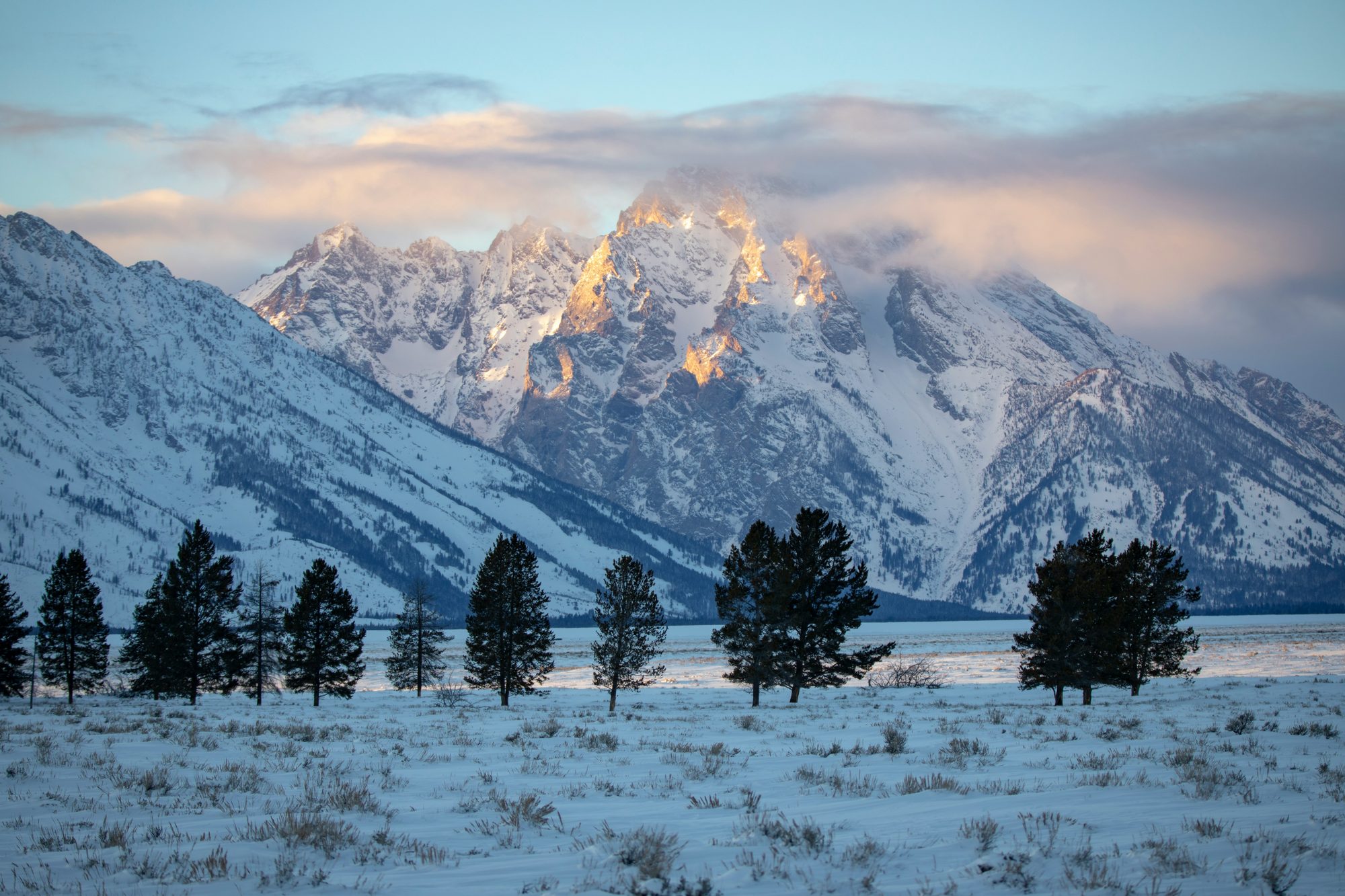
Jackson Hole, Wyoming
The steepest, most serious inbounds skiing in the US — under the Tetons.
Jackson Hole Mountain Resort sits at the foot of the Teton Range in Wyoming, with 2,500 acres of terrain that tilts harder than anywhere else in North America: 50% expert, the biggest continuous vertical drop in the US, and Corbet’s Couloir — the most famous inbounds chute on the continent. The aerial tram to the summit of Rendezvous Mountain delivers 4,139 feet of vertical in a single ride.
The resort splits into two characters. The Bridger Gondola side and the lower mountain have genuine intermediate and beginner terrain, especially since the Teton Lift opened in 2015. The tram side and the upper mountain are another matter entirely: the chutes, couloirs and steep faces off Rendezvous are as serious as inbounds skiing gets in the US, and Corbet’s Couloir is a mandatory-air drop that draws expert pilgrims from around the world.
The honest part: Jackson Hole’s reputation scares away intermediates who would actually love half the mountain. But the other half really is expert-only, the town of Jackson is 12 miles from the resort at Teton Village, and the small airport (JAC) limits flight options and inflates prices. The payoff is the Tetons — Grand Teton and Yellowstone national parks are next door, and the scenery is on a different scale from anything in Colorado.
Highlights
-
Corbet’s Couloir
The most famous inbounds chute in North America — a mandatory 10–20-foot air entry.
-
Aerial Tram
The Big Red box to the 10,450 ft summit of Rendezvous — 4,139 ft of continuous vertical.
-
Grand Teton views
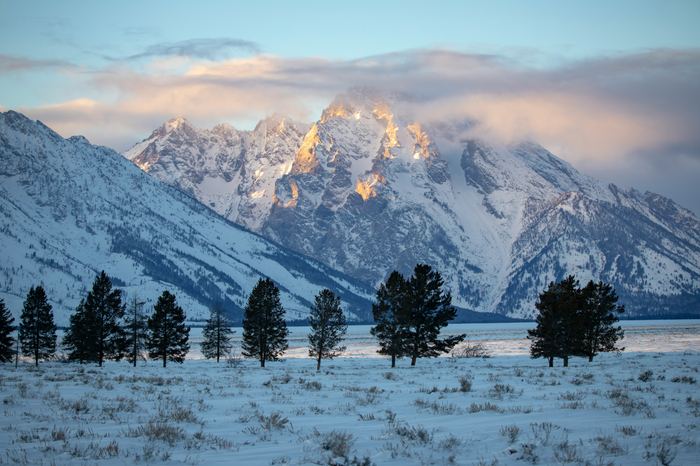
The Teton Range as a backdrop is unmatched — no other US resort has scenery like this.
-
Wildlife
Moose in the car park, elk herds on the refuge, bald eagles overhead — this is the real mountain West.
Practical info
- Visa
- ESTA or B-1/B-2 visa for most Western nationalities.
- Currency
- USD ($)
- Language
- English.
- Safety
- Safe; wildlife encounters (moose, bears) are real — give them space.
- Getting around
- Jackson Hole Airport (JAC) 15 min from the resort; free START bus between Jackson town and Teton Village.
- Tap water
- Tap water safe.
- Plug type
- Type A Type B 120V
- Money
- Cards everywhere; tips expected (15–20%).
General guidance — visas, safety, and health change, so check your government's travel advisory and the official sources before you go.
Common questions
- Is Jackson Hole good for beginners?
- Only in specific zones. Jackson Hole is famous for expert terrain — 50% of its runs are rated expert — and the mountain’s reputation is built on steeps. But the Teewinot area at the base has genuine beginner slopes, the ski school is excellent, and the Solitude Station mid-mountain area gives intermediates room to progress. See who it suits.
- What is Corbet’s Couloir?
- The most famous inbounds chute in North America — a mandatory air-entry couloir at the top of Rendezvous Mountain, accessed from the aerial tram. It is a rite of passage for expert skiers, not a run for anyone who has to ask "can I do this?" See the ski area.
- Is Jackson Hole on the Ikon Pass?
- Yes. JHMR is on both the Ikon Pass (unlimited days) and the Ikon Base Pass (5 days with blackout dates). It is not on the Epic Pass. See lift passes.
- How do you get to Jackson Hole?
- Fly into Jackson Hole Airport (JAC) — the only commercial airport inside a US national park, 15 minutes from the resort. Direct flights from Denver, Salt Lake City, Dallas, Chicago, LA, San Francisco and others. See getting there.
- Is Jackson Hole expensive?
- Yes — it is one of the most expensive ski resorts in North America. Day tickets top $250, lodging at Teton Village is premium, and dining is not cheap. Staying in the town of Jackson (12 miles away, free bus) is the main way to control costs. See what it costs.
- Can you visit Yellowstone from Jackson Hole in winter?
- Yes, but not by car — the road through Grand Teton NP to Yellowstone’s south entrance is closed in winter. Snowcoach tours and guided snowmobile trips run from Flagg Ranch, and you can watch the elk herd at the National Elk Refuge right from Jackson. See non-skiers.
- Can you bring a dog to Jackson Hole?
- To the town and the valley, yes — Jackson is dog-friendly. Onto the ski slopes, no — dogs are not allowed on JHMR pistes or lifts. Dogs are also restricted in Grand Teton and Yellowstone national parks. See dogs.
The ski area
One mountain, one tram, and the most famous chute in North America
Jackson Hole Mountain Resort is a single, massive mountain — 2,500+ skiable acres with 4,139 ft (1,262 m) of continuous vertical, anchored by the aerial tram to the summit of Rendezvous Mountain.

The mountain is defined by two things: the Big Red aerial tram to the 10,450 ft summit of Rendezvous Mountain, and the terrain it opens up. Corbet’s Couloir — a mandatory-air-entry chute visible from the tram — is the most famous inbounds line in North America. The expert terrain spreads across the Hobacks, Casper Bowl, Cody Bowl, and the Headwall — steep, sustained, and often holding fresh snow days after a storm.
But Jackson Hole is not only for experts. The Bridger Gondola accesses the mid-mountain, where cruising blues and groomed intermediates open up at Solitude Station. The Teewinot area at the base has dedicated beginner terrain with its own quad chair. The split is real, though: half the mountain is black or double-black, and the steeps are what built this place’s reputation.
| Zone | Elevation | Best for | Notes |
|---|---|---|---|
| Rendezvous Summit (tram) | 10,450 ft / 3,185 m | Experts | Corbet’s Couloir, the Hobacks, and the steepest inbounds terrain in the Lower 48 |
| Casper Bowl / Solitude | ~8,000–9,000 ft | Advanced intermediates | Bridger Gondola access; groomed cruisers and some moderate bowls |
| Apres Vous | 6,311–8,481 ft | Intermediates | The mellow side of the mountain; wide, well-groomed, the best progression terrain |
| Teewinot | 6,311 ft (base) | Beginners | Dedicated beginner area with its own quad — flat, sheltered, separate from the main mountain |
133 named trails: 10% beginner, 40% intermediate, 50% expert. The adjacent resort of Grand Targhee (on the west side of the Tetons, ~1.5 hours by road) gets even more snow and has friendlier terrain — a good day-trip for intermediates.
The tram holds 100 people and is the only way to the summit. On a powder morning, the tram line can exceed an hour. Locals line up before the 9 am first tram; the Bridger Gondola is the crowd-relief alternative.
Who it suits
Who Jackson Hole is — and isn’t — for
Jackson Hole’s reputation is built on expert terrain. If steep, sustained, challenging skiing is what you want, this is the mountain. If you want a gentle, cruising circuit, it is the wrong choice.
The terrain split says it: 50% expert, 40% intermediate, 10% beginner. The mountain’s identity is the tram, Corbet’s, the Hobacks, and the expert chutes. But the intermediate terrain off the Bridger Gondola and Après Vous is genuine and well-groomed — a strong intermediate will have a good week here.
- Expert skiersSkipthe base area on a powder dayGoFirst tram to Rendezvous summit — Corbet’s, the Hobacks, Cody and Casper Bowls; the tram line is the price of admission
- Confident intermediatesSkipthe summit chutes and the HeadwallGoBridger Gondola to Solitude Station — groomed blues and moderate bowls with a fraction of the tram queue
- Beginners & familiesSkipthe main mountain on day oneGoTeewinot base area (dedicated beginner quad, flat terrain, ski school) — or consider Grand Targhee for a gentler overall mountain
- Powder chasersSkipsleeping in — Jackson gets 459 inches a year and the tram line builds fastGoFirst chair on a storm day; the Hobacks and Casper Bowl hold untracked lines longer than the summit
If what you want is a gentle, interlinked European-style circuit you can cruise all week, Jackson Hole is the wrong mountain — try Park City or a Trois Vallées resort. The honest pitch here is that the hard stuff is world-class, and the intermediate terrain is better than the reputation suggests but secondary to the character of the place.
Snow & season
Continental snow, cold temperatures, and 459 inches a year
Jackson Hole averages 459 inches (11.7 m) of annual snowfall — lighter and drier than Pacific Northwest snow, heavier than Colorado’s, and delivered by storms that stack up against the Tetons.
Crimson bars mark the operating season and the peak-conditions window. The Christmas week and Presidents’ Day are the crowd peaks — tram lines exceed an hour. Early January and early March offer the best balance of snow and crowds.
The Teton Range catches moisture from Pacific storms that cross Idaho, delivering consistent mid-winter dumps. The snow is "Teton cold smoke" — drier and lighter than the Sierra cement of California, though not quite as light as Utah’s famous powder. The altitude and north-facing aspect of the upper mountain preserve the snow well.
The season runs early December to early April, with the upper mountain sometimes extending into mid-April. January through mid-March is the reliable window: the deepest base, the coldest temperatures, and the most consistent coverage. December is sometimes thin at the base. Spring brings warm days, corn snow on south-facing slopes, and smaller crowds.
Lift passes
Day tickets, Ikon Pass, or the Mountain Collective — and none of them are cheap
Jackson Hole’s day tickets are among the most expensive in the US. The Ikon Pass is the multi-resort option; the resort is not on the Epic Pass.
JHMR uses dynamic pricing — day tickets are cheaper bought online in advance and more expensive at the window or on peak days. The range below is approximate; the Ikon Pass is the saving for anyone skiing more than 4–5 days or visiting other Ikon resorts in the same season.
| Pass | Price | Notes |
|---|---|---|
| Day ticket (advance online) | Dynamic pricing — cheaper midweek and early season, higher holidays | |
| Day ticket (window / peak) | Walk-up price; Christmas/Presidents’ Day peak | |
| Ikon Pass (full) | Unlimited days at JHMR + 50+ resorts worldwide | |
| Ikon Base Pass | 5 days at JHMR (blackout dates) + other resorts | |
| Mountain Collective | 2 days at JHMR + 2 days each at 25+ resorts; 50% off extra days |
Under-5s ski free. Child (6–12) and teen (13–17) day tickets are 30–40% cheaper. Season pass: ~$2,100 adult. Ikon prices are 2026/27 pre-sale — buy in spring for the best rate. JHMR is NOT on the Epic Pass.
The Ikon Pass pays for itself in 5–6 days of Jackson Hole skiing and gives access to Big Sky, Aspen, Deer Valley, Chamonix and Zermatt — if you ski more than one resort a season, it is the obvious play.
Lessons & guides
A ski school that takes the steep terrain seriously
Jackson Hole’s ski school is run by the resort and matched to the mountain — there is a strong focus on steep-skiing clinics and off-piste guiding alongside the standard progression levels.
The resort’s Jackson Hole Mountain Sports School is the main operator, running group and private lessons at all levels from Teewinot beginners to expert steep clinics. The Steep & Deep camps — expert-level guided sessions through Corbet’s, the chutes and the backcountry gates — are the signature product.
For backcountry skiing beyond the resort boundary, Exum Mountain Guides (the Teton’s premier guiding service, founded 1931) runs guided backcountry days, avalanche courses and multi-day tours into the Teton Range. Avalanche transceiver, probe and shovel required for any backcountry.
The Steep & Deep camps fill up weeks ahead in January and February. Book online before your trip if expert guiding is the reason you’re coming.
Families & kids
The Kids Ranch — Jackson’s dedicated family base
Jackson Hole’s Kids Ranch at Teton Village is the family hub — childcare from 6 months, ski lessons from age 3, and a separate facility so kids are not on the main mountain until they are ready.
The Kids Ranch handles the three tiers: nursery (6 months to 2 years, non-skiing), Rough Riders (3–5 years, first-time ski with play), and Explorers/Pioneers (6–14, progressive ski instruction). All are housed in the Kids Ranch building at the base area.
| Programme | Ages | What it is |
|---|---|---|
| Nursery (Kids Ranch) | 6 months – 2 yrs | Indoor non-ski care, full-day or half-day; must book ahead |
| Rough Riders | 3 – 5 | First-time ski + play; indoor/outdoor combo; gear included |
| Explorers | 6 – 14 | Progressive ski lessons by ability, full-day; lift ticket not included |
| Teens (13–17) | 13 – 17 | Full-day group or private; terrain-specific (park, steeps, all-mountain) |
Under-5s get a free lift pass. Kids Ranch nursery books out in peak weeks — reserve at least 2 weeks ahead. Lunch is included in full-day programmes.
Jackson Hole is not a family-first resort — the mountain is steep and the prices are high. But the Kids Ranch is well run, and families who base at Teton Village with children in the programme can ski the main mountain while the kids are looked after.
Getting there
The only commercial airport inside a national park — 15 minutes to the lifts
Jackson Hole Airport (JAC) sits inside Grand Teton National Park, about 15 minutes from Teton Village. It is the most convenient airport-to-resort transfer in the Rockies.
JAC has direct flights from Denver, Salt Lake City, Dallas, Chicago, Los Angeles, San Francisco, Atlanta, Seattle, Minneapolis and others — the route network is much better than the town’s 11,000 population would suggest, because the Tetons and Yellowstone drive year-round traffic. From SLC, the drive is about 4.5–5 hours if you prefer to rent a car.
From the airport to Teton Village (JHMR): resort shuttles, hotel shuttles, taxis and ride-shares cover the 15-minute ride. To the town of Jackson (12 miles from the resort), the free START bus runs daily, making a car optional if you base in either Jackson or Teton Village.
| From | To JHMR / Jackson | Notes |
|---|---|---|
| Jackson Hole Airport (JAC) | 15 min to Teton Village | Inside Grand Teton NP; resort/hotel shuttle or taxi ~$25–$40 |
| Salt Lake City (SLC) | ~4.5–5 hrs drive | Rental car route through Idaho; scenic but long |
| Denver (DEN) | ~1.5 hr flight | Most frequent connection; multiple airlines |
| Town of Jackson ↔ Teton Village | ~25 min by START bus | Free public bus; runs every 20–40 min during ski season |
A rental car is useful for exploring Grand Teton and the Elk Refuge but not essential for skiing alone — the START bus and hotel shuttles cover the Jackson–Teton Village corridor.
JAC’s runway sits at 6,451 ft and weather delays are real — winter storms can close the airport for hours. Build a buffer day into your itinerary if flying in during a storm cycle.
Where to stay
Teton Village for ski-in/ski-out, Jackson town for value and life
The two bases are Teton Village (at the mountain, premium, ski-in/ski-out) and the town of Jackson (12 miles south, more restaurants and bars, lower prices, free bus to the resort).
Teton Village is the resort base: the Four Seasons, Hotel Terra, Terra and Teton Mountain Lodge offer ski-in/ski-out or slope-adjacent lodging — expensive, but you are at the lifts. Jackson town is a real Western town with a Town Square elk-antler arch, a main street of restaurants, galleries and bars, and accommodation from motels to boutique hotels at lower prices. The START bus connects the two in about 25 minutes.
A middle option: Teton Village condos and vacation rentals are cheaper than the hotels and still within walking distance of the lifts. Wilson, a small community between Jackson and Teton Village, has a few lodges and is quieter still.
| Location | Character | Price range per night |
|---|---|---|
| Teton Village hotels | Ski-in/ski-out, premium | |
| Teton Village condos | Slope-adjacent, self-catering | |
| Jackson town hotels | Town centre, restaurants, bars | |
| Jackson town motels/lodges | Budget, functional | |
| Wilson / outlying | Quiet, car helpful |
Peak-season (Christmas through Presidents’ Day) prices are 2–3× the early/late-season rate. Book 3–6 months ahead for Teton Village; Jackson town has more last-minute availability.
The budget play: stay in Jackson town, ride the free START bus, eat on the town square. You lose the ski-in/ski-out convenience but save $200+/night.
Après & dining
Elk steak, craft beer and a proper Western town — not a resort bubble
Jackson is a real town, not a purpose-built village, and the dining reflects it — from elk burgers at the Mangy Moose to a tasting menu at The Kitchen.
At the mountain: the Mangy Moose in Teton Village is the après institution — a loud, packed saloon and restaurant at the base of the tram, serving pizza, burgers and live music since 1967. Handle Bar at the Four Seasons is the upmarket slope-side option.
In Jackson town: The Kitchen (modern American, one of the best in the Rockies), Snake River Grill (elk, bison, trout), Bin 22 (wine bar and tapas), Hatch (Thai — surprisingly good), and the Million Dollar Cowboy Bar (saddle barstools, Western kitsch, a must-see even if you don’t drink). The food scene punches well above a town of 11,000 people.
Reservations are essential at The Kitchen, Snake River Grill and Couloir (the tram-summit restaurant) during peak weeks. Walk-ins work at the Mangy Moose and most Jackson burger-and-beer spots.
Non-skiers
Grand Teton, Yellowstone, elk herds and the most dramatic scenery in the Lower 48
Jackson Hole’s non-ski offering is arguably the strongest in North America — Grand Teton and Yellowstone National Parks are on the doorstep.
2 national parks within reach
Winter non-ski activities: sleigh rides through the National Elk Refuge (December–March, ~$30 adult), snowshoeing and cross-country skiing in Grand Teton NP, dog-sledding (Continental Divide Dogsled Adventures), snowmobiling (guided tours into Yellowstone or Granite Hot Springs), wildlife safaris (moose, elk, bald eagles, wolves in Yellowstone), and the Jackson town galleries and shops.
The town of Jackson itself is the non-skier’s base — a walkable Western main street with enough restaurants, bars and culture for a week without ever touching skis.
The Yellowstone snowcoach from Flagg Ranch is a full-day trip (book through Scenic Safaris or similar). Old Faithful and the geyser basins in winter, with no summer crowds, are extraordinary.
Dogs
Welcome in town, banned on the slopes and restricted in the parks
Jackson is a dog-friendly town. The ski resort and the national parks are not.
Dogs are not allowed on JHMR pistes or lifts. In Grand Teton National Park, dogs must be on a leash no longer than 6 ft and are restricted to roads, parking areas and a few designated trails — no backcountry. Yellowstone has similar rules: dogs on roads and boardwalks only, never on trails or in thermal areas.
In the town of Jackson and Teton Village, dogs are welcome in many shops, some restaurants (outdoor seating), and several pet-friendly hotels and vacation rentals. The Jackson Town Pathways (groomed walking/skiing trails) allow leashed dogs.
Accessibility
JHMR’s adaptive programme and Teton Adaptive Sports
Jackson Hole has a genuine adaptive ski programme, run through Teton Adaptive Sports — one of the better-equipped programmes in the Rockies.
Teton Adaptive Sports (tetonadaptivesports.org) offers sit-skiing, mono-skiing, outrigger skiing, visually-impaired guiding and developmental programmes for adults and children with physical, cognitive and visual disabilities. Equipment is provided; trained guides match to ability.
In the resort: the Bridger Gondola and the main base area are wheelchair-accessible. The tram is accessible with advance arrangement. Teton Village hotels (Four Seasons, Hotel Terra) have ADA-compliant rooms. The START bus fleet is wheelchair-accessible.
Safety & insurance
Real mountain hazards, no universal healthcare, and the insurance conversation Americans skip
Jackson Hole is a serious mountain — avalanche terrain, cliffs, and a resort boundary that borders genuine backcountry. The US has no public healthcare safety net for visitors.
The resort’s inbounds terrain includes permanently closed areas, mandatory cliff bands, and avalanche-prone slopes. Ski Patrol operates within the resort boundary and is professional and responsive — but outside the boundary is unpatrolled backcountry in the Teton Range, where rescue is by Teton County Search and Rescue (volunteer) and can be billed to the individual.
On insurance: the US has no equivalent of the EHIC/GHIC. An ER visit or helicopter evacuation without insurance can cost $10,000–$100,000+. International visitors need travel insurance with winter sports cover, including off-piste, evacuation and medical. American visitors should confirm their health plan covers out-of-state mountain injuries — many don’t.
The single biggest financial risk at Jackson Hole is not the lift ticket — it is an uninsured injury on the mountain. Check your cover before you go. This applies to Americans as well as international visitors.
What it costs
What a day at Jackson Hole actually costs
Jackson Hole is one of the most expensive ski destinations in North America. The day-rate below covers pass, hire, food and a bed — before flights.
Day-rate breakdown, per person per day unless noted:
| What | Typical day-rate ($) | Notes |
|---|---|---|
| Day ticket (advance) | $150–$200 | Dynamic pricing; peak days $200–$270+ |
| Ikon Pass (per day, 10-day trip) | ~$120/day | From ~$1,200 full pass; better value the more days you ski |
| Ski/board hire | $50–$85 | Standard to performance; pre-book online for savings |
| Group lesson (half-day) | $200–$250 | Up to 7 per group; full-day $350–$450 |
| Private lesson (half-day) | $850–$1,400 | For 1–5 people; full-day $1,200–$1,800 |
| Lunch on-mountain | $18–$35 | Cafeteria to table service at Couloir (tram summit) |
| Dinner in Jackson | $30–$80 | Casual to mid-range; tasting menu $120+ |
| Accommodation (Jackson town) | $100–$500 | Motel to boutique hotel |
| Accommodation (Teton Village) | $200–$1,200+ | Condo to Four Seasons |
| Tipping | 15–20% | On meals, ski lessons, shuttles — expected, not optional |
The budget day: Jackson town motel (~$150), advance day ticket (~$165), rental ($55), packed lunch, dinner at a burger spot (~$25), START bus (free) ≈ ~$400. The premium day: Teton Village hotel (~$600), Ikon Pass (~$120), rental ($75), mountain lunch ($30), dinner at Snake River Grill (~$90), tips ≈ ~$950. Figures are 2026/27 season estimates.
The Ikon Pass is the biggest single saving — it turns a $200/day lift ticket into ~$120/day over a week and gives access to other resorts. Staying in Jackson town instead of Teton Village saves $100–$500/night.
Compare Jackson Hole, Wyoming
If you like Jackson Hole, Wyoming, also consider
Vail, Colorado
The biggest single ski mountain in the US, with seven legendary Back Bowls.
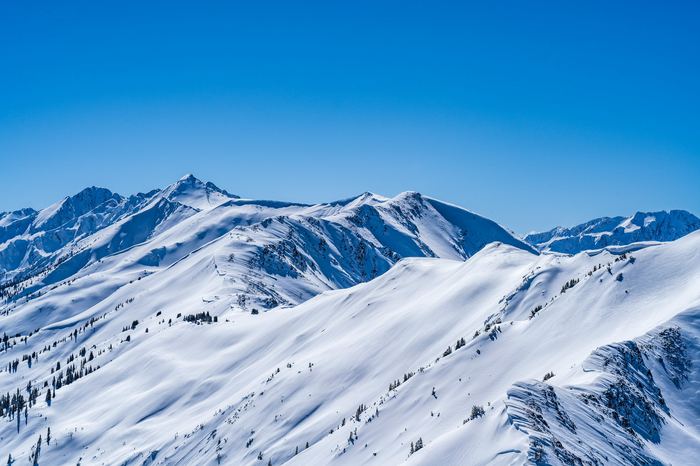
Aspen, Colorado
Four mountains, a real town and the most glamorous ski culture in America.
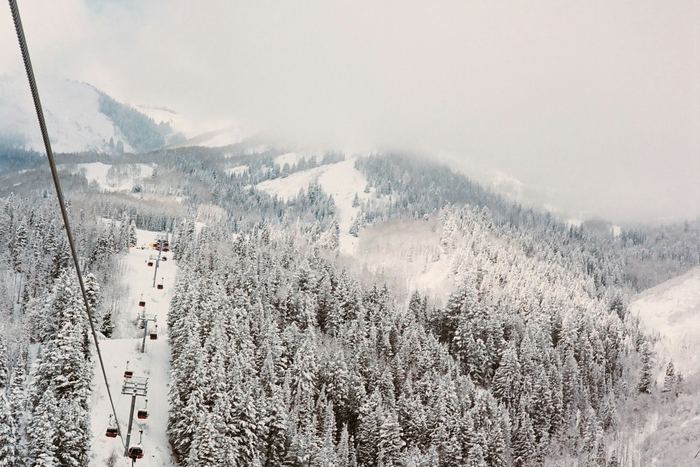
Park City, Utah
The largest ski resort in the US, 35 minutes from Salt Lake City.
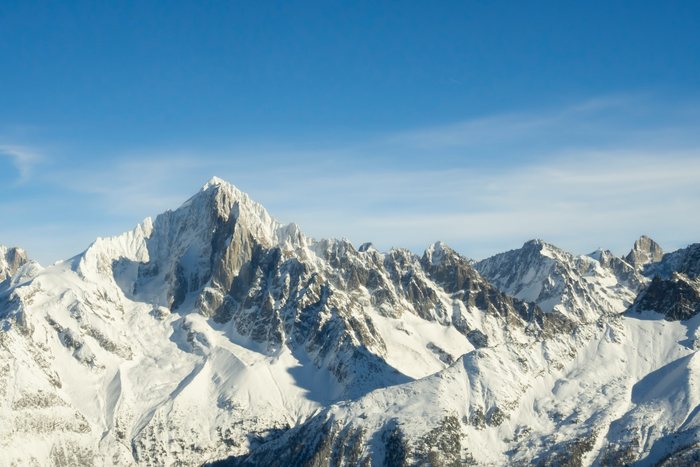
Chamonix, France
The birthplace of alpinism, under Mont Blanc.
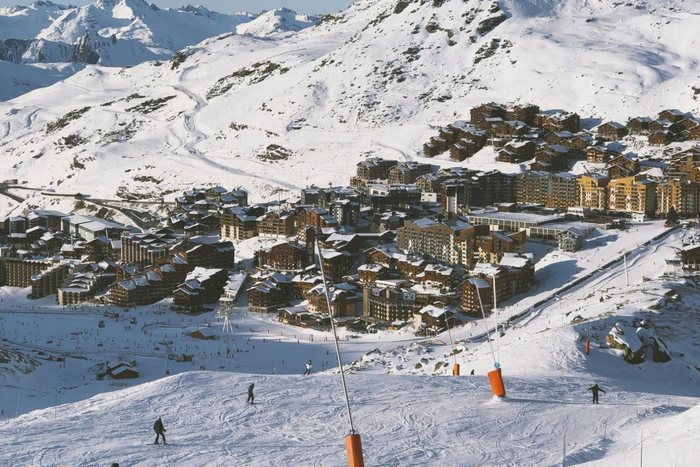
Val Thorens, France
Europe’s highest resort — snow-sure, and the gateway to the world’s largest linked ski area.
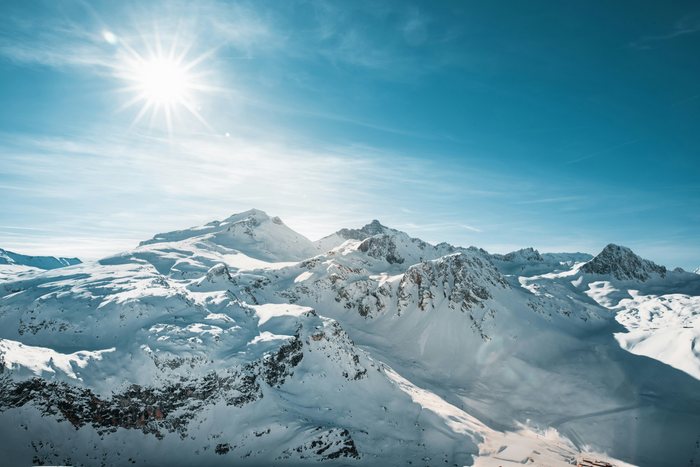
Val d’Isère, France
High-altitude, serious skiing with a village that actually feels like one.