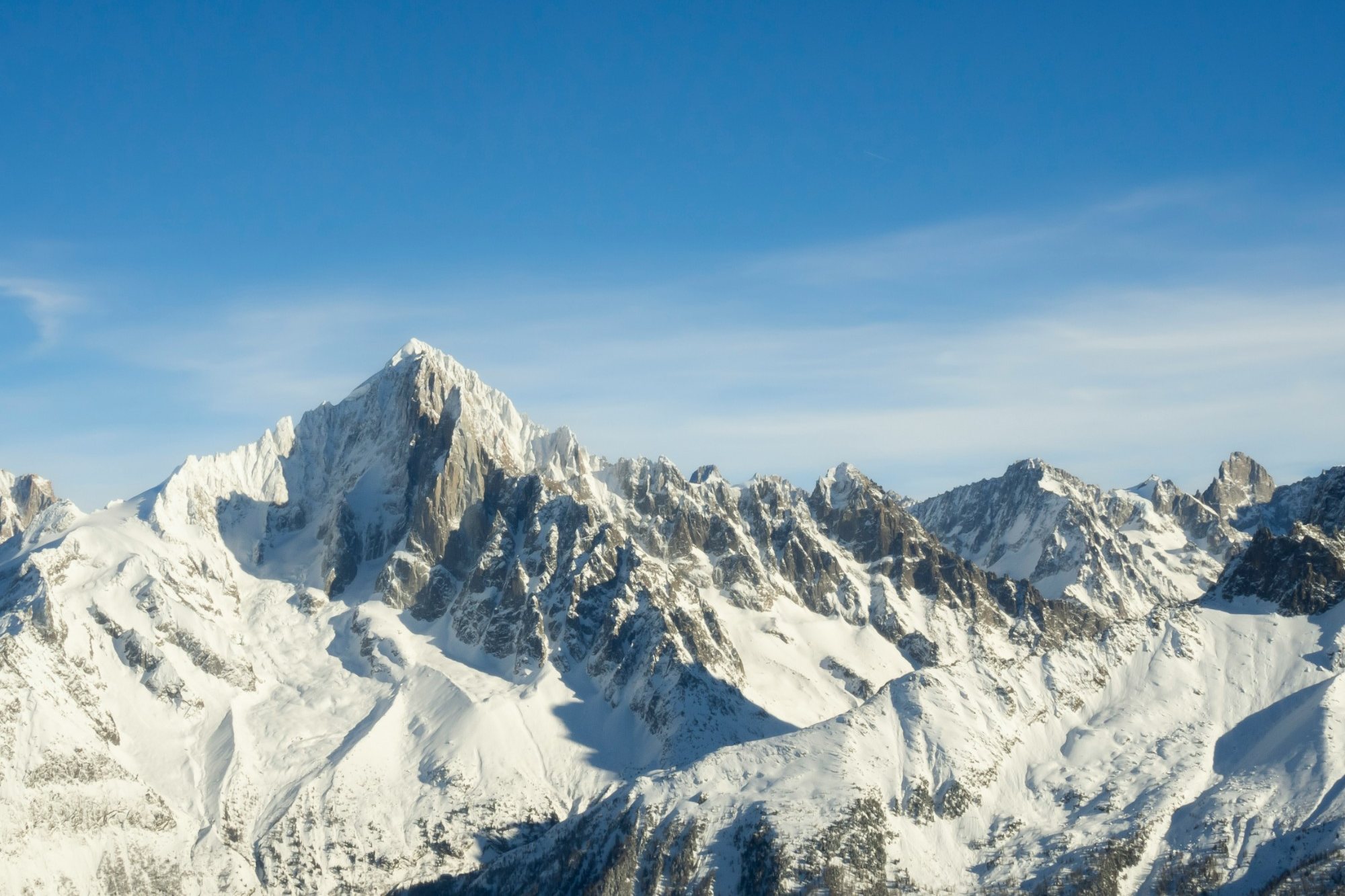
Chamonix, France
The birthplace of alpinism, under Mont Blanc.
Chamonix is not a purpose-built ski factory — it is a real town with a 250-year mountaineering history, wedged in a deep valley beneath Mont Blanc and ringed by some of the most serious terrain in the Alps. The skiing is spread across separate areas linked by bus and lift rather than one tidy circuit, which puts off cruisers and thrills everyone else: this is the home of the Vallée Blanche, the Aiguille du Midi, and off-piste that has made careers and ended them.
A Chamonix day is vertical and various. Take the Aiguille du Midi cable car to 3,842 m for the glacier balcony and the step-into-the-void, ski the lift-served areas of Grands Montets, Brévent-Flégère and Les Houches, and — with a guide and the right conditions — ride the 20 km Vallée Blanche off the top of the Midi down to the Mer de Glace. The town itself has proper restaurants, bars and a train station, so you do not need a car once you are in.
The honest part: Chamonix is not for nervous beginners or anyone wanting a single ski-in/ski-out piste map — the areas are separate, the weather and avalanche risk are real, and the famous descents need a mountain guide. It is also a genuine year-round destination, as busy with climbers and hikers in August as with skiers in February, which keeps it expensive and, in peak weeks, crowded on the lifts.
Highlights
-
Aiguille du Midi
Cable car to 3,842 m — the glacier viewpoint and the start of the Vallée Blanche.
-
Vallée Blanche
A 20 km off-piste glacier descent with a guide — a rite of passage, not a run.
-
Grands Montets
The serious lift-served area, long a freeride proving ground.
-
Mer de Glace
France’s largest glacier, reached by the rack railway from town.
Practical info
- Visa
- Schengen — visa-free for most Western passports (90 days).
- Currency
- EUR (€)
- Language
- French. English widely spoken in the resort.
- Safety
- Safe town; the mountain risk (avalanche, glacier) is the real hazard — hire a guide off-piste.
- Getting around
- About 1h15 by road/shuttle from Geneva airport; a valley train and free ski buses once there.
- Tap water
- Tap water safe.
- Plug type
- Type C Type E 230V
- Money
- Cards everywhere.
General guidance — visas, safety, and health change, so check your government's travel advisory and the official sources before you go.
Common questions
- Is Chamonix good for beginners?
- Only in the right spots. Chamonix is a valley of serious, mostly separate mountains, not one gentle circuit — the famous terrain is steep and much of it is off-piste. First-timers and families should base around Les Houches or Le Tour–Balme, which have the wide, sunny beginner slopes; nervous beginners wanting a single ski-in/ski-out piste map are better served elsewhere. See who it suits.
- Do Chamonix’s ski areas connect to each other?
- No — and this is the thing to understand before you book. The four main areas (Les Houches, Brévent, Flégère, Grands Montets and Le Tour–Balme) are not linked by piste; only Brévent and Flégère join, by the Liaison cable car. You move between the others on the free valley ski-bus or the Mont Blanc Express train. The ski-area section has the map.
- Which lift pass do I need — Mont Blanc Unlimited or Le Pass?
- Chamonix Le Pass covers the valley’s ski areas (but not Les Houches or the Aiguille du Midi) and is the cheaper choice for a pure ski week. Mont Blanc Unlimited adds the Aiguille du Midi, the Montenvers–Mer de Glace railway, Les Houches, Courmayeur (Italy, via the tunnel) and half-price days in Verbier — worth it if you want the big cable car or to ski across the border. The pass table compares them.
- Do you need a guide for the Vallée Blanche?
- Yes. The Vallée Blanche is a 20-odd-kilometre off-piste glacier descent from the Aiguille du Midi — unmarked, unpatrolled, crevassed, and starting down an exposed arête you down-climb roped up. A qualified mountain guide is essential; the Compagnie des Guides (founded 1821) runs it from about €155 per person in a shared group. See lessons & guides.
- Do you need a car in Chamonix?
- No. Geneva airport is about an hour away, the Mont Blanc Express train runs the length of the valley, and the ski-bus that links the separate ski areas is free with a valid lift pass — a guest card from your accommodation makes the valley train free too. A car helps only for beating peak-time lift queues. See getting there.
- Is Chamonix good for non-skiers?
- It is one of the best, precisely because it is a real year-round town rather than a purpose-built station. Non-skiers can ride the Aiguille du Midi to 3,842 m and the Step into the Void, take the rack railway to the Mer de Glace glacier, soak at the QC Terme thermal spa, snowshoe, skate or paraglide. See non-skiers & off-slope.
- Can you bring a dog to Chamonix?
- To the town and the valley, yes; onto the pistes, no. Dogs are not allowed on groomed ski runs in France even on a lead (avalanche dogs excepted), but Chamonix’s valley lifts and trains carry leashed dogs — except the two Aiguille du Midi cable-car sections and the Index chair — and dog-friendly lodging is easy to find. GB visitors need an Animal Health Certificate. See dogs.
The ski area
A valley of separate mountains, not one ski circuit
The single most important thing to grasp before you book: Chamonix is not one linked ski area. It is a string of distinct mountains down a valley, and you travel between them.
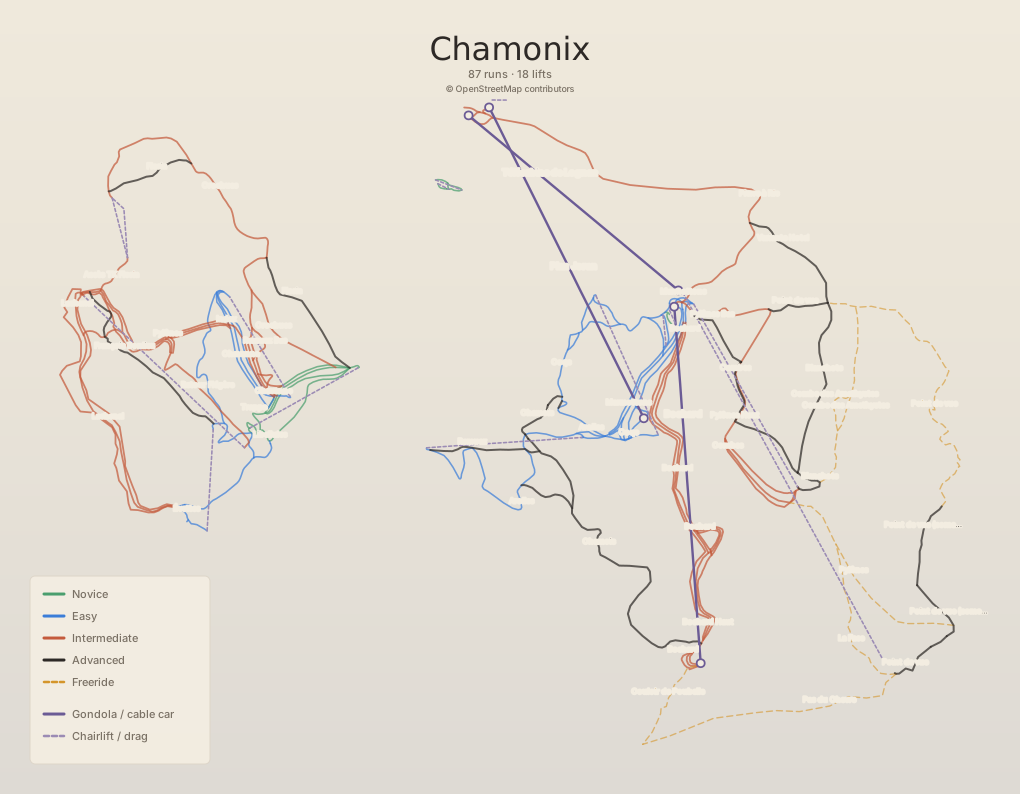
You cannot ski from one Chamonix area to the next. Les Houches, Brévent, Flégère, Grands Montets and Le Tour–Balme are separate mountains; only Brévent and Flégère are joined (by the Liaison cable car). To move between the rest you take the free valley ski-bus or the Mont Blanc Express train. This is the opposite of a Les Arcs or a Val Thorens, and it rewards strong, independent skiers while frustrating anyone who wants a single tidy piste map from the chalet door.
The payoff is terrain of a seriousness few resorts can match — the Grands Montets, the Aiguille du Midi and the off-piste between them have made and ended careers — plus a real town at the bottom. The catch is the logistics: you plan your day around which mountain you are skiing and how you get there.
| Area | Base → top | Best for | Notes |
|---|---|---|---|
| Les Houches | 1,010 → 1,900 m | Families, beginners, bad weather | Tree-lined and gentle; the Kandahar World Cup downhill. Not on Le Pass — on Mont Blanc Unlimited |
| Le Tour–Balme | 1,460 → 2,270 m | Beginners, easy intermediates | Wide, sunny high bowls; links over to Vallorcine |
| Brévent–Flégère | 1,035 → 2,525 m | Intermediates, some steeps | The two town-side areas, linked to each other; faces Mont Blanc |
| Grands Montets | 1,252 → 3,275 m | Advanced & experts | High, north-facing, big off-piste; the valley’s snow-sure flagship |
| Aiguille du Midi | 1,035 → 3,842 m | Experts with a guide | Not a piste area — the cable car to the Vallée Blanche and high mountain |
The Chamonix Le Pass marked domain is about 119 km over roughly 80 runs (16 green, 27 blue, 25 red, 12 black); Les Houches and the Aiguille du Midi sit outside it. Piste totals vary by source and season.
Because the mountains are separate, "ability" is best read area by area, not as one valley-wide average — a beginner and an expert can have perfect weeks here without ever skiing the same slope.
Who it suits
Who Chamonix is — and isn’t — for
Match the mountain to the skier and Chamonix is superb at every level. Pick wrong and a beginner lands under the Grands Montets, which is miserable.
The valley’s reputation is built on its experts’ terrain, but it has genuine beginner and family mountains too — they are just in specific places. Base and ski by ability:
- First-timers & familiesSkipGrands Montets and the central Brévent steepsGoLes Houches (tree-lined, gentle, good in bad weather) and Le Tour–Balme (wide, sunny high bowls)
- Cruising intermediatesSkipexpecting big linked mileage — there isn’t anyGoFlégère–Brévent and Le Tour, hopping areas by ski-bus; a day over the tunnel to Courmayeur on Mont Blanc Unlimited
- Advanced & expertsSkipthe gentle outliersGoGrands Montets for lift-served steeps and off-piste; the Aiguille du Midi and the Vallée Blanche with a guide
- Freeriders & ski-tourersSkiptreating this like a piste resortGoChamonix as a base for guided off-piste, couloirs and touring — some of the most serious lift-accessed terrain in the Alps
If what you want is a single ski-in/ski-out circuit you can learn on without reading a bus timetable, Chamonix is the wrong choice and a purpose-built resort is the right one. That is not a flaw here — it is the character of the place.
Snow & season
Snow-sure high up, weather-dependent low down
At 1,035 m the town is low for a major resort. The snow lives up high — which is exactly where Chamonix’s best skiing is anyway.
Months on the axis (12 = December). Crimson bars are the snow-sure high areas and the crowd peaks. The French February break is staggered over three zones, so the crush runs for weeks, not one — mid-to-late February is the crunch.
Because the town sits low, early-season and warm-spell snow on the valley floor and the sunny lower slopes is unreliable — but the terrain that defines Chamonix is high and north-facing, so the Grands Montets, the Aiguille du Midi and the Balme bowls hold cover when lower resorts struggle, and the Grands Montets skis late into the spring. January to March is the dependable window for cold snow and all areas open.
Quietest value weeks are early-to-mid January, after New Year and before the French February holidays, and the first weeks of December if you are willing to gamble on the high areas while the low ones wait for snow. Avoid mid-to-late February unless you have no choice.
Lift passes
Two passes that cover very different mountains
The choice is not about size — it is about which mountains, and whether you want the Aiguille du Midi and the border resorts.
Chamonix sells two main passes plus local ones. The cheaper Chamonix Le Pass covers the valley ski areas but leaves out Les Houches and the Aiguille du Midi. Mont Blanc Unlimited is the premium pass: it adds the Aiguille du Midi cable car, the Montenvers–Mer de Glace railway, Les Houches, the Evasion Mont-Blanc domain and Courmayeur in Italy, and gives holders of a 6-day-plus pass half-price days in Verbier, Switzerland.
| Pass | Covers | 6-day adult | Per day |
|---|---|---|---|
| Chamonix Le Pass | Valley ski areas (not Les Houches / Aiguille du Midi) | €360 | |
| Mont Blanc Unlimited | All areas + Aiguille du Midi + Montenvers + Courmayeur + ½-price Verbier | €480 | |
| Les Houches–Saint-Gervais | Les Houches only (sold separately) | €281 |
Adult 15–64; child 5–14 and senior 65–79 pay a reduced rate (roughly 15% off); under-5s ski free (a €3 reusable keycard aside). The "Tribu" family pack (2 adults + children 5–14) gives the 3rd, 4th and 5th child a free pass. Figures read autumn 2026 for the 2025/26 season; Chamonix uses dynamic online pricing and 2026/27 rates run a little higher — buy online in advance and re-check on the Compagnie du Mont-Blanc boutique.
For a pure ski week where you won’t ride the Aiguille du Midi, Le Pass is the saving. If you want the big cable car, a day in Courmayeur, or you’re staying in Les Houches, Mont Blanc Unlimited is the one that actually covers your week.
Lessons & guides
A ski school town — and the oldest guiding company on earth
For lessons, the choice is ESF versus the English-first schools. For anything off-piste, Chamonix is a guiding town first and a ski resort second.
For lessons, the ESF (École du Ski Français) is the big traditional school with multilingual instructors and classes in English and French; the English-first independents — Evolution 2, Chamonix Experience, the British Alpine Ski School — guarantee native English-speaking instructors and smaller groups, which is the safer bet for nervous beginners and children if you don’t speak French. Group lessons are the budget option; privates cost more but progress faster.
Off the pistes, Chamonix is in a different category. The Compagnie des Guides de Chamonix, founded in 1821, is the oldest guiding company in the world, and the Vallée Blanche, the couloirs and the touring here are serious glaciated mountaineering — not a resort "off-piste" afterthought. A guide is not optional for these; the Compagnie supplies a harness and avalanche transceiver with its descents, and the minimum age for the Vallée Blanche is 15 (you must be able to handle an ungroomed red run).
The Vallée Blanche is booked out fast in good-weather weeks. If it is the reason you are coming, reserve a guide well before you travel rather than hoping to walk in.
Families & kids
Where you can leave the kids — and the rule that catches parents out
"Childcare" at a ski resort is three different things with three different minimum ages. Chamonix has all three — but the nappy rule trips people up every year.
The confusion worth clearing up first: a non-skiing nursery (for babies and toddlers), a ski kindergarten (play plus a first taste of snow, from about age 3), and ski-school lessons proper (from about age 3) are not the same service. Chamonix is more of a real-town childcare market than a big-chain one: infant care is nannies (MeriNannies, Alpine Child Care) and the municipal halte-garderie rather than a giant resort crèche.
| Option | Ages | What it is |
|---|---|---|
| Nanny / halte-garderie | babies – under 3 | Non-ski care — private nannies or the municipal crèche; the route for children still in nappies |
| ESF Club Piou-Piou | 3 – 4 | Snow garden at Le Savoy / Les Planards in town — games and a first taste of skiing, max ~6 per group |
| Ski-school group lessons | 3+ | ESF or Evolution 2, English-speaking groups; the start of real progression |
| Panda Club (Evolution 2) | young skiers | A ski club at Grands Montets — note it is not a nursery and isn’t set up for nap time |
Best family and beginner areas: Les Houches (gentle, quieter, sledging at Les Chavants), and Le Savoy & Les Planards in Chamonix town (magic carpets + the ESF snow garden). Le Tour and Vallorcine are good and quiet too.
The rule that catches people out: ESF ski kindergarten and lessons require the child to be toilet-trained — "we are unable to accept children wearing nappies." A toddler still in nappies goes to a nanny or the crèche, not ski school. On passes, under-5s ski free and the "Tribu" family pack frees the 3rd, 4th and 5th child — so a big family’s lift bill is smaller than it looks.
Getting there
An hour from Geneva — and car-free if you want
Chamonix’s trump card is access: it is the closest major resort to a big international airport, and you genuinely don’t need a car.
Geneva is the gateway — about 88 km and an hour to 1h15 by private transfer (a shared shuttle, filling up and dropping off, runs nearer 1h30). Lyon, Turin (through the Mont Blanc tunnel) and Grenoble are the next nearest, all two hours-plus. By train you take the Léman Express from Geneva to Saint-Gervais/Le Fayet and change onto the narrow-gauge Mont Blanc Express, which runs the length of the valley to Vallorcine and the Swiss border.
Once you are there, the valley is built for car-free skiing: the free ski-bus linking the separate areas is free with a valid lift pass, and the Carte d’Hôte guest card — given to you by your accommodation on arrival — makes the Mont Blanc Express free within the valley and the town buses cheaper. A car buys you flexibility and faster lift-base access at peak times, nothing more.
| From | To Chamonix | Notes |
|---|---|---|
| Geneva airport | ~1h – 1h15 | Private transfer; shared shuttle nearer 1h30. The default gateway |
| Lyon airport | ~2h – 2h30 | More flights from some cities |
| Turin airport | ~2h – 2h30 | Via the Mont Blanc tunnel |
| Geneva, by train | ~2h30 | Léman Express to St-Gervais, then the Mont Blanc Express |
Driving in winter: France’s Loi Montagne requires winter tyres marked 3PMSF or chains carried, 1 Nov–31 Mar, across Haute-Savoie (fine €135). Times are dry-road — a peak Saturday can double them.
Where to stay
Not ski-in, ski-out — so where you base matters
Almost nowhere in Chamonix is true ski-in/ski-out, because the mountains are separate. You are choosing a village, then busing to the skiing.
Take the ski-in/ski-out marketing with scepticism here: with the areas unconnected, you reach each one by bus, train or cable car wherever you stay. That makes the choice of base about atmosphere and which mountain you favour, not about clicking out of your boots at the door.
Central Chamonix is the pick for most — the town, the bars and restaurants, the shops, and still a bus or the Brévent cable car to every area. Argentière is quieter and the choice for serious skiers who want the Grands Montets on the doorstep. Les Houches is the family base: peaceful, cheaper, its own gentle ski area, at the valley mouth. Les Praz is a scenic down-valley hamlet by Flégère. Accommodation runs the full range — hostels and self-catered apartments through to catered chalets and four- and five-star hotels, including La Folie Douce Hotel in the old Savoy Palace.
The honest trade-off: a central Chamonix bed near the station and the ski-bus often beats an "isolated but slopeside" spot that is dead after dark and needs a taxi to the bars. Pick for the evenings as much as the mornings.
Après & dining
A town that drinks and eats, not just a slope that parties
Because Chamonix is a real town, the après and the dining have a depth that purpose-built resorts can’t fake.
Après here isn’t only the slopeside umbrella bar — it rolls into a genuine town scene. Chambre Neuf by the station is the legendary live-music bar; Elevation 1904, La Terrasse and the MBC microbrewery (Haute-Savoie’s oldest, since 2002) are the fixtures, with seasonaire haunts like The Monkey Bar in Chamonix Sud. And yes, there is a La Folie Douce — the hotel in the former 1904 Savoy Palace brings the cabaret-style "after-mountain party" to town.
On the plate it is Savoie and Haute-Savoie: fondue, raclette, tartiflette, diots and croûte au fromage, from traditional rooms like La Calèche and Le Fer à Cheval up to the two-Michelin-star Albert 1er. On the mountain, a cafeteria plat du jour runs about €15–20 and a sit-down lunch €20–40 a head — going back down to town for lunch costs you an hour of skiing.
Non-skiers
One of the best resorts in the Alps if you don’t ski
Chamonix’s non-ski offering isn’t a consolation prize — the Aiguille du Midi and the Mer de Glace are among the great mountain experiences in Europe, no skis required.
3,842 m the Aiguille du Midi, by cable car
The valley’s non-ski list is long because it is a working town, not a ski-only station: the Montenvers rack railway to the Mer de Glace, the QC Terme thermal spa facing Mont Blanc (a day pass around €52–58), the scenic Mont Blanc Express, snowshoeing, the Richard Bozon ice rink, and tandem paragliding. A pedestrian lift pass lets a non-skiing partner or grandparent ride up to meet skiers for a mountain lunch.
A pairing that works: a skier on Mont Blanc Unlimited and a non-skier on pedestrian tickets both end up at the same mid-mountain restaurant for lunch, then split again — the spa and the town are least crowded during ski hours.
Mer de Glace
France’s largest glacier — and a disappearing one
The Montenvers railway has carried visitors to the Mer de Glace since 1908. What it delivers them to gets smaller every year.
~€49.70 Montenvers train + gondola + ice cave
The Mer de Glace is both a sight and a lesson: a glacier you can ride a 1908 cog railway to, and a measure of how fast the ice is going. The gondola and stairs added to reach the shrinking surface are, each year, a little longer. It is the gentle, accessible counterpart to the Aiguille du Midi — included on Mont Blanc Unlimited, or bought as a standalone package.
Dogs
Bringing a dog: fine in the valley, not on the pistes
Chamonix is a dog-friendly town — but the slopes are not, and the paperwork for a British dog starts weeks before you travel.
On the mountain, the rule is France-wide: dogs are not allowed on the groomed pistes, even on a lead, for safety — only working avalanche dogs are. In the valley, though, dogs are welcome: Chamonix’s lifts and cog railways carry leashed dogs — with the exception of the two Aiguille du Midi cable-car sections and the Index chair above Flégère — and dogs ride the valley trains at half fare. Dog-friendly hotels, chalets and apartments are easy to find, often for a small supplement; dogs must be leashed near livestock and are banned outright in nature reserves.
GB → France paperwork (gov.uk): the old pet passport no longer works for British dogs. You need an Animal Health Certificate, a microchip, and a rabies vaccination given at least 21 full days before travel; the AHC is valid 10 days for entry. Tapeworm treatment is not required for France. Pack paw balm — grit and salt on the valley roads are hard on paws.
Accessibility
Adaptive skiing and a town you can get around
Chamonix has real adaptive-ski provision and a largely walkable centre — with a few specific gaps worth knowing before you come.
Adaptive skiing is well established: ESF Handiski runs at Chamonix, Les Houches and Argentière with sit-ski, dualski and guided lessons for blind and partially-sighted skiers, and Ski Assis Evasion at Les Houches adds more sit-ski options. Book the equipment at least 15 days ahead and reconfirm the week before. Disabled skiers get 50% off the lift pass on presentation of a disability card, with a preferential rate for an accompanying helper where assistance is noted.
The town centre is largely pedestrianised and wheelchair-friendly, the free "Le Mulet" shuttle and the valley trains are accessible, and even the Aiguille du Midi top station has ramps, accessible WCs and a wheelchair-accessible Step-into-the-Void box. The gap to plan around: the Aiguille du Midi mid-station (Plan de l’Aiguille) has steps, and the Montenvers train needs portable ramps on request.
Safety
Serious terrain, and the insurance that actually covers it
Chamonix’s terrain is genuine high mountain. The commonest, costliest mistake is skiing it on cover that doesn’t apply.
This is real mountaineering country: the off-piste and the Vallée Blanche are glaciated, crevassed, avalanche-prone and unpatrolled, which is why a guide and the transceiver-probe-shovel kit are non-negotiable off the marked runs. Altitude is a factor too — the Aiguille du Midi tops out at 3,842 m, reached from the town in twenty minutes.
On insurance: a standard travel policy usually excludes winter sports, and a UK GHIC covers state emergency care but not mountain rescue, repatriation or private clinics — and off-piste is commonly only covered if you ski with a qualified guide. The cheap local add-on bought with the lift pass, Carré Neige (about €3.50 a day), covers piste rescue and lift-accessible off-piste accidents, but it is not a substitute for full mountaineering cover on a route like the Vallée Blanche.
Carré Neige must be added when you buy the lift pass — you cannot add it afterwards. For the Vallée Blanche and serious off-piste, check that your own policy covers guided glacier terrain, and don’t assume GHIC or a standard policy will.
What it costs
What a day in Chamonix actually costs
Chamonix sits at the upper end — but Geneva being an hour away keeps the travel cheap, and there is a real budget route through the valley.
Here is the day-rate breakdown, so you can build your own number rather than trust a package headline. Everything is per person per day unless noted.
| What | Typical day-rate | Notes |
|---|---|---|
| Lift pass — Chamonix Le Pass | ~€60 | From a 6-day pass; the valley ski areas |
| Lift pass — Mont Blanc Unlimited | ~€80 | Adds Aiguille du Midi, Les Houches, Courmayeur, ½-price Verbier |
| Ski / board hire | ~€14 (economy) – €27 (performance) | From a 6-day pre-booked rental; cheaper booked online |
| Group lesson (ESF, adult) | ~€60 per half-day | Child group ~€38.50; book ahead for peak weeks |
| Private lesson | €80 / hour · €490 / day | 1–2 people; faster progress |
| Mountain lunch | €15–20 cafeteria · €20–40 sit-down | Per head, on the mountain |
| Dinner out | €25–45 mid-range · €20–30 Savoyard | Per head in town |
| Bed for the night | €25–45 hostel · €90–180 apartment/3★ · €250+ 4–5★ | Per person or per room; peak weeks far higher |
| Tourist tax (taxe de séjour) | €0.80 – €4.90 per night | By accommodation class, +10% departmental surcharge; under-18s exempt |
| Geneva transfer | ~€45 pp (shared) · €195–270 (private vehicle) | One-way; the airport is ~1h away |
Rates read autumn 2026 (2025/26 season; 2026/27 runs a little higher and uses dynamic online pricing). They are set each season — buy passes and transfers online in advance, and re-check before you travel. Peak-week lodging (Christmas, mid-February) can roughly double the off-peak price.
The levers that move the number most: ski Le Pass rather than Mont Blanc Unlimited if you won’t ride the Aiguille du Midi; self-cater (shop at a valley supermarket, not the resort mini-mart); pre-book pass, hire and transfer online; and go in January rather than February half-term.
Compare Chamonix, France
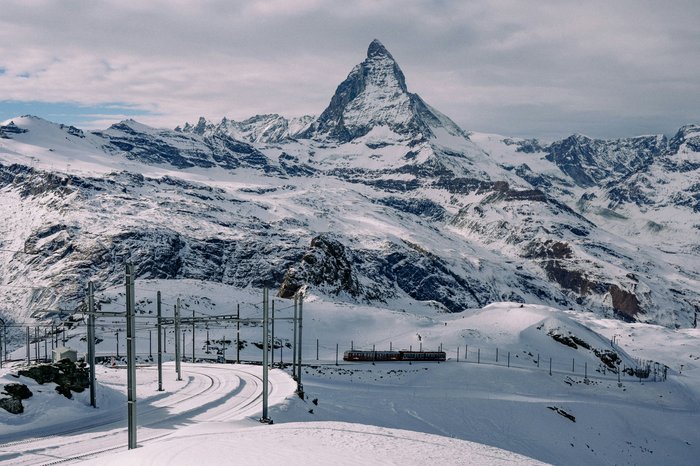
If you like Chamonix, France, also consider
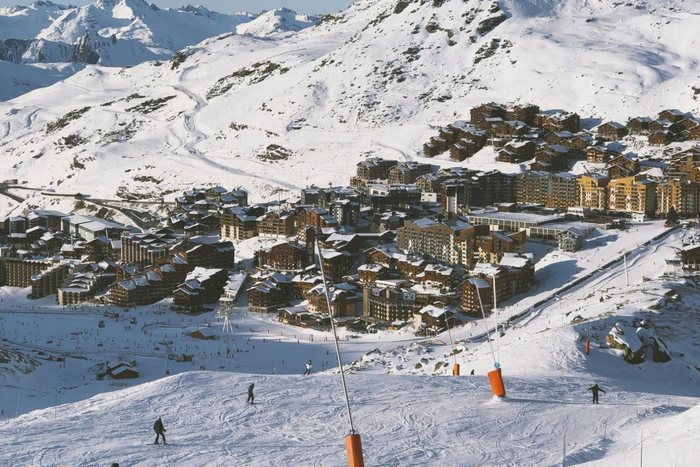
Val Thorens, France
Europe’s highest resort — snow-sure, and the gateway to the world’s largest linked ski area.
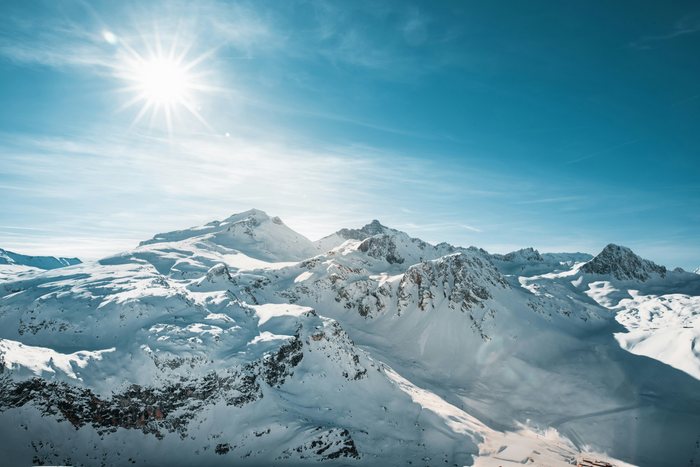
Val d’Isère, France
High-altitude, serious skiing with a village that actually feels like one.
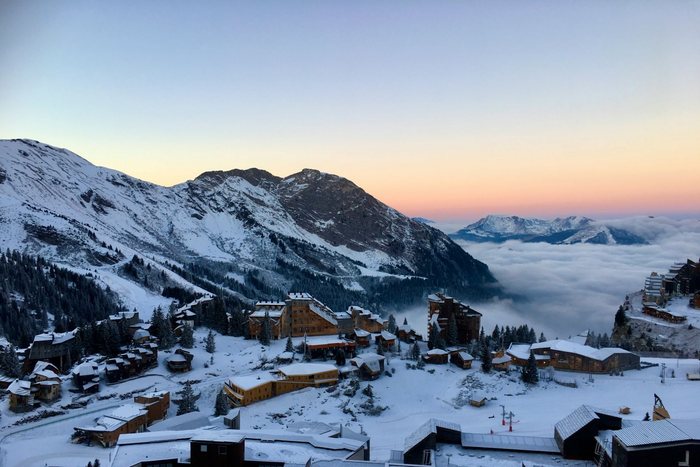
Morzine, France
A real Savoyard town and the gateway to the vast Portes du Soleil.
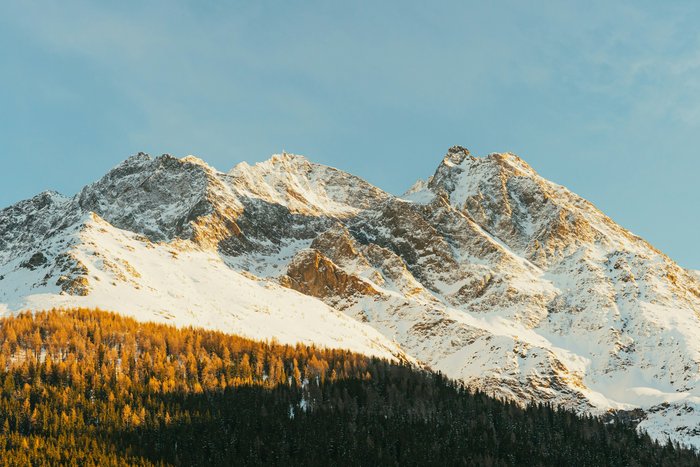
St. Anton am Arlberg, Austria
The birthplace of ski instruction and Austria’s most legendary off-piste.
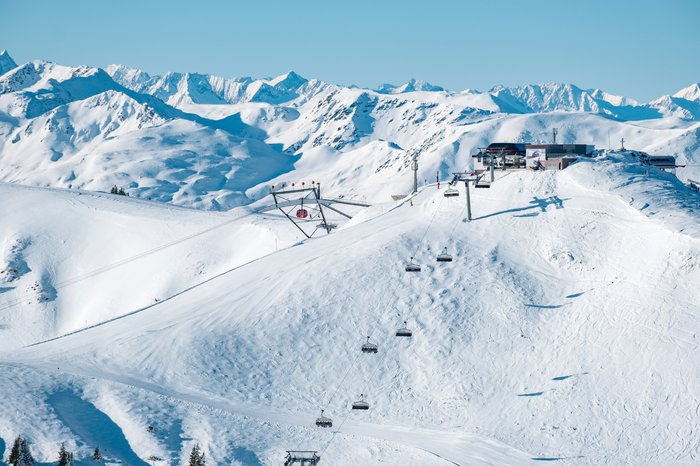
Kitzbühel, Austria
A medieval town with a World Cup downhill and 800 years of alpine charm.
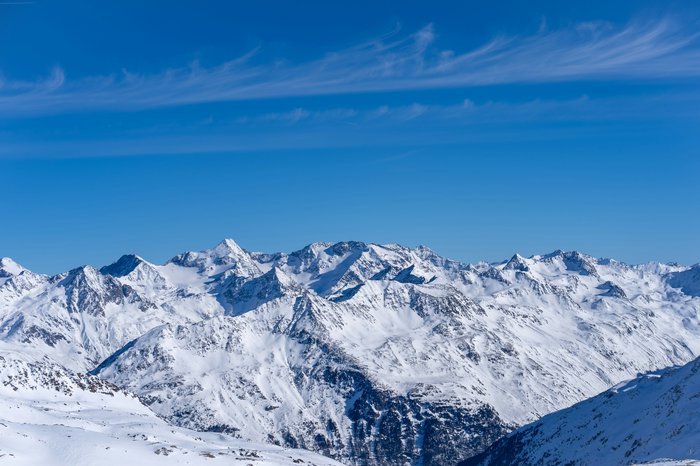
Sölden, Austria
Two glaciers, three 3,000 m peaks, a James Bond villain’s lair and the World Cup opener.