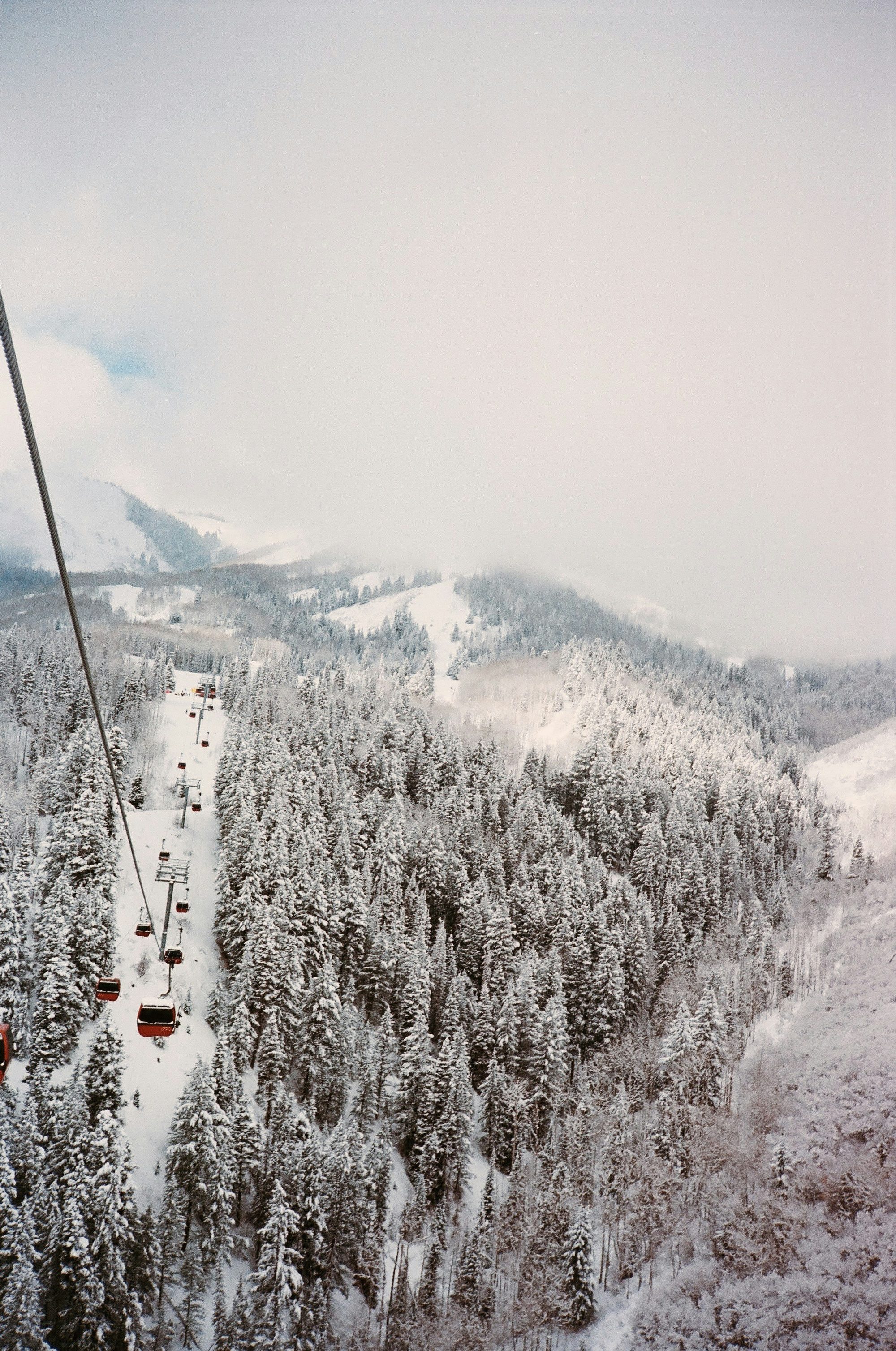
Park City, Utah
The largest ski resort in the US, 35 minutes from Salt Lake City.
Park City Mountain Resort merged with the former Canyons in 2015 to create the biggest ski resort in the United States — over 7,300 acres, 341 trails and 41 lifts, all on one Epic Pass. Add a historic silver-mining Main Street, the Sundance Film Festival and Utah’s famously dry powder, and you have a resort that works for everyone from first-timers to experts.
The scale is the headline: 14 bowls, terrain from gentle groomers off the Town Lift to the steep chutes of Jupiter and McConkey’s, and enough variety that a week barely covers it. The Quicksilver Gondola links the Park City and Canyons sides. Deer Valley, a separate resort just down the road, adds another 2,000+ acres on the Ikon Pass for those who want groomed perfection.
The honest part: the 2015 merger stitched two resorts together, and the seam still shows — some traverses are flat, and the Canyons side can feel distant from the town base. Main Street’s character is real but the surrounding development is suburban sprawl. And "35 minutes from Salt Lake City" is a dry-road number; in a storm or on a Saturday, double it.
Highlights
-
Historic Main Street
A walkable, historic mining-town high street — restaurants, bars, galleries and the Town Lift at the bottom.
-
Jupiter & McConkey’s
The expert terrain on the Park City side — steep bowls, chutes and hike-to lines.
-
Utah powder
The Wasatch Range catches dry, light "Greatest Snow on Earth" — ~360 inches a year.
-
Sundance Film Festival
Late January each year — the town becomes a film-industry circus for 10 days.
Practical info
- Visa
- ESTA or B-1/B-2 visa for most Western nationalities.
- Currency
- USD ($)
- Language
- English.
- Safety
- Safe; altitude (base 2,103 m) is lower than Colorado resorts.
- Getting around
- Salt Lake City airport (SLC) 35–40 min; free PC-SLC Connect bus and free Park City transit.
- Tap water
- Tap water safe.
- Plug type
- Type A Type B 120V
- Money
- Cards everywhere; tips expected (15–20%).
General guidance — visas, safety, and health change, so check your government's travel advisory and the official sources before you go.
Common questions
- Is Park City good for beginners?
- Yes — the resort has wide, well-groomed terrain at the base area and across the former Canyons side, with long blue cruisers and a dedicated learning zone. Deer Valley next door is even gentler. See who it suits.
- How big is Park City Mountain?
- The largest ski resort in the United States: 7,300+ acres after the 2015 merger of Park City and Canyons, with 341 trails, 41 lifts and 14 bowls. The sheer acreage means you can ski a full week and barely repeat a run. See the ski area.
- Which pass covers Park City — Epic or Ikon?
- Park City Mountain is on the Epic Pass system (Vail Resorts). Deer Valley, the separate resort next door, moved to the Ikon Pass. If you want both resorts, you need both passes or a window ticket for the second. See lift passes.
- How far is Park City from Salt Lake City airport?
- About 35–40 minutes by car — the shortest transfer from a major international airport to a major ski resort in the US. A free PC-SLC Connect bus runs the route too. See getting there.
- Can you ski Park City without a car?
- Yes. The free Park City Transit bus system links the town, the resort base areas and the neighbourhoods, and the PC-SLC Connect serves the airport corridor. Main Street, the resort village and most lodging are on the bus routes. See getting there.
- What do non-skiers do in Park City?
- Park City is a year-round town, not a ski-only station. Non-skiers have the Utah Olympic Park (bobsled rides, zip line), Historic Main Street shopping and galleries, the Montage spa, snowshoeing, tubing, and — in late January — the Sundance Film Festival. See non-skiers & off-slope.
- Can you bring a dog to Park City?
- To the town, yes — Park City is dog-friendly with pet-friendly lodging and off-leash areas. Onto the ski slopes, no — dogs are not allowed on PCMR or Deer Valley pistes or lifts. See dogs.
The ski area
The largest ski resort in the US — a former mining town turned mega-resort
Park City Mountain merged with the neighbouring Canyons in 2015, creating a single lift-linked resort of 7,300+ acres — the biggest in the United States by a wide margin.

The merger of the old Park City base area with the former Canyons side, linked by the Quicksilver gondola, created a single resort you can ski on one pass. The Park City side has the town, the historic Main Street base and the steep Jupiter Peak terrain; the Canyons side adds wide intermediate cruising, the Iron Mountain chutes and the back-bowl glades. Together they offer genuine variety — a week here doesn’t feel repetitive.
Adjacent but separate, Deer Valley operates its own lift pass and limits daily tickets to preserve a groomed, uncrowded experience. It still bans snowboards (one of only two US resorts to do so). It is now on the Ikon Pass, not Epic, so access requires a separate purchase or multi-pass.
| Zone | Elevation | Best for | Notes |
|---|---|---|---|
| Park City base / Town Lift | 2,103 → 2,926 m | All levels, town access | Walk from Main Street to the Town Lift; groomers, trees, and PayDay steeps above |
| Canyons Village | 2,073 → 2,926 m | Intermediates, families | The wider, quieter side; long blue cruisers and the Cabriolet gondola from the village |
| Jupiter Peak / McConkey’s | ~3,056 m summit | Advanced & experts | The top of the resort — hike-to chutes, steep bowls, and the Jupiter Access chair |
| Iron Mountain / Murdock Peak | ~2,800 m | Experts | North-facing chutes and glades on the Canyons side; snow holds well |
| Deer Valley (separate) | 2,003 → 2,917 m | Intermediates, luxury seekers | Ikon Pass; groomed-only, no snowboards; 2,026 acres, 103 runs, daily ticket caps |
Park City Mountain: 341 trails (roughly 8% beginner, 42% intermediate, 50% advanced/expert), 41 lifts. Deer Valley: 103 runs, 21 lifts, and a daily capacity limit that keeps it quiet. The two resorts are not lift-linked.
The Quicksilver gondola linking Park City and Canyons is the only connection — if it closes for wind, the two sides are functionally separate for the day. Check conditions before committing to one side.
Who it suits
Who Park City is — and isn’t — for
The scale means there is terrain for everyone, but you need to pick the right zone of the resort — the wrong pick puts a beginner on Jupiter Peak or an expert on gentle groomers all day.
Park City’s 7,300 acres cover the full ability range, but the zones are large enough that a bad base choice wastes time. Match the zone to the skier:
- First-timers & familiesSkipJupiter Peak and the Canyons side back bowlsGoPark City base learning area and the wide blues off the Town Lift and Silverlode, or Deer Valley for groomed perfection
- Cruising intermediatesSkipthe hike-to expert terrain at the summitGoThe long blue runs on the Canyons side (Kokopelli, Sidewinder), the groomers off Red Pine and Sun Peak, or a day at Deer Valley
- Advanced & expertsSkipthe gentle base-area groomersGoJupiter Peak chutes, McConkey’s Bowl, Iron Mountain, and the north-facing glades — the terrain that justifies the resort’s size
- SnowboardersSkipDeer Valley (snowboards banned)GoPark City Mountain — full access to all 7,300 acres, parks and pipes included
If what you want is the groomed, no-crowds, silver-service experience and you don’t snowboard, Deer Valley next door is a better fit than the sprawling Park City resort. If you want scale, variety and a real town at the base, Park City is it.
Snow & season
“The Greatest Snow on Earth” — Utah’s famous dry powder
Utah’s licence plates don’t lie. The Wasatch Range wrings moisture out of Pacific storms and delivers it as light, dry powder — roughly 360 inches (9.1 m) a year at Park City.
Months on the axis. Crimson bars mark the best snow window and the crowd peaks. Presidents’ Day (third Monday of February) is the single busiest week — book months ahead or avoid it.
The Wasatch Range sits in a sweet spot: far enough from the Pacific to lose the heavy moisture but close enough to catch storm after storm. The result is snow with a water content of roughly 7–8%, lighter and drier than the 12%+ of the Sierra Nevada. That’s the “Greatest Snow on Earth” claim — and while marketing slogans are marketing slogans, the powder quality is genuinely a cut above most North American resorts.
Park City’s north-facing terrain (Jupiter Peak, Iron Mountain) holds cold snow longest, while the lower south-facing groomers soften earlier in spring. The best value weeks are early-to-mid January (post-holiday, pre-Sundance) and early March (spring weather, winter snow, dropping prices).
Lift passes
Epic Pass territory — and the Deer Valley question
Park City Mountain is a Vail Resorts property on the Epic Pass. The economics of the pass versus day tickets are stark — plan ahead.
The Epic Pass (season pass, unrestricted) gives unlimited access to Park City and every Vail resort worldwide. The Epic Local Pass is cheaper but has holiday blackout dates. Epic Day Passes let you pre-purchase 1–7 days at a discount to the walk-up window rate, and they lock in a price months before the season. The window rate for a walk-up day ticket is eye-watering — $200+ — and is the last resort for the unprepared.
| Pass | Covers | Approx. cost | Notes |
|---|---|---|---|
| Epic Pass (full season) | Park City + all Vail resorts, unrestricted | Best value for 5+ days across Epic resorts; no blackouts | |
| Epic Local Pass | Park City + select Vail resorts, blackout holidays | Blocked Christmas, Presidents’ Day, MLK — good for locals and flexible travellers | |
| Epic Day Pass (1 day) | Park City, pre-purchased | Price varies by date and how far ahead you buy; well below window rate | |
| Window day ticket | Park City, walk-up | The penalty for not planning; holiday weekends at the high end | |
| Deer Valley day ticket | Deer Valley only (Ikon Pass) | Separate resort, separate pass system; daily capacity cap |
Figures read autumn 2026 for the 2026/27 season. Epic Pass prices are set annually in spring and the best rates are for early purchase; day-pass prices use dynamic pricing and climb as the date approaches. Deer Valley is on the Ikon Pass — no cross-access with Epic. Child (5–12) and senior (65+) rates are roughly 20–30% less; under-5s ski free at PCMR.
The single biggest money lever: buy an Epic Day Pass months in advance rather than a window ticket on the day. The saving can be $100+ per day. If you’re skiing 5+ days at any Vail resort this season, the full Epic Pass pays for itself.
Lessons & guides
A big resort ski school — plus independents for a personal touch
Park City Mountain’s ski and snowboard school is one of the largest in the US. For smaller groups and more personal instruction, independents fill the gap.
The PCMR Ski & Ride School covers all levels from never-evers to expert clinics, and first-timer packages bundle a lesson, rental and a beginner-zone lift ticket — the cheapest way to try skiing here. Group sizes run 4–8 per instructor, which is reasonable for the US but large by European private-lesson standards.
For more personal instruction: Deer Valley’s ski school is widely considered the best in the US (small groups, immaculate grooming), and local independents like Park City Powder Cats offer backcountry guiding and cat skiing in the Wasatch for advanced skiers who want terrain beyond the resort boundary.
First-timer packages (lesson + rental + beginner lift) are the best-value entry point at PCMR and sell out in peak weeks — book online at least two weeks ahead for Christmas and Presidents’ Day.
Families & kids
Childcare, kids’ lessons, and the logistics parents need
Park City has licensed childcare for non-skiing toddlers, a large kids’ ski school, and a town that keeps families entertained off-slope — but it is not cheap.
The PCMR Kids’ School takes children from age 3 (for skiing) and age 4 (for snowboarding) in all-day programmes that combine lessons with supervised play and lunch. For younger children who are not skiing, licensed childcare providers — Small World Child Care, Guardian Angel Babysitting — offer in-lodge and in-home care. Deer Valley’s Children’s Center takes children from 2 months in a licensed resort nursery.
| Option | Ages | What it is |
|---|---|---|
| Licensed childcare (Small World, etc.) | infants – 6 | Non-ski, in-home or lodge-based care; must book ahead in peak weeks |
| Deer Valley Children’s Center | 2 months – 6 yrs | Licensed resort nursery with indoor/outdoor play; separate Deer Valley purchase |
| PCMR kids’ ski lessons | 3+ (ski) · 4+ (board) | Full-day group programmes with lunch; progression tracked across the week |
| PCMR teen/youth programmes | 7 – 14 | All-mountain guided groups sorted by ability; builds independence on the hill |
Under-5s ski free at PCMR (child 5–12 pays a reduced rate). Deer Valley’s nursery is one of the few in the US that takes infants — but it fills fast, and the fee is on top of any Deer Valley lift access. Book all childcare 2–4 weeks ahead for holiday periods.
The logistical catch: PCMR is enormous, and a child in lessons at the Park City base while a parent skis the Canyons side means a mid-mountain commute. Agree a pickup point the night before.
Getting there
35 minutes from Salt Lake City — the shortest airport-to-slopes transfer in the US
No other major US ski resort sits this close to a major international airport. That proximity is Park City’s transport trump card.
Salt Lake City International Airport (SLC) — rebuilt in 2020, a Delta hub with nonstops from most US cities and a growing list of international routes — is about 32 miles / 51 km east via I-80 and SR-224. In normal traffic the drive is 35–40 minutes; on a Friday afternoon or after a big storm it can stretch to 60–90 minutes on the canyon road.
Once in Park City, the free Park City Transit bus system connects the town, Main Street, the PCMR base areas, Canyons Village and the residential neighbourhoods. The PC-SLC Connect bus runs between SLC and Park City for a few dollars, making a fully car-free trip viable. Rental cars are readily available at SLC but add parking costs in town.
| From | To Park City | Notes |
|---|---|---|
| SLC airport (car / rideshare) | ~35–40 min | I-80 east to SR-224; longer on peak Fridays |
| SLC airport (PC-SLC Connect bus) | ~50–60 min | A few dollars each way; runs multiple times daily in season |
| SLC airport (shared shuttle) | ~45–60 min | Mountain Express, Canyon Transport; ~$45–65 pp one-way |
| Denver (drive) | ~7 hours | I-80 west; some visitors combine with Colorado resorts on a road trip |
If you are coming from overseas, SLC has direct flights from a growing number of European and Asian gateways (Amsterdam, Paris CDG, London on Delta seasonal). A Customs & Immigration pre-clearance at Calgary or Dublin reduces US arrival time for Canadian and Irish routes.
Where to stay
A real town with a real Main Street — not a purpose-built village
Park City is a former silver-mining town, not a resort invented by a developer. That gives it a walkable downtown with character — and a wider price spread than most ski destinations.
Historic Main Street is the heart: a walkable stretch of restaurants, bars, galleries and shops in converted 19th-century buildings, with the Town Lift right at the top. Staying on or near Main Street means ski access, nightlife and dining on foot. Canyons Village on the other side of the resort is quieter, more condo-oriented and closer to the wide intermediate terrain. Deer Valley lodges are the luxury end — hotel-and-spa properties like the Montage and St. Regis, at a premium.
The price range is wide: budget travellers can find condos and vacation rentals away from the centre; mid-range runs through the Main Street hotels and slopeside condos; and the high end caps out at $1,000+ a night in peak season at the Montage or Stein Eriksen Lodge.
The honest trade-off: Main Street is the pick for atmosphere and convenience, but parking is tight and expensive. Canyons Village is ski-in/ski-out and quieter, but dead after dark. Shuttle-distance lodging on the bus route is the value play — the free bus is reliable.
Après & dining
A real town’s food scene, not a resort cafeteria
Because Park City is a genuine year-round town — and the host of the Sundance Film Festival — its restaurant scene punches well above the ski-resort norm.
On Main Street: No Name Saloon is the après institution (buffalo burgers, live music, a roof deck); High West Distillery is the world’s only ski-in distillery and gastro-pub; Handle and Riverhorse on Main are the fine-dining anchors. Up the mountain, the Mid-Mountain Lodge is a log-cabin lunch landmark.
Dining runs from $15 pub grub to $80+ tasting menus. The town supports sushi, Thai, Mexican, Italian, steakhouses and farm-to-table alongside the expected mountain-lodge fare — a depth of choice that purpose-built resorts can’t match. On the mountain, expect $18–25 for a cafeteria meal and $30–50 for a table-service lunch.
Utah’s liquor laws are looser than their reputation: restaurants and bars serve full-strength spirits, wine and beer without a “membership.” The main quirk is that grocery and convenience stores sell only beer up to 5% ABV — anything stronger comes from a state liquor store. Happy-hour drink specials are technically prohibited, but food specials are not.
Non-skiers
An Olympic town with more off-slope draws than most ski resorts dream of
Park City hosted the 2002 Winter Olympics, runs the Sundance Film Festival every January, and has a walkable downtown that keeps non-skiers genuinely busy.
2002 Winter Olympics, hosted right here
Beyond the Olympic Park: the Sundance Film Festival takes over Main Street for ten days each January (a scheduling headache for skiers but a draw for everyone else); the Montage and St. Regis spas are full-day retreats; snowshoeing and cross-country skiing on the extensive Round Valley trail network are free; and the Factory Outlet Stores on the edge of town draw bargain-hunters from Salt Lake City.
A pedestrian sightseeing ride on the Town Lift gives non-skiers a mountain view without skis, and the free bus makes the whole town accessible.
During Sundance (late January): lodging prices spike, Main Street is heaving, and restaurant reservations become essential. If you are coming to ski, either embrace the festival or avoid the last week of January entirely.
Dogs
Dog-friendly town, dog-free slopes
Park City is one of the more dog-friendly ski towns in the US — but the ski resort itself is off-limits to dogs.
Dogs are not allowed on PCMR or Deer Valley pistes or lifts — no exceptions, even leashed. In town, though, Park City is welcoming: many hotels and vacation rentals accept dogs (often with a pet fee), the Run-a-Muk off-leash dog park is a popular gathering spot, and dogs are welcome on the town’s walking trails (leashed). Several Main Street restaurants have heated patios that accept well-behaved dogs.
International visitors bringing a dog to the US: the CDC requires a valid rabies vaccination certificate and the dog must appear healthy at the port of entry. Dogs from high-risk rabies countries face additional requirements (CDC Dog Import Permit, titer test). Check the current CDC rules — they tightened in 2024.
Accessibility
Adaptive skiing and a resort that has invested in access
The National Ability Center, based in Park City, makes this one of the strongest adaptive-skiing destinations in the US.
The National Ability Center (NAC) operates out of PCMR and Deer Valley, offering sit-ski, mono-ski, bi-ski, outrigger and guided lessons for skiers with physical, cognitive, visual and developmental disabilities. It is a nationally recognised adaptive programme — one of the largest in the country — and serves both adults and children. Lessons are booked directly through the NAC and availability in peak weeks is limited.
The resort’s base areas and Canyons Village are largely wheelchair-accessible, the free bus system has wheelchair lifts, and the Town Lift and gondola cabins accommodate sit-skiers. Main Street is paved and mostly flat but narrow, with kerb ramps of varying quality on the historic blocks.
Book NAC adaptive lessons at least 3–4 weeks ahead for holiday periods — they are popular, and volunteer-instructor ratios are high but limited.
Safety & insurance
Altitude, avalanche risk, and the insurance gap for international visitors
Park City’s summit tops 3,000 m / 10,000 ft, and the Wasatch backcountry beyond the resort boundary is serious avalanche terrain. International visitors face a US-specific insurance gap.
On-piste, Park City is well-patrolled and the grooming is excellent, but the resort’s sheer size means a wrong turn can put you in steep, expert-only terrain. Jupiter Peak and McConkey’s Bowl require a short hike and should be treated as advanced terrain. Altitude is real at 10,000 ft: hydrate, take the first day easy, and watch for signs of altitude sickness.
The bigger risk is the backcountry: the Wasatch Range immediately outside the resort boundary is prime avalanche terrain, and the US has no equivalent of Europe’s Carré Neige or piste-patrol-included rescue. Search and rescue in Utah is run by the county sheriff, and while Summit County does not currently bill for SAR, medical evacuation by helicopter runs $20,000–$50,000+ without insurance. For international visitors: the US has no public healthcare — a broken leg on the slope can cost $30,000+ in hospital bills without travel insurance.
Travel insurance with winter-sports cover and US medical cover is essential, not optional. Check that your policy covers skiing (some exclude it by default), and if you plan to ski off-piste or in the backcountry, confirm that guided and unguided off-piste are included. A $50 annual membership in the Utah Avalanche Center supports the forecasts you should be reading every morning before going out of bounds.
What it costs
What a day in Park City actually costs
Park City is expensive by US standards — cheaper than Aspen or Vail village, but not a budget destination. The pass you choose swings the daily number by $100+.
Day-rate breakdown, so you can build your own number. Everything is per person per day unless noted.
| What | Typical day-rate | Notes |
|---|---|---|
| Lift pass — Epic Day Pass (pre-purchased) | ~$100–$170 | Price depends on date and advance purchase; the smart play |
| Lift pass — window day ticket | $200–$260+ | Walk-up rate; the penalty for not planning ahead |
| Lift pass — Epic Pass (amortised) | ~$50–$65 | If you ski 15+ days across Epic resorts; the season-pass math |
| Ski / board hire | ~$40–$70 | From a 6-day pre-booked rental (Jans, Christy Sports, Park City Sport); cheaper booked online ahead |
| Group lesson (adult, half-day) | ~$210 | PCMR Ski & Ride School; first-timer packages include rental + beginner lift |
| Private lesson (full day) | $850+ | 1–5 people; rates climb in peak weeks |
| Mountain lunch | $18–25 cafeteria · $30–50 table service | Per head, on the mountain |
| Dinner out | $25–50 mid-range · $60–90 fine dining | Per head on Main Street |
| Bed for the night | $80–150 condo · $200–400 hotel · $600+ luxury | Per room; peak weeks (Christmas, Presidents’ Day) can double these |
| Lodging + sales tax | ~12.1% | Combined state (4.85%) + county (1%) + resort (1%) + municipal (5.25%) |
| SLC transfer | Free (bus) · $45–65 (shared shuttle) · $100+ (private) | One-way; the airport is ~35 min away |
| Tipping | 15–20% | Expected at restaurants, bars, and for ski instructors; $5–10 per bag for lodge bell staff |
Rates read autumn 2026 for the 2026/27 season. Epic Pass and Day Pass prices are set annually — buy early for the best rate. Peak-week lodging (Christmas, Sundance, Presidents’ Day) can double or triple the shoulder-season price.
The levers that move the number most: buy an Epic Day Pass months in advance (not a window ticket); self-cater or eat on Main Street rather than on-mountain; stay bus-distance from the slopes rather than ski-in/ski-out; and go in early January or March rather than the holiday peaks.
Compare Park City, Utah
If you like Park City, Utah, also consider
Vail, Colorado
The biggest single ski mountain in the US, with seven legendary Back Bowls.
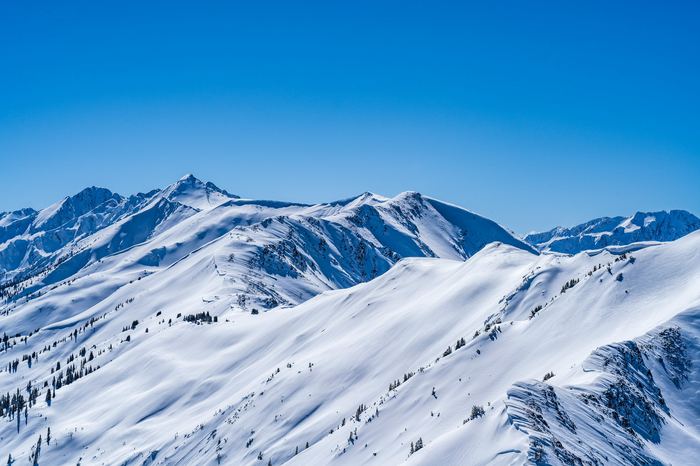
Aspen, Colorado
Four mountains, a real town and the most glamorous ski culture in America.
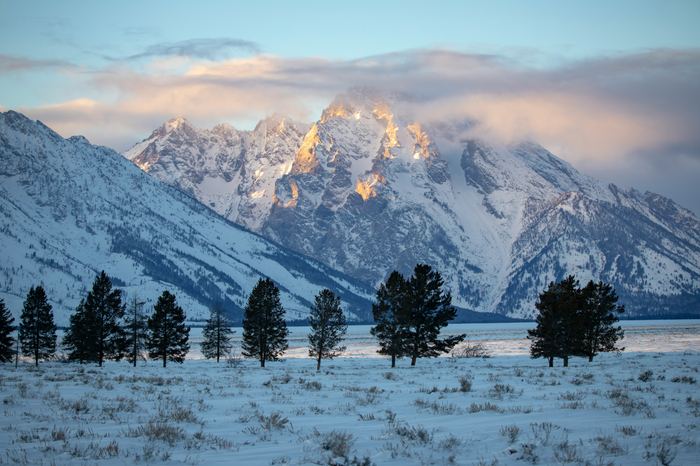
Jackson Hole, Wyoming
The steepest, most serious inbounds skiing in the US — under the Tetons.
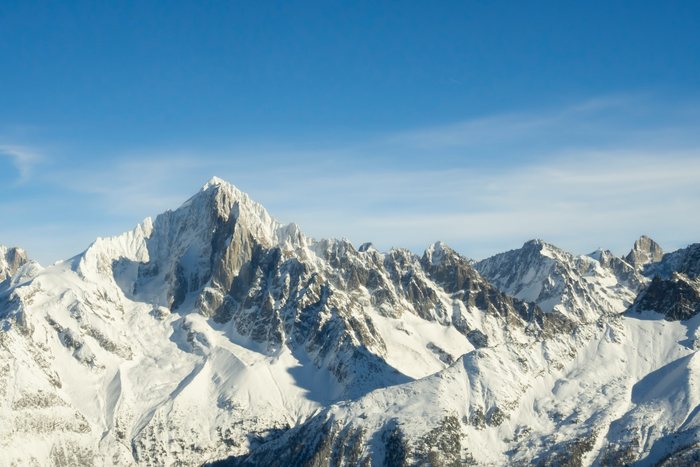
Chamonix, France
The birthplace of alpinism, under Mont Blanc.
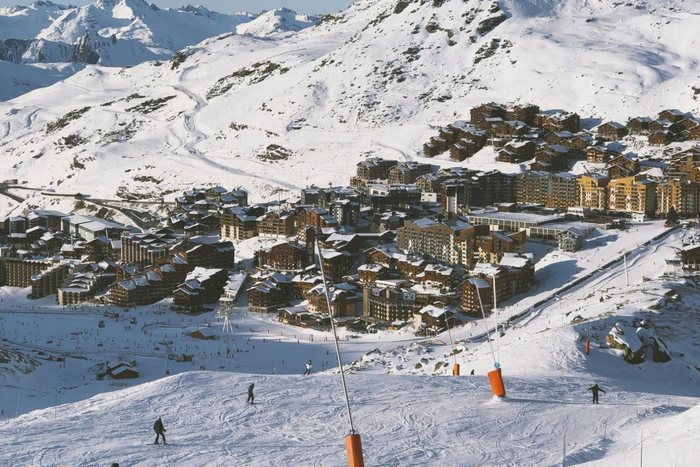
Val Thorens, France
Europe’s highest resort — snow-sure, and the gateway to the world’s largest linked ski area.
Val d’Isère, France
High-altitude, serious skiing with a village that actually feels like one.