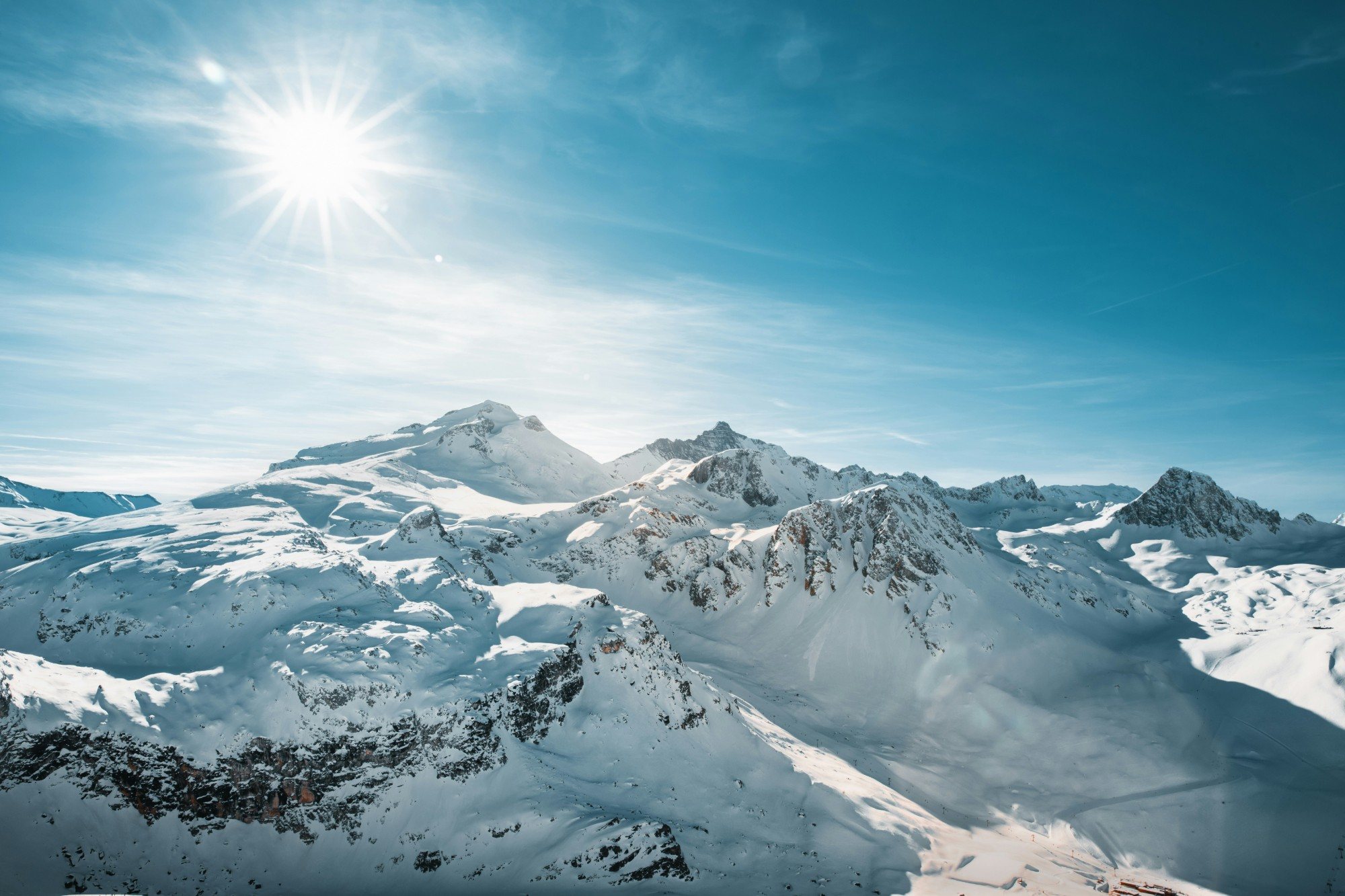
Val d’Isère, France
High-altitude, serious skiing with a village that actually feels like one.
Val d’Isère pairs a genuine old village centre with some of the most extensive high-altitude terrain in France, linked with neighbouring Tignes as the Espace Killy. It is snow-sure, long-seasoned, and serious — a World Cup fixture on the fearsome Face de Bellevarde — but it also has the après, the restaurants and the looks that purpose-built rivals lack.
The skiing climbs well above 3,000 m across to Tignes and its glacier, so the Espace Killy holds snow from late November to early May and offers enough variety to fill a fortnight — long cruisers, steep faces, and lift-served off-piste that rewards a guide. The village has a stone-and-wood heart that stays lively into the evening, which is why it draws repeat visitors who could ski anywhere.
It is not a budget trip or a beginners’ idyll: prices sit at the top end, the marquee runs are demanding, and in bad weather the high, exposed sectors shut or white out. For strong intermediates and up who want altitude plus atmosphere, though, it is hard to beat.
Highlights
-
Espace Killy
The combined Val d’Isère–Tignes area — 300 km of high, snow-sure piste on one pass.
-
Face de Bellevarde
The World Cup downhill face dropping straight to the village.
-
Pissaillas Glacier
High-altitude snow that extends the season at both ends.
-
La Daille to the village
Long top-to-bottom descents with genuine vertical.
Practical info
- Visa
- Schengen — visa-free for most Western passports (90 days).
- Currency
- EUR (€)
- Language
- French. English widely spoken in the resort.
- Safety
- Very safe; the exposed high sectors demand weather and avalanche awareness.
- Getting around
- About 3h by road from Geneva, Lyon or Chambéry airports; buses and a free resort shuttle on arrival.
- Tap water
- Tap water safe.
- Plug type
- Type C Type E 230V
- Money
- Cards everywhere.
General guidance — visas, safety, and health change, so check your government's travel advisory and the official sources before you go.
Common questions
- Is Val d’Isère good for beginners?
- Better than its reputation suggests, but not the easiest start. The free Pim Pam and Poum magic-carpet area near the Rond Point des Pistes is good for first steps, and Solaise has wide, gentle blue slopes above it — but the nursery terrain sits at altitude (1,850 m), so beginners need a lift ride before their first turns. Nervous first-timers who want doorstep green runs may find a purpose-built resort less daunting. See who it suits.
- How does Val d’Isère link to Tignes?
- They share one lift pass and one linked ski area — the Espace Killy, about 300 km of piste with 78 lifts. You ski between the two via the Tovière and Col de Fresse ridges, no bus needed. Many skiers base in Val d’Isère for the village and ski both sides all week. See the ski area.
- Which lift pass — Val d’Isère only or Espace Killy?
- The Espace Killy pass covers both Val d’Isère and Tignes (300 km) and is the default for most visitors — it opens the Tignes glaciers and doubles your terrain. A Val d’Isère-only pass (150 km) exists and costs less, but you lose the Grande Motte glacier and half the skiing. A 6-day Espace Killy pass includes a bonus 7th day free. See lift passes.
- When is the best time to ski Val d’Isère?
- The season runs from late November to early May — one of the longest in the Alps, thanks to the Pissaillas and Grande Motte glaciers above 3,000 m. January to March is the reliable core for cold snow and full terrain. The quietest value weeks are early-to-mid January; avoid mid-to-late February unless you don’t mind the French school-holiday crush. See snow & season.
- Is Val d’Isère expensive?
- Yes — it sits firmly at the premium end of the French Alps. Lift passes, lodging and dining all cost more than at a mid-market resort, and peak-week prices roughly double off-peak. The day-rate breakdown in what it costs lets you build your own number, and there is a genuine budget route through self-catering apartments and the Val d’Isère-only pass.
- Is Val d’Isère good for families?
- Yes, with planning. The Village des Enfants (founded by double Olympic silver medallist Annie Famose) takes children from 18 months and runs ski classes from age 3. Under-8s ski free, and the family deal (4+ passes, min 2 adults + 2 children) knocks €330 off the total. The catch: nursery slopes sit at altitude, so toddlers ride a lift before their first turns. See families & kids.
- Can you bring a dog to Val d’Isère?
- To the village and the walks, yes; onto the pistes, no. Dogs are banned from groomed ski runs across France — the rule is national, not resort-specific. Dog-friendly chalets and apartments are available. GB visitors need an Animal Health Certificate (the old pet passport no longer works). See dogs.
The ski area
One linked domain with Tignes — and a World Cup face on the doorstep
Val d’Isère and Tignes share a single lift pass and a single linked ski area, the Espace Killy — about 300 km of piste from 1,550 m to 3,456 m, all on one circuit with no bus transfers between them.

Unlike Chamonix, where the areas are separate, here everything connects. From the village you can ski over the Tovière ridge into Tignes, across to the Grande Motte glacier, back to Solaise and the Fornet cable car, and down the Face de Bellevarde to the village — all on one pass, all by piste. The linked scale is the point: a week rarely repeats itself, and the glaciers above 3,000 m underpin a season that runs late November to early May.
The terrain is more balanced than the resort’s World Cup reputation suggests. The Face de Bellevarde is fearsome, but Solaise is wide and sunny, Le Fornet is quiet and varied, and the Tignes side adds gentle glacier blues alongside demanding off-piste. Val d’Isère’s distinction is that it wraps all this around a genuine stone-and-wood village, not a purpose-built block — which is why it draws repeat visitors who could ski anywhere.
| Sector | Altitude range | Best for | Notes |
|---|---|---|---|
| Bellevarde | 1,850 → 2,807 m | Advanced, experts | The Face: 1992 Olympic downhill, 71% max gradient. Gondola from La Daille or village |
| Solaise | 1,850 → 2,551 m | Intermediates, families | Wide, sunny slopes; new gondola (2016); the gentle heart of the resort |
| Le Fornet | 1,930 → 2,900 m | Intermediates, quiet skiing | Traditional hamlet; cable car to the Pissaillas glacier sector |
| Pissaillas Glacier | 2,725 → 3,197 m | All levels (limited runs) | The high-altitude snow bank; summer skiing to mid-July some years |
| Grande Motte (Tignes) | 2,100 → 3,456 m | All levels | Cable car to 3,456 m; the glacier that guarantees the season length |
| La Daille | 1,800 m | Budget base, Bellevarde access | Purpose-built hamlet at the western entry; gondola straight onto Bellevarde |
The Espace Killy domain totals about 300 km across 154 marked runs. “Espace Killy” is the historic name (after Jean-Claude Killy, who grew up here); the official branding now reads “Tignes–Val d’Isère” but both names are used.
The link to Tignes is genuine — you ski over, not bus over. But the two villages have very different characters: Val d’Isère has the atmosphere and the restaurants; Tignes is higher, more functional and even more snow-sure. Many visitors base in one and ski both.
Who it suits
Who Val d’Isère is — and isn’t — for
The World Cup pedigree gives it an experts-only reputation, but the reality is a balanced area with terrain for every level — provided you know where to go.
The Face de Bellevarde is Olympic-grade, but Solaise is gentle and wide, and Tignes adds glacier blues a nervous intermediate can cruise all day. The key is matching ability to sector:
- First-timers & nervous beginnersSkipBellevarde and the Fornet steepsGoThe free Pim Pam / Poum magic-carpet zone near the Rond Point, then the wide blues on Solaise
- Intermediates wanting mileageSkipstaying on one side of the passGoThe full Espace Killy circuit — Solaise, Fornet, over to Tignes and back; 300 km without repeating a run all week
- Advanced & expert skiersSkipthe gentler Solaise sectors (unless warming up)GoFace de Bellevarde, the blacks off Tovière, and the serious off-piste with a guide — some of the most demanding lift-accessed terrain in Europe
- Families with young childrenSkipassuming the nursery slopes are at village level — they are at 1,850 mGoSolaise (gentle, sunny, the ValKids play area) and the Village des Enfants for childcare + lessons from 18 months
Val d’Isère hosted the 1992 Winter Olympics, the 2009 Alpine World Championships, and will host the technical events (slalom, giant slalom) at the 2030 Games — the pedigree is real. But the resort the rest of the week is less intimidating than the headline runs suggest, and a strong intermediate has as good a week here as an expert.
Snow & season
Late November to early May — glacier-underwritten
Two glaciers above 3,000 m and a village at 1,850 m make Val d’Isère one of the most snow-sure and longest-season resorts in France.
Months on the axis (12 = December). Crimson bars are the glacier-anchored extremes and the crowd peaks. The French February holiday is staggered across three school zones — the worst overlap is late February into early March.
The Pissaillas glacier on the Val d’Isère side and the Grande Motte on the Tignes side both sit above 3,000 m, so the Espace Killy opens reliably from late November and runs into early May — and the Grande Motte sometimes opens for weekends as early as October. In warm spells the lower Bellevarde runs can soften, but the high terrain and the 900+ snow cannons keep the core domain solid.
The season peaks are Christmas/New Year and the staggered French February holidays (zones A, B and C overlap around late February). Early-to-mid January is the sweet spot: cold snow, full terrain, no crowds. Late March and April offer long days, spring snow and quieter slopes — the glacier backing means the coverage holds.
Lift passes
Val d’Isère only or the full Espace Killy — and the 7th day free
The default is the combined Espace Killy pass, which links Val d’Isère and Tignes on one ticket. A Val d’Isère-only pass exists for those who want to save and are happy with half the domain.
Two pass tiers, each with a high-season and shoulder-season price. The Espace Killy pass covers both resorts (300 km); the Val d’Isère-only pass covers 150 km. A 6-day pass of either type includes a 7th day free — so a 6-day purchase is effectively a week. Pricing is tiered by period, not dynamic.
| Pass | Covers | 6-day adult (high) | Per day |
|---|---|---|---|
| Espace Killy (high season) | Val d’Isère + Tignes, 300 km | €468 | |
| Espace Killy (shoulder) | Same domain, early/late weeks | €402 | |
| Val d’Isère only (high) | Val d’Isère 150 km | ~€420 | |
| Val d’Isère only (1-day high) | Val d’Isère 150 km, single day | €70 |
Adult 19–64; reduced rate for children 8–18 and seniors 65–74 (roughly 19% off adult); under-8s and over-75s ski free (proof of age at the ticket office). Family deal: 4+ passes (min 2 adults + 2 children 8–18), 6+ days — €330 off the total order. Figures are 2026/27 season (valdisere.com). High season 12 Dec – 23 Apr; shoulder is the weeks either side.
The 6-day = 7-day bonus is easy to miss and genuinely useful — it means you can arrive Sunday, start skiing Monday and ski through Sunday without buying an extra day. Buy online in advance; the shoulder-season saving is significant if your dates are flexible.
Lessons & guides
250 ESF instructors, strong English-speaking independents, and serious off-piste guiding
Val d’Isère has one of the largest ESF schools in France and a strong bench of British-run independents — plus the off-piste guiding to match its terrain.
The ESF (École du Ski Français) is the traditional big school — 250 instructors, lessons in seven languages, and the longest track record. The English-first independents — New Generation (British-run, small groups), Oxygène (private from €89/hr, adaptive skiing), Evolution 2 (private from €96/hr), and BASS (the British Alpine Ski & Snowboard School, here since 1991) — guarantee native English-speaking instruction and typically cap group size at 6–8 rather than the ESF’s 12.
For off-piste, the terrain here is serious — some of the most demanding in Europe — and Val d’Isère’s guiding outfits (through ESF, Oxygène, New Generation and local mountain guides) run everything from introductory off-piste sessions to multi-day touring. A guide is essential once you leave the marked runs: the Espace Killy’s off-piste is avalanche-prone and the gullies are no place to explore alone.
New Generation is the pick if guaranteed English and smaller groups matter most; Oxygène is strong on adaptive skiing and families. ESF has the scale and the pipeline from Piou-Piou kindergarten through to racing — if your child will spend the week in lessons, ESF’s all-day option with a lunch-club add-on is the most convenient.
Families & kids
The Village des Enfants, free passes for under-8s, and the nursery-slopes catch
Val d’Isère has better family infrastructure than its expert reputation suggests — but there is one thing to plan around: the nursery slopes are at altitude, not at street level.
The centrepiece is the Village des Enfants, founded by Annie Famose (double Olympic silver medallist, 1968) and Isabelle Mir. It is a dedicated children’s centre — not an afterthought bolted on — taking kids from 18 months in the crèche up to age 13 in structured ski lessons, with state-certified childcare staff. The crèche accepts children in nappies; ski school starts from age 3.
| Option | Ages | What it is |
|---|---|---|
| Village des Enfants crèche | 18 months – 3 years | Non-ski nursery care with outdoor snow play — nappies accepted; ~€55–70 per day |
| Village des Enfants ski | 3 – 13 | Structured ski lessons + indoor activities; the main family option |
| ESF Piou-Piou / kindergarten | 3 – 4 | First taste of skiing; snow garden with magic carpet |
| ESF / independent group lessons | 3+ | Group or private; English-speaking at New Generation, Oxygène, BASS |
| Free beginner zone | all ages | Pim Pam and Poum magic carpets near the Rond Point — no pass needed |
Under-8s ski free (proof of age at the ticket office). Family deal: 4+ passes (min 2 adults + 2 children 8–18), 6+ days — €330 off the total. Best family area: Solaise (wide, gentle, the ValKids play area) and the Rond Point nursery zone.
The catch to plan around: Val d’Isère’s beginner terrain sits at 1,850 m, not at a gentle base-village level — a child’s first turns involve riding a gondola or chair first. This is fine for confident families but can be off-putting for very young or nervous beginners. If doorstep green runs matter, a lower purpose-built resort is easier.
Getting there
Further than Chamonix — but once you arrive, you stay put
Val d’Isère is deeper into the Tarentaise than Chamonix or Morzine, so the transfer is longer — but the payoff is that everything is on-piste once you get there.
The closest major airport is Chambéry (about 2 hours), which handles a limited schedule of ski-charter and budget flights. Most visitors fly into Geneva or Lyon (both roughly 2h40–3h by road) for the wider choice. By train, the Eurostar ski train runs direct to Bourg-Saint-Maurice on Saturdays (Dec–Mar); from there it is 35–40 minutes by bus or taxi up the valley.
Once in resort, a free shuttle bus runs three colour-coded routes (Red, Green, Blue) from La Daille to Le Fornet, morning to late evening all season. The village centre is compact and walkable; a car is unnecessary and parking is limited. The honest trade-off versus Chamonix: you spend longer getting here, but you don’t need a bus between ski areas once you arrive — it is all linked.
| From | To Val d’Isère | Notes |
|---|---|---|
| Chambéry airport | ~2h | Limited flight schedule; the shortest transfer |
| Geneva airport | ~2h50 – 3h | Wider flights; shared transfer from ~€50 pp; peak Saturdays can reach 4h+ |
| Lyon airport | ~2h40 | Good flight choice; similar distance to Geneva |
| Bourg-Saint-Maurice (train) | ~35–40 min | Eurostar ski train on Saturdays Dec–Mar; then taxi or bus |
France’s Loi Montagne requires winter tyres (3PMSF) or chains carried, 1 Nov–31 Mar (fine €135). Peak-Saturday road times can nearly double. A private transfer from Geneva for up to 5 people runs from about €250 midweek, ~€390 on a Saturday.
Where to stay
A real village with three distinct bases — not a purpose-built block
Unlike Val Thorens or Les Arcs, Val d’Isère is built around a genuine old village with a stone-and-wood centre. The choice is atmosphere versus convenience — and all three bases have ski access.
Village centre is the pick for most visitors: the bars, restaurants, shops and the stone-and-wood high street are here, and you are close to both the Solaise gondola and the Bellevarde Express. This is where the atmosphere lives — and where prices are highest.
La Daille sits at the western end, purpose-built and more functional than pretty. It has direct gondola access to Bellevarde (and La Folie Douce at the top), budget-friendlier apartments, and is linked to the centre by the free shuttle. Le Fornet at the eastern end is the quietest, most traditional hamlet — the cable car to the Pissaillas glacier leaves from here, and the old-village feel is strongest.
Accommodation runs the full range: self-catering studios from about €65/night in low season through three- and four-star hotels to five-star properties like Airelles (ski-in/ski-out, butler service), Hôtel Le Blizzard (family-owned since 1963, outdoor heated pool) and Les Barmes de l’Ours (Michelin-star restaurant, 1,000 m² spa). Ski-in/ski-out is more achievable than in Chamonix — several village and La Daille properties offer it — but not as effortless as in a purpose-built resort.
The honest trade-off: the village is what makes Val d’Isère Val d’Isère, but it also means the centre is not flat, the streets fill with slush by afternoon, and a ground-floor apartment by the lifts costs double what a La Daille studio does. If budget matters more than ambience, La Daille is the pragmatic choice — you still ski the same mountain.
Après & dining
Four Michelin stars, La Folie Douce, and Dick’s Tea Bar since 1979
Val d’Isère’s restaurant and bar scene punches well above what a ski resort of 1,600 inhabitants ought to deliver — because the clientele demands it.
The après starts on the mountain: La Folie Douce, at the top of the La Daille gondola, runs DJs, live bands and cabaret-style performances from mid-afternoon — it is one of the flagship venues of the brand that started in Val Thorens. Below it, Cocorico on the snow front picks up the afternoon crowd with live music into the evening, and its basement transforms into Doudoune, a nightclub. Dick’s Tea Bar, open since 1979, is the village institution — a bar by evening, a dancefloor by 1am, open until 5.
On the plate, Val d’Isère has serious range. L’Atelier d’Edmond in Le Fornet holds two Michelin stars for contemporary Savoyard cuisine; La Table de l’Ours (one star, in Les Barmes de l’Ours) and Ursus (one star, forest-themed, strong cheese trolley) complete the starred set. Below Michelin level, La Baraque does tapas and cocktails, Le Garage is the family-friendly Neapolitan pizza spot, and the traditional Savoyard rooms serve the fondue-raclette-tartiflette circuit. On the mountain, La Fruitière at 2,400 m and Gigi (black-truffle pizza at 2,205 m) are the standouts.
Prices match the address: a mountain cafeteria lunch runs €20–30 per head, a sit-down mountain meal €30–50, dinner in the village €35–60 for a main and a glass — and the starred rooms go well beyond that. A glass of wine starts at about €7.50.
Non-skiers
A village that works for a non-skiing partner — not just a cold bench
Val d’Isère is a genuine village with bars, shops and atmosphere rather than a block of apartments on a slope, so a non-skiing day has substance.
25 m pool at the Centre Aquasportif
Non-skiers can ride the Solaise, Bellevarde and La Daille gondolas on a pedestrian pass to meet skiers for a mountain lunch, or walk the village for the shops, cafés and people-watching. The Centre Aquasportif at the foot of Bellevarde has a full pool and spa setup; ice driving on a dedicated circuit (cars, go-karts, motorcycles on ice) is a Val d’Isère speciality; and snowshoeing, paragliding, and the indoor sports centre (basketball, climbing wall, trampolines, gym) round it out.
The village atmosphere is the real asset: a non-skiing partner in Val d’Isère has coffee, shops, a book and a bar, whereas in many purpose-built resorts they have a corridor and a window. Torchlit descents and pedestrian evenings add to it.
A pedestrian pass gives access to the Solaise, Olympique, Fornet, La Daille and Le Vallon cable cars and gondolas — enough to walk at altitude, see the views, and join skiers for lunch without buying the full ski pass.
Dogs
Fine in the village, banned on the pistes
Dogs are welcome in the village on a lead but are not allowed on the ski runs — the rule is national, not resort-specific.
On the mountain, the rule is France-wide: dogs are not allowed on the groomed pistes, even on a lead. In the village, dogs walk freely on a lead; dog-friendly chalets and apartments are available (most at a small supplement). The village is compact enough that a dog has a genuine walk rather than circling a car park.
Val d’Isère is less dog-accommodating on the lifts than Chamonix — Chamonix’s valley trains and most lifts carry leashed dogs, whereas Val d’Isère’s closed-cabin gondolas are the main transport and dog access varies. Check with the lift company before assuming you can ride up.
GB → France paperwork: the old EU pet passport no longer works for British dogs post-Brexit. You need an Animal Health Certificate from your vet, a microchip, and a rabies vaccination given at least 21 full days before travel; the AHC is valid 10 days for entry into France. Tapeworm treatment is not required for France.
Accessibility
Adaptive skiing with specialist equipment, and a compact walkable village
Val d’Isère has real adaptive-ski provision through Oxygène’s Taxi-Ski programme and standard ESF handiski — plus a village centre that is largely flat and walkable.
Oxygène runs the main adaptive-skiing programme: Taxi-Ski, Uniski and Dualski using Tessier equipment, with one instructor per student and sessions of 2–4 hours. Equipment is included; book well ahead. Drop-off access is right on the snow front opposite the Bellevarde Express.
Disabled skiers get ~50% off the lift pass (available at ticket offices on presentation of a disability card, with a reduced rate for a named companion). The village centre is compact and largely flat; the free shuttle bus runs all day; and the Solaise gondola has been rebuilt (2016) with accessibility in mind.
Book adaptive lessons at least two weeks ahead — instructor and equipment availability is limited, and peak weeks fill fast. Oxygène’s drop-off point on the snow front is the most accessible entry to the slopes.
Safety
Serious off-piste, altitude, and the insurance gap
Val d’Isère’s off-piste is among the most demanding in Europe. The commonest mistake is skiing it on cover that doesn’t apply.
The Espace Killy’s off-piste terrain is serious avalanche country — a reminder came in February 2025 when three skiers, including two British, were killed in an avalanche at risk level 4 out of 5, even while skiing with a professional guide. Off-piste here means transceiver, probe and shovel as a bare minimum, a qualified guide as the norm, and a hard look at the avalanche bulletin before you leave the marked runs.
On insurance: a standard UK travel policy usually excludes winter sports. A GHIC covers state emergency care but not mountain rescue, helicopter evacuation or repatriation — and a helicopter runs about €72 per minute. Carré Neige (about €3.30/day, added when you buy the lift pass) covers piste rescue and lift-accessible off-piste evacuation, but it is not a substitute for full winter-sports cover. Off-piste is commonly only covered by your insurer if you ski with a qualified guide — check before you go.
Altitude is a factor: the village sits at 1,850 m and you ski to 3,456 m. Mild effects (headache, breathlessness) are possible in the first day or two, especially for those arriving from sea level. The UV at altitude is also stronger than it feels — high-factor sunscreen and goggles, not just sunglasses.
What it costs
What a day in Val d’Isère actually costs
Val d’Isère is premium, full stop — but there is a genuine budget route through the resort if you know where the money goes.
Here is the day-rate breakdown, so you can build your own number rather than trust a package headline. Everything is per person per day unless noted.
| What | Typical day-rate | Notes |
|---|---|---|
| Lift pass — Espace Killy (high) | ~€78 | From a 6-day pass (= 7 days); Val d’Isère + Tignes, 300 km |
| Lift pass — Espace Killy (shoulder) | ~€67 | Early/late-season weeks; same 300 km domain |
| Lift pass — Val d’Isère only (high) | ~€70 | Val d’Isère 150 km; saves ~€8/day vs the full Espace Killy |
| Ski / board hire | ~€16 (standard) – €25 (performance) | From a 6-day pre-booked rental; cheaper booked online |
| Group lesson (ESF, adult, half-day) | ~€72–86 | From a 5-session block; book ahead for peak weeks |
| Private lesson (Oxygène / Evo 2) | €89–96 / hour | 1–2 people; New Generation from ~€165 per session |
| Mountain lunch | €20–30 cafeteria · €30–50 sit-down | Per head, on the mountain; wine from ~€7.50/glass |
| Dinner out | €35–60 mid-range · €80+ Michelin | Per head in the village |
| Bed for the night | €65 budget apt · €115+ 3★ · €620+ 4★ peak · €800+ 5★ | Per room in high season; peak weeks far higher |
| Tourist tax | ~5% of net accommodation / night | +10% departmental surcharge; capped at ~€4.80 pp |
| Geneva transfer | ~€50 pp (shared) · €250–390 (private vehicle) | One-way; Chambéry is closer (~2h) but fewer flights |
Rates read autumn 2026 (2026/27 season where available; tiered pricing, not dynamic). They are set each season — buy passes and transfers online in advance, and re-check before you travel. Peak-week lodging (Christmas, mid-February) can roughly double the off-peak price.
The levers that move the number most: the Val d’Isère-only pass saves ~€50 over 6 days if you won’t ski Tignes; self-cater in a La Daille apartment instead of a village hotel; pre-book hire and transfer online; and go in January or late March rather than February half-term.
Compare Val d’Isère, France
If you like Val d’Isère, France, also consider
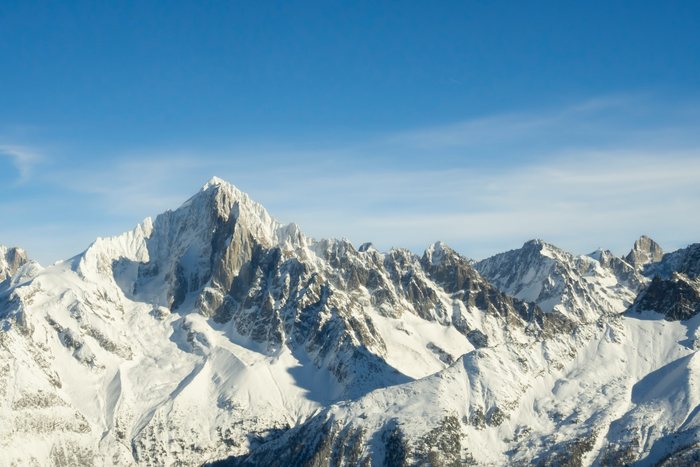
Chamonix, France
The birthplace of alpinism, under Mont Blanc.
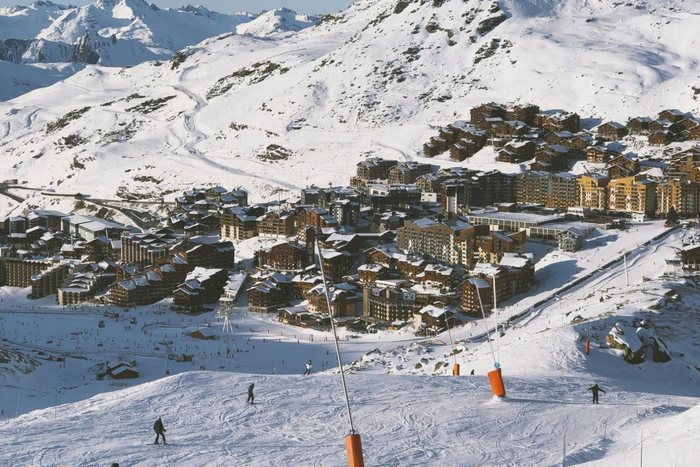
Val Thorens, France
Europe’s highest resort — snow-sure, and the gateway to the world’s largest linked ski area.
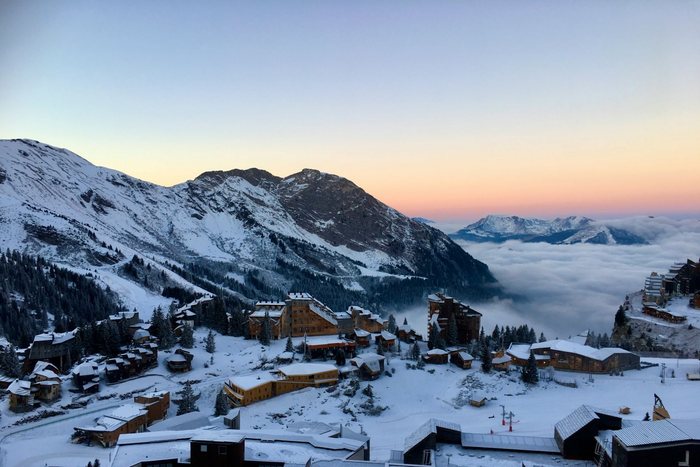
Morzine, France
A real Savoyard town and the gateway to the vast Portes du Soleil.
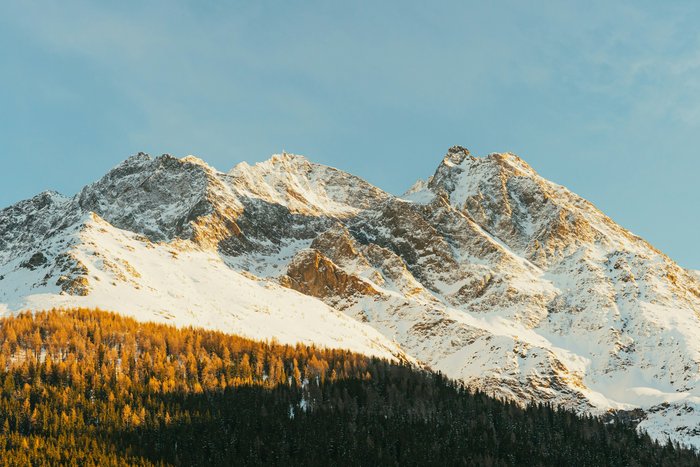
St. Anton am Arlberg, Austria
The birthplace of ski instruction and Austria’s most legendary off-piste.
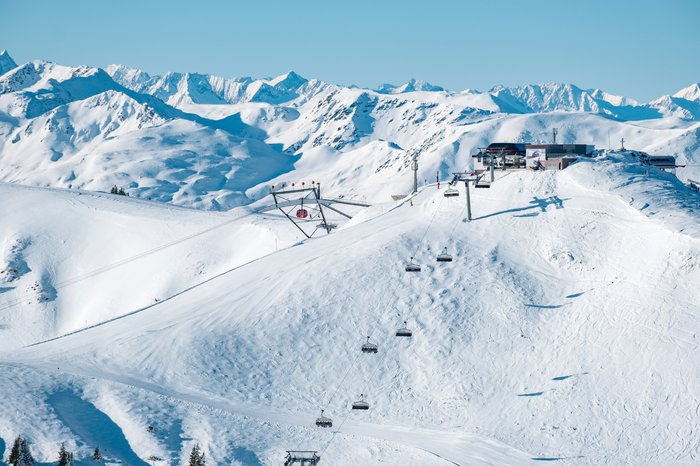
Kitzbühel, Austria
A medieval town with a World Cup downhill and 800 years of alpine charm.
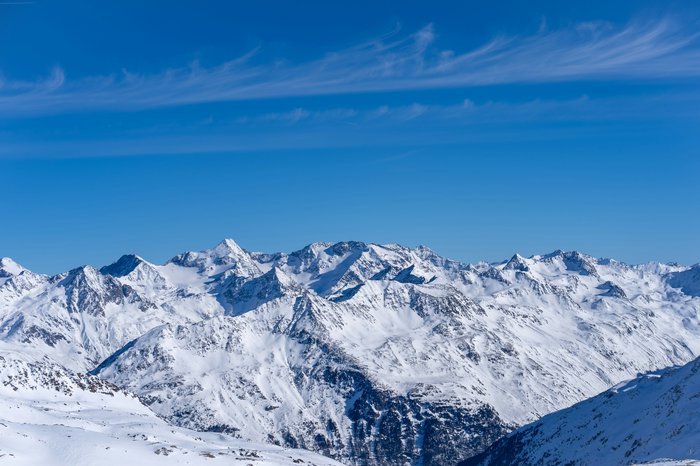
Sölden, Austria
Two glaciers, three 3,000 m peaks, a James Bond villain’s lair and the World Cup opener.