This isn’t really a like-for-like choice. Singapore is a two-to-three-day city-state — polished, spotless, expensive, effortless. Malaysia is a whole country you could spend a month in, at roughly a third of the cost. They share a border, a colonial past and a hawker table, so most people who ask this end up doing both.
The mistake is treating these as the same kind of choice. One is a long weekend; the other is a month.
~450×Malaysia’s land area against Singapore’s
Singapore is about 730 km² — a city-state you can cross by train in under an hour. Malaysia is about 330,000 km² of peninsula plus a slab of Borneo across a sea, so it is more than four hundred times the size. That single ratio drives almost everything below: how long you need, how you get around, and how much the trip costs. These two don’t substitute for each other; they answer different questions.
730 km²Singapore — the whole country, one cityCrossable end to end by MRT in under an hour
2–3 daysthe honest length of a Singapore tripIt reads best as a stopover or a bookend
A week+the minimum Malaysia really wantsThe peninsula alone; Borneo wants its own separate leg
Singapore is a two-to-three-day city-state — polished, spotless, expensive and effortless, the frictionless introduction to Southeast Asia. Malaysia is a whole country you could spend a month in: Kuala Lumpur and Penang, the Cameron Highlands and Malacca, islands on two separate coasts, and across the South China Sea the jungle, diving and orangutans of Borneo — all at roughly a third of Singapore’s everyday cost. They complement each other; they are not rivals for the same holiday.
The operational detail for each — arrival cards, the two monsoon coasts, Borneo’s separate immigration, Singapore’s vape ban, the permit-gated sights — lives on the two guides: Malaysia, know before you go and Singapore, know before you go. This page is the head-to-head: the cost gap, who each suits, and how easily you do both.
Getting in
Two countries, two free arrival cards
Entry is easy for both — around 90 days visa-free for most Westerners — with one online form each that people forget.
~90 daysvisa-free for most Western passports, both countriesPassport valid six months; the officer sets the actual stay
SG Arrival CardSingapore — free, online, within 3 days of arrivalMandatory even visa-free; carries a health declaration
MDACMalaysia — free, within 3 days before arrivalNeeded to use the airport autogate; file earlier and it’s rejected
Both are among the most frictionless arrivals in the region, and both hinge on a short online form filed in the three days before you land. Singapore’s is the SG Arrival Card (free, through the official ICA e-Service, with a health declaration), mandatory even for visa-free travellers — you can be refused entry without it. Malaysia’s is the Malaysia Digital Arrival Card (MDAC), free on the official immigration portal and required to use the airport autogate. The headline rule is the same: the card is free, and any site charging a “processing fee” to submit a government form is a scam.
The one structural difference travellers miss is inside Malaysia, not at its front door. The Borneo states of Sabah and Sarawak run their own immigration: fly there from the peninsula and you clear immigration again and get a fresh stamp, regardless of how long was left on your first entry. Singapore has nothing like it — it is one clearance and you are in the whole country.
File each card separately and in the right window. Both are due within three days before arrival; Malaysia’s MDAC is auto-rejected if you file too early, and both are needed for the autogates. If you are pairing the two countries across the land border at Johor, you need both cards for the one trip — crossing from Singapore into Malaysia is a fresh Malaysian entry.
When to go
Singapore has no seasons. Malaysia has two coasts.
Neither has a weather “high season” to chase — but Malaysia’s calendar relocates the trip, and Singapore’s doesn’t.
MAMJJASOND
Malaysia east-coast islands open (Perhentian, Tioman)Mar – Oct
Mar – Oct
NE monsoon — Malaysian east-coast islands shutNov – Feb
Nov – Feb
Malaysia west coast (Penang, Langkawi) driest & bestlate Nov – Mar
late Nov – Mar
Regional haze possible (both countries)Aug – Oct
Aug – Oct
Singapore F1 night race — hotels spikeearly Oct
early Oct
Crimson bars are the catches. Singapore is hot and humid every month (highs 31–33°C, lows 24–25°C) with no real seasons, so events and the haze drive its timing, not weather. Malaysia runs two coasts on opposite clocks — when the north-east monsoon shuts the east-coast islands (Nov–Feb, shown running past the chart into the new year), the west coast is at its driest and best.
Singapore is warm and humid all year — there is no dry season to aim for, so you pick dates around events and price instead: the early-October F1 night race and Chinese New Year push hotels up, the mid-year months are a touch quieter. Malaysia is where “when to go” actually changes the trip. The northeast monsoon (roughly November to March) shuts the east-coast islands — the Perhentians, Redang and Tioman largely close, resorts and dive schools stop — while in the very same window the west coast of Penang and Langkawi is at its driest and best. So the honest answer for Malaysia is “which coast,” not “which month.”
The one calendar item both share is the haze from regional agricultural fires, roughly August to October — most years a nuisance, but October 2026 brought the worst episode in either country since 2015. It is a shared regional weather event, not a reason to pick one over the other.
If you are doing both and want the beaches to count, the clean plan is the western window: December to March puts Penang and Langkawi at their best and leaves Singapore exactly as it always is. Chasing the Perhentians instead means travelling March to October and skipping the Malaysian west coast’s peak — the two coasts cannot both be in season at once.
What each is famous for
Engineered spectacle, or the genuine wild
Both have world-class headline sights. One set is built; the other is out there.
Gardens + BaySingapore’s signature is designed and seamlessGardens by the Bay, Marina Bay Sands, Sentosa, the zoo
4,095 mMount Kinabalu, Borneo — Malaysia’s headline climbPermit, guide and a hut booked ~6 months ahead for peak dates
2 culturesof nature the two trips actually offerEngineered showpiece versus rainforest, reefs and orangutans
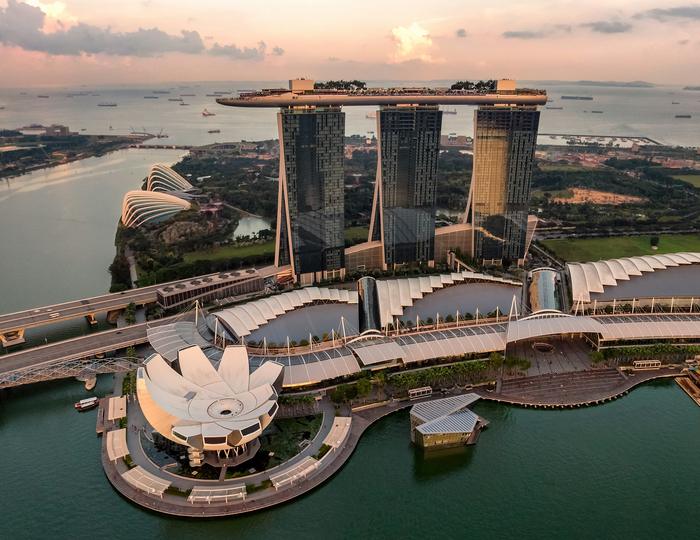
Singapore’s marquee experiences are engineered and flawless: Gardens by the Bay and its free nightly Supertree light show, the Marina Bay Sands skyline, Sentosa’s theme parks, and a Mandai wildlife cluster whose Night Safari is genuinely world-class. It is nature and spectacle curated to a very high finish — and you can see all of it comfortably in a couple of days.
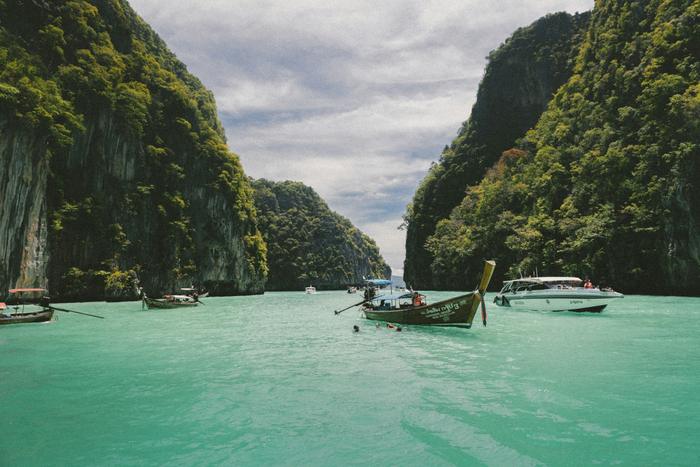
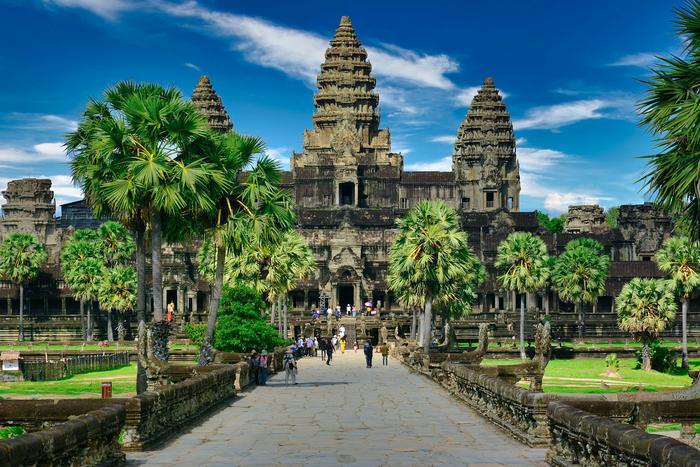
Malaysia’s headliners are the opposite: the wild itself. Climbing Mount Kinabalu (4,095 m), diving Sipadan — one of the great sites on earth — and watching orangutans at Sepilok or Semenggoh all live in Borneo, reached by a domestic flight and a second immigration clearance. These are the two things you cannot improvise: Kinabalu’s climb is gated by a single mountain-hut operator (no bed, no permit) and Sipadan by a daily permit cap rationed through dive resorts, so both want booking months ahead — see the Malaysia guide for the permit detail. Singapore’s version of “book ahead” is a timed ticket a few days out.
One famous Singapore letdown is worth pre-empting because it sits at the heart of its skyline: the Marina Bay Sands infinity pool is for hotel guests only. A SkyPark deck ticket does not get you in — a rooftop bar nearby gives much the same view without a room. Malaysia’s equivalent disappointment is seasonal, not structural: the orangutan feedings are never guaranteed, because in the fruiting season the semi-wild apes forage and skip them.
Cities & scale
One city, against cities plus a continent’s edge
Singapore is the destination. In Malaysia the cities are the start of it.
600 kmof sea between Malaysia’s two halves
Singapore is a single island you never leave. Malaysia is a peninsula and a slab of Borneo 600 km apart: Kuala Lumpur and Penang and the Cameron Highlands on one side, Mount Kinabalu, Kuching and the great Mulu caves on the other. East Malaysia is 60% of the country’s land but a small share of its people — and reaching it is a flight plus a fresh immigration clearance, which is why Borneo warrants its own dedicated leg rather than a day trip.
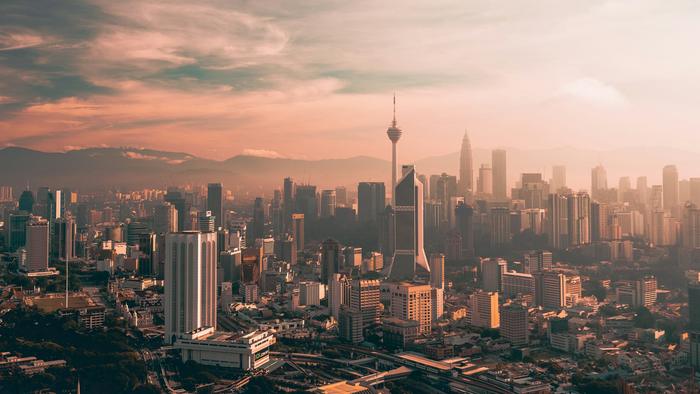
In Singapore the city is the country and the country is the trip — Marina Bay, the ethnic quarters, Sentosa and a hawker centre, all a short MRT ride apart. There is no “rest of the country” beyond it. Malaysia gives you a stack of distinct places instead: Kuala Lumpur, whose skyline now runs from the Petronas Twin Towers to the new Merdeka 118 (the world’s second-tallest building); George Town, Penang, a UNESCO old town and the acknowledged street-food capital; the tea-country Cameron Highlands; historic Malacca; and two separate island coasts.
Then it adds a second half across the sea. Borneo — Sabah and Sarawak — is the wild Malaysia, and it is a genuine second trip: Kuala Lumpur to Kota Kinabalu is about 2h35 in the air before you even start. The practical upshot is that Singapore is one tidy base and Malaysia is a sequence of them, which is the real reason the two trips feel nothing alike.
Cost & money
The cost gap is the whole story
This is the single biggest difference, and it runs in Malaysia’s favour everywhere but the bar.
~1/3Malaysia’s everyday cost against Singapore’s
Across food, transport and lodging, everyday Malaysia runs around a third of Singapore’s prices — a full hawker meal with a drink is usually under RM20, a Grab across a Malaysian city RM8–15. Singapore is regularly ranked among the world’s most expensive cities, with one sharp exception: its hawker food stays genuinely cheap at about S$6–9, some of it Michelin-recognised. The place the gap narrows to almost nothing is alcohol — both countries tax it heavily, so a bar beer is RM15–20 in Malaysia and S$12–16 in Singapore.
Plan each budget around its own split. In Singapore, eat at hawker centres and ride the MRT and the city is affordable; it is the drinks, hotels and taxis that make it world-expensive. In Malaysia almost everything is cheap — the lone asterisk is alcohol, which Malaysia, an Islamic-majority country, taxes among the most heavily in the world, so the drinks saving over Singapore shrinks to about half rather than two-thirds.
The honest way to read the gap: Malaysia has a genuine budget tier that Singapore lacks — you can travel it for weeks on what a few polished days in Singapore cost. Singapore has no cheap end except its food. That is not a knock on either; it is the structural fact that most shapes which trip you can afford, and for how long.
Everyday item
Malaysia
Singapore
A full hawker / street meal
Under RM20 (Penang dishes under RM10)
S$6–9 (the cheap half of an expensive city)
Ride across the city
Grab RM8–15
MRT from ~S$1.28; taxis far more
A beer in a bar
RM15–20 (heavily taxed)
S$12–16 (heavily taxed)
Mid-range hotel, per night
A fraction of the Singapore figure
S$200–300, surging over the F1 weekend
Overall everyday prices
Baseline — Southeast-Asia cheap
Roughly three times Malaysia’s
Structural comparison, not a live quote — exact day-rates move within a season and are kept off this page deliberately. Note the tax wrinkles each side: Singapore adds 9% GST and a restaurant “++” means a further 10% service charge, while Malaysia’s expanded Sales and Service Tax adds 5–10% on discretionary goods. The live figures sit on the two country guides.
Watch the add-ons that make a Singapore bill bigger than the menu: a listed “S$25++” is really about S$30 once the 9% GST and 10% service charge land. The flip side is a tourist GST refund at Changi on goods over S$100. In Malaysia the equivalent small print is the fuel price — the cheap subsidy is for citizens only, so if you drive, foreigners pay the floating rate.
Getting around
Tap a card, or cross a country
In Singapore transport is a solved problem. In Malaysia it is part of the itinerary.
Singapore’s transport is simply not something you plan: the MRT is world-class, covers the entire tourist map, and you ride it by tapping a bank card straight at the gate — the only trap is using the same card in and out, since two different cards double-charge you. Changi is on the line (about S$2–3 to the centre) and is an attraction in its own right.
Malaysia asks more. The KTM ETS gives the peninsula a fast, cheap spine up the west coast, but Borneo and the longer hops are flights, so getting around is genuinely part of the trip rather than a background utility. Both drive on the left; Singapore you simply won’t drive, and in Malaysia a car is optional for the mainstream route and handy only for specific island and highland corners.
Malaysia
Singapore
The backbone
KTM ETS train up the peninsula (up to 140 km/h) — KL to Penang in ~3h30 — then flights for everything beyond
The MRT does everything; tap any contactless card or phone at the gate, from ~S$1.28
Reaching the far bits
A flight: KL to Kota Kinabalu on Borneo is ~2h35, and AirAsia is the norm for long hops
There are no far bits — the island is crossable in under an hour
In the cities
Grab dominates ride-hailing; KL’s LRT/MRT/monorail run on the Touch ’n Go card
MRT plus Grab and taxis fill the gaps; no car needed or wanted
Do you need a car?
Not for the cities or the train spine; useful for some island and highland corners
No — a COE licence to own one topped S$130,000 in 2026
Food, culture & language
A shared table, and a shared history
Here the two are most alike — same cuisines, same colonial past, same hawker habit, and no language barrier either side.
This is the section where the two feel like siblings, because historically they are — both were British, both are multicultural by design, and Singapore was part of Malaysia until 1965. The result is a shared hawker-centre culture: three food cultures at one table, cheap, and central to the trip rather than a budget fallback. A laksa runs through both, shading from Penang’s sour asam broth to the creamy coconut curry version further south and in Singapore’s Katong.
The real divergence is finish and law, not cuisine. Singapore is spotless, strictly governed and liberal-leaning but cautious; Malaysia is cheaper, looser and more conservative in parts — Malay food is halal, alcohol is heavily taxed, and the dress code tightens in the northern states. Both reward you with some of the best eating in the world for a few dollars a plate.
Malaysia
Singapore
The food cultures
Malay, Chinese and Indian, plus the Nyonya (Peranakan) blend, sharing every hawker centre
The same three communities plus Eurasian — four official languages, hawker culture on UNESCO’s list since 2020
The signature cheap meal
Nasi lemak, char kway teow, asam laksa, roti canai — mostly under RM10–15
Hainanese chicken rice, char kway teow, laksa, satay — about S$6–9, some Michelin-starred
The street-food capital
George Town, Penang — the acknowledged one
More than a hundred centres; Maxwell, Lau Pa Sat, Chinatown Complex
Language
English very widely spoken (British-colonial legacy) — effectively no barrier
English is the working language
Two legal footnotes that cut opposite ways. In Singapore, vaping is the rule that can end a trip: possession itself is illegal with no tourist exemption, and the penalty rose to fines up to S$10,000 (with deportation for foreigners) on 1 May 2026 — do not even transit Changi with a vape. In Malaysia, homosexuality remains criminalised, so LGBTQ+ travellers should be discreet; Singapore repealed its equivalent (Section 377A) in January 2023. The detail for both is on the country guides.
Who suits which
Who each actually suits
On several of these the answer inverts — the country that wins overall loses for you.
If you are…
Malaysia
Singapore
Short on time, wanting zero planning
A week is the minimum to do it justice — and it asks things of you
Wins clearly. Frictionless, English-speaking, spotless, seen in 2–3 days
After an actual multi-week trip with range
Wins clearly. Cities, two island coasts, highlands, Borneo’s wild
A city-state — you’ll have seen it in a couple of days
Travelling on a tight budget
Wins. A whole country at roughly a third of Singapore’s prices
Among the world’s most expensive — bar the hawker food
Engineered nature — Gardens by the Bay, the Night Safari
A nervous first-timer or on a tight stopover
Rewarding, but asks more of you
Wins. The safest, glossiest, lowest-friction way into the region
Travelling with a vape, or valuing loose rules
Wins by default. No possession ban (alcohol is taxed hard, though)
A possession ban with fines up to S$10,000 — leave it at home
Doing both
They share a causeway — so most people do both
Plenty of people asking “which one?” are really asking “can I do both?” — you can, very easily.
One borderSingapore and Malaysia at Johor
The two countries meet at a land border in Johor — the Causeway and the Second Link — and are a short flight or bus apart as well. The classic shape writes itself: a slick day or two in Singapore bookending a longer, wilder, far cheaper Malaysian trip. A city stopover at one end, weeks of range at the other, and the contrast between them is a feature rather than a compromise.
This is why the “which?” question so often dissolves. Singapore makes the perfect polished stopover — two or three days of ease at the start or end — while Malaysia carries the length and the range. They are close, they are cheap to move between, and they flatter each other: the city feels sharper after the jungle, the jungle better value after the city.
The only friction is administrative, and it is small: each country has its own arrival card, the SG Arrival Card and the MDAC, both free and both due within three days of arrival. Crossing from Singapore into Malaysia is a fresh Malaysian entry, so file the MDAC for it even if you have been in the region a week.
If Borneo is on the plan, don’t try to fold it into the Singapore-plus-peninsula loop. Sabah and Sarawak are a separate leg — a domestic flight and a second Malaysian immigration clearance — so the realistic three-part shape is Singapore (2–3 days), peninsular Malaysia (a week), and Borneo (its own stretch) rather than a single continuous hop.
How to choose
How to choose — and what you give up
If you can only pick one, it comes down to time and money on one side and ease on the other.
Pick Singapore if you have a few days and want the region at its most effortless — spotless, English-speaking, world-class at transport and food, no planning required. What you give up is range and value: you will have seen it in two or three days, and it is one of the most expensive cities on earth. Pick Malaysia if you want an actual trip with length and variety at a fraction of the cost. What you give up there is polish and simplicity — it asks more of you, the coasts run on a monsoon clock, and Borneo is a second trip bolted on.
But the most honest verdict is that this is rarely a real either/or. They share a border and complement each other, so for most travellers the right answer is both — Singapore as the glossy bookend, Malaysia as the longer, wilder, cheaper journey. Choose one only if your time or budget genuinely forces it; otherwise the causeway means you don’t have to.
Two things we deliberately keep off this page. Exact day-rates beyond the structural gap — hotel, dining and transport prices move within a season, so the figures here are the shape of the difference, not a quote; the two country guides carry the live detail. And because these are such different trips, this page compares cost, ease and range rather than pretending they are rivals for the same holiday.
Malaysia or Singapore, month by month
Which of the two is the better bet for each month of the year, scored on
how well the season suits each place.
You have a few days and want ease — frictionless, English-speaking, spotless, world-class at transport and food.
It’s a stopover or a bookend and you want zero planning friction on either end of a longer trip.
You want the polished version — hawker food plus the Marina Bay skyline plus Gardens by the Bay, all seamless.
You’re a nervous first-timer to the region and want the safest, glossiest way in.
Common questions
Is Malaysia or Singapore cheaper?
Malaysia, by a wide margin — everyday costs run around a third of Singapore’s, and a full hawker meal is under RM20 against S$6–9 (still cheap) in Singapore, whose hotels, taxis and alcohol are among the priciest anywhere. The one place the gap narrows is beer: both countries tax alcohol heavily, so a bar pint is RM15–20 in Malaysia and S$12–16 in Singapore.
Should I visit Malaysia or Singapore?
It depends how long you have. A few days and you want ease: Singapore. An actual trip with range — islands, highlands, Borneo, food: Malaysia. They’re a short hop apart and complement each other, so the honest answer for most people is both — Singapore as the polished stopover, Malaysia as the longer, wilder, cheaper journey.
How many days do you need in Singapore vs Malaysia?
Two to three days is enough for Singapore — it’s a compact city-state you cross by MRT in under an hour. Malaysia is a whole country: a week for the peninsula alone, and Borneo (Sabah and Sarawak) really wants its own separate leg on top, reached by a domestic flight and a second immigration clearance.
Can you do Malaysia and Singapore in one trip?
Very easily, and most people do. They share a land border at Johor and are a short flight or bus apart, so the classic shape is a slick day or two in Singapore bookending a longer, cheaper Malaysian trip. Just note each country has its own free arrival card — the SG Arrival Card and the MDAC — to file within three days before you cross.
When is the best time to visit Malaysia and Singapore together?
December to March is the cleanest window: it puts Malaysia’s west coast (Penang, Langkawi) at its driest and best, while Singapore is hot and humid as it always is, with no season to avoid. The two things to watch are the Aug–Oct regional haze, which can affect both, and Malaysia’s east-coast islands, which close in roughly that Nov–Mar window — so pick the Malaysian coast that’s open rather than the month.