Lombok
Bali’s quieter neighbour — the same warm sea and volcano drama, with a fraction of the crowds.
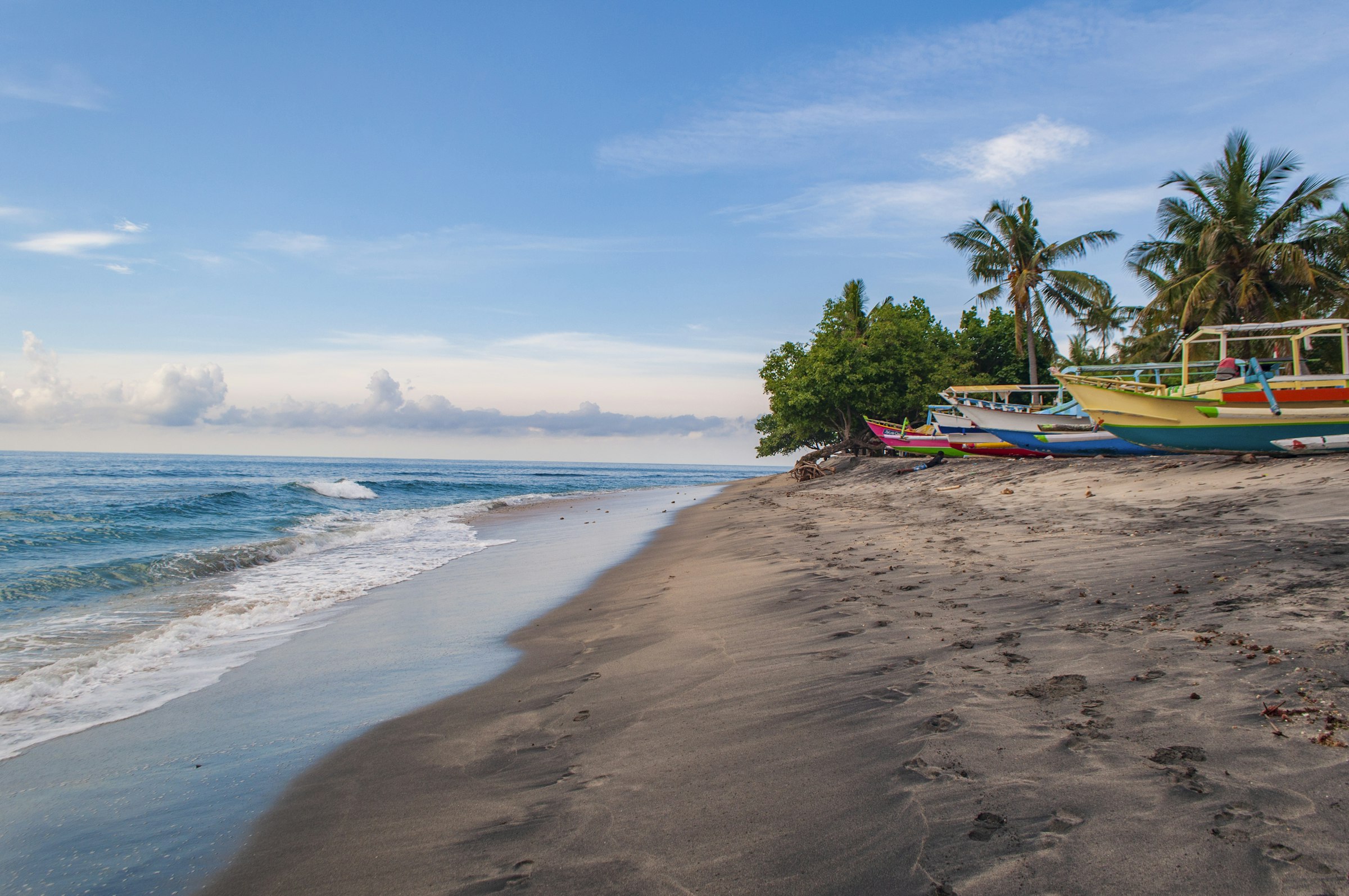
Lombok is the island just east of Bali, and it's what a lot of people wish Bali still felt like: emptier white beaches, warm turquoise water, a big active volcano to climb, and a slower, more traditional Sasak culture. Just offshore sit the Gili Islands — three tiny, car-free sandbars that are the region's easy-going snorkelling-and-hammock escape. It's the low-key, better-value version of the trip most people take to Bali.
The Gili Islands are the gateway for most: Gili Trawangan for a bit of a party, Gili Air for the sweet spot of calm-plus-life, and Gili Meno for near-total quiet — all car-free, ringed by reef and turtles, and a short boat from Bali. On the main island, the south around Kuta Lombok is a run of stunning, still-uncrowded white-sand bays and world-class surf that Bali's south lost to development years ago. Looming over everything is Mount Rinjani, Indonesia's second-highest volcano — a tough two-to-three-day trek to a crater lake and a sunrise summit that's one of the great hikes in Southeast Asia. Inland there are Sasak villages, rice terraces, and waterfalls like Tiu Kelep.
The honest part: Lombok is less developed than Bali, and that cuts both ways — fewer world-class restaurants and less polish, rougher roads, and a more conservative, mostly Muslim culture to be mindful of away from the tourist strips. The Gilis have no motorised transport (or police), and their popularity means Trawangan in particular can get busy and boozy. The wet season (roughly November to March) closes the Rinjani trek and muddies the trails. Come in the dry season, and you get Bali's best bits — sea, surf, and volcano — with more room to breathe and lower prices.
Highlights
-
The Gili Islands
Three car-free islands off the northwest coast — turtles, reef, and hammocks, from party (Trawangan) to silent (Meno).
-
Mount Rinjani
Indonesia’s second-highest volcano — a demanding multi-day trek to a crater lake and a sunrise summit.
-
Kuta Lombok
The south coast: empty white-sand bays and world-class surf, still low-key where Bali’s got built out.
-
Sasak villages
Traditional thatched hamlets and weaving villages inland — the island’s distinct Indigenous culture.
-
Waterfalls
Jungle falls like Tiu Kelep and Sendang Gile on Rinjani’s green northern slopes.
-
Pink Beach
A pale-pink-sand cove in the remote southeast, reached by boat or a rough drive.
Practical info
- Visa
- Visa on arrival / e-visa for most Western passports (30 days, extendable). Verify before travel.
- Currency
- Indonesian Rupiah (IDR).
- Language
- Indonesian and Sasak; English in tourist areas.
- Safety
- Generally safe; dress modestly away from the beaches, and use reputable operators for the Gili fast boats and Rinjani trek.
- Getting around
- Fast boats link Bali and the Gilis; hire a car/driver or scooter on the main island.
- Tap water
- Drink bottled or filtered water.
- Plug type
- Type C Type F 230V
- Money
- Cash-based; ATMs in towns, little card acceptance on the Gilis.
General guidance — visas, safety, and health change, so check your government's travel advisory and the official sources before you go.
Common questions
- Do I need a visa for Lombok?
- You get Indonesia’s visa-on-arrival / e-VOA — IDR 500,000 (~US$32) for 30 days, extendable once — with a passport valid six months. A fee increase was proposed in 2026 but isn’t yet in force; re-check. See entry.
- Can anyone climb Mount Rinjani?
- It’s a tough multi-day trek (to ~3,726 m) with a mandatory guide and porter — no solo trekking — and you register on the eRinjani portal. The national park closes roughly January–March in the rains. See Mount Rinjani.
- Which Gili island should I pick?
- All three are car-free: Gili Trawangan for buzz and diving, Gili Air for a balance of social and mellow, Gili Meno for quiet. See the Gili Islands.
- Is Lombok better than Bali?
- It’s quieter, cheaper and more traditional (and majority-Muslim, not Hindu) — a calmer, less-developed alternative rather than a "better" one; Bali still has more infrastructure and variety. See culture.
- When should I go?
- The dry season (May–October) — best for beaches, diving and the Rinjani trek. The wet season (Nov–April) is rainier and closes the Rinjani park. See when to go.
- Has it recovered from the 2018 earthquake?
- Yes — the M7.0 quake of August 2018 hit north Lombok and the Gilis hard, but tourism rebuilt and is fully operational; it’s mostly historical context now. See money.
Entry
An easy visa-on-arrival
Same as the rest of Indonesia — simple, with a fee to watch.
Entry is the standard Indonesian visa-on-arrival: IDR 500,000 (about US$32) for 30 days, extendable once for another 30, with a passport valid six months. You can buy it on arrival or, more smoothly, apply for the e-VOA online at least 48 hours ahead.
One thing to watch: a fee increase was proposed in 2026 (roughly IDR 750k online / IDR 1,000,000 on arrival) but isn’t yet in force. And note that Bali’s IDR 150,000 tourist levy is a Bali provincial tax — Lombok has no equivalent, though if you day-trip from Bali you may pay Bali’s levy again on return.
Lombok and the Gilis are reached from Bali by a short flight or a fast boat, so most people arrive via Indonesia’s main hubs anyway.
Apply for the e-VOA in advance to skip the airport queue, and keep an eye on the proposed fee hike (not yet live). If you’re hopping from Bali, remember Bali’s own tourist levy can be charged again on your return there — budget for it rather than being caught out.
Mount Rinjani
The volcano that defines the island
A serious multi-day climb to a crater lake near the summit.
3,726 m Mount Rinjani — Indonesia’s second-highest volcano
Mount Rinjani towers over Lombok — Indonesia’s second-highest volcano and the island’s defining adventure. The reward for the hard multi-day climb is one of Southeast Asia’s great mountain scenes: a summit sunrise, and the turquoise Segara Anak crater lake with hot springs and a steaming young cone within the caldera.
This is a genuine trek, not a day walk: steep, cold at altitude, and run only with a mandatory guide and porter booked through the park system. Register on eRinjani, and plan around the seasonal closure.
Climb Rinjani only in the dry season (roughly April–December) — the park shuts ~January–March for the rains, and trail status can change at short notice (a 2026 fire briefly closed the Senaru route). Go with a reputable operator, be honestly fit for a multi-day high-altitude trek, and treat the mandatory guide/porter rules as the safety feature they are.
Beaches & surf
A laid-back south coast
Lombok’s own Kuta — quieter than the Balinese one.
Lombok’s south coast is the beach heart — and crucially, its Kuta is nothing like Bali’s namesake: a relaxed surf town of white-and-golden sand, hills and coves rather than crowds and clubs. Around it, Selong Belanak is the gentle learn-to-surf bay, Tanjung Aan the photogenic "peppercorn-sand" horseshoe, and Mawun a quiet swimming cove.
On the west coast, Senggigi is the older resort strip — calmer sunset beaches, quieter since the 2018 quake. The Mandalika MotoGP development near Kuta has brought new roads and hotels to the south.
| Beach | What | For whom |
|---|---|---|
| Kuta Lombok | The low-key south-coast base (not Bali’s Kuta) | Surfers and chilled beach days |
| Selong Belanak | A wide, gentle crescent bay | Beginner surf lessons |
| Tanjung Aan | Famous "peppercorn" sand | Swimming and photos |
| Senggigi | The older west-coast resort strip | Sunset beaches, quieter now |
The Mandalika MotoGP circuit near Kuta Lombok has driven much of the south coast’s recent growth.
The Gili Islands
Three car-free islands
Bicycles, horse carts and turtles — no engines allowed.
3 car-free isles the Gili Islands — Trawangan, Air and Meno
The Gili Islands — three small dots off the northwest coast — are Lombok’s postcard draw, and their charm is the absence of engines: transport is bicycle and cidomo horse cart only. Pick to taste: Trawangan for nightlife and dive schools, Air for a social-but-mellow balance, Meno for near-silence.
The water is the point — clear, warm, and full of green and hawksbill turtles, with easy snorkelling straight off the beach. Fast boats connect them to Bali (Padang Bai, Sanur, Amed) and to Lombok’s coast.
Choose your Gili deliberately — Trawangan, Air and Meno are very different moods, and island-hopping between them by local boat is easy. They’re administratively part of Lombok, not Bali; book the fast boat with a reputable operator and check the sea conditions, as crossings can be rough.
Culture
Sasak, and a thousand mosques
A different Indonesia from Hindu Bali — majority Muslim.
Culturally, Lombok is a clear step away from Bali. Its Indigenous people are the Sasak, who are predominantly Muslim rather than Hindu — Lombok is even nicknamed the "Island of a Thousand Mosques," and the call to prayer, not temple offerings, sets the daily rhythm.
You can see the traditional side at Sade, a preserved Sasak village of thatched-and-bamboo houses, and in the tenun handweaving of villages like Sukarara. It all makes Lombok feel more traditional and less touristed than its famous neighbour.
| Place / thing | What | Note |
|---|---|---|
| The Sasak | Lombok’s Indigenous people | Majority Muslim — unlike Hindu Bali |
| Sade village | A traditional Sasak thatched village | Near Rukun Damai, central-south |
| Tenun weaving | Handwoven songket/ikat textiles | Sukarara and Sade are weaving villages |
| "A thousand mosques" | Lombok’s nickname | Islam shapes the daily rhythm |
Lombok is more conservative than Bali — dress modestly away from the beaches and the Gilis.
Respect the more conservative, Muslim culture: cover up away from the beach resorts and the Gilis, be mindful during Ramadan, and ask before photographing people. The Sasak villages are a genuine highlight, best visited with a local guide who can explain the weaving and customs rather than as a quick photo stop.
Getting around
An airport in the south, boats to the isles
Easy to reach, with scooters and drivers on the ground.
Lombok is simple to reach: Lombok International Airport (LOP) sits in the south, handy for Kuta Lombok (~30 minutes) and a quick 40-minute hop from Bali’s Denpasar. Many visitors instead take a fast boat from Bali, landing at Bangsal/Teluk Nare for the Gilis or at the coast.
On the ground, scooters are the cheap local norm and a car with driver the comfortable option; the main south and west roads are improved (helped by the Mandalika development), while rural and mountain routes can be rough.
When to go
Dry season for beaches and the trek
A clear split — and the Rinjani closure to plan around.
The dry season (May–October) is best for the beaches, the Gilis and diving. Rinjani trekking runs roughly April–December; the park closes in the heart of the wet season (~January–March) for safety.
The dry season (May–October) is Lombok at its best — sunny beaches, calm crossings to the Gilis, and clear diving — and it’s also the core of the Rinjani trekking season (which runs roughly April–December).
The wet season (November–April) brings heavier rain and rougher seas, and the Rinjani national park closes through its wettest months (around January–March) for safety, reopening about April.
Money
Cheaper and calmer than Bali
The quiet-neighbour appeal — good value, fewer crowds.
Money goes further here than on Bali — Lombok is cheaper and quieter, with lower prices on food, rooms and activities and far fewer crowds. The currency is the rupiah; ATMs cluster in Mataram, Kuta and on Gili Trawangan, so carry cash for villages and the smaller Gilis.
One piece of recent history worth knowing: the August 2018 M7.0 earthquake badly damaged north Lombok and the Gilis, but tourism rebuilt and is fully operational — it now matters mainly as context for the island’s resilience rather than a live concern.
- The Bali vibe without the crowdsSkipassuming Lombok is built-upGoKuta Lombok’s quieter south coast
- A serious volcano trekSkipthe Jan–Mar rains (park closed)GoRinjani in the May–Oct dry season
- Car-free island timeSkipstaying only on the mainlandGothe Gili Islands (Air for balance)
| On the bill | Detail | Note |
|---|---|---|
| Currency | Indonesian rupiah (IDR) | Cheaper and quieter than Bali |
| Entry | e-VOA ~IDR 500k (~US$32) | 30 days, extendable once; a hike was proposed |
| Cash | ATMs in the main towns | Carry cash for villages and the Gilis |
Lombok has no equivalent of Bali’s tourist levy (as of now) — one small saving over its neighbour.
Treat Lombok as the calmer, cheaper alternative to Bali rather than a like-for-like swap — it has less infrastructure and nightlife, which is exactly its appeal. Carry cash (especially for the Gilis), budget for the VOA and the Rinjani/fast-boat splurges, and you’ll find it excellent value.
Compare Lombok
If you like Lombok, also consider
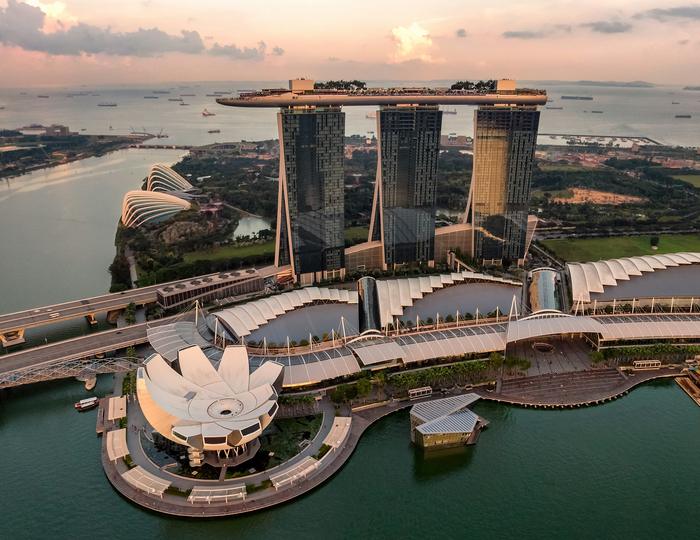
Singapore
The best two days you can spend between flights — or on their own.

Greece
Ruins in the morning, a swim by noon, taverna until dark.

Spain
Food, beaches, and three or four cities that each justify the trip.
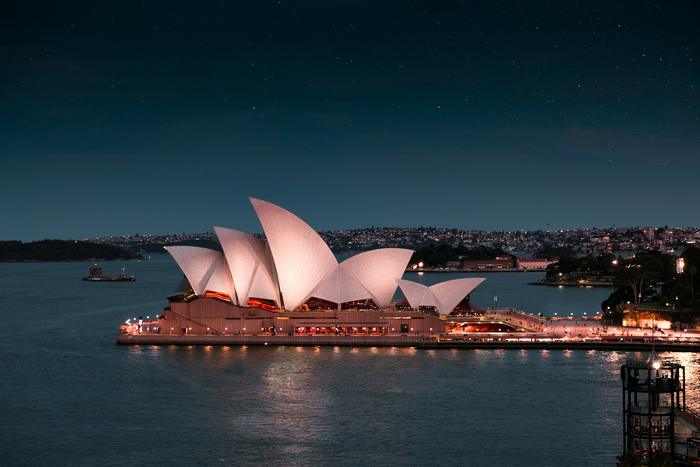
Australia
Vast, varied, relaxed. Reef, Sydney, and proper wilderness in one.
Not sure where to go
Take the 5-minute quiz
Answer a few honest questions and get matched to destinations that actually fit how you travel.
Start the quiz