Laos
The slowest, gentlest country in Southeast Asia, and the better for it.
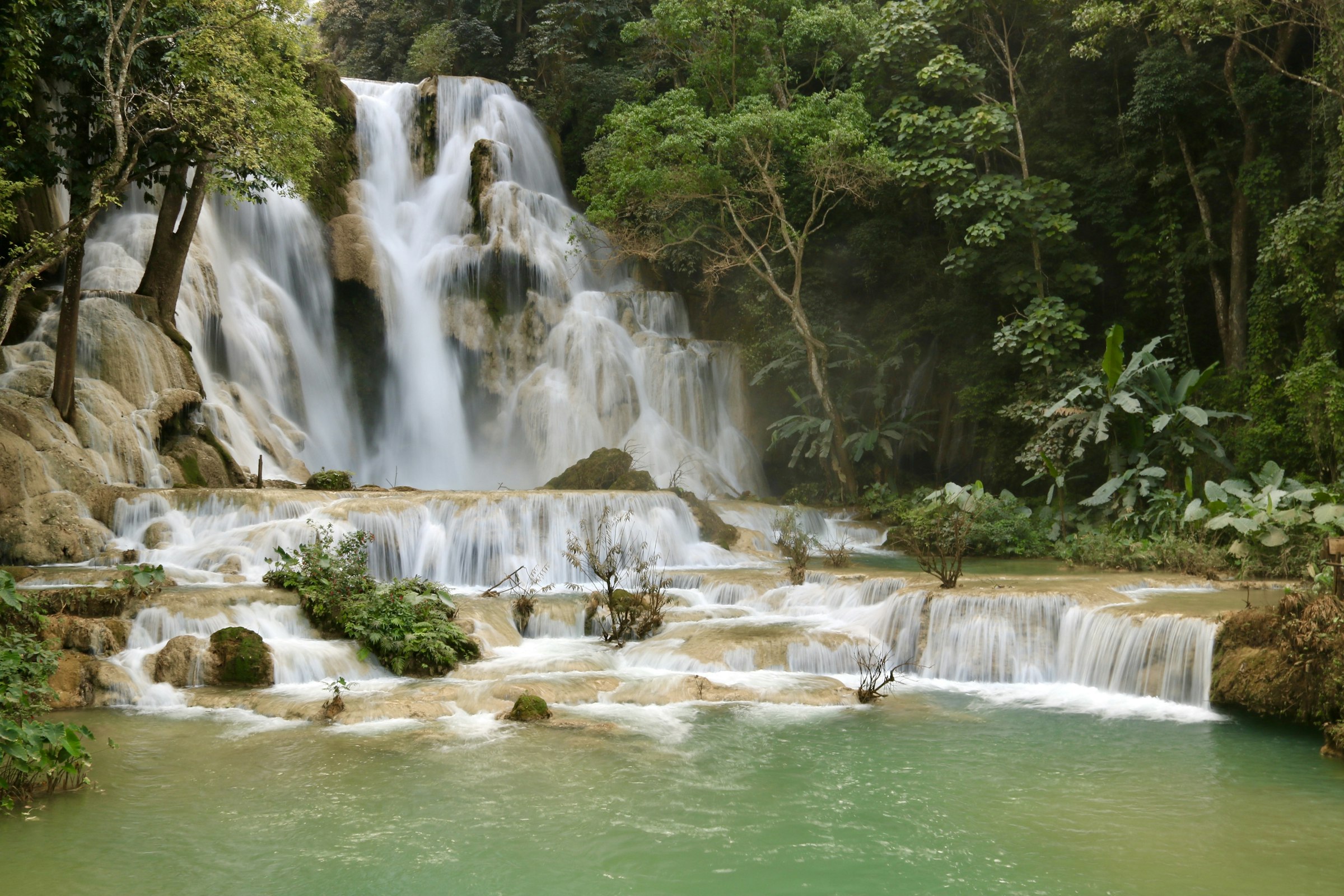
Laos asks you to downshift. Luang Prabang sets the tone with its temples, morning alms procession, and turquoise waterfalls a tuk-tuk ride away. From there it's the slow boat down the Mekong, a backpacker pause in Vang Vieng, and eventually the hammock-strung 4000 Islands in the south. Nothing moves quickly here, and that's the appeal rather than the flaw.
The natural route runs the slow boat from the Thai border down to Luang Prabang — two unhurried days watching the Mekong unspool — then south by stages. Luang Prabang itself is the centrepiece: saffron-robed monks collecting alms at dawn, gilded temples, and the tiered Kuang Si pools a short ride out of town. Further on, Vang Vieng trades its old party reputation for kayaking and karst scenery, and the 4000 Islands deliver nothing more demanding than a bicycle and a river view.
The honest part: getting around is slow and often uncomfortable. Roads are rough, journeys take far longer than the map suggests, and outside Luang Prabang and the main backpacker stops, tourist infrastructure thins out fast. English is limited once you leave those hubs, and the rainy season from May to September turns waterfalls muddy and back roads to slop. If you need things to run on time or want a packed itinerary, the pace will frustrate you.
Highlights
-
Luang Prabang
Temples, the dawn alms procession, and a riverside calm the rest of the region lost.
-
Kuang Si Falls
Tiered turquoise pools you can swim in, a short ride from town.
-
Mekong slow boat
Two days drifting downriver from the Thai border into Laos.
-
Vang Vieng
Karst peaks, kayaking, and caves now that the party era has faded.
-
4000 Islands
Hammocks, bicycles, and river dolphins where the Mekong braids apart.
Practical info
- Visa
- Visa on arrival or e-visa for most nationalities (30 days). Verify before travel.
- Currency
- LAK (Lao Kip). USD and Thai baht sometimes accepted.
- Language
- Lao. Limited English outside tourist spots.
- Safety
- Generally safe and calm; petty theft is the main concern.
- Getting around
- Slow and basic; buses, boats, and the new high-speed rail line between key towns.
- Tap water
- Stick to bottled or filtered water; avoid the tap.
- Plug type
- Type A Type C Type F 230V
- Money
- Cash-driven economy; carry kip and small USD, as ATMs are scarce outside cities.
General guidance — visas, safety, and health change, so check your government's travel advisory and the official sources before you go.
Common questions
- Do I need a visa for Laos?
- Most nationalities get a visa-on-arrival (~US$30–45, 30 days, cash USD plus a photo) at the main airports and borders, or an eVisa online at laoevisa.gov.la (~US$50); passport valid six months. See entry.
- What’s the digital arrival card?
- A free online form (the LDIF, at immigration.gov.la), mandatory since 1 September 2025 — complete it a few days before you travel to get the QR code shown at the border. It’s still rolling out to all crossings through 2026.
- How do I get around Laos now?
- The Laos-China Railway is the game-changer: Vientiane–Vang Vieng–Luang Prabang in about two hours, versus the old day-long mountain bus. Book ahead (it sells out) and note the stations sit well outside the towns. See the railway section.
- When is the best time to go?
- The cool, dry season, November to February. Avoid March–April, when agricultural burning chokes the north (Luang Prabang especially) in smoke; May–October is the wet monsoon. See when to go.
- Is it safe to leave the trails?
- No — Laos is the most-bombed country per capita in history, and unexploded ordnance remains a real danger. Stay strictly on cleared, marked paths, especially around the Plain of Jars. See the secret war section.
- What does it cost, and what money do I use?
- It’s cheap and a cash economy: the Lao kip (~22,500 to the dollar and sliding) for daily spending, with US dollars and Thai baht widely accepted. Cards rarely work outside upscale hotels — carry cash. See money.
Entry
A visa on arrival, and a new online card
Easy enough — a visa on arrival plus the mandatory digital form introduced in 2025.
Entry is straightforward but has two steps. Most nationalities take a visa-on-arrival (~US$30–45, paid in cash US dollars with a passport photo, 30 days) at the main airports and borders, or lock in the cost with an eVisa at laoevisa.gov.la (~US$50 all-in — the better bet for remote land crossings). Passport valid six months.
Since 1 September 2025 there’s also a free digital arrival card (the LDIF) at immigration.gov.la — complete it a few days before travelling for the QR code shown at the border. It was still rolling out to all crossings through 2026.
Carry clean US-dollar cash for the visa-on-arrival (and a spare passport photo), since the counter won’t take cards. Fill in the LDIF online a few days before you travel; if your crossing isn’t yet covered by the digital system, you may still meet a paper card — it’s mid-rollout.
The railway
The railway that changed everything
The 2021 Laos-China Railway turned a day-long bus into a two-hour train.
~2 hours Vientiane to Luang Prabang by rail (vs a day-long bus)
The single biggest change to travelling Laos is the Laos-China Railway: the mountainous Vientiane–Luang Prabang slog that used to eat a whole day on a bus is now a comfortable two-hour train, with Vang Vieng in between. Fares are low, the trains modern.
Two practicalities decide whether it goes smoothly: book ahead (the fast trains sell out, with a seven-day advance window from 2026), and plan for the out-of-town stations, which need a tuk-tuk or shuttle at both ends.
Buy railway tickets as early as the window allows (via the LCR Ticket app, a station counter or an agent) — the fast C/D trains routinely sell out, especially around weekends and holidays. And factor the station transfers: Luang Prabang’s station is a good 15 minutes’ drive from the old town, so arrival isn’t quite as quick as the two-hour headline.
Luang Prabang
The UNESCO heart of Laos
A gilded, laid-back town on the Mekong — temples, waterfalls, and a dawn alms ritual under pressure.
Luang Prabang is the reason many people come — a UNESCO World Heritage town of gilded temples and French-colonial shophouses on a Mekong peninsula, moving at a gentle pace. Climb Mount Phousi for the sunset, browse the evening night market, admire Wat Xieng Thong, and tuk-tuk out to the turquoise Kuang Si Falls.
The dawn tak bat — monks collecting alms through the streets — is the signature sight, and also an over-tourism flashpoint: it’s a solemn ritual, not a photo op.
If you watch the tak bat alms-giving, do it respectfully: stay back and low, keep silent, no flash, don’t thrust a camera in a monk’s face or block the procession, and dress modestly. If you join in, buy the sticky rice from a shop, not a tout. Better still, many locals would rather you simply observe quietly from a distance.
Vang Vieng & the river
Karst, the slow boat and the far south
Beyond Luang Prabang: limestone scenery, a two-day river journey, and the 4,000 Islands.
Vang Vieng, between Vientiane and Luang Prabang, trades on dramatic karst limestone scenery over the Nam Song — its backpacker-party reputation long since tamed into kayaking, caves, lagoons and dawn hot-air ballooning. For the journey itself, the classic is the two-day Mekong slow boat from the Thai-border town of Huay Xai to Luang Prabang, overnighting at Pak Beng.
Far to the south, where the Mekong braids into channels near Cambodia, Si Phan Don (the 4,000 Islands) is the country’s hammock-and-slow-travel end, with rare Irrawaddy dolphins in the deep pools.
- Karst scenery and a bit of adventureSkipthe old party-tubing imageGoVang Vieng — kayaking, caves and a dawn balloon
- The classic slow journey inSkipthe overland bus from ThailandGothe two-day Mekong slow boat from Huay Xai
- Deep-south hammock timeSkiprushing back northGoSi Phan Don, the 4,000 Islands
| Spot | What | Note |
|---|---|---|
| Vang Vieng | Karst scenery on the Nam Song | Tamed tubing, kayaking, dawn ballooning; on the railway |
| Mekong slow boat | Huay Xai → Luang Prabang | Two days downriver, overnight at Pak Beng |
| Si Phan Don (4,000 Islands) | The Mekong braids near Cambodia | Hammock pace; rare Irrawaddy dolphins |
| Blue Lagoon (Vang Vieng) | A swimming hole and caves | The family-friendly day out |
Vang Vieng’s notorious party-tubing was tamed after the 2012 crackdown — it now runs in a milder, family-friendly form alongside kayaking and ballooning. The railway puts it about an hour from Vientiane.
The two-day slow boat is scenic but genuinely slow and basic — bring a cushion, snacks and a book, and don’t confuse it with the dangerous, discredited speedboats on the same route. Vang Vieng today is family-friendly, not the old lawless party town; the ballooning at dawn over the karst is the highlight.
Vientiane & the Jars
The sleepy capital and an Iron Age mystery
Low-key Vientiane and the enigmatic Plain of Jars — set against the war that scarred both.
Vientiane is one of Asia’s sleepiest capitals — a riverside town of the golden Pha That Luang stupa, the Patuxai victory arch, and the quietly devastating COPE visitor centre on UXO survivors. East, around Phonsavan, lies the Plain of Jars: thousands of mysterious Iron Age stone jars scattered across the hills, a UNESCO World Heritage Site since 2019.
The jars and the capital both carry the shadow of the secret war (next section) — the Plain of Jars is among the most heavily bombed, UXO-contaminated areas in the country.
At the Plain of Jars, stick rigidly to the cleared, marked paths — the area is among the most UXO-contaminated in Laos, and the safe routes are flagged for a reason. Pair it with the free COPE centre in Vientiane, which explains the UXO legacy and funds survivors’ prosthetics — the context that makes the jar sites land.
The secret war
The most-bombed country on earth
A history every visitor should grasp — and a live danger that dictates where you walk.
2 million tonnes of ordnance dropped — the most-bombed country per capita in history
To understand Laos you have to know the secret war: between 1964 and 1973 it became the most heavily bombed country per capita in history, as the US targeted the Ho Chi Minh Trail. The scale is staggering — two million tonnes of ordnance, 270 million cluster bomblets, up to 80 million of them unexploded and still lethal decades on.
For visitors this is both a moving history (see it at COPE in Vientiane) and a practical rule: in affected regions, never leave the cleared paths and never touch a metal object in the ground.
The UXO danger is real, not historical colour: thousands have been killed or maimed since the war ended, and bomblets still surface in fields and forests. Stay on marked, cleared paths in the north and east, don’t pick up or kick metal debris, and support the clearance and survivor charities (MAG, COPE) rather than treating it as a curiosity.
When & getting around
Cool-dry season, and the burning months
Time it to the cool dry window — and route around the smoke and the slow roads.
The dry season proper runs Nov–Apr. The first crimson bar is the sweet spot (cool and clear); the second is the window to avoid — March–April agricultural fires choke the north, Luang Prabang especially, in hazardous smoke.
Come in the cool, dry window of November to February — comfortable and clear. The dry season runs on to April, but March–April is burning season, when agricultural fires blanket the north (Luang Prabang especially) in hazardous smoke that ruins both the views and the air. The May–October monsoon is lush but turns back roads to mud.
Getting around, the railway is the fast spine; elsewhere it’s slow buses, scenic boats, or a Lao Airlines hop for the far-flung south and the Plain of Jars.
| Journey | How | Note |
|---|---|---|
| Vientiane ↔ Luang Prabang | Laos-China Railway | ~2h; book ahead, station outside town |
| Off the rail line | Buses & minivans | Long, slow, rough mountain roads |
| To the far south / Plain of Jars | Lao Airlines domestic flight | Saves a very long bus |
| Huay Xai → Luang Prabang | Mekong slow boat | Two days, scenic |
The railway is the fast corridor; off it, roads are slow. Domestic flights (Lao Airlines) are worth it for the far south and Phonsavan. Laos drives on the right, but there’s little self-drive tourism.
Money & culture
Cheap, cash-only, and gently Buddhist
A bargain on a shaky currency — carry cash, and lean into the bor pen nyang pace.
Laos is cheap — among the most affordable countries in the region — and a cash economy: pay for daily life in kip (weak and sliding, around 22,500 to the dollar), with US dollars and Thai baht accepted in tourist settings and near the Thai border. Cards work only at upscale hotels, and ATMs are stingy, so carry cash.
Culturally it’s devoutly Theravada Buddhist — cover shoulders and knees at temples, remove shoes, don’t touch monks — and famously unhurried, captured in the phrase “bor pen nyang” (“no worries”). It slots naturally into a wider Indochina trip with Thailand, Vietnam or Cambodia.
| On the bill | Detail | Note |
|---|---|---|
| Currency | Lao kip (~22,500/US$, sliding) | Weak and volatile; daily spending in kip |
| Cash economy | US$ and Thai baht widely accepted | Cards rarely work outside upscale hotels — carry cash |
| Overall cost | Among South-East Asia’s cheapest | Budget food, guesthouses and transport |
The visa-on-arrival must be paid in cash US dollars; ATMs have low limits and per-transaction fees. The kip has been sliding with high inflation, so prices quoted in kip drift.
Carry enough cash (kip plus some US dollars/baht) for several days, especially off the main towns where ATMs are scarce and card payment rare. Embrace the “bor pen nyang” pace — Laos rewards slow travel over tight schedules, and the laid-back rhythm is much of its charm.
Compare Laos
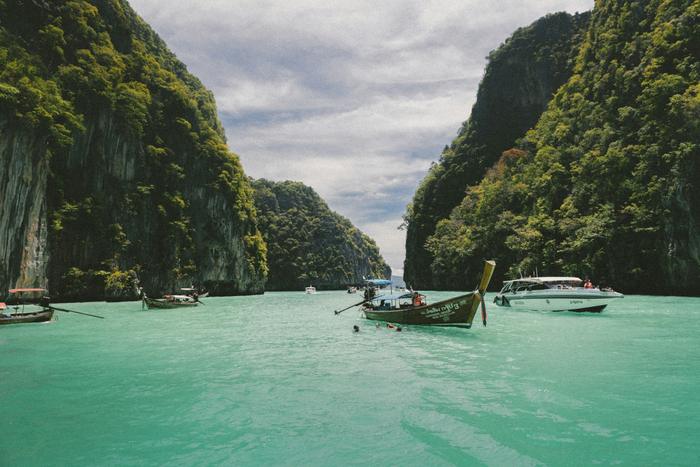
If you like Laos, also consider
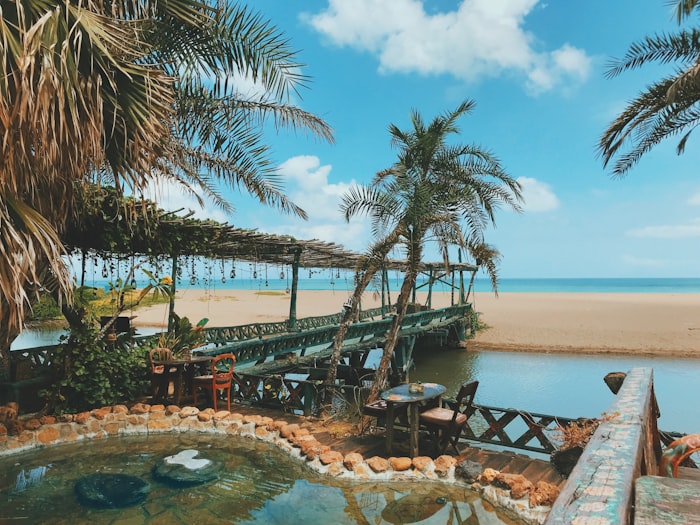
Bali, Indonesia
Warm, affordable, endlessly deep — beach, wellness, and culture in one place.
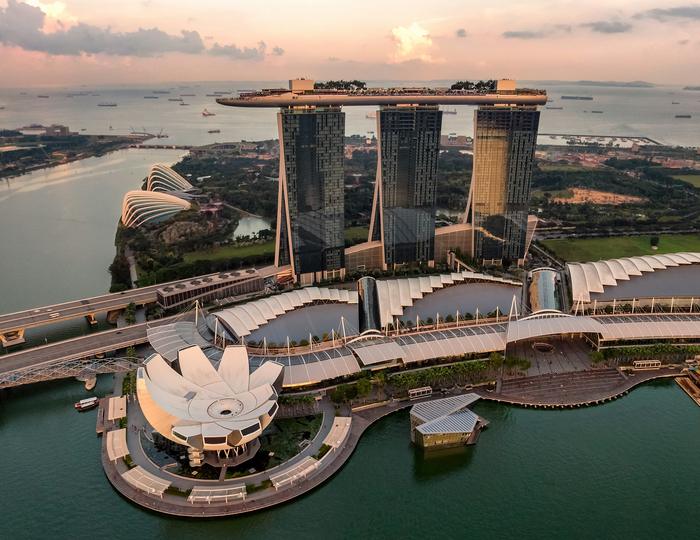
Singapore
The best two days you can spend between flights — or on their own.

France
Paris is only the opening act — wine country, the Alps, and two coastlines.

Italy
The benchmark for food, history, and beauty.
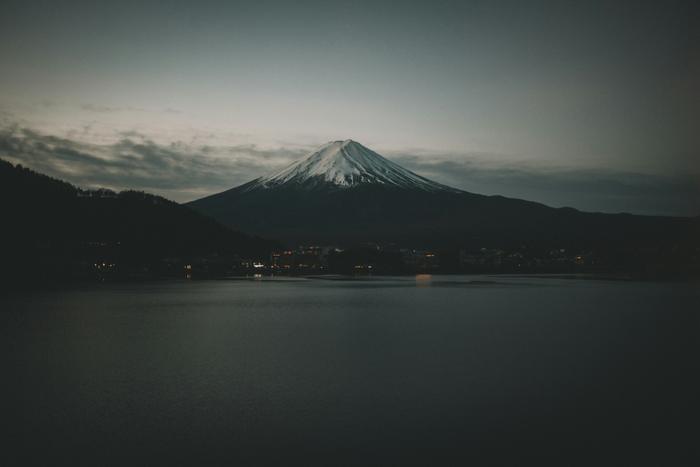
Japan
Extraordinary food, culture, and cities. Nothing quite prepares you for it.
Not sure where to go
Take the 5-minute quiz
Answer a few honest questions and get matched to destinations that actually fit how you travel.
Start the quiz