Kyrgyzstan vs Nepal

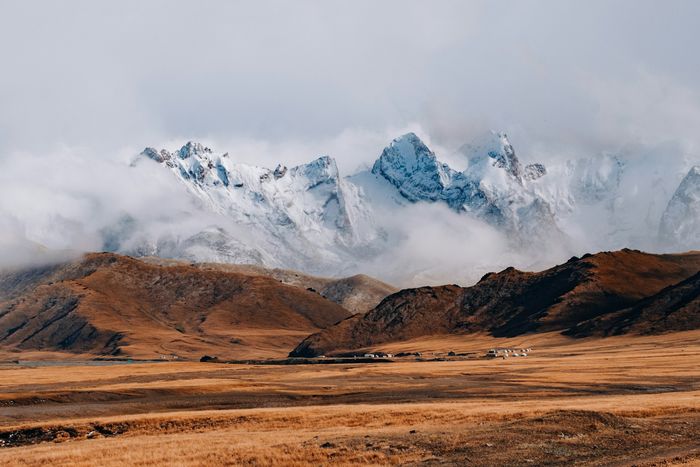
Two of the world’s great budget mountain trips, built around completely different trekking cultures. Kyrgyzstan is nomad-and-horse wilderness: the Tien Shan, alpine lakes and yurt pastures, explored on foot or horseback with homestays and wild camps, and almost no crowds — but no teahouse network either. Nepal is the Himalayan trekking mecca: the highest mountains on earth, the famous Everest and Annapurna routes, a mature teahouse-lodge system, and a rich hill-and-temple culture. Uncrowded nomad wilderness, or the Himalayan trekking machine.

Central Asia

Kyrgyzstan

The most accessible corner of nomad Central Asia — high alpine lakes, yurts, and horses, for almost nothing.

Best time to visit
  1. January: avoid
  2. February: avoid
  3. March: avoid
  4. April: fine
  5. May: fine
  6. June: peak
  7. July: peak
  8. August: peak
  9. September: peak
  10. October: fine
  11. November: avoid
  12. December: avoid
Peak Fine Avoid
South Asia

Nepal

The Himalayas. Trekking that changes how you see scale.

Best time to visit
  1. January: fine
  2. February: fine
  3. March: peak
  4. April: peak
  5. May: fine
  6. June: avoid
  7. July: avoid
  8. August: avoid
  9. September: fine
  10. October: peak
  11. November: peak
  12. December: fine
Peak Fine Avoid

Read our full guides about Kyrgyzstan and Nepal.

Side by side

Emphasised where they differ. Muted rows are much the same either way.

Kyrgyzstan Nepal
Best time June–September March, April, October, November
Climate cold cold
Budget Startlingly cheap — CBT homestays and horse treks cost little; a short season and remote logistics are the constraint Very cheap — teahouse trekking is famously affordable, with permits and guides the main added cost
Trip length 1–2 wks 2–6 wks
Visa Visa-free for most Western passports (typically 60 days). Verify before travel. Visa-on-arrival for most nationalities (15/30/90 days).
Currency Kyrgyzstani Som (KGS); carry cash, especially in the mountains. NPR (Nepalese Rupee). Roughly 134 NPR ≈ 1 USD.
Language Kyrgyz and Russian; little English outside a few tour operators. Nepali. English widely used in trekking areas.
Tap water Drink bottled or purified water. Tap water not safe. Treat or bottled.
Safety Very safe for travelers; the real risks are altitude, weather, and rough roads. Safe on trails. Altitude is the real risk — acclimatize properly.

General guidance — visas, safety, and health change, so check your government's travel advisory and the official sources before you go.

The split

Nomad wilderness, or the Himalayan mecca

Two budget mountain trips — one uncrowded, nomadic and self-reliant, the other the teahouse-trekking Himalaya.

Wilderness vs meccathe tripEmpty Tien Shan, or the famous Himalaya
Horses vs teahousesthe trekkingYurts and wild camps, or lodge-to-lodge
Summer vs spring/autumnthe seasonA short mountain window, or the pre/post-monsoon

Kyrgyzstan is nomad-and-horse wilderness: the Tien Shan, alpine lakes and yurt pastures, explored on foot or horseback with homestays and wild camps, and almost no crowds — but no teahouse network. Nepal is the Himalayan trekking mecca: the highest mountains on earth, the Everest and Annapurna routes, a mature teahouse-lodge system, and a rich hill-and-temple culture. Uncrowded self-reliant wilderness, or the world’s great trekking machine.

Operational detail — Kyrgyzstan’s new 30-day visa rule, short season and Batken border caution; Nepal’s permits, trekking seasons and trail status — lives on the two guides: Kyrgyzstan, know before you go and Nepal, know before you go. This page is the head-to-head.

Who suits which

Who each actually suits

Nomad-wilderness or Himalayan-mecca — so these never invert.

If you want…KyrgyzstanNepal
The highest, most famous peaksBig but lowerWins clearly. The Himalaya
Uncrowded, empty trailsWins clearly. Genuinely quietClassic routes get busy
Teahouse lodge-to-lodge trekkingNo such networkWins. Mature system
Horse treks and yurtsWins. The signatureFoot-trekking culture
Hill-and-temple cultureNomadic cultureWins. Rich and layered
Self-reliant wildernessWins. Wild and remoteMore supported

Doing both

A choice, not a pairing

Far apart, different seasons — pick one.

They’re far apart — Central Asia and the Himalaya — and each is a full trip, so this is a choice. The seasons differ: Kyrgyzstan’s window is summer (mid-June–September), while Nepal treks best in spring and autumn, the monsoon ruling out summer. Note Kyrgyzstan’s new 30-day visa-free limit. Choose Kyrgyzstan for uncrowded nomad-and-horse wilderness, Nepal for the Himalayan teahouse-trekking mecca.

What we leave out

What we deliberately leave out

Exact prices and the moving pieces — Kyrgyzstan’s transport and trek costs; Nepal’s permit fees and trail status — change within a season, so the figures here are the shape of the gap, not a quote; the country guides carry the live detail.

Kyrgyzstan or Nepal, month by month

Which of the two is the better bet for each month of the year, scored on how well the season suits each place.

Which to choose

Choose Kyrgyzstan if:

  • You want uncrowded wilderness, yurts and horse treks.
  • Nomadic culture and empty mountains are the draw.
  • Solitude-and-horses beats a busy trekking trail.

Choose Nepal if:

  • You want the Himalaya, teahouse treks and the highest peaks.
  • A mature trekking system and hill-temple culture appeal.
  • The Himalayan trekking mecca beats nomad wilderness.

Common questions

How do Kyrgyzstan and Nepal compare?
By trekking culture. Kyrgyzstan is nomad-and-horse wilderness — the Tien Shan, alpine lakes and yurt pastures, explored on foot or horseback with homestays and wild camps, and almost no crowds, but no teahouse network. Nepal is the Himalayan trekking mecca — the highest mountains on earth, the Everest and Annapurna routes, a mature teahouse-lodge system, and a rich hill-and-temple culture. Uncrowded nomad wilderness, or the Himalayan trekking machine. See the Kyrgyzstan and Nepal guides.
Which has the bigger mountains, and which the emptier trails?
Nepal has the bigger mountains by far — the Himalaya, eight-thousanders, Everest — a scale nothing in Kyrgyzstan matches. But Kyrgyzstan has the emptier trails: the Tien Shan is genuinely uncrowded, where Nepal’s classic routes can be busy in peak season. The highest, most famous peaks, or solitude in big-but-lower mountains.
How does the trekking actually work on each?
Very differently. Nepal’s teahouse system means you can trek lodge-to-lodge, sleeping and eating in villages — no tent needed on the main routes — with guides, porters and permits readily arranged. Kyrgyzstan has no such network: treks use yurtstays, homestays, horses and wild camping, which is wilder and more self-reliant. Lodge-to-lodge comfort, or nomad-style self-sufficiency.
Can I combine them, and when do they work?
Not really — they’re far apart (Central Asia and the Himalaya) and each is a full trip. Their seasons differ too: Kyrgyzstan’s mountain window is summer (mid-June–September), while Nepal treks best in spring and autumn (the monsoon rules out summer). Note Kyrgyzstan’s new 30-day visa-free limit. Decide on uncrowded nomad wilderness, or the Himalayan trekking mecca.

Still undecided

Take the quiz

Three matches. Often answers comparison questions for you.

Start the quiz