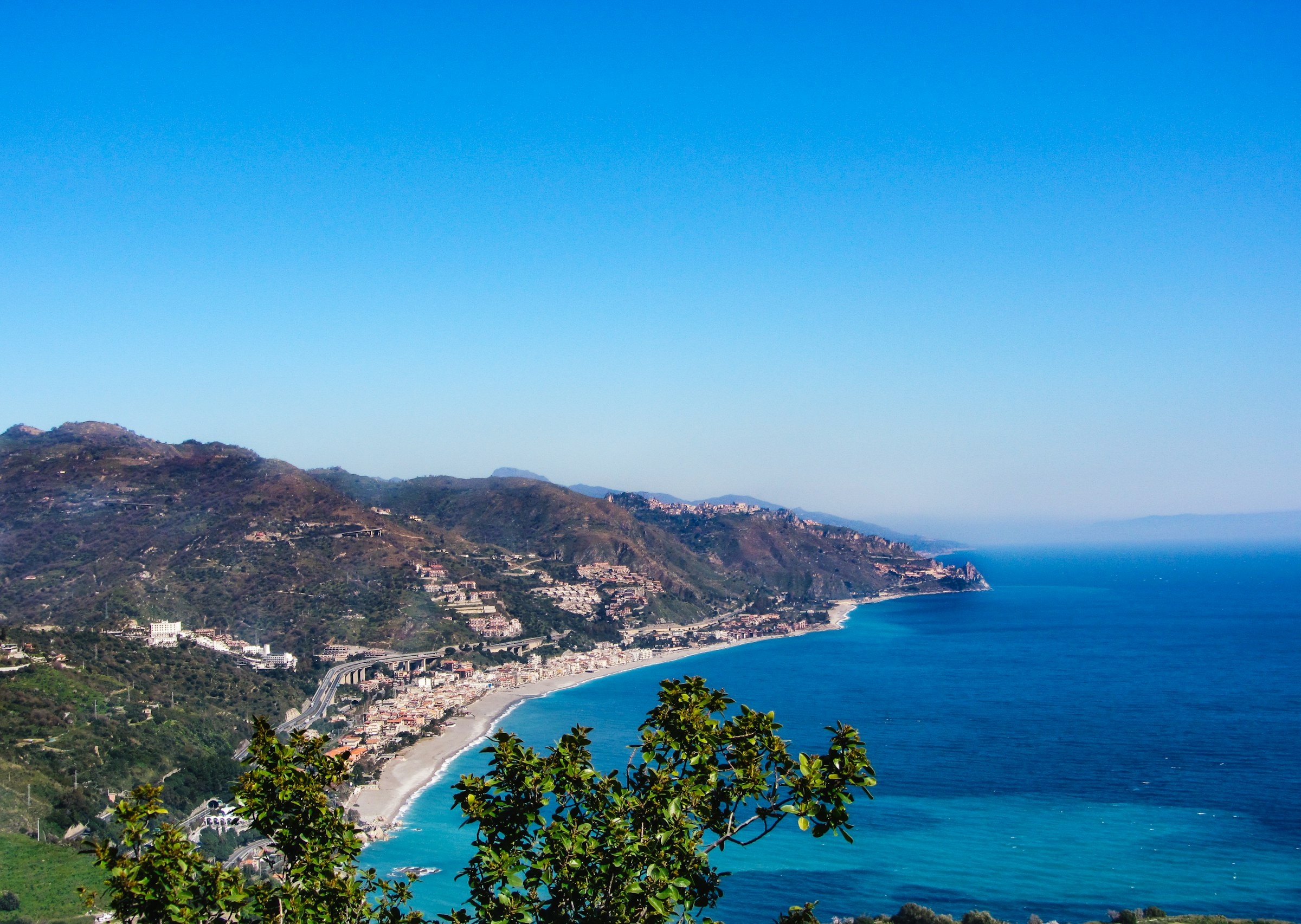
Sicily
Italy at its most layered and intense — Greek temples, Baroque towns, street food, and a live volcano.
Sicily is where the Mediterranean's whole history piles up in one place: Greek temples, Roman mosaics, Arab-Norman churches, and Spanish Baroque towns, all on an island with a live volcano, some of Italy's best street food, and a coastline that runs from glossy resort to raw and empty. It's bigger, wilder, and more intense than mainland Italy — a full trip in itself, not a day-trip add-on.
There's more here than one visit holds, so most people pick an axis. In the east, Taormina is the glamorous cliff-top base, with Mount Etna — Europe's most active volcano — smoking above vineyards you can tour and, snow permitting, climb; the Baroque southeast (Noto, Ragusa, Modica) is a run of honey-coloured towns and chocolate. In the west, Palermo is chaotic and magnificent — Arab-Norman cathedrals, teeming markets, and the best street food in Italy (arancini, panelle, sfincione, the offal you order if you're brave). Between them sit the Greek temples of Agrigento's Valley of the Temples, some of the best-preserved anywhere, and offshore, the volcanic Aeolian Islands. A car is essential to string it together.
The honest part: Sicily runs on its own logic. Palermo and Catania are gritty, chaotic, and require normal city street-smarts (petty theft is real); driving is assertive and parking is a contact sport; and things run late and loosely in a way that charms some and frustrates others. July and August bring heat and crowds to the coast. Come in the shoulder seasons, accept the rough edges as part of the texture, and you get one of the richest food-and-history trips in Europe for noticeably less than Tuscany or the Amalfi Coast.
Highlights
-
Taormina & Mount Etna
A glamorous cliff-top town below Europe’s most active volcano — vineyards, lava fields, and a Greek theatre with a view.
-
Palermo
Chaotic and magnificent: Arab-Norman cathedrals, teeming markets, and the best street food in Italy.
-
Valley of the Temples, Agrigento
A ridge of huge, remarkably intact Greek temples — among the finest surviving anywhere.
-
Baroque southeast
Noto, Ragusa, and Modica: honey-stone Baroque towns rebuilt after an earthquake, plus Modica’s chocolate.
-
Aeolian Islands
A volcanic archipelago off the north coast — Stromboli erupts nightly; Lipari and Salina are quieter escapes.
-
Street food
Arancini, panelle, sfincione, cannoli, granita — Sicily eats better on the street than most places do at the table.
Practical info
- Visa
- Schengen — visa-free for most Western passports (90 days).
- Currency
- EUR (€)
- Language
- Italian; English patchy outside tourist areas.
- Safety
- Generally safe, but Palermo and Catania have real petty theft — watch bags and cars.
- Getting around
- Rent a car — essential for the island. Trains and buses are slow and limited.
- Tap water
- Tap water safe and good.
- Plug type
- Type C Type F Type L 230V
- Money
- Cards widely accepted; carry cash for markets and small towns.
General guidance — visas, safety, and health change, so check your government's travel advisory and the official sources before you go.
Common questions
- When is the best time to visit Sicily?
- May–June and September–October — warm but below the peak extremes, with the sea still around 23°C in October. July–August are brutal: 35–40°C in the interior when the Saharan sirocco blows (Europe’s record 48.8°C was set at Siracusa in 2021). Unusually for the Med, Sicily is also a viable winter city destination — mild coasts, and snow on Etna.
- Do you need a car in Sicily?
- Yes, really. The trains are slow and patchy — Palermo to Catania still takes nearly three hours on a mostly single track — so a car is how you see the island. Just watch the ZTL limited-traffic zones in Palermo, Catania and Ortigia: cameras fine you automatically (€83–332) and the notice reaches your rental months later.
- Can you visit Mount Etna right now?
- Etna is Europe’s most active volcano and it’s live — a flank eruption began on 1 January 2026 — so access changes with its mood and ash occasionally closes Catania airport at short notice. Normally you ride the Funivia dell’Etna cable car from Rifugio Sapienza and take a 4×4 with a guide higher up; reaching the summit craters legally requires an authorised guide. Check the operator and INGV bulletins near your trip.
- Is Sicily cheaper than Mallorca?
- Yes, clearly — Sicily is one of the cheaper corners of the Med. Against Mallorca, cost of living runs about 28% lower and rents less than half; an inexpensive meal is around €13.50 versus €16.50, a cappuccino €1.83 versus €2.88. Sicily is bigger, wilder and less polished, and it rewards more time. See our full comparison.
- Is Sicily safe, given the mafia reputation?
- Very safe for tourists — organised crime doesn’t target visitors, and Italy’s homicide rate is among the world’s lowest. The real, everyday risk is petty theft and pickpocketing in the crowded markets of Palermo and Catania. Ordinary city precautions are all it takes.
When to go
It holds Europe’s heat record for a reason
Get the season wrong and midday at an open ruin is genuinely punishing.
48.8°C Europe’s highest reliably recorded temperature — Siracusa, 2021
Plan the calendar around the heat and around Ferragosto (15 August), when many family-run businesses close for up to a fortnight and locals travel — a national slowdown, not a Sicily quirk, but one to design around.
Getting around
You need a car — and you need to know the ZTL
The trains won’t carry your trip, and the city centres have an invisible fine line.
Sicily is big — roughly seven times Mallorca — and its railways are slow and patchy: the Palermo–Catania line is still mostly single track at 80–90 km/h, so a car or bus beats the train and the interior is barely served at all. A car is how you actually see the island, with two cautions. First, the ZTL limited-traffic zones in the historic centres of Palermo, Catania and Siracusa’s Ortigia: drive in without a permit and automatic cameras issue a fine that reaches your rental company — and you — months later. Second, aggressive local driving and hard city parking. The A19 Palermo–Catania motorway is free; the A18 and A20 around Messina are tolled.
Mount Etna
A 3,400-metre volcano that is erupting as you read this
Etna is the headline, and it is live — which changes how, and whether, you climb it.
Etna is Europe’s most active volcano, a UNESCO site, and about 3,400 metres tall — a height that literally changes with each eruption. It is erupting now: a flank eruption began on 1 January 2026, and this is normal rather than exceptional. Two practical consequences follow. Visiting it means riding the Funivia dell’Etna cable car up from Rifugio Sapienza (from around €50) and continuing by 4×4 with a guide; the summit craters can only be reached legally with an authorised volcanological guide, not on your own. And ash closes Catania airport at short notice — it happened repeatedly in 2024–25 — so build slack into flights in and out of Catania and watch the INGV bulletins.
The big sights
Greek temples, Baroque towns, and the White Lotus effect
This is the deepest layer-cake of history in the Med — Greek, Roman, Arab, Norman, Baroque, in one island.
The set pieces are extraordinary, and the major state sites share a tidy price — €14 full, €7 reduced for the big ones. The Valley of the Temples at Agrigento is one of the great Greek sites anywhere — go early or at the summer night openings (to around midnight, June–September) to dodge the heat. The Val di Noto — Noto, Ragusa Ibla, Modica, Scicli — is a cluster of golden late-Baroque towns rebuilt after a 1693 earthquake, their churches mostly free to wander. Siracusa pairs the Neapolis archaeological park (the Greek theatre and the Ear of Dionysius) with the island town of Ortigia; Palermo layers Arab-Norman mosaics — the Cappella Palatina, and Monreale’s golden cathedral nearby — over three of the Mediterranean’s great street markets; and Villa Romana del Casale holds the finest Roman mosaics still in situ, the famous “bikini girls” among them.
One warning: Taormina, with its Greek theatre framing Etna, has become the island’s priciest and most crowded spot since The White Lotus filmed there in 2022 — its San Domenico Palace hotel now runs from around $1,300 a night — beautiful, but the least “value” corner of an otherwise cheap island. For an add-on, the Aeolian Islands — Stromboli’s near-continuous eruptions, Lipari, Vulcano — are a separate ferry trip from Milazzo (where Stromboli’s summit is closed, but the night boats to watch the lava run regardless).
The food
Cheap, distinct, and half the reason to come
Sicilian food isn’t Italian food — it’s Greek, Arab, Norman and Spanish layered over each other.
The Arabs brought citrus, sugar and the sweet-sour profile; the Greeks olives and almonds; the Spanish chocolate and tomatoes — which is why the island tastes unlike the mainland. The street-food canon is arancini, cannoli, granita with a brioche for breakfast, and in Palermo the market stalls of Ballarò and Vucciria, and it’s genuinely cheap — a cappuccino under €2, a full meal around €13. The wines are their own world too: Etna DOC off the volcano’s slopes, Nero d’Avola, and Marsala.
Good to know
Less English, live EU borders, a relaxed clock
The practical footnotes — including one border correction people get wrong.
Sicily is Schengen and eurozone. Italian is the language and Sicilian is a distinct language of its own; English is patchier here than in northern Italy or Spain, so a few Italian phrases go a long way outside tourist venues. Tap water is drinkable but bottled is the table norm, and the pace is relaxed — afternoon closures and late dining. On borders: the EU’s biometric Entry/Exit System is now rolling out, so expect fingerprint-and-photo checks on arrival, but the separate ETIAS authorisation is not yet required — it’s due in 2027, so it doesn’t apply to a 2026 trip.
Sources
Where this comes from
The detail above was read off primary sources on — operator timetables, municipal ordinances, regional tourism boards, national statistics offices and first-hand traveller reports, rather than other travel articles. Researched and maintained by Dmitrii Romashchin — how we research.
Compare Sicily with
If you like Sicily, also consider
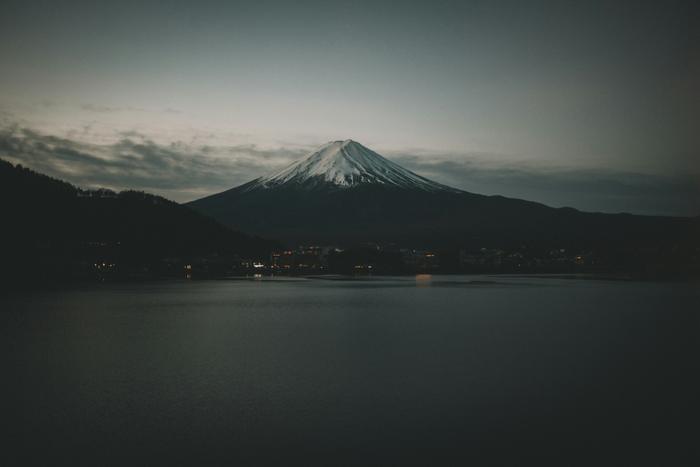
Japan
Extraordinary food, culture, and cities. Nothing quite prepares you for it.
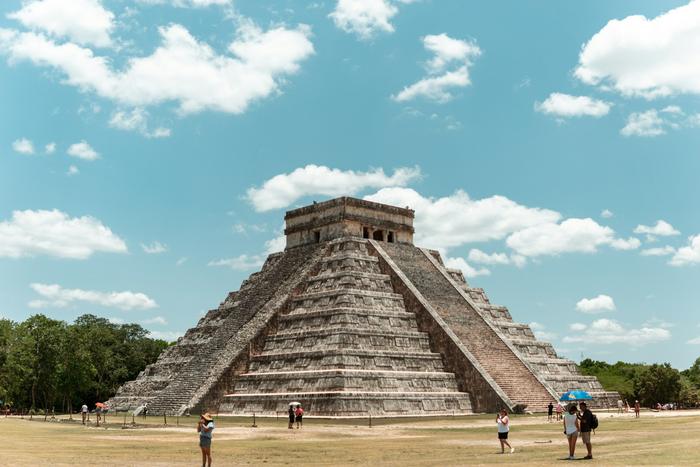
Mexico
Mexico City is world-class. Add the coast, ruins, and food culture.
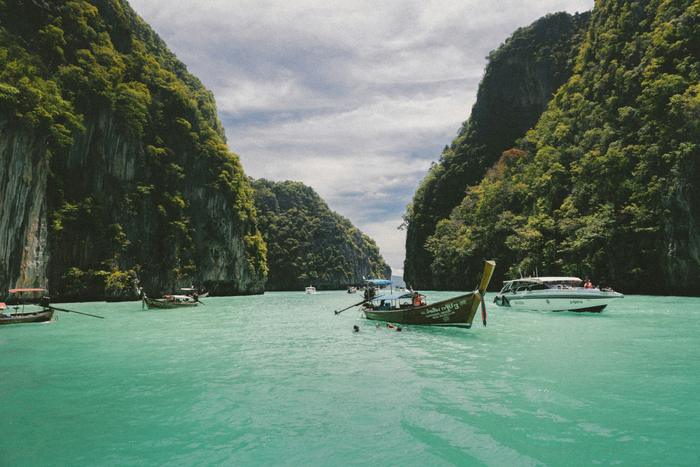
Thailand
The complete package for warm-climate travel.
Not sure where to go
Take the 5-minute quiz
Answer a few honest questions and get matched to destinations that actually fit how you travel.
Start the quiz