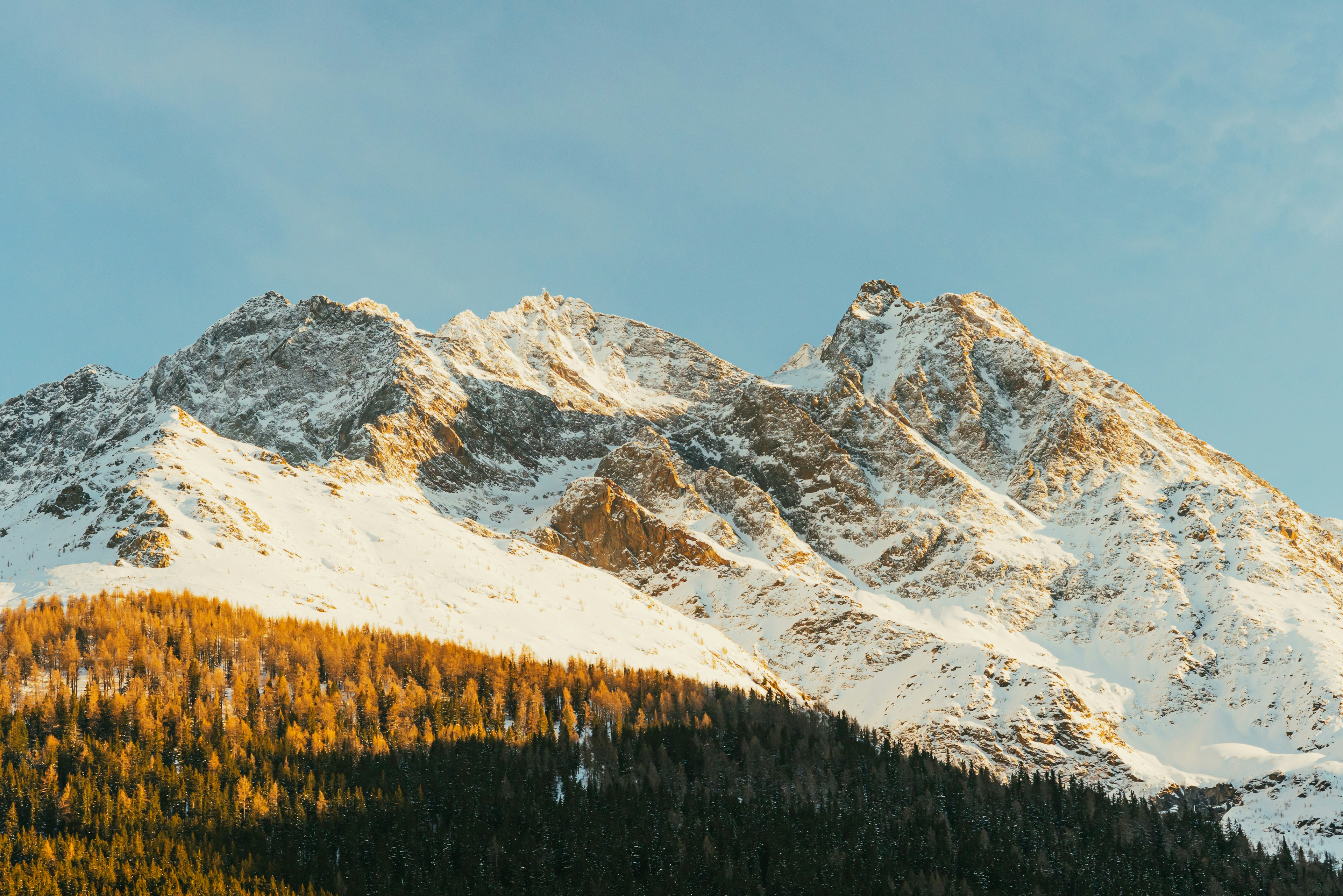
St. Anton am Arlberg, Austria
The birthplace of ski instruction and Austria’s most legendary off-piste.
St. Anton invented the ski school, perfected the après-ski bar and remains the standard against which every other Austrian resort is measured. The Ski Arlberg is Austria’s largest interconnected area — 305 km of piste from St. Anton through to Lech, Zürs, Warth and Schröcken — and the off-piste terrain here is among the most serious in the Alps.
The Valluga at 2,811 m anchors terrain that ranges from gentle family slopes at Gampen and Nasserein to the unpatrolled, guide-required summit descent and the vast freeride between St. Christoph and Stuben. The Flexenbahn gondola, opened in 2016, finally linked St. Anton to Lech and Zürs on skis, creating the interconnected area that had been talked about for decades.
It is expensive, crowded in February and legendarily loud at 3:30 pm when the Mooserwirt drops its blinds. But for strong skiers who want serious terrain, snow that lasts, and a village that stays up later than they do, St. Anton is hard to argue with.
Highlights
-
Ski Arlberg
Austria’s largest linked ski area — 305 km across St. Anton, Lech, Zürs, Warth and Schröcken.
-
Valluga
The 2,811 m summit with a guided descent through some of the Alps’ steepest terrain.
-
Mooserwirt & Krazy Kanguruh
The two après bars that defined the genre — ski boots and dancing from 3:30 pm.
-
Hannes Schneider heritage
Where organised ski instruction was born in 1921 — the Arlberg Technique went worldwide.
Practical info
- Visa
- Schengen — visa-free for most Western passports (90 days).
- Currency
- EUR (€)
- Language
- German. English very widely spoken in the resort.
- Safety
- Very safe on-piste; serious avalanche terrain off-piste — guide essential.
- Getting around
- Own railway station on the Arlberg line; about 90 min by road from Innsbruck airport.
- Tap water
- Tap water safe.
- Plug type
- Type C Type F 230V
- Money
- Cards everywhere.
General guidance — visas, safety, and health change, so check your government's travel advisory and the official sources before you go.
Common questions
- Is St. Anton good for beginners?
- Not as a first choice. St. Anton's reputation is built on steep, serious terrain and its off-piste, and the village base areas are limited for first-timers. Beginners are better served at Nasserein (quieter, own beginner area and ski school), Lech (gentler, upmarket) or Warth-Schröcken (snow-sure, quiet, wide slopes). See who it suits.
- How big is the Ski Arlberg area?
- 305 km of marked piste plus about 200 km of off-piste ski routes — making it Austria's largest interconnected ski area. Since the Flexenbahn gondola opened in 2016/17, St. Anton, St. Christoph, Stuben, Lech, Zürs, Warth and Schröcken are all connected on one pass. See the ski area.
- Do you need a guide for the Valluga?
- For the summit, yes. The Valluga II cable car to the 2,811 m top requires you to have a qualified mountain guide — there are no marked pistes from the summit, and the descent drops through steep couloirs and serious avalanche terrain. The Valluga I station at 2,650 m is open to everyone. See lessons & guides.
- Is the après-ski really that famous?
- Yes — St. Anton essentially invented the modern après-ski scene. The Mooserwirt ("probably the worst ski hut in the Arlberg") and the Krazy Kanguruh on the Mooserweg run are legendary, with dancing in ski boots from 3:30 pm. The town carries on until the small hours. See après & dining.
- Can you get to St. Anton by train?
- Yes, and it is one of the best train-accessible ski resorts in the Alps. St. Anton has its own station on the main Arlberg railway line, five minutes' walk from the village centre, with direct hourly trains from Innsbruck (~1h10) and direct services from Zurich (~2h30). See getting there.
- What does a week in St. Anton cost?
- Expect roughly €150–€280 per person per day, all-in before flights — the low end is self-catering with an off-peak pass, the high end is peak-season hotel and full-day lessons. St. Anton sits at the premium end of Austrian resorts. See what it costs.
- Is St. Anton good for families?
- It can be, but base wisely. The village party scene is not family-oriented, but Nasserein — a quieter neighbourhood with its own gondola, beginner area and Hoppl's Erlebnispark with nine magic carpets — is excellent for families. Childcare takes children from age 2. See families & kids.
The ski area
Austria's largest linked ski area — and its most serious
The Flexenbahn gondola, opened in 2016/17, joined the east and west sides of the Arlberg into one interconnected domain — 305 km of piste, 200 km of off-piste routes, and a vertical that reaches 2,811 m at the Valluga summit.
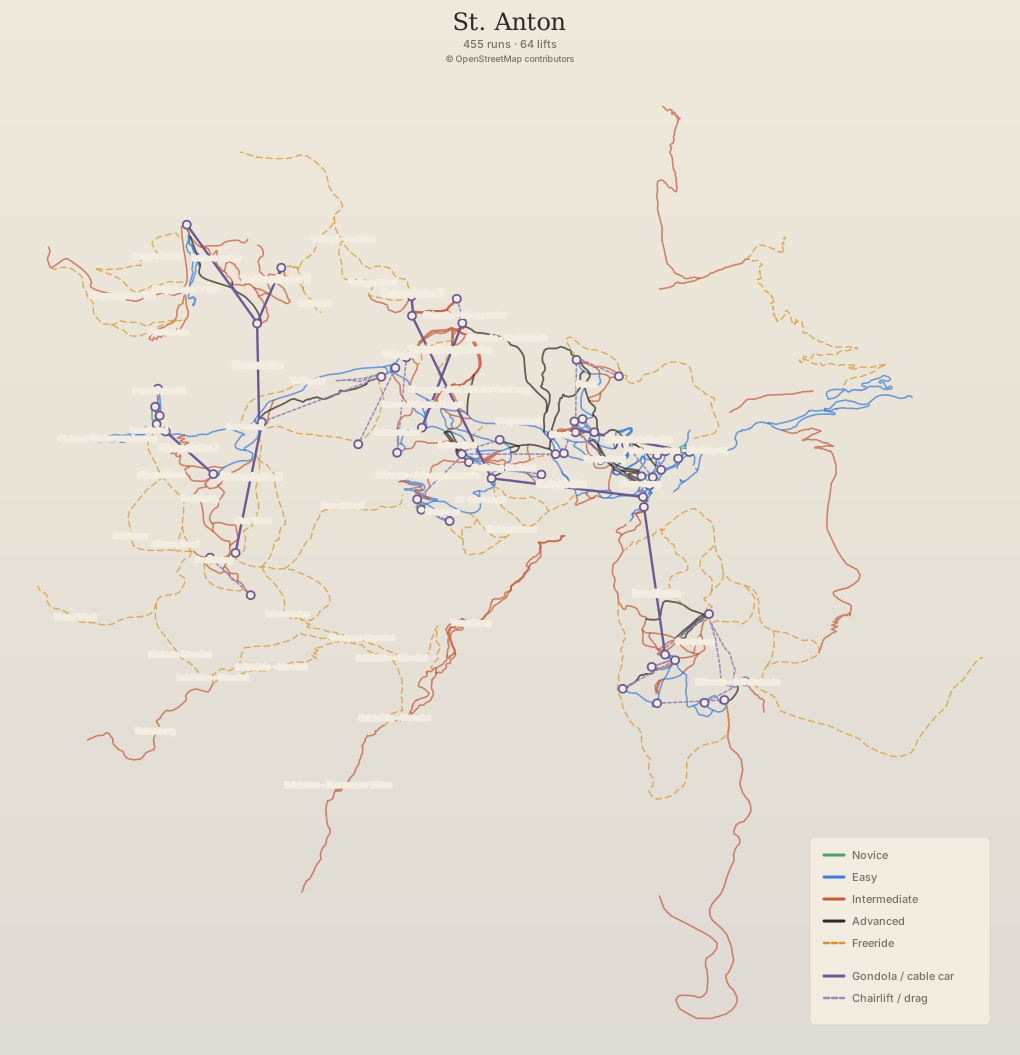
Everything connects. The Flexenbahn 10-person gondola, opened for the 2016/17 season, was the missing link: skiers now descend from the Schindler Spitze area to the Flexen valley station and ride across to Zürs and Lech, making the full east–west traverse possible on piste for the first time. The Auenfeldjet (opened 2013/14) extends the network further, linking Lech to the snow-rich Warth-Schröcken area.
St. Anton's own terrain centres on three main lifts from the village: the Galzigbahn gondola rising to 2,185 m, the Nassereinbahn gondola (the family-friendly side) and the Rendlbahn across the valley, serving a separate sector with a strong freeride reputation. Above Galzig, the Valluga cable car climbs in two stages to 2,811 m — the second stage, to the summit, requires a guide and has no marked return.
| Sector | Altitude | Best for | Notes |
|---|---|---|---|
| Galzig – Valluga | 1,304 → 2,811 m | All levels to experts | Main access from village; Valluga summit (guide required for descent) and the link west to Zürs via Flexenbahn |
| Gampen – Kapall | ~1,850 → 2,330 m | Intermediates, families | Gampen is the gentler, family-friendly area; Kapall is steeper above it |
| Rendl | 1,304 → ~2,030 m | Freeriders, off-piste | Separate sector across the valley; quieter, north-facing, strong freeride terrain |
| St. Christoph – Stuben | 1,407 → 1,793 m | Intermediates, tree runs | High hamlet at the pass; good in bad weather. Stuben is quieter and more affordable |
| Lech – Zürs (linked west) | 1,444 → 2,450 m | Cruising intermediates | Gentler, more manicured; the White Ring 22 km circuit; upmarket family base |
| Warth – Schröcken (linked) | 1,269 → 2,050 m | Families, snow-sure | Snowiest corner of the Arlberg; wide, gentle slopes; quietest sector |
Terrain split roughly 43% intermediate, 40% advanced, 17% expert (about 128 km blue, 121 km red, 51 km black). The ~200 km of ungroomed ski routes sit on top of that. 85–88 lifts in total, including 17 gondolas/cable cars/funitels, 43 chairlifts and ~25 drag lifts.
The Valluga summit (2,811 m) is the high point, but it is NOT a piste area — no marked runs return from the top. The Valluga I station at 2,650 m is open to all; the Valluga II cable car to the summit requires a guide. The descent drops through serious couloirs and powder fields with ~900 m of steep, ungroomed vertical.
Who it suits
Who St. Anton is — and isn't — for
St. Anton's soul is off-piste. Match yourself to the right corner of the Arlberg and every level works, but come expecting gentle nursery slopes on the doorstep and you'll be disappointed.
The Arlberg is big enough that every ability finds its terrain, but the default experience from St. Anton village is steep and serious — which is why the village après scene is full of people who just survived something. Families and beginners should plan their base around Nasserein, Lech or Warth rather than assuming the village centre works for everyone.
- First-timers & nervous beginnersSkipthe Galzig steeps and the village base areaGoNasserein (own beginner area, ski school, Hoppl's Erlebnispark), or better yet Lech or Warth-Schröcken — gentler terrain, quieter, less intimidating
- Cruising intermediatesSkipgetting stuck on the steep St. Anton sideGothe Lech–Zürs sector (the White Ring circuit is 22 km of linked cruising) and the St. Christoph–Stuben runs for tree-lined variety
- Advanced & expertsSkipthe gentle west sideGothe Valluga descent (with a guide), the Rendl freeride terrain, and the north-facing Schindler Spitze runs — some of the most serious lift-accessed terrain in Austria
- Freeriders & tourersSkiptreating this like a groomed-piste resortGoSt. Anton as an off-piste base — 200 km of marked ski routes plus limitless backcountry, with IFMGA guides available through Ski School Arlberg and independents
If what you want is a party-town week of challenging on- and off-piste skiing with the Alps' most famous après-ski, St. Anton is hard to beat. If you want a quiet family resort with gentle doorstep slopes, it is the wrong choice — even though the wider Arlberg has that terrain, you'd base elsewhere to reach it.
Snow & season
One of the snowiest resorts in the Alps
The Arlberg sits at the western gateway to Tirol, catching weather from the north-west. The result: up to 11 metres of natural snowfall a year and a season that runs early December to mid-April.
Months on the axis (12 = December). Crimson bars mark the snow-sure full season and the off-peak value windows. Monthly snowfall averages roughly: Dec 74 cm, Jan 111 cm (the peak), Feb 73 cm, Mar 80 cm.
Much of St. Anton's terrain is north-facing, which preserves snow quality longer and explains why the off-piste stays good well into spring. The Valluga at 2,811 m holds cover when lower slopes struggle, and the high bowls above Galzig and on the Rendl side are among the last to soften. January is the snowiest month by far.
Quietest and cheapest weeks: the Wedel & Sun Weeks at the season edges (2–18 December and 3–18 April), when passes drop ~15% and accommodation is at its lowest. January after New Year is good value too. Avoid mid-to-late February unless you enjoy queues and premium pricing.
The Arlberg's snow record is genuinely exceptional: Korbersee near Schröcken once recorded 24 metres of snowfall in a single winter (1967). Even in lean years, the altitude and north exposure keep the St. Anton terrain skiable.
Lift passes
One pass, 305 km — with off-peak savings at the edges
A single Ski Arlberg pass covers the entire interconnected area. The price varies by season tier — the off-peak "Wedel & Sun" weeks at the start and end of winter are the saving.
There is one main pass: the Ski Arlberg Pass, which covers all 305 km and all 85–88 lifts. No local vs. mega-pass choice — you buy the full area. Pricing has two tiers: peak (19 December – 2 April) and the cheaper Wedel & Sun off-peak weeks (early December and mid-April).
| Duration | Adult (peak) | Child 2011–18 | Youth / Senior |
|---|---|---|---|
| 1 day | €51 | €78 | |
| 3 days | €148 | €228 | |
| 6 days | €276 | €405 | |
| 7 days | €311 | €453 | |
| 14 days | €582 | €890 |
2026/27 peak-season rates. Off-peak Wedel & Sun Weeks (2–18 Dec, 3–18 Apr): 6-day adult €395, roughly 15% off. "Youth" = born 2007–2010; "Senior" = born 1953–1962. Active Seniors (born 1952 or earlier, i.e. 65+) pay the children's rate. Season pass: adult €1,272 (early-bird €840 if purchased 27 Nov–10 Dec). A €5 chip-card deposit applies.
Snowman ticket (free): children born 2019 or later — effectively under 8 for the 2026/27 season — ski free with a "Snowman" ticket. Family season-pass deal: the 3rd child and younger ski free when both parents and the first two children buy season passes.
Lessons & guides
Where ski instruction was invented
Hannes Schneider founded the Ski School Arlberg here in December 1921 — one of the world's first organised ski schools — and developed the Arlberg Technique that became the global standard for how skiing is taught.
The Ski School Arlberg remains the flagship — it is the original, with multilingual instructors and a heritage few schools anywhere can match. Skischule A-Z Arlberg, Schischule Pettneu and Ski School Stuben are the main alternatives, all offering English-speaking instruction and private lessons.
For off-piste, St. Anton is in a different class. IFMGA/UIAGM-certified mountain guides are available through the ski schools and independent guiding companies for the Valluga descent, the Rendl freeride terrain and multi-day touring. The Valluga II summit cable car will not let you on without a guide — this is not marketing, it is the rule for the cable car.
| Lesson type | Price | Notes |
|---|---|---|
| Adult group (4 hrs) | from €89/day | Ski School Arlberg; groups typically 8–12 |
| Kids group (4 hrs, ages 4–17) | from €85/day | Multiple ski schools; smaller groups available |
| Private (1 hr) | €116–€130 | Varies by school; Ski School Arlberg €116, Stuben €130 |
| Private (full day, 5 hrs) | €425–€540 | Pettneu €425, A-Z Arlberg €450, Arlberg €540 |
| Guided off-piste (group day) | from ~€250 | IFMGA guides; Valluga descent, freeride tours |
Prices from the 2025/26–2026/27 seasons via checkyeti.com and school websites. English-speaking instructors are the norm across all schools — St. Anton has a large international clientele.
The Ski Club Arlberg (founded 1901) is separate from the school — it is one of the oldest ski clubs in the world and hosts the famous "Der Weiße Rausch" mass-start race from the Valluga each spring.
Families & kids
Base at Nasserein and the family side opens up
St. Anton village is a party town. For families, the trick is to base at Nasserein — a quieter neighbourhood with its own gondola, beginner slopes and a huge children's world.
The confusion worth clearing up: a non-skiing crèche (from age 2), a ski kindergarten with snow play (from age 3), and ski-school lessons proper (from age 3) are different services. St. Anton's Ski School Arlberg accepts children from age 2 for non-ski childcare and from age 3 for lessons.
Hoppl's Erlebnispark (Hoppl's Adventure Park) is the centrepiece: a dedicated children's world at the Galzig and Nasserein base stations with nine magic carpets, a carousel, practice lifts, a children's lounge and its own kindergarten. Additional kids' areas operate at St. Christoph. The Gampen sector above the village has the gentlest intermediate terrain and is the natural progression area.
| Option | Ages | What it is |
|---|---|---|
| Non-ski childcare (crèche) | from 2 | Ski School Arlberg — indoor care without skis; the route for children still in nappies |
| Ski kindergarten / Hoppl's | from 3 | Snow garden at Nasserein/Galzig with 9 magic carpets, games, first taste of skiing |
| Group ski lessons | from 4 | Multiple ski schools; Ski School Arlberg from €85/day for kids |
| Lech / Warth (gentler base) | all ages | For families wanting wider beginner terrain and a quieter atmosphere than St. Anton village |
The Snowman ticket means children born 2019 or later ski free. The 4.5 km Gampen-Nasserein toboggan run is illuminated for evening runs on Tuesdays and Thursdays — a family highlight. The Funslope and Stanton Speed course add variety for kids progressing off the magic carpets.
The practical point: St. Anton village après-ski is famously raucous — dancing in ski boots from 3:30 pm, bars open until 4 am. Families with small children should base at Nasserein (10–15 min walk or free bus from the centre) or in Lech/Warth, not in the Dorfstraße party zone. The skiing is the same; the evenings are entirely different.
Getting there
One of the best train-accessible ski resorts in the Alps
St. Anton has its own railway station on the main Arlberg line — direct trains from Innsbruck in about an hour and from Zurich in under three. Few ski resorts anywhere can match this.
~1h 10 min Innsbruck to St. Anton by train
The train is the standout. Innsbruck is ~1h10 with one change at Wörgl; Zurich is a direct ~2h30 on RailJet/EuroCity services; Munich is ~3–3.5h with a change. An ÖBB Nightjet overnight service runs to the Arlberg too. From the UK, the route is Eurostar to Paris, then onward via Zurich — doable in a day with an early start.
By air, the options are Innsbruck (~90 min transfer), Zurich (~2.5–3h by road or train) and Munich (~3h transfer). Innsbruck is the shortest but Zurich has far more international flights and the train is direct.
| From | To St. Anton | Notes |
|---|---|---|
| Innsbruck (train) | ~1h 10 min | Hourly departures, one change at Wörgl; the quickest gateway |
| Zurich (train) | ~2h 30 min | Direct RailJet/EuroCity; ~20 trains/day. Zurich airport: add ~15 min from terminal |
| Munich (train) | ~3–3.5h | Change in Innsbruck; seasonal Urlaubs Express direct from Munich Ost |
| Innsbruck airport | ~90 min | By private transfer; ~95 km via S16 Arlberg route |
| Zurich airport | ~2.5–3h | By road or direct train; more international flights than Innsbruck |
Driving: Austrian motorway vignette required; the Arlberg tunnel (S16) toll is ~€12 one-way, or use the Arlberg Pass road (free, but closed in heavy winter conditions). Snow tyres are mandatory Nov–Apr.
The train advantage is real and undersold: no transfer bus, no airport wait, no snow-tyre stress. For many European cities, Zurich + direct train is faster door-to-door than flying to Innsbruck and transferring.
Where to stay
Four bases, four personalities
Where you sleep in the Arlberg defines your week. St. Anton village is the party; Nasserein is the family escape; St. Christoph is the high-altitude quiet; Stuben is the budget pick.
Central St. Anton (Dorf) is the heart: the compact pedestrianised Dorfstraße, the Galzigbahn and Nassereinbahn gondola base stations, the bars, the restaurants and the après-ski — the default for couples, groups and anyone who wants the full St. Anton experience. Nasserein is a quieter neighbourhood 10–15 minutes' walk or a free bus ride from the centre, with its own gondola, beginner area and ski school — the family base.
St. Christoph (1,800 m) sits 6 km from St. Anton at the Arlberg Pass, with true ski-in/ski-out and an exclusive, tranquil atmosphere — the famous Arlberg Hospiz Hotel (5-star, Michelin-listed, 7,000-bottle wine cellar) is here. Stuben is small, traditional and the most affordable of the Arlberg bases — its own quiet ski area connects to the main domain.
Accommodation runs from hostels and apartments through traditional Tyrolean pensions to the Hotel Schwarzer Adler (same family since 1885) and the MOOSER Hotel (boutique/design) in the village centre.
Budget lever: Stuben accommodation is significantly cheaper than St. Anton village, and you ski onto the same 305 km. If the après-ski scene doesn't matter, it is the smart saving — but you'll need the free bus to reach the nightlife.
Après & dining
The most famous après-ski in the Alps
If Chamonix is the mountaineering town and Val Thorens is the high-altitude party station, St. Anton is the original — the place that turned "après-ski" from a drink after skiing into a cultural phenomenon.
The mountain après starts on the Mooserweg blue run from Gampen, where two legendary venues sit within 200 m of each other. The Mooserwirt — self-styled "probably the worst ski hut in the Arlberg" — holds about 400 people, serves beers from ~€4, and has DJ Gerhard on the decks since 1994. Just above it, the Krazy Kanguruh (operating since 1965, owned by Olympic champion Mario Matt) claims to be "the original home of après-ski" — huge sun terrace, open-air dance floor, younger crowd. Both close at 8 pm. Taps sits between them for a slightly calmer drink.
The village takes over from 8 pm. Piccadilly Bar (Hotel Post) has live music nightly with resident performer Andy Joseph. Postkeller (the Hotel Post basement) is the nightclub — it opens at 10 pm and runs until 4 am. Scotty's Bar, Murrmel, Underground Den and Bobo's fill the middle hours. Kandahar on the lower Dorfstraße is open 8 pm to 6 am with food until 4 am.
On the plate, mountain lunches run about €15–25 for a main course. In the village, Museum Restaurant (mains €15–30) and Aquila (€19–28) are solid mid-range. The Hospiz Alm in St. Christoph is Michelin-listed with a 7,000-bottle wine cellar and a famous concrete slide to the toilet.
St. Anton après is not for everyone — the mountain venues on the Mooserweg are packed, loud and fuelled by cheap beer. That is exactly the point for its fans and exactly the problem for anyone wanting a quiet drink. There is no middle ground at 4 pm.
Non-skiers
A lively village with a thermal centre — not just the slopes
St. Anton is small but its non-ski offering is better than most Austrian resorts, anchored by the Arlberg WellCom and the compact, walkable village.
The Arlberg WellCom leisure centre is the centrepiece for non-skiers: indoor and outdoor heated pools with mountain views, a rooftop Sauna World, waterfall feature and whirlpool — a full spa day. Beyond that: 70 km of cleared winter hiking paths, snowshoeing (guided tours available), cross-country skiing (40 km of trails), ice skating, curling, horse-drawn sleigh rides and an indoor climbing wall.
The 4.5 km Gampen-Nasserein toboggan run is a highlight for non-skiing partners and kids — illuminated for evening runs on Tuesdays and Thursdays. And the village itself, while small, has enough restaurants, bars and atmosphere to keep a non-skiing partner entertained through a week, especially if they like après-ski without the skiing.
A pairing that works: a skier on the full Arlberg pass and a non-skier with a WellCom day pass and a winter hiking map can share a mountain lunch (the non-skier rides a gondola up) and split again for the afternoon.
Dogs
Bring a dog to the village — not to the slopes
Dogs are welcome in the valley and on cleared paths, but Austrian ski resorts do not allow dogs on groomed pistes — and the paperwork for a British dog starts weeks before you travel.
On the mountain, the rule is Austria-wide: dogs are not permitted on ski slopes and must be kept on a short lead at all times in lift areas. Some Austrian resorts allow leashed dogs on certain gondolas for a small fee (~€4); specific St. Anton gondola rules vary by season — check with the tourist office. Dog waste must be collected and disposed of (Austrian law).
In the village, dogs are welcome on winter walking paths on a lead. Several hotels and apartments accept dogs — Hotel Arlberg is noted as pet-friendly — but always confirm in advance, and dogs are not typically allowed in hotel restaurants. Winter hiking with a leashed dog on the 70 km of cleared paths works well.
GB → Austria paperwork (gov.uk): the old pet passport no longer works for British dogs entering the EU. You need an Animal Health Certificate, a microchip, and a rabies vaccination given at least 21 full days before travel; the AHC is valid 10 days for entry. Austria also requires tapeworm treatment (echinococcus) within 24–120 hours before arrival — this is an Austrian/EU rule that catches UK owners out.
Accessibility
Modern lifts and a compact village — with gaps to plan around
St. Anton's modern gondolas and compact centre make it more accessible than many Alpine resorts, but formal adaptive-ski provision is limited.
The Galzigbahn and Nassereinbahn are modern cabin-style gondolas that wheelchair users can board at the base stations with staff assistance. The village centre is compact and largely flat along the pedestrianised Dorfstraße. The Arlberg WellCom is wheelchair accessible. St. Anton's three railway stations provide step-free access.
On adaptive skiing, there is no dedicated adaptive-ski school documented for St. Anton — the broader Vorarlberg region has provision (e.g. Brandnertal), but St. Anton itself would need direct enquiry to Ski School Arlberg. Accessible hotel rooms are available (Sporthotel listed on disability holiday sites). No specific disabled-person lift-pass discount exists beyond the age-based categories.
The gap is the formal adaptive-ski programme: Chamonix has ESF Handiski with sit-ski and dualski; St. Anton does not have an equivalent documented programme. If adaptive skiing is essential, confirm availability with Ski School Arlberg directly before booking.
Safety
Serious off-piste terrain — and rescue costs money
The Arlberg's off-piste is genuine avalanche terrain, and Austrian mountain rescue is not free. The insurance gap catches visitors every year.
St. Anton's ~200 km of off-piste ski routes and the Valluga descent cross serious avalanche paths. A qualified guide (IFMGA) is essential for off-piste, and the minimum kit — avalanche transceiver, probe and shovel — is non-negotiable. The Austrian avalanche warning service (Lawinenwarndienst Tirol) publishes daily bulletins.
On insurance: the EHIC/GHIC covers state emergency hospital treatment for EU/EEA/UK citizens, but it does not cover mountain rescue, helicopter evacuation or repatriation — and those are charged in Austria. Helicopter rescue can cost €3,500–10,000+ depending on the deployment. A standard travel policy often excludes winter sports, and off-piste cover typically requires you to have been with a qualified guide.
Unlike some French resorts, the Austrian lift pass does not include rescue insurance. The ÖAMTC Schutzbrief (Austrian auto club membership) provides up to €10,000 helicopter rescue reimbursement — worth considering for regular Austrian ski trips. Otherwise, ensure your travel/ski insurance explicitly covers on-piste rescue, off-piste with a guide, and helicopter evacuation.
The Valluga summit descent is NOT a marked piste — it is an unpatrolled, uncontrolled off-piste route through couloirs and avalanche terrain. Treating it like a black run because there is a cable car to the top is the mistake that gets people into trouble.
What it costs
What a day in St. Anton actually costs
St. Anton sits at the premium end of Austrian resorts — the pass is the priciest in the country, accommodation is steep in peak weeks, and the après adds up. But the off-peak edges and train access offer real savings.
Here is the day-rate breakdown, so you can build your own number rather than trust a package headline. Everything is per person per day unless noted.
| What | Typical day-rate | Notes |
|---|---|---|
| Lift pass (from 6-day, peak) | ~€78 | Full Ski Arlberg; off-peak ~€66 |
| Lift pass (from 6-day, off-peak) | ~€66 | Wedel & Sun Weeks: 2–18 Dec, 3–18 Apr |
| Ski / board hire | €30–50 mid-range · €50–70 premium | Intersport Arlberg: rent 7 days pay 6; kids under 10 free, under 14 half price |
| Group lesson (adult, 4 hrs) | €89 | Ski School Arlberg; kids from €85 |
| Private lesson | €116–130/hr · €425–540/day | Varies by school; faster progress |
| Mountain lunch | €15–25 | Main course + drink on the mountain |
| Dinner out | €25–45 mid-range · €80+ fine dining | Per head; the Hospiz Alm is the splurge |
| Bed for the night | €50–75 budget · €75–175 mid-range · €200–500+ luxury | Per person; Stuben is 30–40% cheaper than St. Anton village |
| Tourist tax (Ortstaxe) | ~€5 per person per night | St. Anton rate; varies slightly by accommodation class |
| Transfer (Innsbruck airport) | €175–200 private | Or ~€15–25 by train — the budget move |
Rates from the 2025/26–2026/27 seasons. They are set each year — buy passes online in advance, and re-check before you travel. Peak-week lodging (Christmas, mid-February) roughly doubles the off-peak price. The Gampen Alm breakfast (€19.50) is a local institution.
The levers that move the number most: travel in the Wedel & Sun off-peak weeks (pass and accommodation both drop ~15%); take the train from Zurich or Innsbruck instead of a private transfer; base in Stuben for cheaper beds; and self-cater from the village supermarket.
Compare St. Anton am Arlberg, Austria
St. Anton am Arlberg, Austria vs Chamonix, France
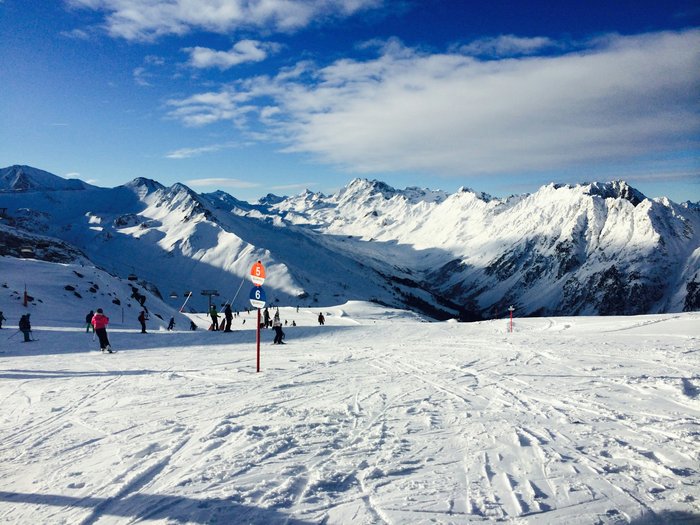
St. Anton am Arlberg, Austria vs Ischgl, Austria
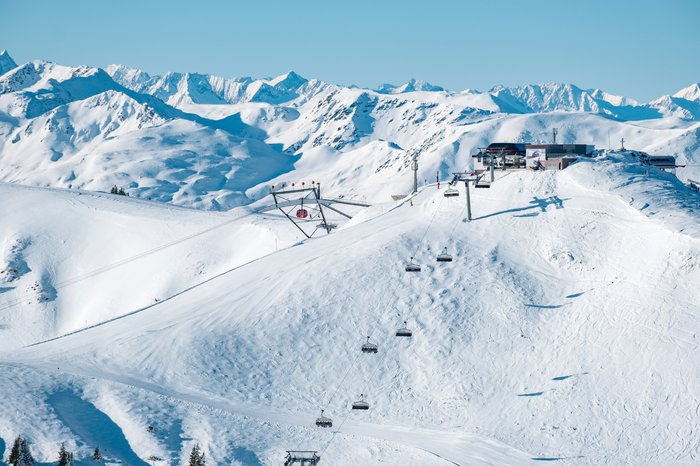
St. Anton am Arlberg, Austria vs Kitzbühel, Austria
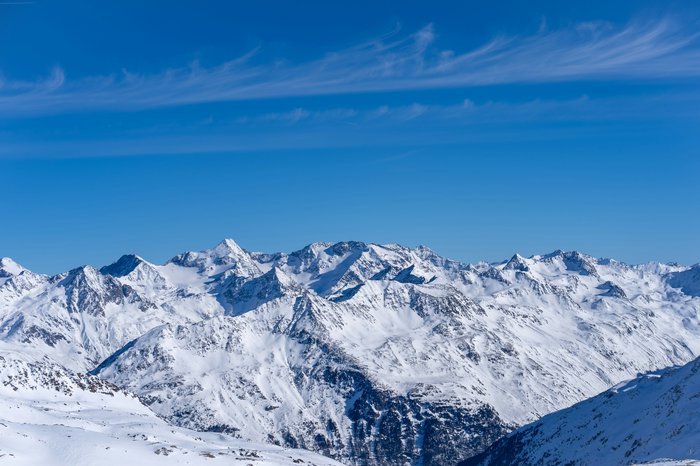
St. Anton am Arlberg, Austria vs Sölden, Austria
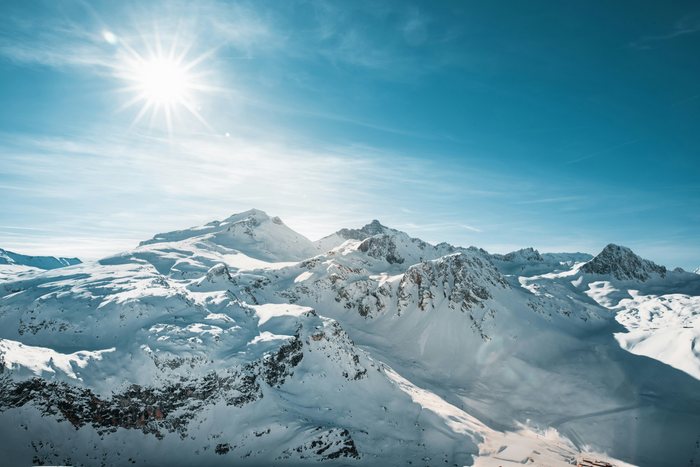
St. Anton am Arlberg, Austria vs Val d’Isère, France
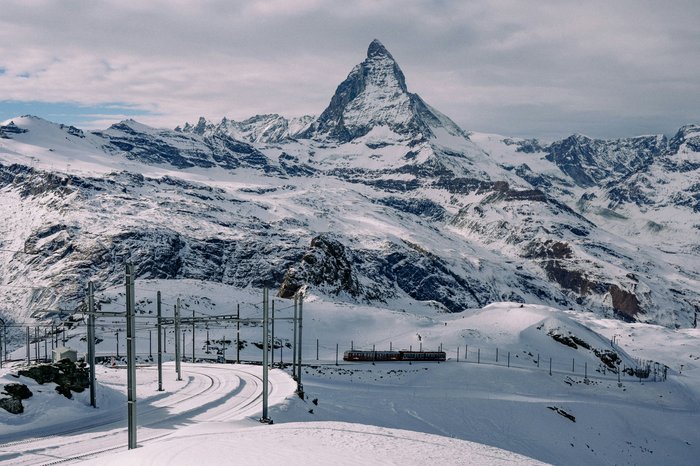
St. Anton am Arlberg, Austria vs Zermatt, Switzerland
If you like St. Anton am Arlberg, Austria, also consider
Kitzbühel, Austria
A medieval town with a World Cup downhill and 800 years of alpine charm.
Sölden, Austria
Two glaciers, three 3,000 m peaks, a James Bond villain’s lair and the World Cup opener.
Ischgl, Austria
The Ibiza of the Alps — 239 km of cross-border skiing and Europe’s wildest après.
Chamonix, France
The birthplace of alpinism, under Mont Blanc.
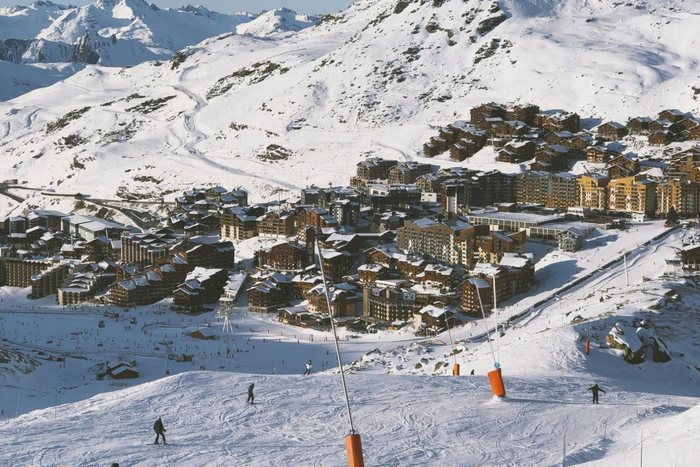
Val Thorens, France
Europe’s highest resort — snow-sure, and the gateway to the world’s largest linked ski area.
Val d’Isère, France
High-altitude, serious skiing with a village that actually feels like one.