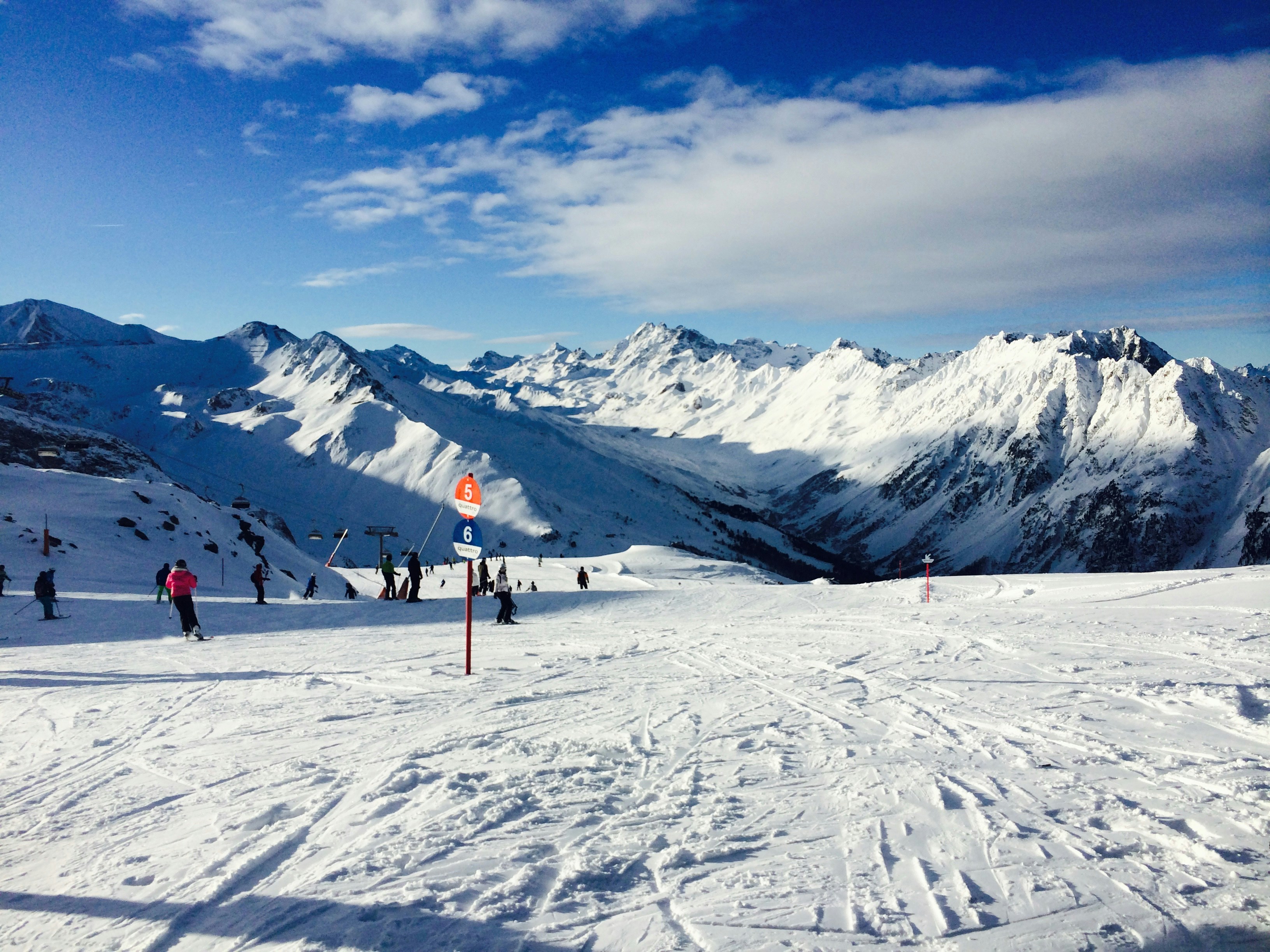
Ischgl, Austria
The Ibiza of the Alps — 239 km of cross-border skiing and Europe’s wildest après.
Ischgl’s Silvretta Arena straddles the Austrian–Swiss border, linking 239 km of piste to the duty-free village of Samnaun on the Swiss side. The skiing is vast and mostly intermediate; the après-ski is not. Pacha (the Ibiza nightclub), the Trofana Alm, and the massive Top of the Mountain concerts have earned Ischgl its nickname — and a clientele that flies in as much for the party as the powder.
The terrain fans out from the Idalp plateau at 2,320 m, reached by two gondolas from the village, with runs stretching to 2,872 m at the Greitspitz. The Smugglers’ Circuit ski route loops through both countries, crossing the border twice. Snow reliability is excellent: 1,200 cannons cover ~95% of pistes, and the season runs late November to early May.
It is not a quiet family village. Ischgl is built for adults who ski hard and stay out late, and the prices — accommodation, passes, dinner — reflect a resort that markets to a well-heeled international crowd. For that crowd, it delivers like few others.
Highlights
-
Silvretta Arena
239 km of cross-border piste linking Austria to duty-free Samnaun, Switzerland.
-
Top of the Mountain
Massive open-air concerts for the season opener and closer — Robbie Williams, Elton John, Muse.
-
Pacha Ischgl
The Ibiza nightclub brand, transplanted to 1,377 m — après until 4 am.
-
Samnaun duty-free
Ski across the border and shop tax-free for perfume, spirits and Swiss watches.
Practical info
- Visa
- Schengen — visa-free for most Western passports (90 days).
- Currency
- EUR (€)
- Language
- German. English very widely spoken.
- Safety
- Very safe on-piste; standard off-piste avalanche precautions apply.
- Getting around
- About 90 min from Innsbruck airport; nearest train station Landeck-Zams (~30 min bus).
- Tap water
- Tap water safe.
- Plug type
- Type C Type F 230V
- Money
- Cards everywhere.
General guidance — visas, safety, and health change, so check your government's travel advisory and the official sources before you go.
Common questions
- How big is the Ischgl ski area?
- The Silvretta Arena spans 239 km of piste across 45 lifts, linking Ischgl in Austria to Samnaun in Switzerland — one of the largest interconnected areas in the Alps, and you cross an international border on skis without noticing. See the ski area.
- Is Ischgl really the "Ibiza of the Alps"?
- The nickname sticks for a reason: Ischgl’s après-ski scene is among the most intense in Europe, anchored by Pacha (the actual Ibiza nightclub brand), the Trofana Alm, Kuhstall and the massive Top of the Mountain concerts that open and close the season with acts like Robbie Williams and Elton John. It is a party town first, but the skiing is serious too. See après & dining.
- Is Ischgl good for beginners?
- Conditionally. The Idalp plateau at 2,320 m has wide, gentle runs and a dedicated practice area, and the ski schools are well set up — but you ride a gondola to reach it (there are no nursery slopes in the village), and the dominant terrain is red (intermediate). Total beginners can learn here, but a resort built around greens would be gentler. See who it suits.
- What is the Smugglers' Circuit?
- The Schmugglerrunde is a marked ski circuit of about 45 km that loops through Austria and Switzerland, crossing the border twice and taking in some of the best runs on both sides. It traces the old smuggling routes between the Paznaun and Samnaun valleys. Budget a full day and good visibility. See the ski area.
- Can you shop duty-free at Ischgl?
- Yes — on the Swiss side. Samnaun is a duty-free zone (the only one in Switzerland), so perfume, spirits, tobacco and Swiss watches are sold at tax-free prices. You ski across, shop, and ski back — or ride the free Samnaun village buses between the shops. See non-skiers & off-slope.
- How snow-sure is Ischgl?
- Very. The skiing sits between 1,377 m and 2,872 m, most of the terrain is above 2,000 m, and 1,200 snow cannons cover about 95% of the pistes — one of the highest snowmaking coverages in the Alps. The season runs late November to early May. See snow & season.
- Can you bring a dog to Ischgl?
- To the village, yes; onto the pistes or the lifts, no. Dogs are banned from ski runs across Austria and are not carried on the lifts. Leashed dogs are welcome on cleared village paths, and some hotels accept pets. GB visitors need an Animal Health Certificate. See dogs.
The ski area
A cross-border arena — Austria on one side, duty-free Switzerland on the other
The Silvretta Arena links Ischgl in Austria’s Paznaun valley to Samnaun in Switzerland’s Lower Engadine — 239 km of piste, one pass, two countries, and you cross the border on a chairlift.
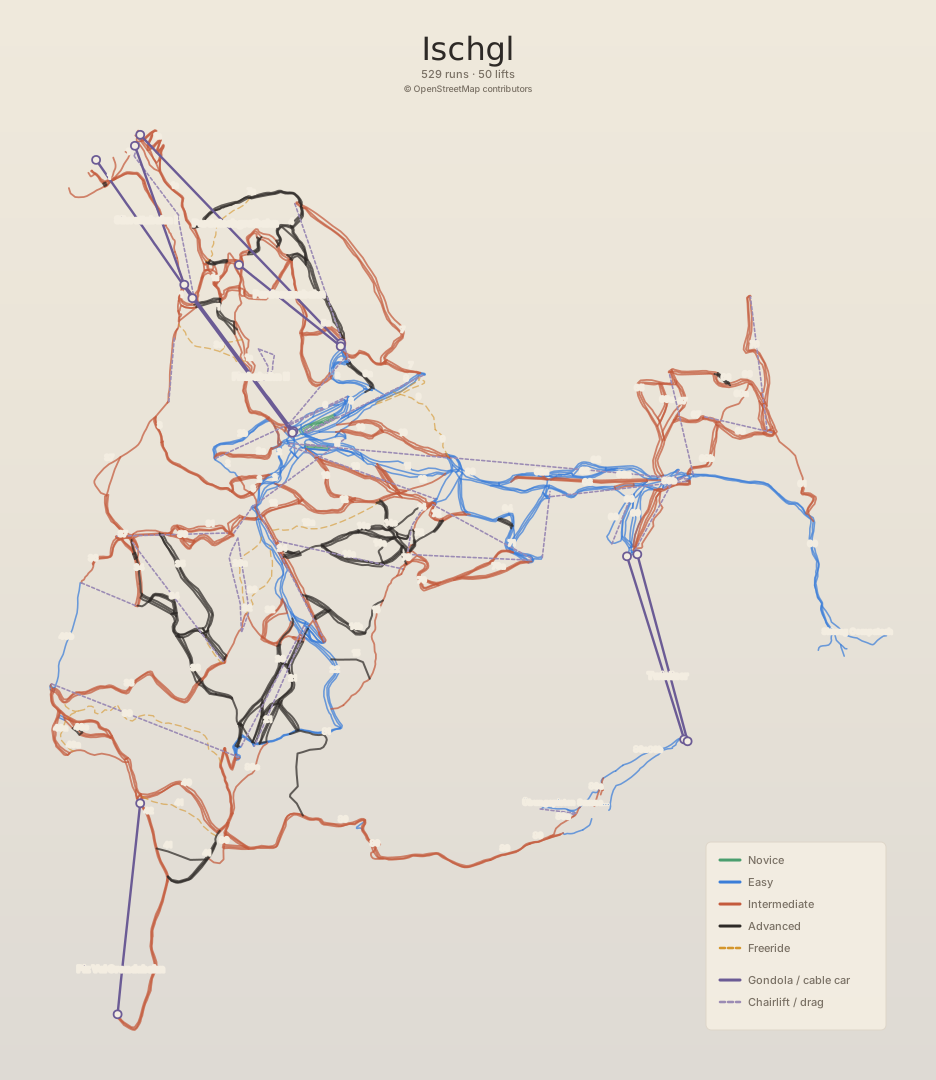
The border crossing is the defining feature. From Ischgl, two gondolas — the Silvrettabahn and the Fimbabahn — rise to the Idalp (2,320 m), the central plateau that is the hub of the ski area. From Idalp, lifts fan out across Austrian terrain to the north and west, and south across the ridge into Samnaun, where the pistes drop into a duty-free shopping zone. You can ski an entire loop through both countries — the Schmugglerrunde (Smugglers’ Circuit) — tracing the old contraband routes between the Paznaun and Lower Engadine.
The terrain is overwhelmingly intermediate: 137 km of red runs make up the bulk, with 47 km of blue and 26 km of black. Off-piste is extensive for those who know it — the terrain between the groomed runs is steep and north-facing — but Ischgl is not marketed as a freeride resort the way St. Anton is. The lift system is modern and fast: high-speed detachable chairs dominate, queues are rare outside peak weeks, and the Pardatschgratbahn gondola reaches the panoramic summit at 2,624 m.
| Sector | Altitude | Best for | Notes |
|---|---|---|---|
| Idalp | 2,320 m | Hub, beginners, families | Central plateau reached by Silvrettabahn/Fimbabahn; wide, gentle terrain, practice area, restaurants |
| Pardatschgrat | 2,624 m | Panorama, steeper runs | Gondola from village; long reds and blacks, 360-degree views |
| Greitspitz | 2,872 m | Experts, the highest point | Highest lift-served point; steep descents, off-piste access |
| Palinkopf | 2,864 m | Intermediates, border crossing | Gateway to Samnaun; long descents on both sides of the border |
| Samnaun (CH) | 1,840 → 2,750 m | Cruising, duty-free shopping | Swiss side; gentler terrain, duty-free village at the base |
The Silvretta Arena in total: 239 km of marked piste (47 km blue, 137 km red, 26 km black) across 45 lifts. The Schmugglerrunde circuit is about 45 km and crosses the border twice.
The Idalp is the crossroads — almost every run either starts from or passes through it. On a powder day or a busy Saturday, being above Idalp first thing in the morning is the move; the plateau itself fills up by 10 am.
Who it suits
Who Ischgl is — and isn’t — for
Match the skier to the mountain and Ischgl delivers serious mileage and an unforgettable evening. Mismatch and a family with small children ends up in Europe’s loudest après bar.
Ischgl’s terrain and its town pull in different directions. The skiing is vast, well-groomed and mostly intermediate — ideal for strong cruisers who want to clock 50+ km a day — but the village scene is built around nightlife, high-end hotels and a hard-partying international crowd. Families can and do come here (the Idalp has the space), but a resort like Serfaus-Fiss-Ladis is designed for them; Ischgl is designed for adults who want to ski hard and stay out late.
- Strong intermediates who love mileageSkipnothing — this is your resortGoThe Schmugglerrunde circuit, the long reds off Palinkopf and Pardatschgrat, and a day skiing the Samnaun side
- BeginnersSkipthe village (no nursery slopes down here)GoHead up to Idalp — the plateau has wide, gentle runs and a practice area; the ski schools meet there
- Experts and freeridersSkipexpecting the off-piste depth of St. AntonGoGreitspitz and the terrain between the groomed runs; hire a guide for the off-piste couloirs off Palinkopf and Pardatschgrat
- Families with young childrenSkipcentral Ischgl village at nightGoStay in a quieter spot or consider the Idalp day-care; the skiing is excellent for kids, but the town is a party town
The honest summary: Ischgl is one of the best resorts in the Alps for a group of intermediate-to-advanced adults who want big skiing, modern lifts and serious nightlife. It is not the best choice for a quiet family holiday or a total beginner.
Snow & season
High, north-facing and machine-backed — about as reliable as it gets
Almost all the terrain sits above 2,000 m, and 1,200 snow cannons cover 95% of the pistes. Ischgl rarely disappoints on snow.
Months on the axis (12 = December). Crimson bars are the peak-season windows and the headline concerts. The quietest value weeks are early-to-mid January and mid-March to mid-April.
Ischgl’s altitude and snowmaking combine to produce one of the longest and most reliable seasons in Austria. The village at 1,377 m is modest, but the skiing starts at 2,000 m and most of the terrain is north- or east-facing, preserving snow quality. Annual natural snowfall averages around 5–6 metres on the upper slopes, and the 1,200 snow cannons — covering roughly 95% of runs — fill any gaps.
The Top of the Mountain opening concert in late November is a guaranteed-open date (Ischgl commits to full operation for the event), and the closing concert in late April or early May marks the end of one of the longest non-glacier seasons in the Alps. The best snow for quality and quiet is January through early March; February half-term (German, Dutch, UK school holidays) is the crush.
Lift passes
One pass, two countries — and under-10s ski free
The VIP Skipass covers the entire Silvretta Arena, including the Swiss Samnaun side, and children under 10 ride free.
There is one main pass: the VIP Skipass, which covers all 239 km of the Silvretta Arena in both Austria and Switzerland. There is no separate "local" pass — everything is included. Passes are hands-free (chip card, €5 deposit). Ischgl uses seasonal tiered pricing.
| Pass | Duration | Adult | Per day |
|---|---|---|---|
| VIP Skipass | 1 day | ~€72 | |
| VIP Skipass | 6 days | ~€385 | |
| VIP Skipass | 13 days | ~€645 | |
| Season pass | Full season | ~€890 |
Adult rates for 2025/26 season. Children (born 2016 or later, effectively under 10) ski free with a paying adult. Youth (~10–17) and senior (born before 1960) rates are roughly 20–25% off adult. Rates are set each season — re-check on ischgl.com before you book. A €5 chip-card deposit is required.
The free-under-10 policy is generous — most Austrian resorts cut off at 5 or 6. A family with two young children saves the price of two passes, which at 6 days is over €500.
Lessons & guides
Multiple ski schools — and the gondola ride to reach them
Lessons meet on the Idalp, not in the village. You ride the gondola to your lesson, which means your first morning starts with a cable car.
Several ski schools operate in Ischgl: Skischule Ischgl (the largest, with a big Idalp presence), Ski Academy Ischgl, and smaller independents. All meet on the Idalp plateau, where the practice lifts, magic carpets and children’s area are. English-speaking instructors are standard — the clientele is heavily international.
Group lessons run around €60–80 per day for adults and €55–75 for children. Private tuition starts at roughly €60 per hour for one-on-one and €120–150 per hour for a group private. Off-piste guiding is available through the ski schools and through independent mountain guides in the Paznaun valley — the terrain between the groomed runs rewards local knowledge.
Because the nursery and practice areas are on the Idalp, not in the village, total beginners ride the gondola on day one. The schools handle this well — instructors meet groups at the top station — but know that you won’t be clicking into skis in the hotel car park.
Families & kids
The skiing works for kids — the village is built for adults
Ischgl’s on-mountain infrastructure for children is solid. The question is whether the village is the atmosphere you want around them in the evening.
On the mountain, families are well served. The Idalp has a dedicated children’s area with magic carpets, a practice zone and ski-school meeting points, and the wide, sunny plateau is ideal for small children learning. Children under 10 ski free on the VIP Skipass — a meaningful saving.
Day care for non-skiing children is available through the ski schools, typically from age 3 (toilet-trained). The standard Austrian rule applies: children in nappies go to a private childminder rather than ski kindergarten. Some hotels offer in-house childcare, and the tourist office keeps a list of registered babysitters.
| Option | Ages | What it is |
|---|---|---|
| Private childminder / hotel crèche | babies – 2 | Non-ski care for children still in nappies |
| Ski kindergarten (on Idalp) | 3+ | Snow play and first taste of skiing; toilet-trained required |
| Group ski lessons | 4+ | Ski-school groups on the Idalp; half- or full-day |
| Free VIP Skipass | under 10 | Children born 2016 or later ski free with a paying adult |
Best family terrain: the Idalp plateau (wide, gentle, sunny) and the long blue runs down to Samnaun (gentle gradient, few hazards). The Samnaun side is generally quieter than the Ischgl side.
The honest trade-off: the skiing and the childcare are fine for families — but the village après scene is loud, late and alcohol-fuelled. Families who want a peaceful evening should look at accommodation outside the Dorfstrasse strip, or consider Galtür (quieter, 15 minutes up the valley, own small ski area, free bus to Ischgl).
Getting there
Deep in the Paznaun — no train station, but good road access
Ischgl has no railway station. You drive or transfer from the Arlberg rail corridor — the nearest stop is Landeck-Zams, about 30 minutes by bus.
Ischgl sits at the end of the Paznaun valley, off the main Inntal motorway. The nearest airports are Innsbruck (~90 minutes by road), Zurich (~3 hours) and Munich (~3.5 hours). By train, the closest station is Landeck-Zams on the Arlberg line (the same line that serves St. Anton), from where a regular bus covers the 30-odd kilometres up the valley in about 30–40 minutes.
The valley road is single-carriageway for most of its length and busy on peak Saturdays — plan to arrive or depart on a Sunday or weekday if you can. Snow tyres or chains are required November to April. A free ski-bus runs between Ischgl, Mathon and Galtür during the season.
| From | To Ischgl | Notes |
|---|---|---|
| Innsbruck airport | ~1h30 | The default gateway; private transfer or bus via Landeck |
| Zurich airport | ~3h | Drive via the Arlberg tunnel or train to Landeck-Zams + bus |
| Munich airport | ~3h30 | Drive via Inntal motorway |
| Landeck-Zams station | ~30 min | Regular bus up the Paznaun valley; trains from Innsbruck ~45 min |
Driving: Austrian motorway vignette required; the Arlberg tunnel (if approaching from the west) carries a toll of about €11.50 one-way. The Paznaun valley road is clear in winter but slow on peak Saturdays.
Where to stay
High-end village, party strip — or escape to Galtür
Ischgl’s accommodation skews upmarket, and the village is compact enough that almost everything is walkable to the lifts — but the noise level varies sharply by street.
The village is built along a single main street, the Dorfstrasse, which runs from the Silvrettabahn gondola station at one end to the Fimbabahn at the other — a walk of about ten minutes. Almost all hotels, restaurants and bars line this strip or sit just off it. The Silvrettabahn end is the livelier (closer to the main après bars); the Fimbabahn end is marginally quieter.
Trofana Royal is the headline property: a 5-star Relais & Châteaux hotel and the only one of its kind in an Austrian ski resort, with a 2,000 m² spa. Other high-end options include the Hotel Madlein, Zhero Hotel and Elizabeth Arthotel. Mid-range chalets and apartments fill the streets behind the Dorfstrasse. For families wanting quiet, Galtür — 15 minutes up the valley by free bus — has its own small ski area, lower prices and none of the party atmosphere.
Ischgl is not a budget resort. Even mid-range accommodation is pricey by Austrian standards, and peak weeks (Christmas, February half-term, the concert weekends) command serious premiums. Book early or look at Galtür and Mathon for the saving.
Après & dining
The après that earned the "Ibiza of the Alps" tag
Ischgl’s après-ski is not a sideshow — it is the main event for a significant chunk of visitors, and the infrastructure is built to match.
Pacha the Ibiza nightclub, transplanted to 1,377 m
The après starts on the mountain — Paznauner Taja and the bars around the Idalp — and rolls down to the village from about 3:30 pm. On the Dorfstrasse, Kuhstall is the big, raucous barn-style bar (imagine Mooserwirt’s energy in a larger venue); Trofana Alm, attached to the Trofana Royal hotel, is more polished; Schatzi Bar and Niki’s Stadl are smaller, louder, earlier. By 10 pm the crowd shifts to Pacha for dancing until 4 am.
On the plate, Ischgl punches above its weight for a village of ~1,600 people. The Trofana Royal has a Michelin-quality restaurant; Stiar in the Hotel Madlein is another high-end option. On the mountain, a Wiener Schnitzel at a hut runs about €15–20 and a sit-down lunch €20–35. The Samnaun side has quieter, cheaper mountain restaurants.
The Top of the Mountain concerts are Ischgl’s headline events: massive open-air shows on the mountain for the season opening (late November) and closing (late April/early May). Past headliners include Robbie Williams, Elton John, Kylie Minogue, Muse, The Killers and Jason Derulo. They are free — included with the lift pass — and they are mobbed. Book accommodation months ahead for concert weekends.
Non-skiers
A spa, duty-free shopping and a zip-line — but skiing is the point
Ischgl’s non-ski offering is thinner than a big town like Chamonix or Kitzbühel, but the Silvretta Therme and the Samnaun duty-free zone give non-skiers genuine things to do.
The Silvretta Therme in the village centre is the main non-ski draw: a thermal spa and water park with indoor and outdoor pools, saunas, steam rooms and a family water zone. A day pass is about €20–25. Beyond that, non-skiers can ride the Pardatschgratbahn gondola for the mountain panorama, try the Skyfly zip-line (a 2 km cable across the valley at up to 85 km/h), or take the lifts to the Samnaun side for duty-free shopping — perfume, spirits, tobacco and Swiss watches at tax-free prices.
Winter hiking is limited compared to bigger valleys (the village is small and the terrain is steep), but cleared paths and snowshoe routes exist. Cross-country skiing is not Ischgl’s strength; Galtür up the valley has better trails.
The duty-free run is a genuine outing: ride over to Samnaun, browse the shops, have lunch at a Swiss mountain restaurant, and ride back. Non-skiers can buy a pedestrian lift pass to reach the Samnaun side.
Dogs
Welcome in the village, banned from the slopes
Dogs are part of the Paznaun valley — but Austrian ski areas draw a hard line on pistes and lifts.
The rule across Austria is straightforward: dogs are not permitted on groomed ski pistes or on the lifts. This is a safety rule, not a preference, and there are no exceptions. In the village, leashed dogs are welcome on cleared paths and pavements; dog waste must be collected (Austrian law).
Several hotels in Ischgl accept dogs, typically for a small supplement — check at booking. Dog-friendly walking routes follow the valley road and the cleared paths toward Mathon and Galtür. In Samnaun (Swiss side), similar rules apply.
GB → Austria paperwork: the old EU pet passport no longer works for British dogs. You need an Animal Health Certificate (AHC), a microchip, and a rabies vaccination given at least 21 days before travel. The AHC is valid for 10 days for entry into Austria. Tapeworm treatment is not required for Austria (it is for some other EU destinations). Arrange the vet visit at least a month before you travel.
Accessibility
Modern lifts, compact village — limited adaptive provision
Ischgl’s lift system is modern and the village is walkable, but formal adaptive skiing and detailed disability access are underdocumented.
The Silvrettabahn and Fimbabahn gondolas are modern cabin-style lifts, and their base stations in the village are broadly accessible — level boarding, space for a wheelchair user to reach the cabin. The village itself is compact and mostly flat along the Dorfstrasse, though steep side streets and winter conditions (ice, snow banks) are a factor.
Formal adaptive skiing (sit-ski, dualski, guiding for visually impaired skiers) is not prominently offered or documented for Ischgl specifically. Contact the tourist office or the ski schools directly to arrange adapted equipment and instruction — provision exists in the broader Tirol region but may not be on-site. No specific disabled-person lift-pass discount has been confirmed beyond the age-based senior rate.
The Silvretta Therme is modern and has accessible changing and pool facilities. Hotels built or renovated recently (Trofana Royal, Madlein, Zhero) are likely to have accessible rooms — confirm at booking.
Safety
High-altitude terrain and the insurance that actually covers it
Ischgl’s terrain is high and the off-piste between the groomed runs is serious. The commonest expensive mistake is assuming your travel policy covers mountain rescue.
On-piste, Ischgl is well maintained and well signed — the patrol is professional and the 45 lifts are modern. Off-piste is a different matter: the terrain between the runs is steep, avalanche-prone and unpatrolled, and the altitude (up to 2,872 m) means weather can change fast. A guide and an avalanche transceiver-probe-shovel kit are non-negotiable off the marked runs.
On insurance: Austrian mountain rescue (Bergrettung) is not free — helicopter rescue can run €3,500–10,000+, and ground rescue is charged by the deployment. An EHIC or UK GHIC covers state hospital treatment only, not rescue, not repatriation, not private clinics. A standard travel policy commonly excludes winter sports or off-piste skiing. You need a policy that explicitly covers on-piste and off-piste skiing, mountain rescue and helicopter evacuation.
Unlike France’s Carré Neige (a cheap add-on to the lift pass), Austria has no standard piste-rescue insurance built into the pass system. Your own policy is the only cover. Check it names skiing, mountain rescue and helicopter before you go.
What it costs
What a day in Ischgl actually costs
Ischgl is at the top end of Austrian pricing — the passes, the hotels and the après all reflect a resort that markets to a well-heeled crowd.
Here is the day-rate breakdown, so you can build your own number rather than trust a package headline. Everything is per person per day unless noted.
| What | Typical day-rate | Notes |
|---|---|---|
| Lift pass — VIP Skipass | ~€64 | From a 6-day pass; covers the entire Silvretta Arena (Austria + Switzerland) |
| Ski / board hire | €25–45 | Per day from a 6-day booking; economy to performance; pre-book online for a discount |
| Group lesson (adult) | €60–80 per day | Half-day (4 hours); child lessons €55–75 |
| Private lesson | ~€60 / hour | One-on-one; group private ~€120–150/hr |
| Mountain lunch | €15–25 | Main course on the mountain; the Samnaun side tends cheaper |
| Dinner out | €25–45 mid-range · €60+ fine dining | Per head in the village |
| Bed for the night | €100–170 budget · €180–320 mid · €350–800+ luxury | Per room; peak weeks and concert weekends far higher |
| Tourist tax (Ortstaxe) | ~€3.50 per night | Per person; collected by your accommodation |
| Innsbruck transfer | ~€50 pp (shared) · €180–250 (private vehicle) | One-way; the airport is ~1h30 away |
Rates researched autumn 2026 for the 2025/26 season. They are set each season — buy passes and transfers online in advance and re-check before you travel. Concert weekends and February half-term inflate accommodation prices significantly.
The levers that move the number most: stay in Galtür or Mathon rather than Ischgl village (30–40% cheaper, free bus); self-cater; and go in January or late March rather than February. The lift pass is fixed, but everything around it is elastic.
Compare Ischgl, Austria
If you like Ischgl, Austria, also consider
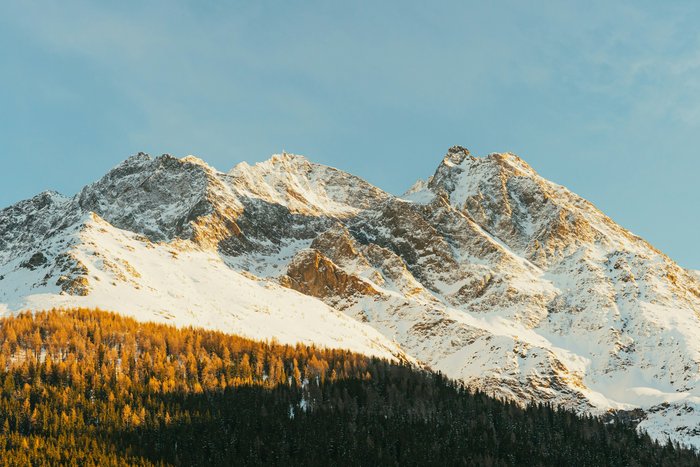
St. Anton am Arlberg, Austria
The birthplace of ski instruction and Austria’s most legendary off-piste.
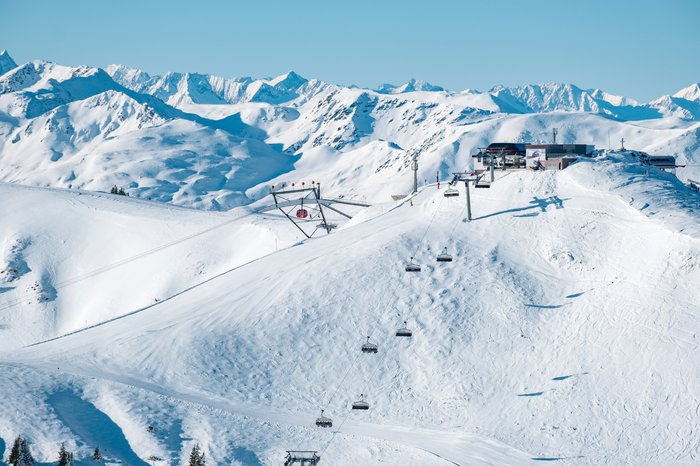
Kitzbühel, Austria
A medieval town with a World Cup downhill and 800 years of alpine charm.
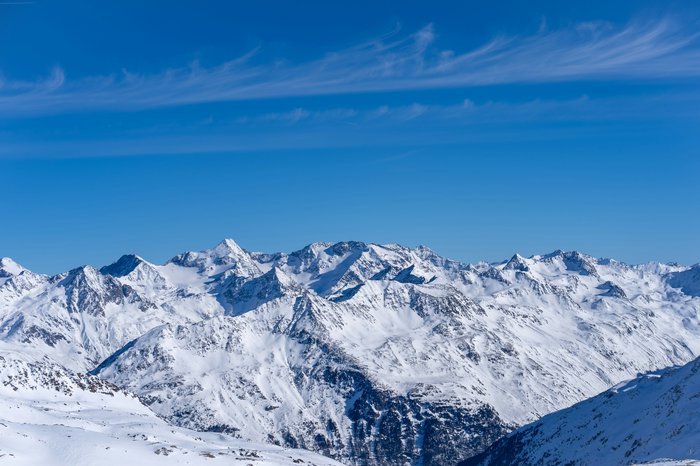
Sölden, Austria
Two glaciers, three 3,000 m peaks, a James Bond villain’s lair and the World Cup opener.
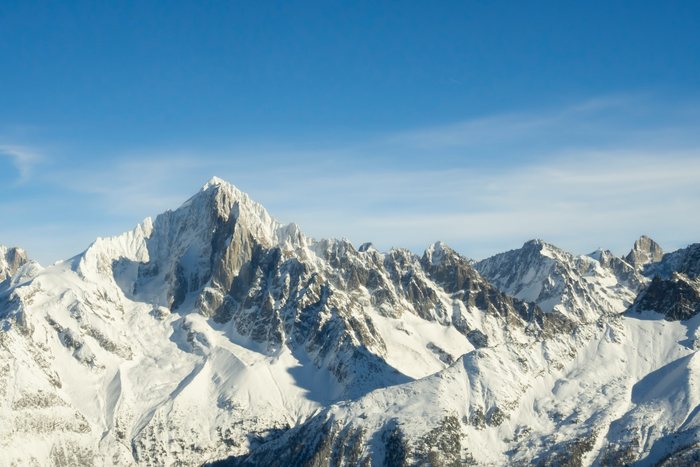
Chamonix, France
The birthplace of alpinism, under Mont Blanc.
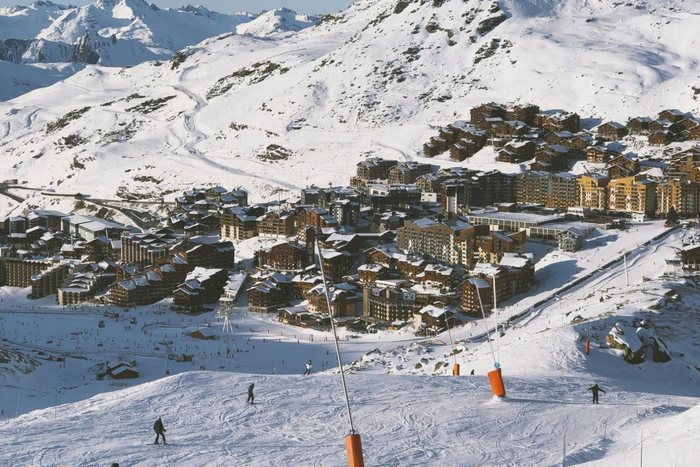
Val Thorens, France
Europe’s highest resort — snow-sure, and the gateway to the world’s largest linked ski area.
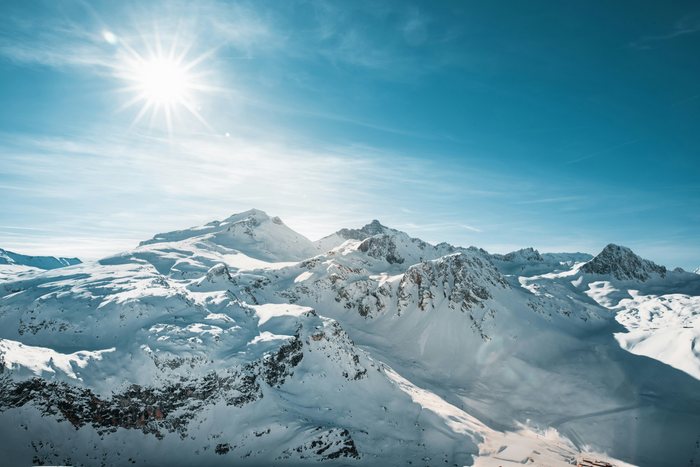
Val d’Isère, France
High-altitude, serious skiing with a village that actually feels like one.