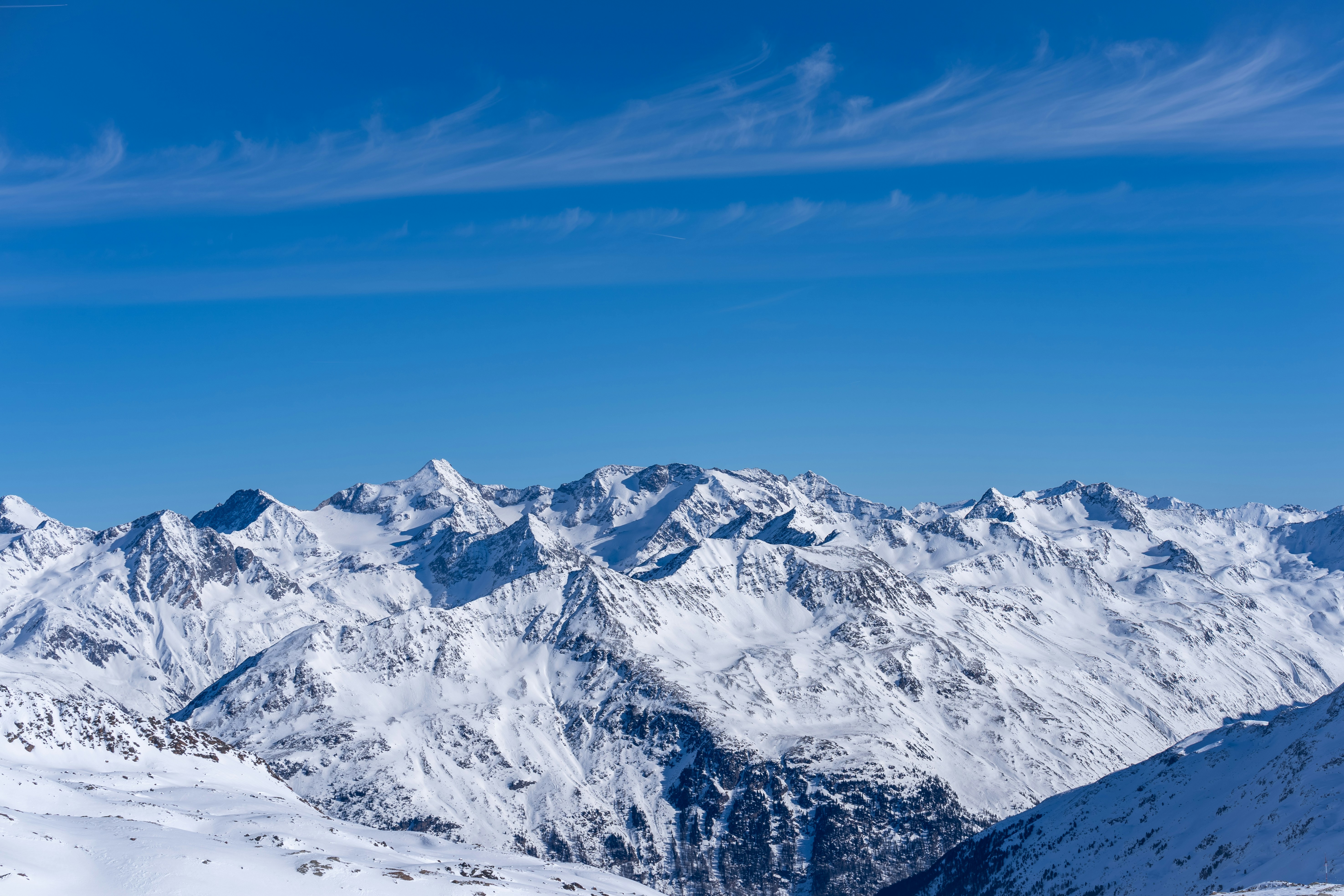
Sölden, Austria
Two glaciers, three 3,000 m peaks, a James Bond villain’s lair and the World Cup opener.
Sölden is built around altitude. Two glaciers (Rettenbach and Tiefenbach), three BIG 3 viewing platforms above 3,000 m, and the ice Q restaurant at 3,048 m — which featured as the villain’s lair in James Bond’s Spectre — give it a high-alpine drama that lower resorts cannot match. The World Cup giant slalom opens here in October, and the glaciers extend the season from September through early May.
The ski area spans about 144 km of piste served by 34 lifts, anchored by three gondola lines that take you from the village at 1,368 m to glacier level above 3,000 m. Off-piste and freeride terrain is extensive once you clear the groomed runs — the north-facing slopes between the glaciers hold powder well — and the 007 Elements museum inside the Gaislachkogl summit is a genuine Bond attraction.
It is not a chocolate-box village: Sölden is a functional resort town stretched along the valley road, with good infrastructure but less charm than Kitzbühel or St. Anton. What it has instead is altitude, guaranteed snow, the cheapest top-tier lift pass in Tirol, and the Aqua Dome thermal spa 15 minutes down the valley.
Highlights
-
BIG 3
Three viewing platforms above 3,000 m — Gaislachkogl, Tiefenbachkogl and Schwarze Schneid.
-
ice Q
The glass-cube restaurant at 3,048 m — the villain’s lair from James Bond Spectre.
-
007 Elements
An immersive James Bond experience carved into the mountain at the Gaislachkogl summit.
-
Rettenbach Glacier
Home to the World Cup opener in October; skiing from September.
Practical info
- Visa
- Schengen — visa-free for most Western passports (90 days).
- Currency
- EUR (€)
- Language
- German. English widely spoken in the resort.
- Safety
- Very safe on-piste; glacier terrain demands respect and crevasse awareness off-piste.
- Getting around
- About 80 min from Innsbruck airport; train to Ötztal Bahnhof then bus.
- Tap water
- Tap water safe.
- Plug type
- Type C Type F 230V
- Money
- Cards everywhere.
General guidance — visas, safety, and health change, so check your government's travel advisory and the official sources before you go.
Common questions
- What makes Sölden different from other Austrian resorts?
- Two things no other Austrian resort can match: two glaciers (Rettenbach and Tiefenbach) for skiing from September, and three summits above 3,000 m — the BIG 3 — each with a panoramic viewing platform reached by gondola. Add the James Bond connection (the Spectre ice Q restaurant and the 007 ELEMENTS installation) and you have a resort built around altitude and spectacle. See the ski area.
- Can you ski in Sölden in September or October?
- Yes — the Rettenbach glacier opens as early as September, making Sölden one of the first resorts in the Alps to open each season. The FIS Alpine World Cup giant-slalom opener is traditionally held on Rettenbach in late October. The main non-glacier terrain opens from late November. See snow & season.
- Is Sölden good for beginners and families?
- Yes — the Giggijoch area is a wide, sunny intermediate plateau with gentle blue runs, and the "Kids on Ski" programme offers free lessons for ages 3–5 during designated weeks. The catch is the valley layout: Sölden is a long roadside village, not a compact car-free base, so you shuttle to the lifts rather than ski to the door. See families & kids.
- What is the BIG 3 Rallye?
- A guided ski circuit hitting all three summits above 3,000 m — Gaislachkogl (3,048 m), Tiefenbachkogl (3,250 m) and Schwarze Schneid (3,340 m) — in a single day, with a stamp card and a pin for completing it. It is the signature experience and covers most of the ski area in one ambitious loop. See the ski area.
- What is 007 ELEMENTS?
- A cinematic installation built inside the summit of Gaislachkogl at 3,048 m, devoted to the James Bond film Spectre — much of which was filmed in Sölden and at the ice Q restaurant next door. It is open to skiers and non-skiers (ride the gondola up) and is more immersive-art piece than museum. See non-skiers.
- How do you get to Sölden?
- Innsbruck airport is about 80 minutes by road. By train you reach Ötztal Bahnhof on the main Innsbruck–Bregenz line, then take a 40-minute bus up the valley. Munich and Zurich airports are each about three hours by road. See getting there.
- Is the Aqua Dome worth a non-ski day?
- Absolutely. The Aqua Dome in Längenfeld (~15 minutes down-valley) is one of the most striking thermal spas in the Alps — three elevated bowl-shaped pools with mountain views, a large sauna world, and an indoor pool complex. It is the standard "rest day" outing and genuinely impressive. See non-skiers.
The ski area
Two glaciers, three summits above 3,000 m — and James Bond
Sölden is the only resort in Austria where three gondolas each take you above 3,000 m. Two glaciers extend the season from September to May, and the terrain between them covers everything from family-friendly plateaux to serious steeps.

The BIG 3 define the resort. Three gondolas each reach a summit above 3,000 m — Gaislachkogl (3,048 m, with the ice Q restaurant and 007 ELEMENTS), Tiefenbachkogl (3,250 m, above the Tiefenbach glacier) and Schwarze Schneid (3,340 m, Sölden’s highest point, between the two glaciers). Each has a panoramic viewing platform, and the BIG 3 Rallye links all three in a single-day circuit — pick up a stamp card at the lift pass office and collect a pin for completing it.
Below the glaciers the terrain divides into two main sides: Giggijoch to the west (a wide, sunny plateau of blues and reds — the family and intermediate heartland) and Gaislachkogl to the south (steeper, with the summit gondola and the black runs dropping back to the village). The glaciers themselves are high, open, wind-exposed and groomed — excellent for early- and late-season cover, less interesting for variety. A road tunnel connects Rettenbach and Tiefenbach.
| Sector | Altitude | Best for | Notes |
|---|---|---|---|
| Giggijoch | 1,368 → 2,284 m | Families, intermediates | Wide, sunny plateau; main beginner/intermediate area; umbrella-bar après at the top station |
| Gaislachkogl | 1,368 → 3,048 m | Advanced, BIG 3, James Bond | Summit gondola from the village; ice Q and 007 ELEMENTS at the top; steep blacks dropping down |
| Rettenbach Glacier | 2,675 → 3,250 m | Early/late season, World Cup | World Cup giant-slalom opener; open from September; groomed glacier runs |
| Tiefenbach Glacier | 2,796 → 3,309 m | Snow-sure cruising | Connected to Rettenbach by road tunnel; high, wide, wind-exposed |
| Schwarze Schneid | ~2,800 → 3,340 m | Highest point, panorama | Sölden’s apex; the summit platform and the link between the two glaciers |
Piste split: roughly 70 km blue, 45 km red, 28 km black. The Ötztal Superskipass adds Obergurgl-Hochgurgl (112 km, higher and quieter) plus smaller areas in the valley — about 360 km in total.
The BIG 3 Rallye is Sölden’s signature day out — but it is a long circuit with a lot of vertical. Start early, pace the lifts, and check that the glacier gondolas are running (wind closures are common above 3,000 m).
Who it suits
Who Sölden is — and isn’t — for
A resort of contrasts: gentle Giggijoch for families, serious glacier terrain for strong skiers, and a James Bond theme for everyone.
- First-timers & familiesSkipthe glacier and the Gaislachkogl steepsGoGiggijoch — wide, sunny, blue runs with magic carpets at the base; and the "Kids on Ski" free-lessons programme for ages 3–5
- Cruising intermediatesSkipexpecting endless linked mileage — 144 km is mid-sizedGothe Giggijoch reds, the BIG 3 Rallye circuit for a long day, and a day trip to Obergurgl on the Superskipass
- Advanced & expertsSkipthe glacier groomers if you want challengeGothe Gaislachkogl blacks, the Rettenbach World Cup slope, and the off-piste between the glaciers with a guide
- Non-skiers & Bond fansSkipbuying a ski pass you won't useGoa pedestrian gondola ticket to ice Q and 007 ELEMENTS, then the Aqua Dome spa in the afternoon
Sölden’s weakness is its village: it is a long, roadside strip along the valley floor, not a compact pedestrianised centre. If walkable charm matters to you, Obergurgl (30 minutes up-valley, quieter, car-free feel) or a traditional Tyrolean village like St. Anton or Kitzbühel is a better fit.
Snow & season
Glaciers from September, main area into May
Two glaciers and a top altitude of 3,340 m make Sölden one of the earliest to open and latest to close in the Alps.
Months on the axis (9 = September, 12 = December). Crimson bars are the glacier-extended periods and the crowd peaks. The World Cup opener draws spectators in late October; Christmas and February half-term are the busiest ski weeks.
The glaciers are the snow guarantee: Rettenbach opens as early as September for training camps and early-season skiing, with Tiefenbach following in October. The main non-glacier terrain opens from late November and closes in late April. The core season — all lifts open, cold reliable snow — is January to March.
At resort level the average annual snowfall is about 3.5 metres, which is moderate for the Tirol, but the glaciers above 3,000 m accumulate far more and hold cover regardless. Snowmaking covers the main lower runs and the connection between Giggijoch and the village, so the return to the valley is usually guaranteed even in lean-snow winters.
The glacier lifts are the most wind-exposed in the resort — summit closures above 3,000 m are common in bad weather, especially the Schwarze Schneid gondola. Check the morning lift-status report before committing to a BIG 3 day.
Lift passes
Sölden-only or the Ötztal Superskipass
Two passes, one choice: ski Sölden alone or add Obergurgl-Hochgurgl and the rest of the valley.
The Sölden-only pass covers the 144 km of Sölden’s own pistes including both glaciers and all three BIG 3 summits. The Ötztal Superskipass adds Obergurgl-Hochgurgl (112 km, higher and quieter, excellent in bad weather), Vent, Gries and Niederthai — about 360 km in total and worth it for a week-long trip. Both passes include the ski-bus within the valley.
| Pass | Covers | 6-day adult | Per day |
|---|---|---|---|
| Sölden only | All Sölden pistes + glaciers + BIG 3 | ~€320 | |
| Ötztal Superskipass | Sölden + Obergurgl-Hochgurgl + Vent + Gries + Niederthai | €341.50 |
Adult 18+; child (born 2008–2018) roughly 50% of adult; youth (born 2005–2007) and senior (born before 1960) at reduced rates. Children born 2018 and later ski free. Figures read autumn 2026 for the 2025/26 season — prices are set each season, so re-check before you travel.
The Superskipass costs only about €20 more than the Sölden-only for 6 days and adds a whole second resort (Obergurgl). Unless you are certain you won’t leave Sölden, it is the better value.
Lessons & guides
Ski schools — and the glacier guiding that earns its fee
Multiple schools compete in Sölden, and the glacier off-piste is serious enough that a guide transforms the experience.
The main schools are Skischule Sölden-Hochsölden (the traditional school, large groups, lessons in English and German), Yellow Power (smaller groups, strong reputation for children), and several independent operators and private guides. English-speaking instructors are widely available — Sölden draws a heavily international crowd.
For off-piste, the terrain between the two glaciers and the steep descents off Schwarze Schneid are genuine high-mountain routes with crevasse risk — a qualified guide with glacier gear (transceiver, probe, shovel, harness, rope) is non-negotiable. Several guiding outfits in the village run glacier freeride days; expect about €250–350 per person in a small group.
The "Kids on Ski" programme — free group lessons for children aged 3–5 — runs during specific weeks (usually early season and late season, published on soelden.com each year). It is a genuine free offer, not a trial class, and worth timing a trip around if you have a pre-schooler.
Families & kids
Free lessons, a sunny plateau — and the village catch
Sölden has genuinely strong family infrastructure on the mountain. The weakness is the village: a valley-floor road strip, not a cosy car-free base.
The good: Giggijoch is one of the best family areas in the Tirol — a wide, sunny plateau reached by gondola from the village, with gentle blue runs, a children’s practice area with magic carpets, and the "Kids on Ski" free-lessons programme for ages 3–5. Childcare (non-skiing) is available from age 2 at the ski kindergarten. Children born 2018 and later ride the lifts free.
The catch: the village is long, strung along the valley road, with no real car-free centre. You drive or shuttle to the Giggijoch or Gaislachkogl gondola base stations. Families who want a pedestrianised doorstep-to-slopes feel are better off in Obergurgl (same Superskipass, 30 minutes up-valley) or Hochsölden (a tiny satellite directly on the slopes).
| Option | Ages | What it is |
|---|---|---|
| Ski kindergarten (non-ski care) | from age 2 | Supervised play and indoor care while parents ski — at Giggijoch base |
| Kids on Ski (free lessons) | 3–5 | Free group ski lessons during designated weeks — a genuine programme, not a trial |
| Ski-school group lessons | 3+ | Standard group lessons; multiple schools with English-speaking instructors |
| Bobo's Kinderclub | varies | The branded children's area at Giggijoch with mascot, obstacle course, magic carpets |
Children born 2018 and later ski free with proof of age. The "Kids on Ski" weeks are published each season on soelden.com — check dates before booking.
The nappy/toilet-training rule applies: ski kindergarten and lessons require the child to be toilet-trained. Younger toddlers still in nappies go to the non-skiing childcare, not the ski programme.
Getting there
Innsbruck is close — the last stretch is the slow part
Sölden is easy to reach from Innsbruck, but the valley road climbs for 40 minutes — there is no train to the resort itself.
The nearest major airport is Innsbruck, about 80 minutes by road through the Ötztal. Munich (~3 hours) and Zurich (~3.5 hours) are the international gateways. By train, you reach Ötztal Bahnhof on the Innsbruck–Bregenz main line (frequent ÖBB services, about 35 minutes from Innsbruck), then take the Postbus up the valley to Sölden — about 40 minutes, running roughly hourly.
The valley road is well-maintained and straightforward — no hairpin climbs, just a steady ascent up the Ötztal — but it is a single-carriageway road that queues on peak Saturdays. Snow tyres are mandatory in Austria from 1 November to 15 April.
| From | To Sölden | Notes |
|---|---|---|
| Innsbruck airport | ~1h 20 min | Road through the Ötztal; the default gateway |
| Ötztal Bahnhof (train) | ~40 min bus | Frequent ÖBB trains from Innsbruck (~35 min); Postbus up the valley |
| Munich airport | ~3 hours | Via the Inntal motorway and the Ötztal turn-off |
| Zurich airport | ~3h 30 min | Via the Arlberg tunnel or the Fernpass |
The Postbus from Ötztal Bahnhof is included with the ski pass. Private transfers from Innsbruck airport run about €150–200 one-way for a car. The valley road does not have a toll, but the Austrian motorway vignette is needed for the Inntal.
The lack of a train station in Sölden itself is the one access drawback. If you are coming by rail, factor in the bus connection from Ötztal Bahnhof — it is reliable but not instant.
Where to stay
A valley-floor village — pick for the gondola, not the charm
Sölden’s accommodation stretches along the main valley road. Where you stay determines which gondola is on your doorstep.
The village is a linear strip along the Ötztaler Ache river, not a compact centre. The two main lift bases are the Gaislachkogl gondola (central, near most hotels and the 007 connection) and the Giggijoch gondola (south end, near the family area). A ski bus connects them.
Central Sölden is the pick for most — close to the Gaislachkogl gondola, the shops, the bars and the restaurants. Hochsölden is a tiny satellite at 2,090 m directly on the slopes — genuine ski-in/ski-out, quieter, and limited to a handful of hotels and pensions. Innerwald (south) is nearer the Giggijoch gondola and slightly cheaper. Accommodation ranges from budget pensions and apartments to four-star wellness hotels.
Sölden is not a place you pick for village atmosphere — it is a place you pick for the skiing, the glaciers and the altitude. If you want cobbled streets and painted facades, that is Kitzbühel or Hallstatt, not here.
Après & dining
On-mountain umbrella bars and a village strip that goes late
Sölden’s après runs from the sun-drenched terrace at Giggijoch down to the village bars that stay open past midnight.
On the mountain, the Giggijoch umbrella bar at the Giggijoch top station is the après anchor — an enormous sun terrace with DJs, deckchairs and a crowd that starts the party at 3 pm. Eugens Obstlerhütte (schnapps, sausages, live music on the Giggijoch slope) and Hühnersteign are the other mountain stops.
In the village, Fire & Ice (the big late-night bar/club, open until 4 am), Bierhimml (beer, burgers, a younger crowd), Philipp (cocktails) and Almrausch are the mainstays. The scene is younger and louder than Kitzbühel but less frantic than Ischgl — a lively village strip with enough variety for a week.
For food, the mountain huts serve good Tyrolean basics: Kaiserschmarrn, Wiener Schnitzel (pork ~€15–18), goulash and Knödel. In the village, a mid-range dinner runs €25–45 a head. The ice Q at 3,048 m (the James Bond restaurant) is the fine-dining outlier — a glass-cube design, reservations advised, mains €35–55.
The ice Q is genuinely special for the setting (a glass cube perched at 3,048 m with a 360-degree glacier panorama) more than the food. Book ahead, ride the Gaislachkogl gondola up, and go for lunch rather than dinner — the views are the point.
Non-skiers
James Bond, a glacier panorama and the best spa in the Tirol
Sölden’s non-ski offering is built around three things that are each worth a day: 007 ELEMENTS, the ice Q restaurant and the Aqua Dome.
3,048 m the ice Q restaurant and 007 ELEMENTS
The Aqua Dome in Längenfeld, about 15 minutes down-valley by car or bus, is one of the most striking thermal-spa complexes in the Alps: three elevated bowl-shaped pools with mountain views, a large sauna world (textile-free, in Austrian tradition), and an indoor pool complex. A day pass is about €40–50. It is the standard "rest day" or "bad weather day" outing and genuinely impressive.
Beyond the headline attractions: non-skiers can ride the Gaislachkogl gondola on a pedestrian ticket for the panorama and a lunch at ice Q, take the Tiefenbach glacier tunnel walk, go winter hiking (several cleared paths in the valley), snowshoeing, or visit the small Ötztal museum. The village itself has limited non-ski charm — the off-slope draw is the altitude, the spa and Bond.
A pairing that works well: one partner skis while the other spends the morning at 007 ELEMENTS and ice Q, then takes the afternoon at the Aqua Dome. The gondola and the spa bus run to different schedules — plan them the evening before.
Dogs
Welcome in the valley, banned from the pistes
Austria has a blanket rule: dogs are not allowed on ski slopes. Sölden follows it, with limited lift access too.
The rule across Austrian ski areas is clear: dogs are not permitted on groomed pistes, and lifts in winter do not carry dogs (unlike some summer operations). In the village and on cleared valley paths, leashed dogs are welcome, and dog-friendly pensions and apartments exist — but this is not a "bring the dog and ride the gondola together" resort.
Winter hiking trails in the lower valley are the best option for exercising a dog; the higher paths are avalanche-prone and not suitable. Clean-up is required by law.
GB → Austria paperwork: the old pet passport no longer works for British dogs since Brexit. You need an Animal Health Certificate, a microchip, and a rabies vaccination given at least 21 full days before travel; the AHC is valid 10 days for entry into Austria. Tapeworm treatment is not required for Austria (it is for the UK on return). Pack paw balm — grit and salt on the village roads are hard on paws.
Accessibility
Modern gondolas, limited adaptive programmes
Sölden’s lift infrastructure is modern and cabin-based, which helps — but dedicated adaptive-ski provision is limited compared to French resorts.
The three main gondolas (Gaislachkogl, Giggijoch, and the glacier gondolas) are modern cabin lifts with flat-floor boarding, which allows wheelchair users and reduced-mobility visitors to ride to the mountain restaurants and viewing platforms as pedestrians. The BIG 3 platforms at the summits are designed to be accessible.
For adaptive skiing, Sölden does not have a dedicated programme on the scale of, say, Chamonix’s ESF Handiski. Contact the main ski school (Skischule Sölden-Hochsölden) in advance to discuss sit-ski or other adaptive equipment — they can arrange it on request but it is not a standard daily offering. The village’s flat valley floor is easier to navigate in a wheelchair than hillside resorts, but the long linear layout means distances are considerable.
If adaptive skiing with a structured programme is essential, check availability with the ski school well before you travel — Sölden can accommodate but does not routinely advertise it.
Safety
Glacier terrain, and the insurance that actually covers it
Sölden’s glaciers are the draw — and the risk. Off-piste on a glacier means crevasses, and Austrian mountain rescue is not free.
On the marked pistes and glaciers, Sölden is well-patrolled and groomed. Off the pistes — particularly between the Rettenbach and Tiefenbach glaciers and on the steep descents off Schwarze Schneid — you are on genuine glaciated terrain with crevasse risk. A guide, a transceiver, a probe, a shovel and roping-up gear are non-negotiable.
On insurance: Austrian mountain rescue (Bergrettung Tirol) is not free — helicopter rescue can cost €3,500–10,000+ depending on the deployment. A standard travel policy usually excludes winter sports, and the European Health Insurance Card (EHIC/GHIC) covers state emergency care but not rescue, helicopter, repatriation or off-piste accidents. Off-piste is commonly only covered if you ski with a qualified guide. Buy proper ski insurance before you travel.
Unlike some French resorts, the Austrian lift pass does not include rescue insurance (there is no "Carré Neige" equivalent). Rescue cover must come from your own travel/ski insurance policy. Check that it explicitly covers glacier skiing and off-piste with a guide if you plan to go beyond the markers.
What it costs
What a day in Sölden actually costs
Sölden sits in the mid-range for Austrian ski resorts — cheaper than St. Anton, with the glaciers as a bonus you don’t pay extra for.
Here is the day-rate breakdown so you can build your own number. Everything is per person per day unless noted.
| What | Typical day-rate | Notes |
|---|---|---|
| Lift pass — Sölden only | ~€53 | From a 6-day pass; covers both glaciers and all BIG 3 summits |
| Lift pass — Ötztal Superskipass | ~€57 | Adds Obergurgl-Hochgurgl, Vent, Gries, Niederthai — about 360 km total |
| Ski / board hire | €25–40 | Mid-range pre-booked rental; premium €40–55 |
| Group lesson (adult) | €60–80 per day | Half-day (3–4 hours); children similar or free under "Kids on Ski" |
| Private lesson | ~€120 / hour | Per instructor for 1–2 people |
| Mountain lunch | €15–22 | Wiener Schnitzel ~€15–18; Kaiserschmarrn ~€10–12; soup ~€8–10 |
| Dinner out | €25–45 mid-range · €35–55 at ice Q | Per head in the village or the summit restaurant |
| Bed for the night | €80–140 budget · €150–280 mid · €300+ luxury | Per room; peak weeks higher; Hochsölden is a premium for ski-in/ski-out |
| Tourist tax (Ortstaxe) | ~€3.30–3.60 per night | Per person per night; set by the municipality |
| Innsbruck transfer | ~€150–200 (private car) | One-way; the Postbus from Ötztal Bahnhof is included with the ski pass |
Rates read autumn 2026 for the 2025/26 season. They are set each season — re-check before you travel. Peak-week lodging (Christmas, February half-term) can roughly double the off-peak price. The Aqua Dome day pass (~€40–50) is a separate cost.
The levers that move the number most: the Sölden-only pass instead of the Superskipass saves about €3.50/day; self-catering in an apartment roughly halves the food bill; and going in January rather than February half-term drops accommodation by 30–40%.
Compare Sölden, Austria
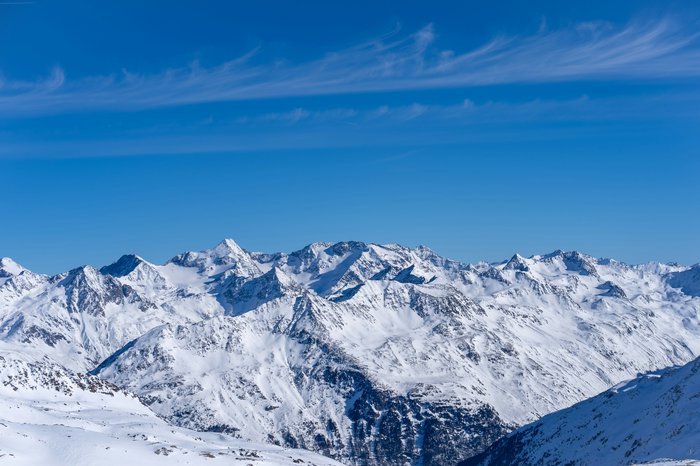
If you like Sölden, Austria, also consider
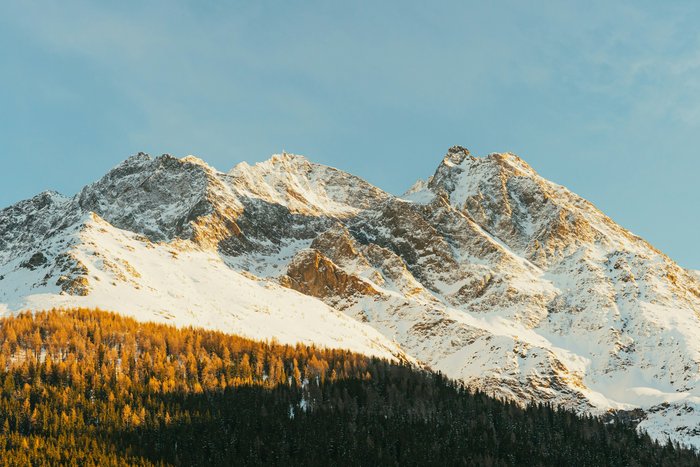
St. Anton am Arlberg, Austria
The birthplace of ski instruction and Austria’s most legendary off-piste.
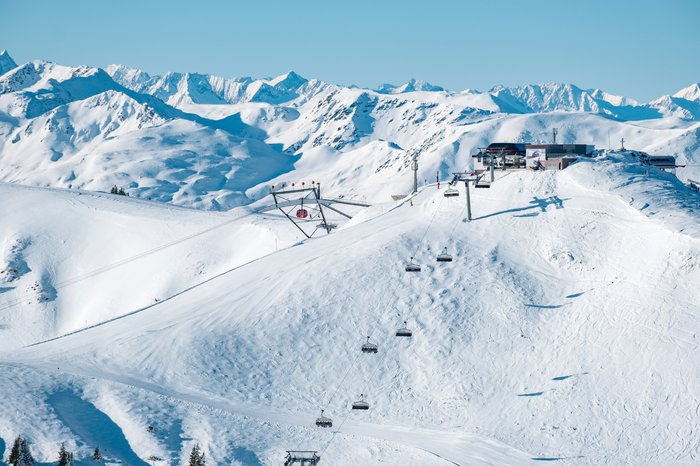
Kitzbühel, Austria
A medieval town with a World Cup downhill and 800 years of alpine charm.
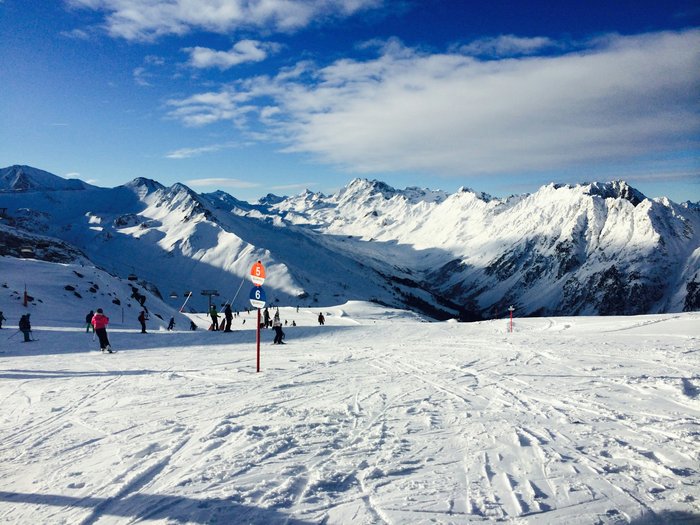
Ischgl, Austria
The Ibiza of the Alps — 239 km of cross-border skiing and Europe’s wildest après.
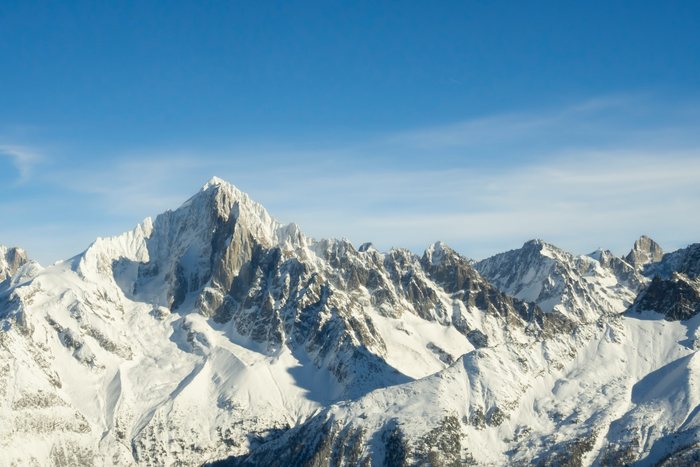
Chamonix, France
The birthplace of alpinism, under Mont Blanc.
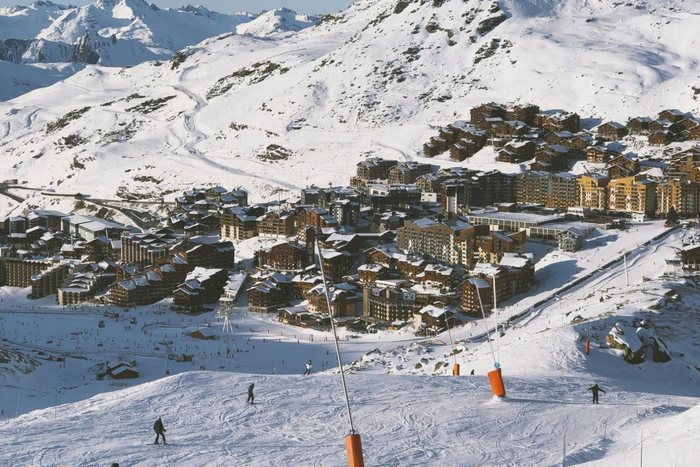
Val Thorens, France
Europe’s highest resort — snow-sure, and the gateway to the world’s largest linked ski area.
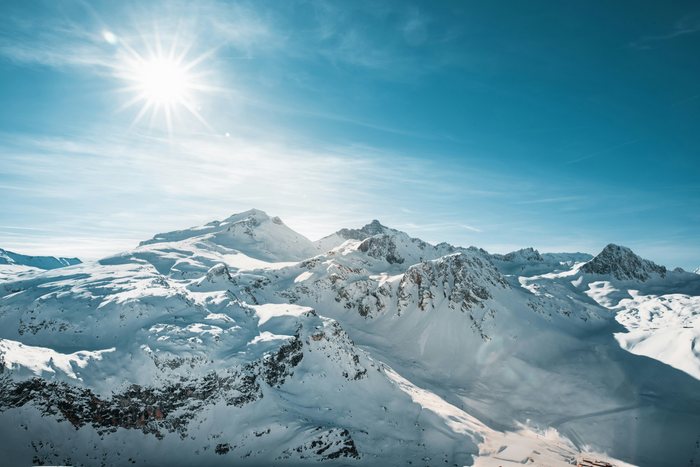
Val d’Isère, France
High-altitude, serious skiing with a village that actually feels like one.