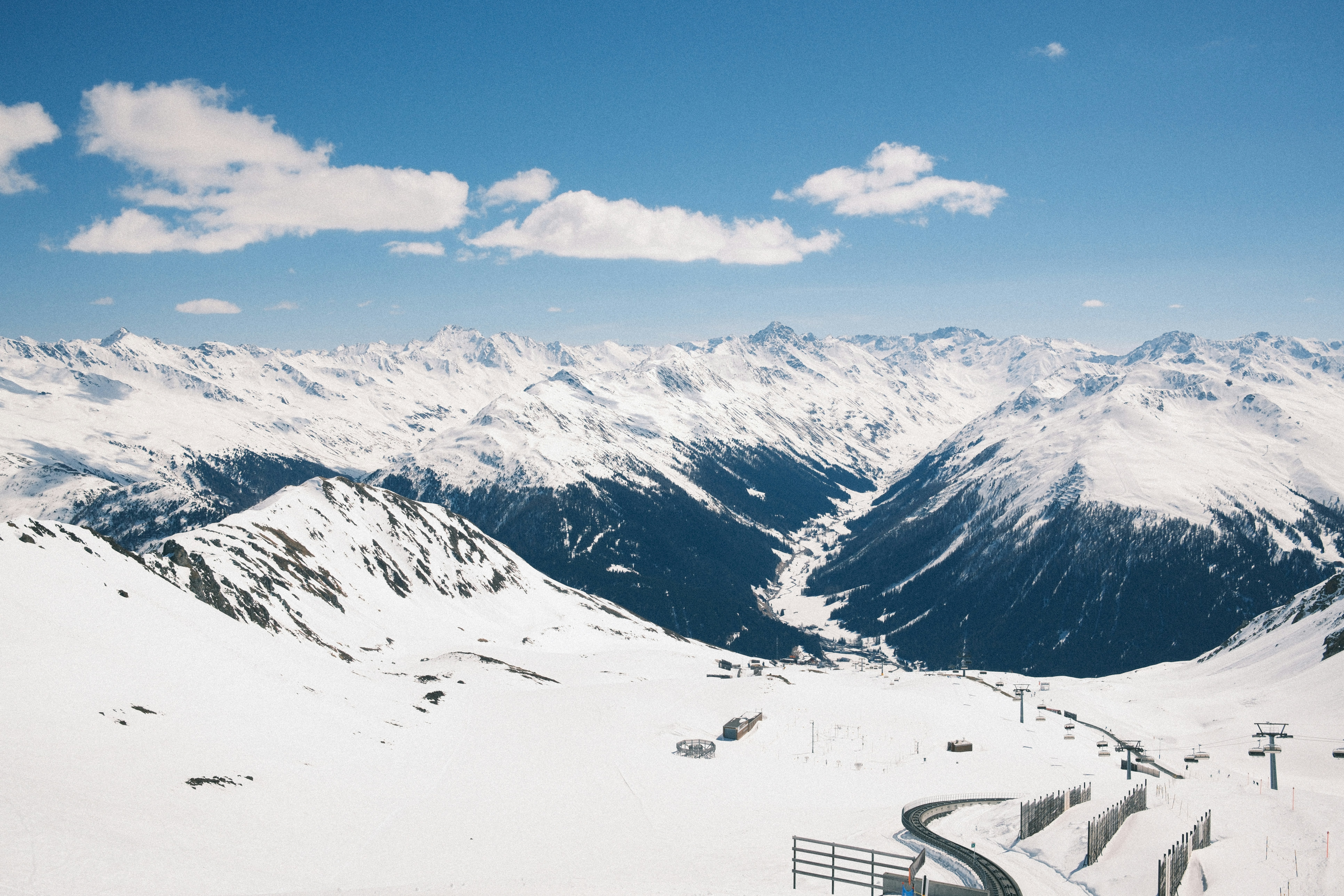
Davos, Switzerland
A real Swiss town with six ski mountains and Europe’s largest natural ice rink.
Davos is a proper Swiss town — not a toy village built around a chairlift — that happens to sit at 1,560 m with six separate ski areas around it and a shared pass with neighbouring Klosters. It is best known outside skiing as the host of the World Economic Forum, but the skiing is substantial: Parsenn-Gotschna, Jakobshorn, Pischa, Rinerhorn, Madrisa and Schatzalp combine for over 300 km of piste.
The backbone is Parsenn, shared with Klosters — a big, high, snow-sure mountain with famously long descents (the Weissfluhjoch to Küblis run drops 2,000 vertical metres over 12 km). Jakobshorn is the freestyle mountain with terrain parks. The smaller areas (Pischa, Rinerhorn, Madrisa) are quiet, family-friendly and freeride-oriented.
The town sprawls more than a traditional ski village, which can feel less cosy than Klosters or Zermatt, but it has real infrastructure — hospitals, shops, a conference centre, the world’s largest natural ice rink — and prices that, while Swiss, are below the Zermatt/Verbier tier.
Highlights
-
Parsenn
The big mountain — high, snow-sure, with the 12 km Weissfluhjoch-to-Küblis descent.
-
Jakobshorn
The freestyle hub with terrain parks and a lively on-mountain scene.
-
Davos-Klosters link
Shared pass with glamorous Klosters, the royal family’s ski resort.
-
Natural ice rink
Europe’s largest natural ice rink — 18,000 m² in the town centre.
Practical info
- Visa
- Switzerland is Schengen — visa-free for most Western passports (90 days).
- Currency
- CHF (Swiss franc).
- Language
- German (Swiss-German). English widely spoken.
- Safety
- Very safe; standard avalanche precautions off-piste.
- Getting around
- Train from Zurich ~2.5h via Landquart. Rhaetian Railway.
- Tap water
- Tap water safe.
- Plug type
- Type J 230V
- Money
- Cards everywhere.
General guidance — visas, safety, and health change, so check your government's travel advisory and the official sources before you go.
Common questions
- Is Davos or Klosters better for skiing?
- They share the same ski pass and Parsenn is accessible from both — so it is about atmosphere, not terrain. Davos is a long, modern town with more bars, shops, the freestyle Jakobshorn and the flatter valley floor; Klosters is a smaller, quieter, more traditional village with a royal reputation and direct gondola access to Parsenn. Families often prefer Klosters for Madrisa. See where to stay.
- How big is the ski area?
- About 300 km of piste across six separate sectors on the regional pass: Parsenn-Gotschna (the giant), Jakobshorn (freestyle), Pischa (freeride), Rinerhorn (family), Madrisa (family, above Klosters) and Schatzalp-Strela (retro). They are not all piste-linked — you bus or train between some. See the ski area.
- What is the famous long run?
- The Weissfluhgipfel to Küblis descent — 12 km and 2,034 m of vertical drop, rated red. It is one of the great classic Alpine runs, first skied in 1895, and once billed as the world's longest piste. You finish at Küblis railway station and take the RhB train back. See the ski area.
- Which lift pass do I need?
- The regional pass covers all six sectors and is the standard choice — CHF 94/day or CHF 390 for 6 days (adult). Single-sector day passes exist for CHF 45–58 if you only want Parsenn or Jakobshorn. The TopCard season pass is CHF 1,300 pre-sale. See lift passes.
- Is Davos good for families?
- Yes — specifically Madrisa above Klosters (Madrisa-Land adventure park, the first in the Swiss Alps accessible to disabled children) and Rinerhorn (Enchanted Forest fun zone, 3.7 km lit toboggan run). Bolgen at the base of Jakobshorn is good for beginners in Davos itself. Children under 6 ski free. See families & kids.
- Is Davos good for non-skiers?
- Excellent. The Kirchner Museum, the Hotel Schatzalp (Thomas Mann's Magic Mountain inspiration), the Eistraum (Switzerland's largest mobile ice rink), Eau-là-là waterpark, 100+ km of cross-country trails, 150 km of winter hiking paths, and the annual Spengler Cup ice hockey tournament. See non-skiers & off-slope.
- Can you bring a dog to Davos?
- To the resort, yes; onto the pistes, no. Dogs are not allowed on groomed ski pistes in Switzerland, but they ride the mountain railways free and there are dedicated winter dog-walking trails. Several hotels welcome dogs, including the Hard Rock Hotel and the InterContinental. GB visitors need an Animal Health Certificate. See dogs.
The ski area
Six sectors, from a vast classic to a deliberate throwback
Davos-Klosters is not one linked circuit — it is six distinct mountains, each with its own character, covered by a single regional pass.
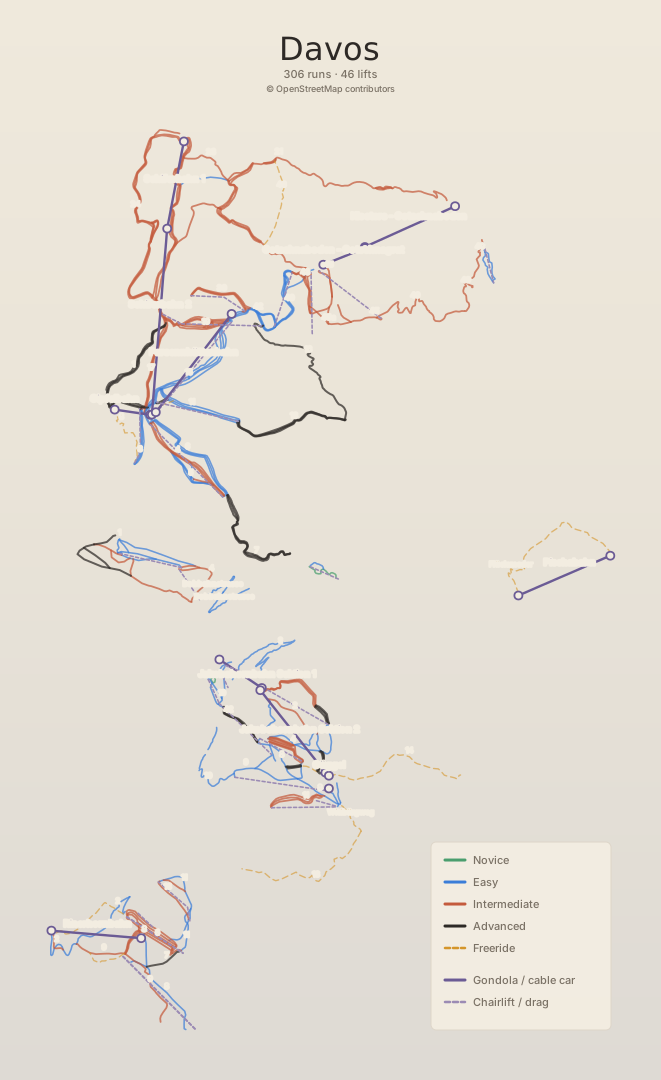
The six sectors have sharply different characters. Parsenn-Gotschna is the flagship — vast, rolling intermediate terrain accessed from Davos Dorf by the Parsennbahn funicular or from Klosters by the Gotschnabahn gondola. It is one of the great classic ski mountains of the Alps, and the 12 km Weissfluhgipfel-to-Küblis descent is a run every strong intermediate should do once. Jakobshorn is the freestyle and snowboard hub, with JatzPark terrain park and halfpipe, accessed from Davos Platz.
Pischa is a dedicated freeride area — deliberately low-key, with ungroomed powder terrain and ski-touring routes. Rinerhorn is a quiet family mountain with the "Enchanted Forest" fun zone and a 3.7 km night-lit toboggan run. Madrisa, above Klosters-Serneus, is the other family pick: sunny, south-facing, with the Madrisa-Land adventure park. And Schatzalp-Strela is the retro oddity — a tiny area reached by funicular from Davos Platz, with no snowmaking, minimal lifts and deliberate nostalgic charm; the "slow mountain."
| Sector | Altitude | Best for | Notes |
|---|---|---|---|
| Parsenn-Gotschna | 810 → 2,843 m | Intermediates, long runs | The main mountain — 96 km of piste, 18+ lifts; access from both Davos Dorf and Klosters |
| Jakobshorn | 1,540 → 2,590 m | Freestyle, snowboarders | 41 km; JatzPark terrain park and halfpipe; accessed from Davos Platz |
| Pischa | 1,800 → 2,483 m | Freeriders, ski-tourers | Small, ungroomed, deliberately wild — powder and touring, not groomed cruising |
| Rinerhorn | 1,475 → 2,490 m | Families | Quiet and uncrowded; Enchanted Forest zone; 3.7 km night-lit toboggan run |
| Madrisa | 1,125 → 2,602 m | Families | Sunny, south-facing above Klosters; Madrisa-Land adventure park |
| Schatzalp-Strela | 1,861 → 2,400 m | Nostalgia | The "slow mountain" — no snowmaking, retro charm, reached by funicular |
Approximate piste split across the whole domain: 12% green/beginner, 42% blue, 25% red, 21% black. Parsenn dominates the total. The sectors are not all piste-linked — you bus or train between some.
57 lifts across the six sectors. The Parsennbahn funicular (Davos Dorf) and Gotschnabahn gondola (Klosters) are the two main feeders — queues form on peak mornings, so start early or use the quieter sectors.
Who it suits
Who Davos-Klosters suits — and who it does not
A resort that has something for every level, but the character of each sector is sharply different — match the mountain to the skier.
Davos-Klosters rewards intermediates above all, but every level has a home if you pick the right sector:
- First-timers & familiesSkipParsenn's long descents and Jakobshorn's steeper blacksGoMadrisa (sunny, gentle, Madrisa-Land) and Rinerhorn (quiet, Enchanted Forest fun zone, beginner lifts)
- Cruising intermediatesSkipthe small, freeride-only PischaGoParsenn — vast, rolling reds and the 12 km Weissfluh-to-Küblis classic; Jakobshorn for variety
- Freestylers & snowboardersSkipthe traditional sectorsGoJakobshorn — JatzPark terrain park, halfpipe, young snowboard culture
- Freeriders & ski-tourersSkipthe groomed circuitsGoPischa for dedicated ungroomed powder; the Parsenn flanks for accessible off-piste; the SLF avalanche bulletin is published from Davos itself
Cross-country skiers get over 100 km of prepared trails — one of Switzerland's premier XC networks, and Davos has hosted FIS World Cup cross-country races. The Engadin valley is next door for even more.
Snow & season
Inner-Alpine dry snow, with the world's avalanche experts on site
Davos sits in an inner-Alpine position that gives cold, dry, well-preserved snow — and the institute that studies it is headquartered here.
Months on the axis (12 = December). Crimson bars mark the main season and the crowd peaks. The Swiss school holiday weeks (Sportferien) vary by canton — Zurich's tend to fall in mid-February, overlapping with German and Dutch holidays. Early January and late March are the quietest value windows.
Davos's inner-Alpine location, south of the main Alpine chain and shielded from warm maritime influences, gives cold, dry snow that preserves well — lighter and drier than the heavier snowfalls of the northern Alps. January averages 101 cm of snow, February 74 cm; the base depth typically peaks in late February to early March.
The WSL Institute for Snow and Avalanche Research SLF, part of the ETH domain, is headquartered in Davos Dorf. It publishes the Swiss national avalanche bulletin twice daily in season — so Davos has the best local avalanche information of any resort in the world. If you ski off-piste here, the SLF bulletin is the essential starting point.
Quietest value weeks: early-to-mid January (after New Year, before the Swiss sport holidays) and late March into early April for spring skiing with longer days. Avoid mid-to-late February unless you have no choice — it is the crunch.
Lift passes
One regional pass covers all six sectors
The standard choice is the regional pass — all six areas on one ticket. Single-sector passes exist for shorter visits, and the TopCard season pass has sharp pre-sale pricing.
The regional pass covers Parsenn-Gotschna, Jakobshorn, Pischa, Rinerhorn, Madrisa and Schatzalp-Strela on one ticket. There is no meaningful "which pass do I need?" dilemma — you buy the regional and ski everywhere. Single-sector day passes (CHF 45–58 for Parsenn or Jakobshorn alone) exist but rarely save enough to be worth the restriction unless you are only skiing one afternoon.
| Pass | Adult (18+) | Youth (13–17) | Child (6–12) |
|---|---|---|---|
| 1 day | CHF 66 | CHF 38 | |
| 3 days | CHF 161 | CHF 92 | |
| 6 days | CHF 273 | CHF 156 | |
| 7 days | CHF 299 | CHF 171 | |
| 3-of-5 flex | — | — | |
| 5-of-7 flex | — | — |
Children under 6 ski free when accompanied by a parent or instructor. Seniors (men 65+, women 64+) get 10% off regional passes of 3+ days and weekday discounts on shorter passes. TopCard season pass: CHF 1,300 pre-sale (by 30 April) / CHF 1,550 regular; family TopCard CHF 2,900 / CHF 3,150. Prices from davosklostersmountains.ch, 2025/26 season.
Every overnight guest receives the free Davos Klosters Premium Card — it covers local bus travel, the RhB train between Klosters Dorf and Filisur, and access to ~70 free activities and discounts. It is your guest card, not a lift pass, but it makes getting between sectors free.
Lessons & guides
Traditional Swiss schools and specialist freeride guiding
Two main Swiss ski schools, a kids' specialist and dedicated freeride guides — Davos-Klosters covers the range.
The Swiss Ski School Davos is the main school in Davos; the Swiss Ski and Snowboard School Klosters covers Klosters and the Madrisa/Parsenn side. Both offer group and private instruction across all levels. TOP SECRET Ski & Snowboard School specialises in children's instruction and private lessons — the go-to for young beginners in Davos.
For off-piste, Adventure Skiing Davos provides licensed freeride guides for powder days on Pischa, the Parsenn flanks and further afield. Multi-day freeride camps (e.g., 3-day Wed–Fri) and private off-piste guiding from about CHF 85/hour are available. With the SLF avalanche institute next door, the local freeride knowledge here is as good as it gets.
Group lessons fill fast during Swiss sport holidays (mid-February). Private lessons cost more but progress far faster for beginners. Book ahead for peak weeks.
Families & kids
Two dedicated family mountains and the first accessible adventure park in the Alps
Madrisa and Rinerhorn are purpose-built for families — and Madrisa-Land is worth knowing about even if you never ski.
The family infrastructure here is spread across two sectors. Madrisa, above Klosters-Serneus, has the Madrisa-Land adventure park — four magic carpets, themed slopes, fun rider, bouncy castle — and it is the first adventure park in the Swiss Alps designed for physically and visually impaired children. Rinerhorn has the "Enchanted Forest" fun zone with waves and small jumps, plus the resort's best toboggan run: 3.7 km, night-lit.
In Davos itself, Bolgen and Bunda at the base of Jakobshorn have beginner fun slopes and the Magic Park. Selfranga in Klosters has a pony lift. The Snowli Club, run by the Swiss Ski School Klosters, takes children from 18 months for non-ski childcare.
| Option | Ages | What it is |
|---|---|---|
| Snowli Club (Klosters) | from 18 months | Non-ski childcare — the route for toddlers and pre-skiers |
| TOP SECRET kids' groups | from ~3 | Specialist children's ski school in Davos; small groups, from CHF 52/day |
| Madrisa-Land | all ages | Adventure park: 4 magic carpets, themed slopes, fun rider — first accessible Alpine adventure park |
| Rinerhorn Enchanted Forest | all ages | Fun zone with waves and jumps; 3.7 km night-lit toboggan run alongside |
Children under 6 ski free. The Premium Card (guest card) gives access to family activities at reduced or free rates. Eight toboggan runs across the resort — Rinerhorn's is the star.
Klosters is often the better family base: smaller, quieter, direct access to Madrisa, the Snowli Club for childcare, and a gentler village atmosphere than Davos's long, urban-feeling main street.
Getting there
By train through the Prättigau — and a tunnel that beats the pass
Zurich is under three hours by train, and the Vereina tunnel gives cars a snow-safe route when the pass road is closed.
The rail journey is the natural way in: Zurich HB to Davos Platz is about 2 hours 40 minutes — SBB to Landquart, then the metre-gauge Rhaetian Railway (RhB) up through the Prättigau valley. Klosters Platz is on the same line, about 50 minutes from Landquart. The journey itself is scenic, especially the stretch from Klosters up to Davos through the narrow valley.
By car from Zurich it is about 2 hours via the A3/A13 motorway to Landquart, then the cantonal road through the Prättigau. In winter, the Vereina car-train tunnel — 19 km, the world's longest metre-gauge tunnel, opened 1999 — runs a car-carrying shuttle between Klosters-Selfranga and Sagliains in the Lower Engadine, replacing the avalanche-prone Flüela Pass. Journey time is about 20 minutes; it provides a snow-safe, year-round connection to the Engadine and Scuol.
| From | To Davos | Notes |
|---|---|---|
| Zurich airport (ZRH) | ~2h40 by train, ~2h30 by car | The default gateway; ~150 km by road |
| Friedrichshafen (FDH) | ~2h30 by car | ~140 km; some budget airlines from the UK |
| Innsbruck (INN) | ~3h by car | ~200 km via the Arlberg tunnel |
| Landquart | ~1h by RhB | The change point from SBB mainline to the metre-gauge Rhaetian Railway |
Swiss motorway vignette (CHF 40/year) required for the motorway. Winter tyres are not legally mandated in Switzerland but are a practical necessity. The Vereina tunnel runs roughly every 30 minutes — check rhaetischebahn.ch for the current timetable.
Where to stay
Davos Dorf, Davos Platz, or Klosters — three distinct bases
Davos is a long, linear town with two centres; Klosters is a different village entirely. The choice shapes your week.
Davos Dorf (the north-east end) is closer to the Parsennbahn funicular — the most convenient base if Parsenn is your main mountain. Davos Platz (the south-west end, the main commercial centre) is closer to Jakobshorn and the Schatzalp funicular, and has more shops, restaurants and bars. The two are about 10 minutes apart by bus.
Klosters is 10 minutes away by train: smaller, quieter, more traditional, and famously associated with King Charles and the British royal family. It gives direct gondola access to Parsenn (via Gotschnabahn) and is the base for Madrisa. The atmosphere is upmarket and village-scale — a different proposition from Davos's long, somewhat urban main street.
Notable hotels: Steigenberger Icon Grandhotel Belvédère (5-star, Davos Platz, from ~CHF 280); Hotel Schatzalp (Art Nouveau at 1,861 m, reached by funicular — the Thomas Mann inspiration, from ~CHF 260); Hard Rock Hotel Davos (4-star, modern, dog-friendly); hostels and budget hotels from CHF 40–80 per person.
WEF week (late January) pushes Davos hotel prices to extremes — the entire town fills with delegates and security. If you are booking a ski week, check the World Economic Forum dates and either avoid them or expect to pay a premium.
Après & dining
Bolgenschanze, Ex Bar and a mountain-hut tradition
Davos après is anchored by the iconic Bolgenschanze; Klosters has the quieter, smarter Casa Antica. On the mountain, the huts go back generations.
Bolgenschanze, at the base of the Jakobshorn slopes, is the resort's iconic après-ski venue — large outdoor terrace and indoor dancefloor, rocking from 3 pm daily, named after the historic ski jump. Ex Bar in Davos Platz (since 1965) is the legendary town bar: live music, foosball, a mixed-age crowd from 5 pm. Cabanna Club is the modern nightspot in Davos.
In Klosters, Casa Antica (since 1959) is the centre of nightlife — three floors: DJ/dancing, piano bar, quieter cocktail bar. Chesa Grischuna is the stylish hotel with a 15-Gault-Millau-point restaurant and a Klosters institution.
On the mountain, the Parsennhütte (established 1903) is one of the oldest Alpine mountain restaurants — self-service, table service and bar. Münggahütte on Parsenn serves raclette and fondue. A mountain lunch runs about CHF 20–35 for a main course.
Non-skiers
Thomas Mann, Kirchner, the Spengler Cup and the biggest ice rink on wheels
Davos's off-slope offering is deep — driven by a year-round town economy, literary history and world-class sporting events.
4,500 m² Eistraum — Switzerland's largest mobile ice rink
The Kirchner Museum houses the world's largest collection of Ernst Ludwig Kirchner's Expressionist paintings — the artist lived in Davos 1918–1938 and painted the local Alpine landscapes. Hotel Schatzalp, the Art Nouveau sanatorium at 1,861 m reached by funicular, is where Thomas Mann's wife was treated for TB in 1912 and the inspiration for The Magic Mountain.
Eau-là-là is the indoor waterpark (80 m "Black Hole" slide, fun park, diving platform, sauna, outdoor whirlpool — adults CHF 10, children CHF 7). For sport, the Spengler Cup ice hockey tournament runs annually 26–31 December (since 1923, a Davos tradition) at the Vaillant Arena. Cross-country skiing covers 100+ km of prepared trails — one of Switzerland's premier XC networks. Winter hiking has 150+ km of cleared paths. Eight toboggan runs, with Rinerhorn's 3.7 km night run the star.
The 350+ Winter Guest Programme activities (CHF 5–15 each, many free with the Premium Card) make Davos one of the better non-skier destinations in the Alps: llama winter hikes, igloo building, GPS treasure hunts, ice mini-golf, torchlight hikes.
Dogs
Not on the pistes, but the resort is dog-friendly
Swiss rules are clear: no dogs on the groomed runs. But Davos-Klosters makes it easy for dog owners otherwise.
Dogs are not allowed on groomed ski pistes or cross-country tracks in Switzerland. On cable cars and gondolas, dogs can typically ride (leashed, often at child fare or a dog ticket), and in Davos-Klosters dogs ride the mountain railways free. There are dedicated winter dog-walking trails.
Dog-friendly hotels are plentiful: Hard Rock Hotel Davos (dogs in all room categories and restaurant), InterContinental/AlpenGold Hotel (dedicated amenities), Hotel Seehof (CHF 25/night per pet), Alpine Inn (CHF 20/night, bowls provided), Club Hotel Davos (CHF 10/night) — 37+ pet-friendly hotels in the area.
GB → Switzerland paperwork: the EU Pet Passport no longer works for British dogs. You need an Animal Health Certificate (AHC), a microchip, and a rabies vaccination at least 21 days before travel. The AHC must be issued by an Official Veterinarian no more than 10 days before entry. A new AHC is needed for every trip. Switzerland applies EU pet travel rules as a Schengen state.
Accessibility
Genuine adaptive infrastructure, from Madrisa to the Parsenn funicular
Davos-Klosters has purpose-built accessible facilities — including the first adventure park in the Swiss Alps designed for disabled children.
Madrisa-Land above Klosters is the first Alpine adventure park designed for physically and visually impaired children. The Madrisa 6-seater chairlift has fully automatic safety bars for adaptive monoski users. Ski schools in Klosters Platz and Klosters Dorf have trained instructors for adaptive snowsport instruction.
The Parsenn funicular is wheelchair-accessible via a stair lift at the station, with wide doors and ramps for wheelchair/scooter boarding. A Mountain Drive electronic wheelchair is available for rent at Madrisa-Alp restaurant, designed for mountain trails, gravel roads and steps up to 10 cm. Accompanying persons get a 50% fare reduction on mountain railway tickets with documentation.
The valley floor is relatively flat along Davos's main axis, making wheelchair navigation manageable. Several barrier-free hotels exist: Hotel Waldhuus, Hotel Strela, Parsenn Resort.
Contact davosklostersmountains.ch (+41 81 830 00 00) at least 2 hours before arrival for assistance at mountain stations. The Ginto app provides station accessibility information. Davos's flat valley floor is an advantage over steeper Swiss resort villages.
Safety
The SLF is next door — and rescue costs are on you
Davos has the world's leading avalanche research institute in the village. Off the marked runs, though, Swiss rescue costs are real.
The WSL Institute for Snow and Avalanche Research SLF, part of the ETH domain, is headquartered in Davos Dorf. It publishes the Swiss national avalanche bulletin — the authoritative source for off-piste conditions across the entire country. Having it here means Davos has the best local avalanche data of any resort in the world. Check slf.ch twice daily during your trip if you ski off-piste.
On insurance: Switzerland has no reciprocal healthcare agreement with the UK (EHIC/GHIC does not apply). Swiss helicopter rescue can cost CHF 3,500–5,000+ for a straightforward evacuation, potentially far more for complex operations. Search operations off-piste are capped at CHF 5,000 by compulsory Swiss accident insurance. Rega patronage (CHF 30/year) means Rega waives rescue costs not covered by your own insurance — worth it for any Swiss ski trip.
Private travel and ski insurance is essential — minimum cover should include CHF 100,000 for helicopter rescue, medical repatriation, and explicit off-piste coverage if you plan to leave the marked runs. Standard policies often exclude off-piste; check before you go.
What it costs
What a day in Davos-Klosters actually costs
Switzerland is expensive, and Davos is no exception. But the Premium Card, free local transport and the range from hostels to five-stars give real budget levers.
Here is the day-rate breakdown, so you can build your own number. Everything is per person per day unless noted.
| What | Typical day-rate | Notes |
|---|---|---|
| Lift pass — regional | ~CHF 65 | From a 6-day pass (CHF 390); covers all six sectors |
| Ski / board hire | CHF 35–65 | Full setup (skis + boots + poles); online pre-booking ~10% off |
| Group lesson (adult) | ~CHF 200/day | Group; private from CHF 420/day |
| Mountain lunch | CHF 20–35 | Main course, on the mountain; self-service cheaper |
| Dinner out | CHF 25–45 mid-range | Per head in Davos; Klosters a touch higher |
| Bed for the night | CHF 40–80 hostel · CHF 150–250 mid-range · CHF 280–650 4–5★ | Per person; WEF week (late Jan) pushes prices far higher |
| Kurtaxe (guest tax) | CHF 5.50–5.90 per night | Davos ~CHF 5.90, Klosters ~CHF 5.50; typically included in accommodation; provides the Premium Card |
| Zurich transfer | ~CHF 60–75 pp by train · ~CHF 350–500 private | One-way; 2nd class SBB + RhB. The train is the sensible option |
Rates from autumn 2026 (2025/26 season). They are set each season — buy passes online in advance. The Premium Card (free to all overnight guests) saves real money on local transport and activities; the flex passes (3-of-5, 5-of-7) can save on a short week.
The levers that move the number most: base in Davos rather than Klosters if budget matters; self-cater from the Coop or Migros; take the train from Zurich (half the cost of a private transfer); and aim for early January or late March rather than the Swiss sport holidays in February.
Compare Davos, Switzerland
If you like Davos, Switzerland, also consider
Zermatt, Switzerland
Car-free village under the Matterhorn, with year-round glacier skiing.
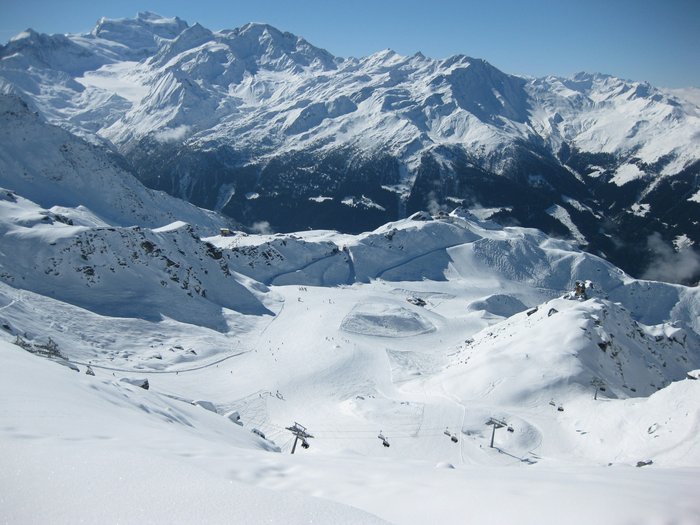
Verbier, Switzerland
Switzerland’s off-piste capital — steep, sunny and expensive.
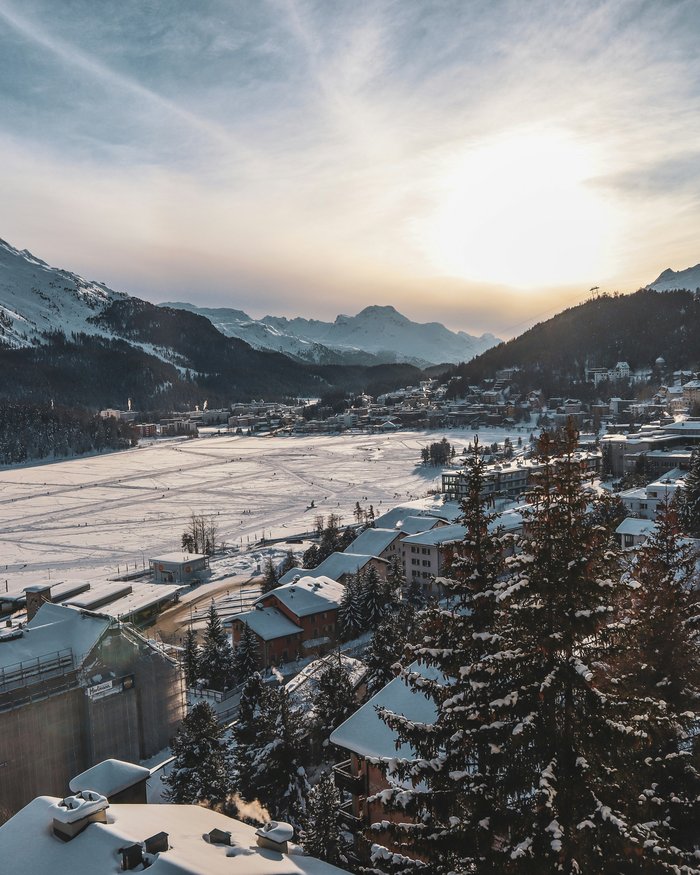
St. Moritz, Switzerland
The original winter resort — sun, snow and the Cresta Run.
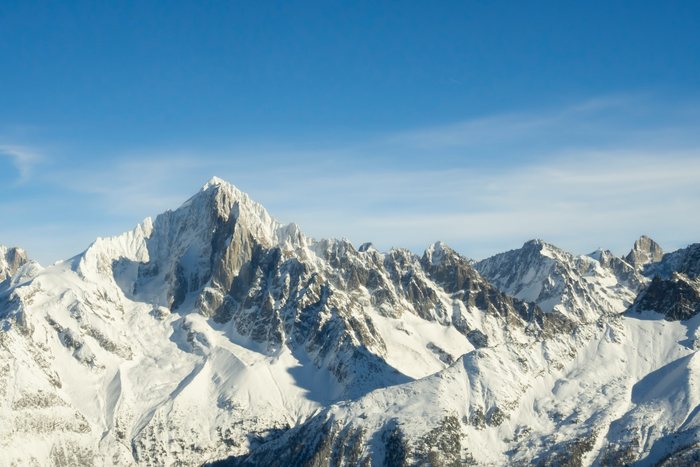
Chamonix, France
The birthplace of alpinism, under Mont Blanc.
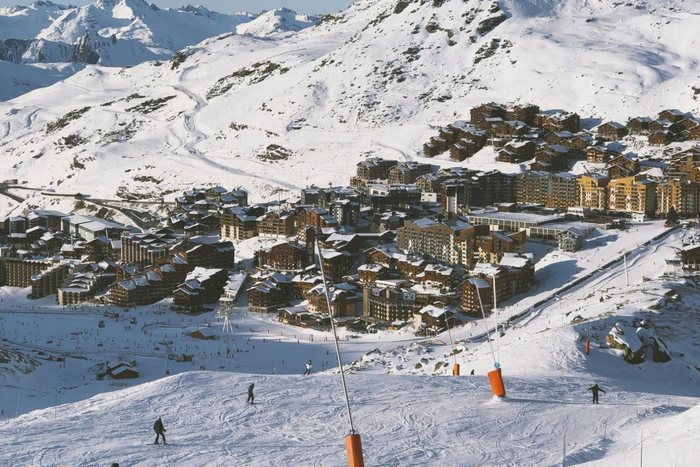
Val Thorens, France
Europe’s highest resort — snow-sure, and the gateway to the world’s largest linked ski area.
Val d’Isère, France
High-altitude, serious skiing with a village that actually feels like one.