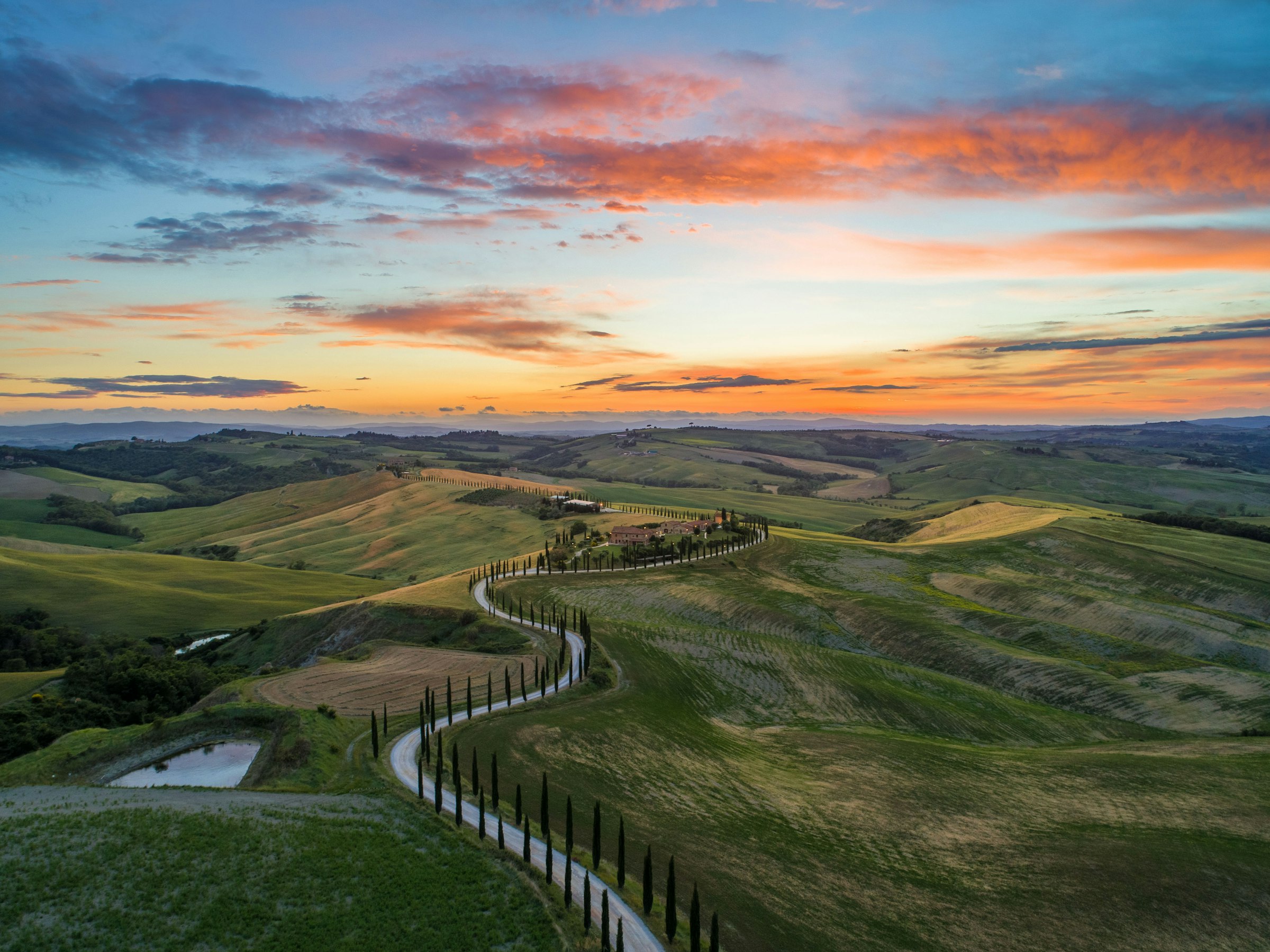
Tuscany
The template for the good life — Renaissance cities, cypress hills, and the best wine roads in Italy.
Tuscany is the Italy of the imagination: Renaissance art in Florence, medieval towers in Siena, and in between a landscape of cypress-lined ridges, vineyards, and hilltop towns that has shaped how the West pictures the countryside. It combines two trips that most places make you choose between — a serious art-and-history city break and a slow, wine-soaked rural idyll — in one compact, beautiful region.
Base yourself in Florence for the art — the Uffizi, Michelangelo's David, the Duomo's dome, a whole city that was the cradle of the Renaissance — then get out into the hills, which are the real magic. The Val d'Orcia is the postcard: rolling golden hills striped with cypress, the perfect little Renaissance town of Pienza, and the wine towns of Montalcino and Montepulciano. Siena, with its shell-shaped Campo and twice-yearly Palio horse race, is the great medieval rival to Florence. The Chianti wine roads wind between them, San Gimignano bristles with its surviving towers, and walled Lucca circles itself with a green rampart you can cycle. It's a region for driving slowly, eating long lunches, and drinking Sangiovese.
The honest part: Tuscany's fame is also its problem — Florence and San Gimignano are mobbed in summer, the marquee sights come with queues and crowds, and the region isn't cheap, especially the agriturismo-and-wine idyll everyone pictures. It's also not a beach destination (the coast is an afterthought). But spread beyond the honeypots into the Val d'Orcia and the Chianti hills, come in spring or autumn, rent a car, and it delivers exactly the art-food-landscape trifecta it's famous for — for good reason.
Highlights
-
Florence
The cradle of the Renaissance: the Uffizi, Michelangelo’s David, and Brunelleschi’s dome over the Duomo.
-
Val d’Orcia
The postcard Tuscany of cypress-lined golden hills, with Pienza and the wine towns of Montalcino and Montepulciano.
-
Siena
A perfectly preserved medieval city around the shell-shaped Campo, home of the twice-yearly Palio.
-
Chianti wine roads
Winding lanes between vineyards and stone villages — the heartland of Sangiovese.
-
San Gimignano
A hilltop town bristling with the medieval stone towers that earned it the "medieval Manhattan" tag.
-
Lucca
A handsome walled city you can circle on top of its Renaissance ramparts by bike.
Practical info
- Visa
- Schengen — visa-free for most Western passports (90 days).
- Currency
- EUR (€)
- Language
- Italian; English widely spoken in tourism.
- Safety
- Very safe; watch for pickpockets around Florence’s big sights.
- Getting around
- Trains link the cities; a rental car is what unlocks the hill towns and wine country.
- Tap water
- Tap water safe and good.
- Plug type
- Type C Type F Type L 230V
- Money
- Cards widely accepted; carry cash for rural trattorie and markets.
General guidance — visas, safety, and health change, so check your government's travel advisory and the official sources before you go.
Common questions
- Do I need a visa for Tuscany?
- As part of Italy and Schengen, US, UK, Canadian and Australian visitors are visa-free for 90 days in any 180. The biometric EES is live, and ETIAS is not yet in force (expected 2027). A per-night tourist tax applies in Florence and elsewhere. See entry.
- Do I have to pre-book Florence’s museums?
- Effectively yes — the Uffizi, the Accademia (Michelangelo’s David) and the Brunelleschi dome climb all need timed-entry reservations, and same-day slots are often gone in peak season. See Florence.
- Do I need a car?
- Not for the cities (trains and buses connect Florence, Pisa and Siena), but yes for Chianti and the Val d’Orcia. Beware the ZTL camera-enforced zones in historic centres — driving in unauthorised triggers automatic fines. See getting around.
- Siena, Pisa or San Gimignano?
- All are easy day-trips — Siena is the grandest (the Campo, and the Palio each July and August), Pisa has the Leaning Tower, and San Gimignano its medieval towers. See the art cities.
- When should I go?
- Spring (April–June) and autumn (September–October) are ideal — mild, with the autumn grape and olive harvest. Summer is hot and crowded; winter quiet. See when to go.
- Which wines define Tuscany?
- Chianti Classico, Brunello di Montalcino, Vino Nobile di Montepulciano and the coastal "Super Tuscans" — best enjoyed alongside a bistecca alla fiorentina. See food & wine.
Entry
Schengen, euro, and a bed tax
Standard Italian entry — plus the per-night tourist tax.
Tuscany is part of Italy and the Schengen Area, so US, UK, Canadian and Australian visitors enter visa-free for up to 90 days in any 180 on the euro. The biometric EES is now live at the border, while its companion ETIAS authorisation is not yet in force (expected in 2027), so you don’t need it at the moment.
The one local cost to budget is the imposta di soggiorno — a per-person, per-night tourist tax added to your room, scaled by hotel class (in Florence roughly €3.50–8), capped at seven nights, with children exempt.
Allow a little time at the border for EES enrolment, and re-check the ETIAS status before travel since its date keeps moving (not required as of now). Factor the tourist tax into accommodation budgets — it’s charged separately from the room rate, often collected in cash at check-out.
Florence
The Renaissance, reservation required
The art capital — glorious, and heavily booked.
1436 Brunelleschi’s dome — the Renaissance made stone
Florence is the reason many people come to Tuscany, and it delivers — Brunelleschi’s dome, the Uffizi’s wall of Renaissance masterpieces, Michelangelo’s David, and the medieval jewellers’ bridge over the Arno. It’s one of the densest concentrations of great art anywhere.
The flip side is the crowds: the headline sights are so popular that timed-entry reservations are effectively mandatory for the Uffizi, the Accademia and the dome climb, with same-day entry often unavailable in season. Book ahead and it’s sublime; turn up unplanned in July and you’ll queue.
Reserve the Uffizi, Accademia and dome online well before you arrive — this is the single biggest difference between a smooth Florence visit and a frustrating one. Consider an early or late slot to dodge the worst crush, and explore the Oltrarno across the river for a quieter, more local side of the city.
The art cities
Siena, Pisa and the towers
A constellation of day-trips — each a self-contained masterpiece.
Beyond Florence, Tuscany’s art cities are a string of day-trips, each distinct. Siena is the great rival — a complete medieval city around the sloping, shell-shaped Campo, where the frenzied Palio horse race runs twice each summer. Pisa is more than its famous tilt: the whole Campo dei Miracoli is a marble marvel.
Lucca charms with its intact Renaissance walls, wide enough to walk or cycle atop, while San Gimignano bristles with the medieval tower-houses that earned it the "medieval Manhattan" tag. Quieter Arezzo rewards those who venture further.
| City | What | Note |
|---|---|---|
| Siena | The shell-shaped Campo and the Palio | The Palio horse race runs 2 July & 16 August |
| Pisa | The Leaning Tower (Campo dei Miracoli) | UNESCO — more than just the tower |
| Lucca | Intact Renaissance city walls | Walk or cycle the ~4 km ring on top |
| San Gimignano | The medieval "city of towers" | 14 towers survive of an original ~72 |
Arezzo adds Piero della Francesca’s frescoes and a famous antiques market, less touristed than the big names.
The countryside
Cypress roads and wine towns
The landscape that launched a thousand postcards — and needs a car.
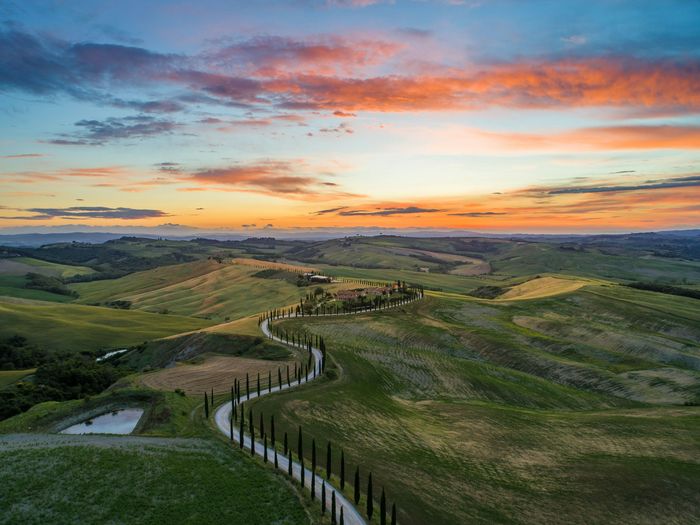
UNESCO (2004) the Val d’Orcia — cypress-lined roads and hilltop towns
For many, the hills are Tuscany. The Chianti wine region rolls between Florence and Siena — vineyards, stone villages and the black-rooster seal of Chianti Classico — while south lies the UNESCO Val d’Orcia, those cypress-lined ridges and golden fields of a hundred photographs.
Its hilltop towns double as wine capitals — Montalcino for Brunello, Montepulciano for Vino Nobile, and perfect little Pienza — and the way to do it is to base yourself at an agriturismo, a working farm or winery with rooms, and drive the cypress-lined back roads at a gentle pace.
The countryside is where a car (and an agriturismo base) transforms a Tuscany trip — the Chianti and Val d’Orcia hill towns and wineries are poorly served by public transport. Just mind the ZTL zones when you dip into historic centres, and book tastings and farm stays ahead, especially around the September harvest.
Coast & islands
Beaches, Elba and marble
The summer counterpoint — sea, an island and a mountain of stone.
Tuscany isn’t only cities and vines — it has a coast. The island of Elba, where Napoleon spent his first exile, offers beaches and clear water a ferry-hop offshore; the Versilia riviera draws Italian holidaymakers to chic Forte dei Marmi; and the wilder, rural Maremma in the south has its own cowboys, a national park and the thermal pools of Saturnia.
Up in the Apuan Alps behind the coast, the Carrara quarries have yielded white marble since antiquity — the very stone Michelangelo carved, still cut from the mountainside today.
| Place | What | Note |
|---|---|---|
| Elba | The largest Tuscan island | Napoleon’s 1814–15 exile; Portoferraio |
| Versilia | The fashionable northern Riviera | Forte dei Marmi the chic resort |
| Maremma | The wild southern coast and cowboys | Parco della Maremma; Saturnia hot springs |
| Carrara | The white-marble quarries | Michelangelo’s stone, in the Apuan Alps |
The coast and islands are the summer counterpoint to the art cities and the inland hills.
Getting around
Trains for cities, a car for the hills
Easy rail between the big names — but drive for the wine country.
The cities are well linked by rail: fast, frequent trains run Florence–Pisa (about an hour) and to Lucca, so you can do the big sights car-free. The exception is Siena, oddly poorly served by train — the bus is usually faster.
For Chianti and the Val d’Orcia, though, a car is essential. The vital warning: Tuscan historic centres are ringed by ZTL (limited-traffic) zones, camera-enforced, and driving in without a permit triggers automatic fines (often arriving months later via the rental company). Park outside the walls.
When to go
Spring and autumn, not high summer
The shoulder seasons are made for Tuscany.
Spring (April–June) and autumn (September–October) are ideal — mild weather, the countryside green or golden, and autumn bringing the grape (vendemmia) and olive harvests. High summer is hot (35°C+ inland), crowded and priciest; winter is quiet and cool, the cities uncrowded.
Tuscany is at its best in the shoulder seasons. Spring (April–June) brings mild days and green hills; autumn (September–October) adds the magic of the harvest — grapes and olives — with warm light and thinner crowds, arguably the single best time to come.
High summer (July–August) is hot, crowded and expensive, with the coast packed by Italians around Ferragosto; winter is quiet and cool, with the cities uncrowded and some rural places closed.
Food & wine
Sangiovese, steak and the slow table
Half the reason to come — eat and drink your way through the hills.
Tuscan food and wine are a trip in themselves. The reds are legendary — Chianti Classico, the powerful Brunello di Montalcino and Vino Nobile di Montepulciano, and the Bordeaux-style "Super Tuscans" of the Bolgheri coast — ideally tasted at the cellar door.
On the plate it’s robust and simple: the enormous rare bistecca alla fiorentina, hand-rolled pici pasta, ribollita and panzanella, pecorino from Pienza, and cantucci dipped in Vin Santo. The region’s whole rhythm is built around the slow, local table.
- Art and Renaissance citiesSkiponly FlorenceGoFlorence plus Siena and a hill-town day
- Wine and landscapeSkipa cities-only tripGoa car and an agriturismo in Chianti or the Val d’Orcia
- Beach and islandsSkipthe baking inland summerGoElba or the Versilia coast
| On the table | What | Note |
|---|---|---|
| Chianti Classico | Sangiovese reds (the black-rooster seal) | The hills between Florence and Siena |
| Brunello / Vino Nobile | Montalcino & Montepulciano reds | Val d’Orcia DOCGs |
| Super Tuscans | Bordeaux-style coastal reds | Bolgheri — Sassicaia, Tignanello |
| Bistecca alla fiorentina | The thick, rare T-bone steak | Plus pici pasta and ribollita |
Book agriturismo stays and cellar tastings ahead, especially around the September harvest (vendemmia).
Build the trip around the table: a few nights at a Chianti or Val d’Orcia agriturismo with its own cellar turns the wine country from a drive-through into the highlight. Reserve tastings and the better restaurants ahead in season, and don’t rush a bistecca lunch — it’s meant to be lingered over.
Compare Tuscany
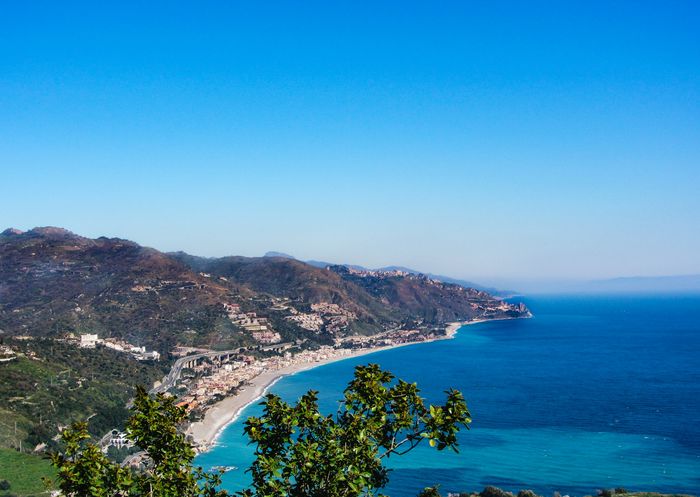
If you like Tuscany, also consider

Greece
Ruins in the morning, a swim by noon, taverna until dark.
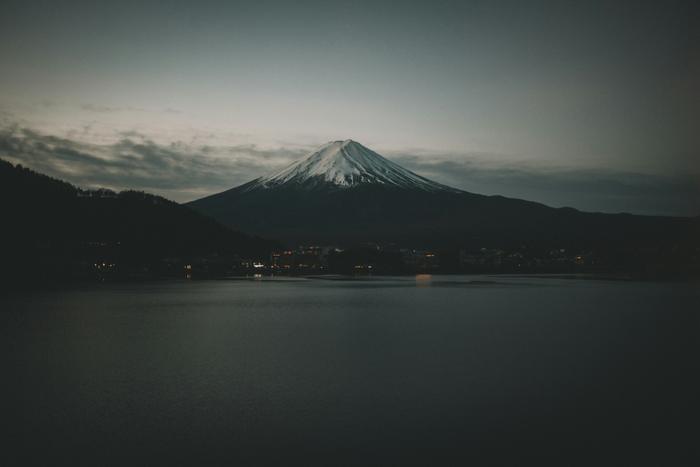
Japan
Extraordinary food, culture, and cities. Nothing quite prepares you for it.
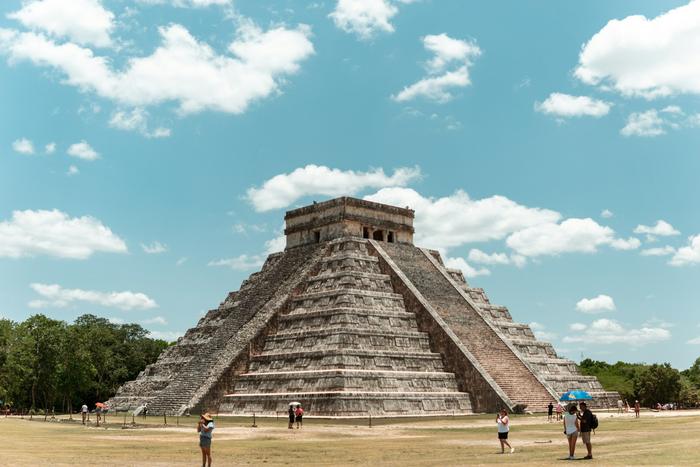
Mexico
Mexico City is world-class. Add the coast, ruins, and food culture.
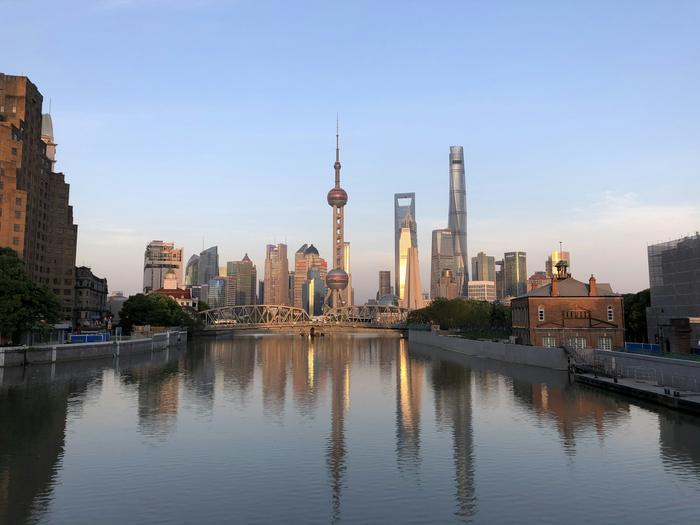
China
Ancient history and hypermodern cities at a scale that's hard to grasp until you're there.
Not sure where to go
Take the 5-minute quiz
Answer a few honest questions and get matched to destinations that actually fit how you travel.
Start the quiz