US Virgin Islands
Three islands, one national park, and no passport needed if you hold a US one.
The USVI is the Caribbean at its most frictionless for Americans — dollars, English, US phone service, no passport required — wrapped around genuinely first-rate scenery. St John is two-thirds national park and has the best beaches; St Thomas has the airport, the cruise ships, and the nightlife; St Croix is bigger, flatter, and quietly the most interesting. Pick the right island and it's excellent; pick the wrong one for your trip and you'll wonder what the fuss is.
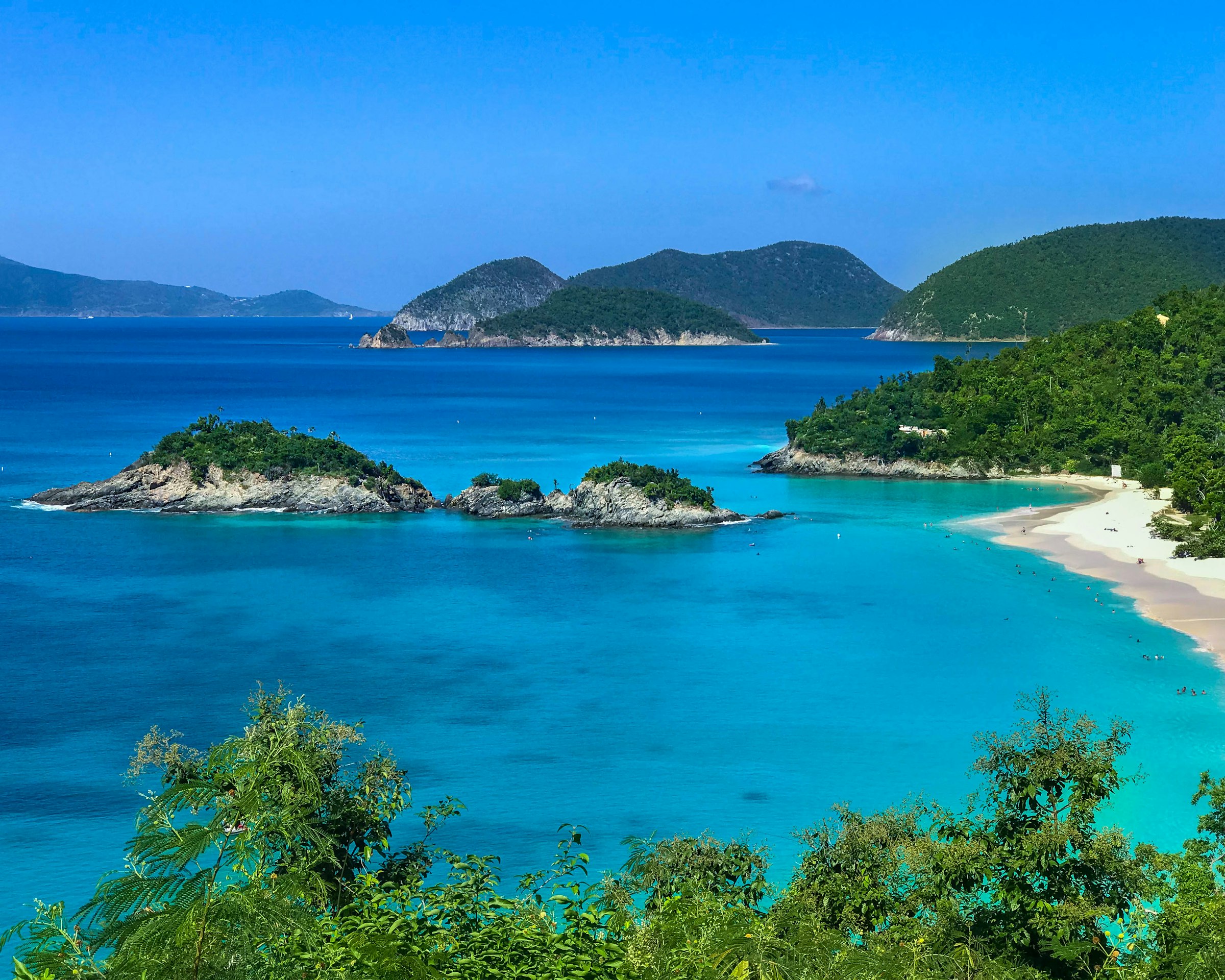
St John is the reason to come. Virgin Islands National Park covers most of it, which means the coastline was never built on: Trunk Bay, Maho, and Honeymoon are protected, and the interior has real hiking through old sugar-mill ruins down to empty coves. St Thomas is where you land and where the ships dock — Magens Bay is genuinely lovely, Charlotte Amalie is busy and duty-free, and the north side has the hotels. St Croix, forty minutes away by plane, is the one people skip and shouldn't: Christiansted and Frederiksted are proper Danish colonial towns, Buck Island has a marked underwater snorkel trail, and the whole island is cheaper and less packaged.
The honest part: the USVI is expensive for what it is, and the value gap against the nearby British Virgin Islands or Puerto Rico is real. St Thomas on a four-ship cruise day is genuinely unpleasant — check the schedule. Getting between islands means ferries or small planes, so island-hopping eats time and money; most trips are better spent on one. And the hurricane hit in 2017 still shows in places. Base on St John if the beaches are the point, St Croix if you want the island to be interesting, and skip the multi-island itinerary.
Highlights
-
Trunk Bay, St John
The postcard: white sand, headlands, and an underwater snorkel trail inside the national park.
-
Virgin Islands National Park
Two-thirds of St John, with trails past sugar-mill ruins down to coves you can have to yourself.
-
Magens Bay, St Thomas
A long protected horseshoe of calm water — the island beach everyone photographs.
-
Christiansted, St Croix
Danish colonial arcades, a working waterfront, and the best-preserved town in the group.
-
Buck Island Reef, St Croix
A national monument with a marked underwater trail through elkhorn coral.
-
Cruz Bay bar-hopping
St John’s small, cheerful harbour town — where the boat crowd ends up after dark.
Practical info
- Visa
- US territory — no passport required for US citizens. Other nationalities need the same visa or ESTA as for the mainland US.
- Currency
- US Dollar (USD).
- Language
- English (official).
- Safety
- Tourist areas are safe; ordinary precautions, more care after dark in parts of Charlotte Amalie and Frederiksted.
- Getting around
- Rental car or open-air taxis (driving on the left, in left-hand-drive cars); ferries between St Thomas and St John.
- Tap water
- Tap water is safe; much of it is desalinated or cistern-collected and tastes it.
- Plug type
- Type A Type B 120V
- Money
- Cards accepted widely; carry cash for taxis, beach bars, and the ferries.
General guidance — visas, safety, and health change, so check your government's travel advisory and the official sources before you go.
Common questions
- Do I need a passport?
- Not if you’re a US citizen — the USVI is a US territory, so it’s domestic travel (but since 7 May 2025 you need a REAL ID or passport to board the flight). Non-US citizens follow standard US rules — ESTA (~US$40) or a US visa. See entry.
- Which side do I drive on?
- The left — the USVI is the only US jurisdiction that drives on the left (a Danish colonial legacy), in standard US left-hand-drive cars. It takes a little getting used to. See getting around.
- How do I get to St John?
- Ferry only — St John has no airport. The Red Hook (St Thomas) to Cruz Bay crossing is ~15–20 minutes, roughly hourly, ~US$6. Two-thirds of the island is national park. See the national-park section.
- Is Virgin Islands National Park free?
- Yes to enter and roam. The only charge is Trunk Bay’s US$5 snorkel-trail fee (ages 16+, cashless). Magens Bay on St Thomas charges a separate ~US$7. See beaches.
- What’s the duty-free allowance?
- Generous — about US$1,600 per person every 30 days (roughly double the mainland limit) plus 5 litres of alcohol (4 bought in the territory, 1 a local product like Cruzan Rum). It’s checked by US Customs when you fly home, so keep receipts.
- When should I go?
- The dry season, December–April; avoid the June–November hurricane window (Irma and Maria both hit in September 2017) and the spring–summer sargassum. Sea warm year-round.
Entry
A US domestic trip with a Danish past
For US citizens, no passport and no customs on arrival — but a customs check on the way home.
For a US citizen, the USVI is an easy domestic trip — no passport, US dollars, your own phone plan — with the standard REAL ID needed to board the mainland flight since May 2025. Non-US citizens follow the usual US rules (ESTA or a visa); there’s no separate territorial step.
The quirk is customs: there’s nothing to clear arriving, but because the territory sits outside the US customs zone, US Customs checks you on departure to the mainland — which is where the generous duty-free allowance (and the receipts) matter.
US citizens: confirm your licence is REAL ID-compliant (the star) before flying — since May 2025 a non-compliant licence won’t board you, same as any domestic route. And keep shopping receipts for the departure customs check, where the USVI’s double-size duty-free allowance comes into play.
The three islands
St Thomas, St John, St Croix
Three distinct islands — the busy one, the park one, and the Danish one.
The three islands are genuinely different trips. St Thomas is the busy gateway — the cruise port, Charlotte Amalie’s duty-free shopping, and the famous Magens Bay. St John, a short ferry away, is the quiet one, two-thirds national park. St Croix, 40 miles south, is the largest and most Danish, with the colonial towns of Christiansted and Frederiksted and the Buck Island reef offshore.
Most trips pair St Thomas and St John (easy to combine by ferry); St Croix is a deliberate add-on by seaplane or a separate flight.
- Cruise-port buzz, shopping and a famous beachSkipexpecting quietGoSt Thomas — Charlotte Amalie and Magens Bay
- A national-park, barefoot weekSkipthe cruise crowdsGoSt John — Trunk Bay and the park trails
- Danish history and wall divingSkipthe busy northGoSt Croix — Christiansted, Frederiksted, Buck Island
| Island | What | Note |
|---|---|---|
| St Thomas | Charlotte Amalie, cruise hub, Magens Bay, duty-free shopping | Main airport (STT) |
| St John | ~60% national park; Trunk Bay; the quiet one | No airport — ferry from St Thomas |
| St Croix | Bigger; Danish Christiansted & Frederiksted, Buck Island | Own airport (STX); ~40 mi south |
St Thomas and St John sit close together in the north; St Croix is ~40 miles south, reached by a Seaborne seaplane (~25 min) or a separate flight.
Pick your base by temperament: St Thomas for convenience and shopping, St John for nature and calm, St Croix for history and diving. St Thomas + St John is the natural combination; adding St Croix means a seaplane hop and a different pace.
National park
Two-thirds of St John, protected
St John is mostly Virgin Islands National Park — barefoot trails and a famous snorkel bay.
~60% of St John is Virgin Islands National Park
St John’s defining feature is that about 60% of it is national park, gifted to protection in the 1950s — so instead of development you get forested trails, old Danish estate ruins and a run of pristine north-shore beaches. Trunk Bay, with its underwater snorkel trail, is the headline; Cinnamon Bay the big beach-and-campground; the Reef Bay trail the best walk.
Entry to the park is free; only Trunk Bay’s snorkel-trail amenity charges a small fee, and it’s cashless.
You can day-trip St John from St Thomas — taxi to Red Hook, the ~15–20-minute ferry to Cruz Bay, then a safari taxi into the park — but it’s better as a base: the park empties out when the day-trippers and cruise crowds leave, and the north-shore beaches are the reward for staying over.
Beaches
Famous bays, small fees
Most beaches are free and public — the two headliners charge a little.
The USVI’s beaches run from the manicured to the wild. Magens Bay on St Thomas is the heart-shaped, fully-serviced classic (a ~US$7 non-resident fee); Trunk Bay on St John is the national-park icon with its snorkel trail (US$5). On St Croix, Buck Island Reef is a national monument reached only by boat, and Cane Bay offers a famous wall dive straight off the sand.
Beyond those, most beaches are free and public — the fees are the exception, not the rule.
| Beach | Island | Entry |
|---|---|---|
| Trunk Bay | St John | US$5 (snorkel trail; cashless, 16+) |
| Magens Bay | St Thomas | US$7 (non-resident, 12+) |
| Buck Island | St Croix | Free, but boat-access only (national monument) |
| Cane Bay | St Croix | Free; a wall dive right off the beach |
Most other beaches are public and free; the small fees at Trunk Bay and Magens Bay fund the park and the bay. Buck Island is reached only by licensed snorkel boats from Christiansted.
Both Trunk Bay and Magens Bay are cashless/card and have the facilities (showers, lockers, concession) that the free beaches lack — worth the small fee for a full beach day. For Buck Island off St Croix, book a licensed snorkel-boat trip from Christiansted; you can’t reach it independently.
Getting around
Drive on the left, ferry to St John
A US quirk up front — you drive on the left — plus ferries and a seaplane.
The thing to brace for is that the USVI drives on the left — the only US jurisdiction that does, a leftover from Danish rule — while the cars are standard American left-hand-drive, which makes junctions briefly confusing. A hire car (~US$75–90/day) works on each island; the shared open-air “safari taxis” run set routes for short hops.
Between islands you go by water or air: the frequent Red Hook–Cruz Bay ferry to St John, and the Seaborne seaplane for the ~25-minute hop to St Croix.
| Link | How | Time |
|---|---|---|
| St Thomas → St John | Red Hook–Cruz Bay ferry | ~15–20 min, ~US$6 |
| St Thomas → St Croix | Seaborne seaplane | ~25 min |
| Around each island | Hire car — drive on the LEFT | US left-hand-drive cars |
| Short hops | Open-air “safari” taxis | Set government rates |
The USVI is the only US jurisdiction that drives on the left — a Danish legacy — in standard US left-hand-drive cars. St John has no airport; the seaplane links St Thomas and St Croix in ~25 minutes.
Give yourself a cautious first hour with the left-side driving — the mix of left-hand traffic and left-hand-drive cars catches everyone out at junctions and roundabouts. For St John, many visitors skip the car and use safari taxis, since the park trailheads and beaches are all on the taxi routes.
When to go
Dry winter, storm-season summer
The usual Caribbean calendar — with two Carnivals and a hard 2017 memory.
~27°C warm sea year-round
St Thomas Carnival is late April into early May; St Croix’s Crucian Christmas Festival runs late December into early January. The crimson bar is the dry, calm peak season.
Aim for the dry December–April window for the calmest seas and best weather. The June–November hurricane season peaks August to October; the twin blows of Irma and Maria in September 2017 are the reference catastrophe, since rebuilt.
The islands run two Carnivals — St Thomas’s in late April, St Croix’s Crucian Christmas Festival over the New Year — either a fine reason to time a trip. Summer brings sargassum to the exposed shores, so lean leeward then.
Money
US dollars, high prices, big duty-free
No currency faff and US-style everything — expensive, but with a generous duty-free upside.
Money is frictionless — US dollars, US cards everywhere, US-style tipping — but the USVI is expensive, with most goods imported, a 12.5% hotel room tax, and resort fees on top. Budget structurally high and lean on the free public beaches.
The compensating quirk is shopping: returning US travellers get a ~US$1,600 duty-free exemption per person every 30 days — roughly double the mainland limit — plus five litres of alcohol (four bought in the territory, one a local product like Cruzan Rum). It’s all checked by US Customs on departure, so keep the receipts.
If you shop, the USVI’s double-size duty-free allowance genuinely rewards buying here (spirits, jewellery, electronics in Charlotte Amalie) over the mainland — but the exemption and the 5-litre alcohol rule are checked by US Customs when you fly home, so keep receipts and don’t overshoot the limit.
Culture & history
Danish towns and Transfer Day
American now, but Danish for 250 years — and the architecture proves it.
The islands were the Danish West Indies for 250 years before the US bought them for US$25 million in gold in 1917 — still commemorated as Transfer Day (31 March). That Danish inheritance is visible in the pastel arcades and forts of Christiansted and Frederiksted on St Croix, and audible in the left-side driving.
The deeper history is the sugar-and-slavery economy and its emancipation in 1848, led by the enslaved at Frederiksted, now marked each 3 July. St Croix’s distinct Crucian culture — quelbe music, a local dialect — grows out of all of it.
Walk Christiansted’s Danish core on St Croix — Fort Christiansvaern and the arcaded streets are a National Historic Site and the clearest window onto the islands’ Danish past, a different register entirely from St Thomas’s cruise-and-shopping bustle.
If you like US Virgin Islands, also consider
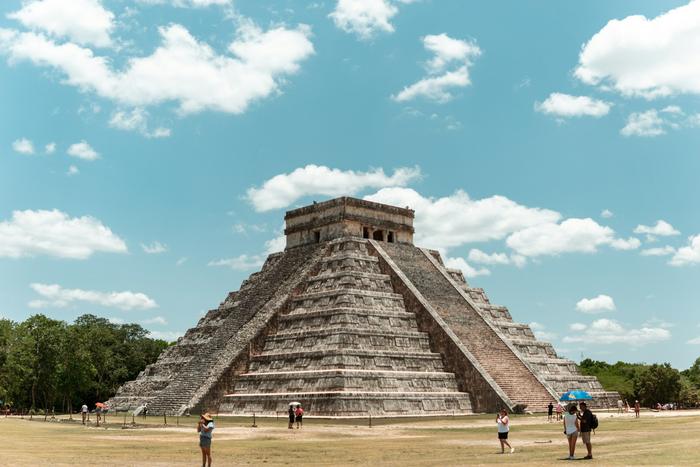
Mexico
Mexico City is world-class. Add the coast, ruins, and food culture.

United States
A continent pretending to be a country — cities, deserts, and the best national parks anywhere.
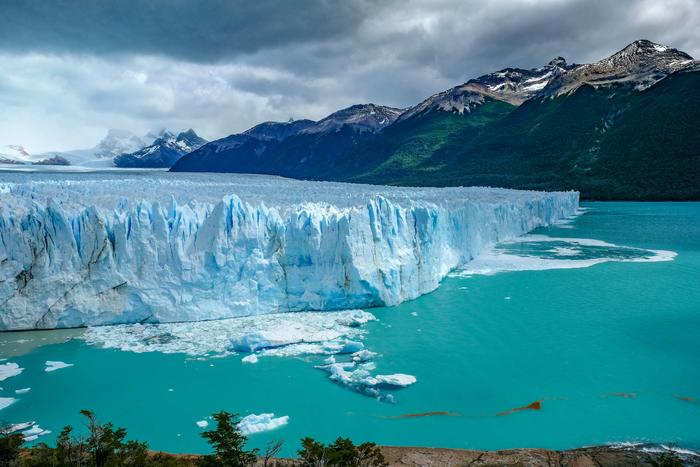
Argentina
Buenos Aires has the best steakhouses and nightlife in South America.

Greece
Ruins in the morning, a swim by noon, taverna until dark.

Spain
Food, beaches, and three or four cities that each justify the trip.
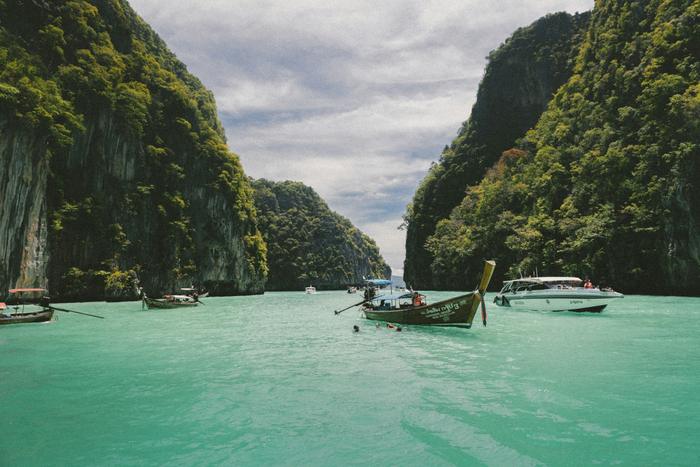
Thailand
The complete package for warm-climate travel.
Not sure where to go
Take the 5-minute quiz
Answer a few honest questions and get matched to destinations that actually fit how you travel.
Start the quiz