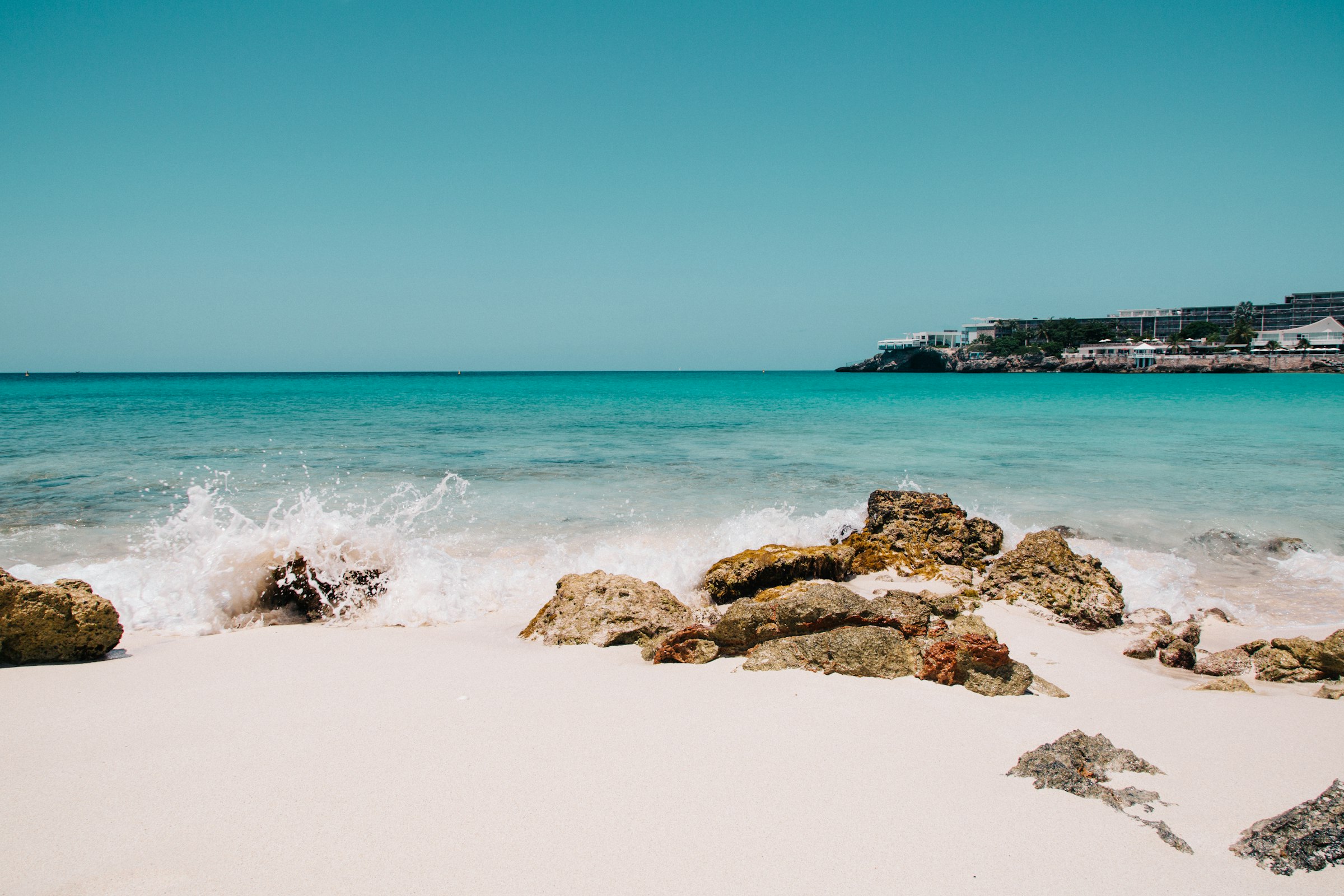
St Maarten / St Martin
One small island, two countries — Dutch nightlife on one side, French cooking on the other.
St Maarten is split down the middle: Dutch Sint Maarten in the south, French Saint-Martin in the north, no border formalities, and a genuinely different atmosphere on each side within a fifteen-minute drive. The Dutch half brings casinos, cruise ships, and the famous jets landing over Maho Beach; the French half brings bakeries, topless beaches, and the best food in the eastern Caribbean. Doing both is the whole point.
Base yourself by what you want your evenings to look like. Philipsburg and Simpson Bay on the Dutch side are busier, cheaper, and louder, with the airport approach over Maho Beach as the island's oddest attraction — planes pass low enough overhead that the jet blast is a genuine hazard, and people queue up for it anyway. Grand Case on the French side is a single street of restaurants that punches absurdly above the island's weight, and Orient Bay is the big, breezy beach everyone knows. Between the two coasts there are thirty-odd beaches, several of which stay empty midweek.
The honest part: the island is small, developed, and cruise-driven — Philipsburg on a heavy ship day is a scrum, and there is not much wilderness left to find. Hurricane Irma flattened it in 2017 and the rebuild has been uneven; you'll still pass shells of buildings. It's also two administrations sharing one island, which shows in the roads and the power. Come for the two-cultures novelty, the food on the French side, and the beach choice — not for an unspoiled island.
Highlights
-
Maho Beach
Jets land directly overhead on their approach — absurd, famous, and genuinely loud.
-
Grand Case
A one-street restaurant strip on the French side that outclasses islands ten times its size.
-
Orient Bay
The big French-side beach: watersports, beach clubs, and a clothing-optional end.
-
Philipsburg & Front Street
Dutch-side capital — duty-free shopping, boardwalk bars, and the cruise crowd.
-
Pinel Island
A five-minute ferry to a car-free islet with calm shallow water and two beach restaurants.
-
Marigot & the Wednesday market
The French capital, with a harbourside market and proper patisserie.
Practical info
- Visa
- Visa-free for most Western passports on both sides; the French side follows Schengen-style rules for some nationalities. Verify before travel.
- Currency
- Dutch side: Netherlands Antillean guilder (ANG), with US dollars accepted everywhere. French side: Euro (EUR).
- Language
- English is spoken island-wide; Dutch and French are the official languages, plus Papiamento and Creole.
- Safety
- Generally safe for visitors; ordinary precautions, and avoid unlit areas after dark.
- Getting around
- Rental car is the way to use both sides (driving on the right); taxis are expensive and unmetered — agree the fare first.
- Tap water
- Tap water is desalinated and safe on both sides.
- Plug type
- Type A Type B 110V
- Money
- Cards widely accepted; carry euros for small French-side places and dollars for the Dutch side.
General guidance — visas, safety, and health change, so check your government's travel advisory and the official sources before you go.
Common questions
- Is there a border?
- Yes, but it’s open and unmarked — you cross freely between Dutch Sint Maarten and French Saint-Martin, usually at just a welcome sign or the 1648 Treaty monument, with no checkpoint. See the two-nations section.
- Do EES or ETIAS apply on the French side?
- No — Saint-Martin is a French collectivity outside the Schengen Area, so the EU’s EES and ETIAS do not apply here. You’d only meet them transiting mainland France or another Schengen state.
- Do I need the entry form, and is it free?
- Yes — the St. Maarten Entry Form at entry.sx is mandatory for air arrivals and free. Avoid the scam sites (often sponsored search ads) that charge for it — one billed US$139.99. See entry.
- What currency should I carry?
- US dollars for the Dutch side (the local Caribbean guilder is rarely needed by tourists) and some euros for the French side — Grand Case and Marigot. Cards work everywhere.
- Which side for what?
- The Dutch side for cruise, casinos, duty-free shopping and nightlife; the French side for gastronomy, Marigot’s market and quieter, part-naturist beaches. More in two nations.
- When should I go, and is it recovered from Irma?
- Mid-December to April is the dry peak; hurricane season is June–November. The island and the SXM airport are fully rebuilt since Irma (2017), the new terminal recommissioned in November 2024.
Entry
Two jurisdictions, one open border
Easy entry to a split island — with a free online form and a scam to sidestep.
St Maarten is the world’s smallest island shared by two nations — the Dutch Sint Maarten (a constituent country of the Kingdom of the Netherlands) and the French Saint-Martin (a French overseas collectivity) — divided since the 1648 Treaty of Concordia by a border you cross without stopping. Entry is visa-free for 90 days for the main Western passports, and crucially the French side sits outside Schengen, so the EU’s EES and ETIAS systems don’t apply.
Air arrivals must file the free St. Maarten Entry Form at entry.sx (mandatory since October 2024) — a quick online declaration.
Use entry.sx and nothing else for the entry form: officials have warned that copycat sites, often the top sponsored search result, charge for what is a free government form — one billed travellers US$139.99. Type the address directly, and ignore any “entry authorisation fee” a third-party site tries to levy.
Two nations
Dutch buzz, French gastronomy
The split is of temperament — casinos and cruise on one side, restaurants and quiet on the other.
For such a small island, the two halves feel genuinely different. The Dutch side is the commercial one — Philipsburg’s cruise port and duty-free Front Street, the Simpson Bay casinos and nightlife, Maho Beach under the flight path. The French side is quieter and more epicurean — Marigot’s market and Fort Louis, the gourmet strip of Grand Case, and the long sweep of Orient Bay with its clothing-optional south end.
Because the border is open, you flit between them in a single drive — French lunch, Dutch night out — which is much of the island’s appeal.
- Cruise buzz, casinos, duty-free and nightlifeSkipexpecting quietGothe Dutch side — Philipsburg and Simpson Bay
- Gastronomy and a quieter beachSkipthe cruise crowdsGothe French side — Grand Case and Orient Bay
- Both in a single daySkipworrying about the frontierGojust driving across — it’s open and unmarked
The border is a welcome sign and a monument, not a control — you won’t even slow down — but the two sides keep different currencies, plug sockets and phone networks. Carry a little of both US dollars and euros, and don’t be surprised when your phone flips carrier mid-island.
Maho Beach
The beach at the end of the runway
The famous plane-spotting beach — thrilling on arrivals, genuinely dangerous on departures.
2017 the year jet-blast killed a tourist at Maho
Maho Beach is the island’s viral set-piece — low-flying airliners skimming the sand on final approach, right over the Sunset Bar at the runway’s edge. It’s a genuine spectacle and a bucket-list photo.
It is also, on departures, dangerous: the thrust from a jet spooling up for take-off can throw a person across the beach, and the warning signs along the fence are not decorative — a tourist was killed there in 2017.
The danger at Maho is the jet-blast on take-off, not the landings — people are injured (and one killed) “fence-surfing” the blast for a thrill. Watch the arrivals from the sand, heed the posted warnings, and get well back from the fence whenever an aircraft is lining up to depart.
Beaches
Thirty-seven beaches, two coasts
The island claims 37 beaches — the choice comes down to calm west or surf-and-seaweed east.
The island is marketed on its 37 beaches, and the useful split is by coast. The west/Caribbean side — Mullet Bay above all, plus Grand Case and Baie Rouge — is calm, clear and largely sargassum-free. The east/Atlantic side, headlined by the big resort sweep of Orient Bay (with its clothing-optional south end), gets the surf and the seaweed.
For a reliable swim-and-laze day, point yourself west; Orient Bay is for the scene and the watersports.
| Beach | Side | Note |
|---|---|---|
| Mullet Bay | Dutch (west) | Widely rated the best — calm, powdery, sargassum-free |
| Orient Bay | French (east) | The big flagship; naturist south end; sargassum-prone |
| Grand Case | French (west) | A calm bay fronting the gourmet village |
| Maho Beach | Dutch (west) | Plane-spotting at the runway’s end |
About 37 beaches in all. The west/Caribbean beaches (Mullet, Grand Case, Baie Rouge) are calm, clear and sargassum-free; the east/Atlantic beaches (Orient Bay, Dawn, Le Galion) get bigger surf and the seaweed.
If sargassum is running (mainly May–October), it lands on the Atlantic east — Orient Bay and Le Galion — while the Caribbean west (Mullet Bay, Grand Case) stays clear. On a split island you’re never far from a clean beach; just switch coasts.
Getting around
One car, and ferries to the neighbours
A hire car covers the whole island in a day — and the ferries open up three more.
A single hire car is all you need on the island — you drive on the right on both sides and cross the open border without stopping, so the whole place is a day’s loop. SXM is the regional air hub, which is why so many trips combine it with a neighbour.
The ferries are the bonus: Anguilla is barely 20 minutes from Marigot, St Barths about 45, and Saba a longer run — each an easy day-trip to a very different island.
| Day-trip | From | Time |
|---|---|---|
| Anguilla | Marigot → Blowing Point | ~20–25 min |
| St Barths | Philipsburg / Oyster Pond | ~45 min |
| Saba | Dutch side | a longer run |
| Across the island | Hire car (drive on the right) | the open border — no stop |
Carry your passport for the ferries — each neighbour is a separate jurisdiction. SXM (Princess Juliana) is the regional air hub; on the island itself you drive on the right and cross the border freely.
Take your passport on any ferry day-trip — Anguilla, St Barths and Saba are each a separate country or territory with its own immigration, even though they’re minutes away. The Marigot–Anguilla hop in particular is quick and frequent, and makes a fine half-day.
When to go
Dry winter, two Carnivals
The usual Caribbean calendar — with a Carnival on each side at different times.
~27°C warm sea year-round
The Dutch-side Carnival peaks late April into early May; the French-side Carnival follows the pre-Lent (Feb/Mar) calendar — so the island gets two. The crimson bar is the dry, peak season.
Aim for the dry mid-December to April window for the calmest seas and the high-season buzz. The June–November hurricane season peaks August to October; Irma in 2017 was the catastrophe, since fully rebuilt — the SXM airport’s new terminal reopened in 2024.
A quirk of the split island is that it runs two Carnivals — the Dutch side’s in late April/early May, the French side’s in the pre-Lent weeks of February or March — so there’s almost always one to time a trip around.
Money
Dollars, euros, and duty-free
Two currencies on one island — and a shopping draw on the Dutch side.
The money is a two-sided affair. On the Dutch side, daily life runs on the US dollar (the local currency became the Caribbean guilder, XCG, in 2025, but tourists rarely touch it); on the French side the euro is official, with dollars taken at poorer rates. Cards work everywhere, so the practical move is to carry a little of both cash.
The island is relatively pricey — imports and high-end French restaurants see to that — but the Dutch-side duty-free on jewellery, liquor and electronics is a real draw.
| Where | Currency | Note |
|---|---|---|
| Dutch side | US dollar (local XCG) | The Caribbean guilder replaced the ANG in 2025; tourists rarely need it |
| French side | Euro | US$ taken at weaker rates — carry some euros |
| Both sides | Cards everywhere | Duty-free shopping on the Dutch side |
Relatively expensive — most goods are imported and French dining is high-end. The Dutch side’s duty-free (jewellery, liquor, electronics) is a genuine shopping draw.
Spend euros on the French side (Grand Case, Marigot) to avoid the weak dollar-to-euro rate shops apply, and save the duty-free shopping for the Dutch side, where it’s genuinely cheaper. A card covers most things; the cash split just smooths the small stuff on each half.
Food & nightlife
The gourmet capital, and the casinos
The French side eats, the Dutch side plays — Grand Case and Simpson Bay in one trip.
The island’s best meals are on the French side: Grand Case is styled the “gourmet capital of the Caribbean,” a single street of serious restaurants backed by waterfront lolos — the Creole barbecue grills that are the cheaper, livelier counterpoint — and Marigot’s market for French-Caribbean produce.
The Dutch side brings the nightlife — the Simpson Bay and Maho bars and casinos, the cruise-day bustle of Philipsburg. Put the two together and you get a rare split: French dinner, Dutch night out.
For the real taste of Grand Case, mix a fine-dining restaurant with the lolos — the barbecue grills at the end of the strip are where locals eat, cheaper and just as memorable as the white-tablecloth places. Book the top restaurants ahead in high season; the lolos you just turn up to.
If you like St Maarten / St Martin, also consider
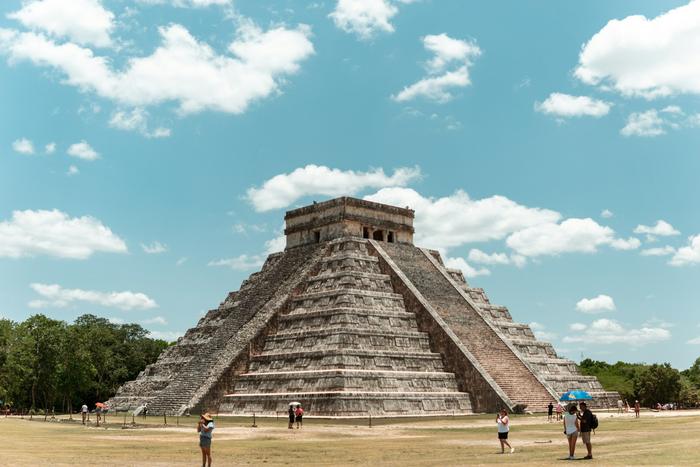
Mexico
Mexico City is world-class. Add the coast, ruins, and food culture.
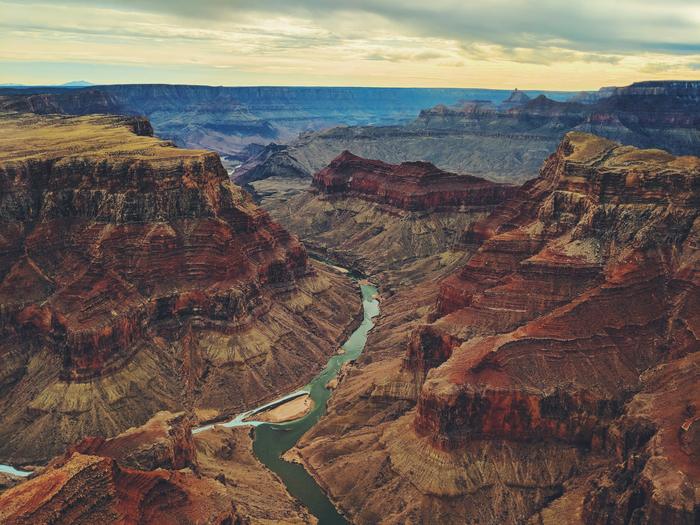
United States
A continent pretending to be a country — cities, deserts, and the best national parks anywhere.
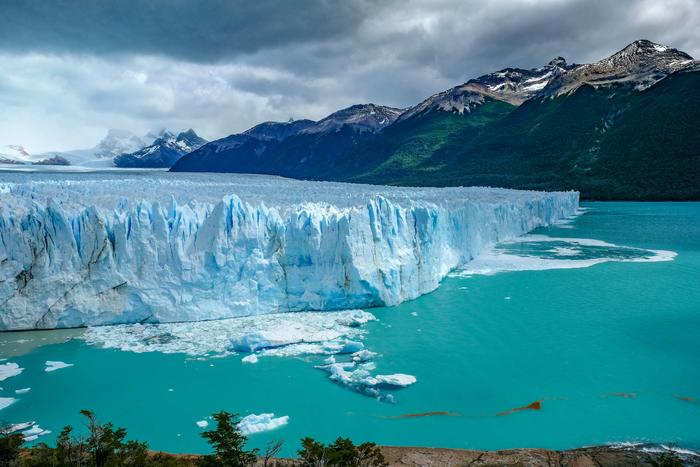
Argentina
Buenos Aires has the best steakhouses and nightlife in South America.

Greece
Ruins in the morning, a swim by noon, taverna until dark.
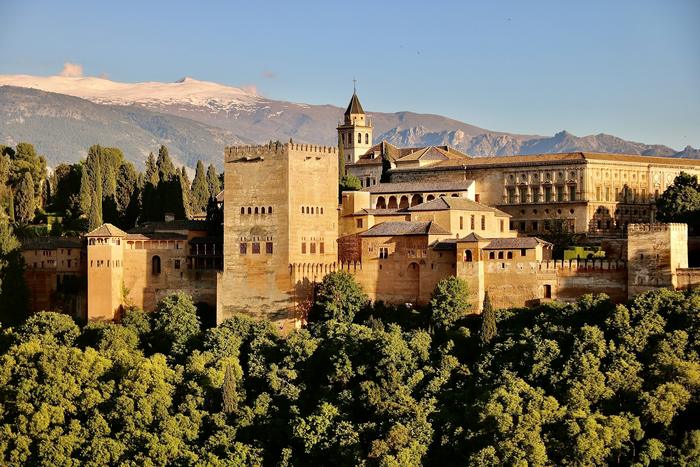
Spain
Food, beaches, and three or four cities that each justify the trip.
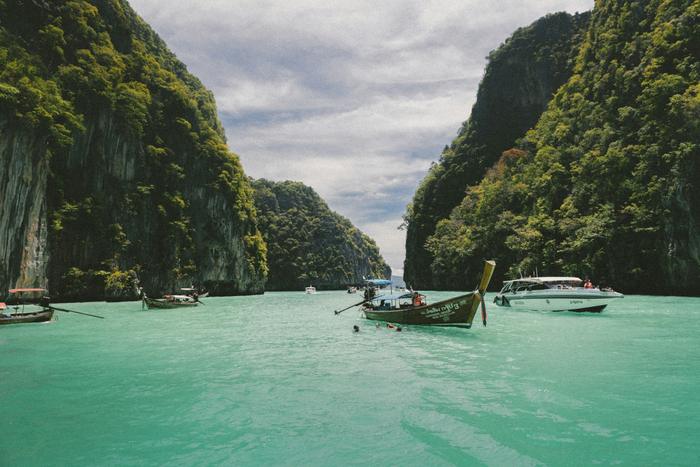
Thailand
The complete package for warm-climate travel.
Not sure where to go
Take the 5-minute quiz
Answer a few honest questions and get matched to destinations that actually fit how you travel.
Start the quiz