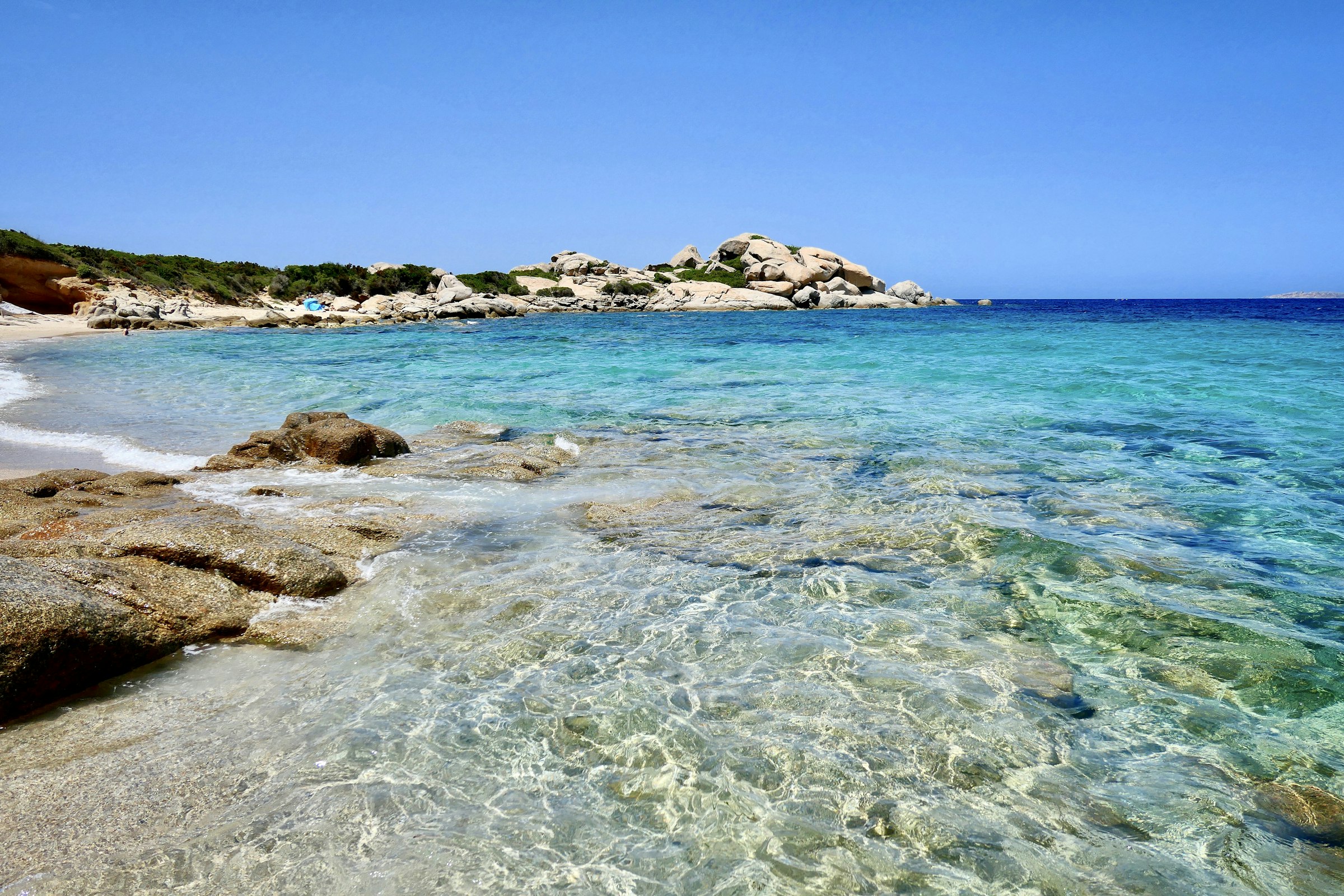
Sardinia
The Mediterranean’s best beaches, wrapped around a wild, ancient interior most visitors never see.
Sardinia has water people fly a long way for elsewhere — Caribbean-clear, ringed by white sand and granite coves — attached to a large, mountainous, deeply old-fashioned island. Most come for the beaches and the summer-glamour of the Costa Smeralda, but the real Sardinia is the empty interior: shepherds' country, Bronze Age stone towers, and a food-and-wine culture that has almost nothing to do with the mainland.
The coast is the headline, and it's genuinely world-class: La Pelosa in the northwest and the beaches strung along the Gulf of Orosei in the east rival anywhere in the Med for clarity of water. The Costa Smeralda in the northeast is the see-and-be-seen strip — yachts, designer resorts, high prices — but you don't have to play that game; much of the coast is wild and reachable only by boat or a hike down to a hidden cove. Turn inland and it changes completely: the Barbagia mountains, the pastel seaside town of Bosa, and thousands of nuraghi — mysterious Bronze Age stone towers found nowhere else on earth. Sardinian food is its own world of suckling pig, pecorino, bottarga, and carta da musica flatbread.
The honest part: Sardinia is a summer island. Outside roughly May to September much of it shuts down — beaches empty in a good way but resorts, restaurants, and boat trips close, and the weather turns. In peak August it's the opposite problem: Italian holiday crowds and steep prices, especially on the Costa Smeralda. It's also large and thinly served by public transport, so a car is non-negotiable and distances are longer than the map suggests. Time it for June or September, rent a car, and split your days between the beaches and the wild interior — that's the trip.
Highlights
-
Gulf of Orosei
A run of cliff-backed coves on the east coast — some reachable only by boat or a steep hike — with the island’s clearest water.
-
La Pelosa
A shallow, dazzling white-sand beach near Stintino in the northwest, framed by an old watchtower.
-
Costa Smeralda
The glossy northeast: yacht harbours, designer resorts, and emerald coves — glamour at a price.
-
Nuraghi
Thousands of mysterious Bronze Age stone towers scattered across the interior — found nowhere else on earth.
-
Bosa
A pastel town of stacked houses above a river, one of the prettiest on the island’s quiet west coast.
-
Barbagia & Sardinian food
The mountainous interior of shepherds and old villages, and a cuisine of suckling pig, pecorino, and bottarga.
Practical info
- Visa
- Schengen — visa-free for most Western passports (90 days).
- Currency
- EUR (€)
- Language
- Italian (and Sardinian); English patchy outside resorts.
- Safety
- Very safe; ordinary precautions only.
- Getting around
- Rent a car — essential. Public transport is sparse and distances are long.
- Tap water
- Tap water safe and good.
- Plug type
- Type C Type F Type L 230V
- Money
- Cards widely accepted; carry cash for beach kiosks and rural villages.
General guidance — visas, safety, and health change, so check your government's travel advisory and the official sources before you go.
Common questions
- Do Sardinia’s beaches need to be booked?
- The famous ones increasingly do — at least seven, including La Pelosa, Cala Goloritzé and Tuerredda, cap daily numbers, charge per person and check a QR code at the gate. The windows are short: Tuerredda opens at 08:00 for the following day, and La Pelosa releases 1,000 of its 1,500 places at 09:00 two days ahead. The full table is in the beach-booking section on this page.
- When is the best time to visit Sardinia?
- June and September are the sweet spot. The south holds a swimmable sea into October, but the season is shorter than the weather: beach concessions are only obliged to open 15 June to 15 September, and much of the tourist coast shuts outside April–October.
- Do you need a car in Sardinia?
- Everywhere except Cagliari and Alghero. Those two work car-free — Cagliari’s airport is on the rail network and eight summer bus lines serve Poetto — but the Costa Smeralda has one direct bus a day from Olbia, and the famous beaches are otherwise reached by car.
- Is Sardinia expensive?
- It spans the widest budget range in the Mediterranean: agriturismi and town B&Bs at one end, Costa Smeralda resorts at the other. We don’t publish day-rates — they go stale within a season — but unlike Corsica across the strait, a genuine budget tier exists once you leave the north-east.
- Is August a bad idea in Sardinia?
- It is the crush month — 1.59 times June’s overnight stays, peaking in the run-up to Ferragosto on 15 August. But the crush is regional: Olbia’s airport traffic spikes 42% over June while Cagliari’s barely moves, so the south and west absorb August far better than the Costa Smeralda.
- Should I choose Sardinia or Corsica?
- Sardinia for shoulder-season trips, car-free travel, small children and August; Corsica for mountains and unbooked beach days. They are 50 minutes apart by ferry — see our full comparison for the measured differences.
Beach booking
The famous beaches must be booked in advance
Seven or more beaches now cap numbers, charge per person and check a QR code at the gate — and the booking windows are short.
Turn up at any of the beaches below without a booking and you will not get on the sand. These are not queues you can beat by arriving early — the binding constraint is the booking window, not what time you show up.
| Beach | Where | Booking window | Daily cap | Fee |
|---|---|---|---|---|
| La Pelosa | Stintino, NW | 15 May – 15 Oct | €3.50 (under-12s free) | |
| Cala Goloritzé | Baunei, E | Apr – Oct, released 72 h ahead | €7.00 | |
| Cala Mariolu | Baunei, E | 1 May – 20 Oct | €2–3 (sea landing only) | |
| Cala Biriala | Baunei, E | 1 May – 20 Oct | €2–3 (sea landing only) | |
| Cala Brandinchi | San Teodoro, NE | 1 Jun – 30 Sep | €2 (under-12s, residents free) | |
| Lu Impostu | San Teodoro, NE | 1 Jun – 30 Sep | €2 (under-12s, residents free) | |
| Tuerredda | Teulada, S | 2 Jun – 15 Oct | €3.00 |
Read from the official municipal and operator booking portals in early August 2026. Caps and fees are set annually — re-check before you travel. Punta Molentis near Villasimius is also restricted for 2026 under a municipal ordinance, but the widely-quoted figures come from press reports rather than the ordinance text, so we have not listed them.
The windows bite. Tuerredda opens at 08:00 for the following day. La Pelosa holds back 1,000 of its 1,500 places until two days ahead, released at 09:00 — and at the beach a woven mat is compulsory, enforced with on-the-spot fines; a towel alone will get you moved on. San Teodoro opens at 18:00 two days ahead. Cala Goloritzé cannot be reached by boat at all — boats stop at buoys offshore, and the only way in is a 3.6 km walk down from the Golgo plateau, about an hour down and ninety minutes back, in closed shoes, with no facilities at the bottom.
Rules that bite
The sand is protected, and the fines are real
Taking sand, pebbles or shells off a Sardinian beach carries a fine of €500 to €3,000, even in small quantities — and it is enforced at the airports, not just written down. Cagliari-Elmas seized around 125 kg in summer 2024 alone, Olbia more than 900 kg since 2020, and one visitor was traced and fined after flying home because she posted the sand on social media.
Spiaggia Rosa on Budelli is closed, and it is not pink. The famous beach has been off-limits since the mid-1990s: you view it from a boat behind a buoy line, walking on it draws fines that have run from about €300 to €1,800, and the recurring verdict from people who have made the trip is that the pink is long gone.
Dried seagrass banked on the sand is normal here, not a sign of a dirty beach — posidonia is protected, it is left in place deliberately, and how much of it there is varies through the year.
Wind
When the wind blows, change beaches — not plans
The Costa Smeralda is one of the windiest corners of the island, not a sheltered one.
1 day in 3 blows hard on the Costa Smeralda
Locals do not write off a windy day — they move a few kilometres and put a headland between themselves and the Maestrale:
- Maestrale (NW)SkipLa Pelosa — its famously fine sand is exactly what makes it miserableGoMugoni, Le Bombarde, Lazzaretto near Alghero; or Cala Domestica, a closed bay ringed by cliffs
- Maestrale, Costa SmeraldaSkipthe exposed north-facing covesGoCala Moresca, Pittulongu, Porto Istana
- Maestrale, south-eastSkipopen west-facing sandGoCala Pira, Porto Sa Ruxi, Campulongu near Villasimius
August
August, in actual numbers
The island is busy — but the crush is regional, and the statistics show where the escape route is.
Olbia against Cagliari is the useful pair. Southern and western Sardinia in August feel nothing like the north-east. If you have to travel in August, that is the lever to pull: base south or west, and treat the Costa Smeralda as a day trip at most.
The other trap is the date: the peak is the run-up to 15 August — Ferragosto — not the end of the month. Italian firms commonly shut for a fortnight around it, and in 2026 it falls on a Saturday.
What’s open
The season is shorter than the weather
A climate table says May and October are pleasant. It does not tell you what is shut.
Crimson bars are the ones that catch people out — the windows are far narrower than the weather suggests.
Under the regional bathing ordinance, beach concessions are only obliged to open between 15 June and 15 September, 08:30–19:30. Outside that three-month core, whether a given lido, bar or sunbed operator opens at all is voluntary — the April-to-October bathing season is permission, not a promise.
The Costa Smeralda makes the point sharply: Porto Cervo’s Waterfront promenade runs 11 June to 7 September 2026 — under thirteen weeks, and that is its longest season ever. The big hotels run longer (Cala di Volpe reopened 16 April, Cervo Hotel 27 March), timed to the late-April Italian holidays.
Driving & car-free
Fast on the spine, slow to every beach
The SS131 is genuinely motorway-like. The last 30 km to the sand never are.
Sardinia is fast on the SS131 spine — 70 to 89 km/h free-flow on the two open routing engines we ran, OSRM and BRouter — and then slows to Corsican mountain-road pace the moment you turn off toward a beach. Olbia to Porto Cervo is 30 km and takes three quarters of an hour.
| Route | Distance | Driving | Average |
|---|---|---|---|
| Olbia – Cagliari | 263 km | 2h58 – 3h45 | 70–89 km/h |
| Alghero – Olbia | 137 km | 1h33 – 1h56 | 71–89 km/h |
| Olbia – Porto Cervo | 30 km* | 0h46 | 38–46 km/h |
| Cagliari – Villasimius | 61 km | 1h04 – 1h10 | 52–58 km/h |
Checked 7 August 2026 on the public OSRM and BRouter instances — free-flow, no traffic modelling; August on the Costa Smeralda will be worse. *On Olbia–Porto Cervo the engines route differently (29 vs 35 km) and still agree on 46 minutes. Scheduled coaches run 30–50 minutes slower than these figures.
Car-free is genuinely possible in two places, and nowhere else. Cagliari, where the airport has its own railway station and CTM runs eight dedicated summer beach lines to Poetto, the busiest every quarter-hour; and Alghero, with the Lido every 20–40 minutes. Everywhere else needs a car — the Costa Smeralda has one direct bus a day from Olbia to Porto Cervo.
Where to base
A week covers a region, not the island
Sardinia is 24,100 km² with 1,850 km of coast. Pick a corner and do it properly.
For families, an official Green Flag standard certifies beaches whose sea "does not suddenly become deep near the shore" — including Poetto, Is Arutas, Capo Coda Cavallo and Alghero Lido.
| Base | Suits | Car needed |
|---|---|---|
| Cagliari | The only base where a car is genuinely optional — Poetto a short bus ride away, Villasimius in day-trip range | No |
| Alghero | Best all-rounder — a real town, plus Capo Caccia and Bosa | No |
| Olbia / Costa Smeralda | The classic north-east, and the most car-dependent | Yes |
| San Teodoro | Gallura beaches without Porto Cervo prices | Yes |
Adding Corsica
Corsica is 50 minutes away
The Bonifacio ferry runs year-round — combining the islands is a short hop, not a project.
50 min Santa Teresa Gallura to Bonifacio
Your hire car almost certainly cannot make the crossing. The ferries carry vehicles happily — the block is on the rental side. Local firms ban leaving the island outright, and one Sardinian contract voids all insurance if you do. Assume no unless your contract says otherwise in writing, or hire separately on each island. Weighing the two islands against each other? See Corsica vs Sardinia, measured.
Sources
Where this comes from
The detail above was read off primary sources on — operator timetables, municipal ordinances, regional tourism boards, national statistics offices and first-hand traveller reports, rather than other travel articles. Researched and maintained by Dmitrii Romashchin — how we research.
- Drive times: OSRM routing engine (public instance)
- Drive times: BRouter routing engine (car-fast profile)
- La Pelosa booking portal
- Baunei beaches (Goloritzé, Mariolu, Biriala)
- San Teodoro beach access
- Tuerredda, Comune di Teulada
- Sardinia tourism statistics 2025
- Sardinian wind climatology (ARPAS)
- Sardinian rail network (RFI)
- Sardinian bus and transport open data (ARST/CTM GTFS)
- Green Flag child-friendly beaches (Sardegna Turismo)
- Spiaggia Rosa access ban (La Maddalena national park)
- Santa Teresa–Bonifacio ferry (Moby)
Compare Sardinia with
If you like Sardinia, also consider
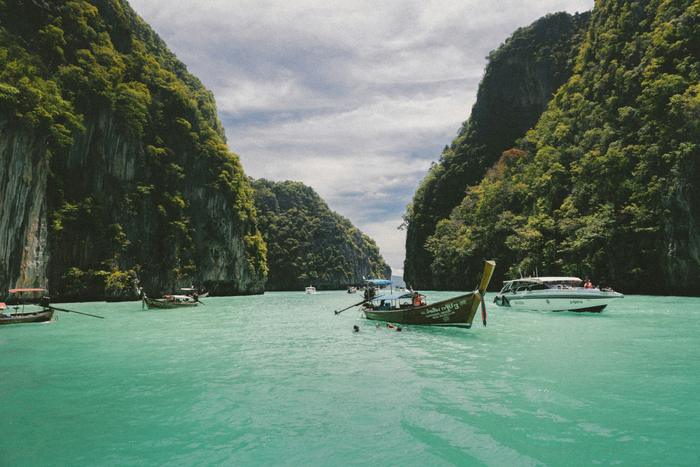
Thailand
The complete package for warm-climate travel.
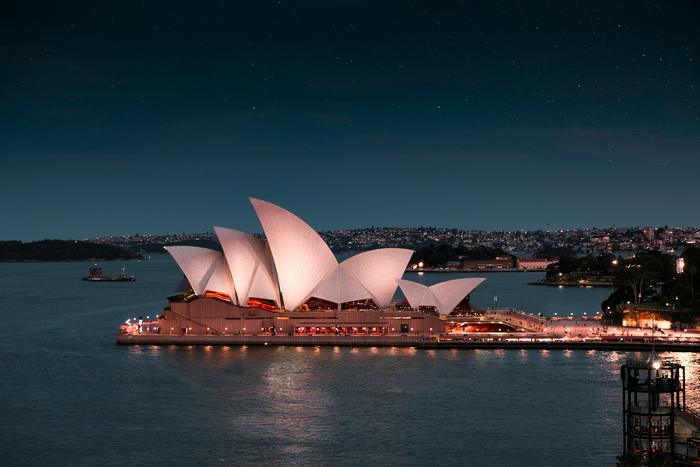
Australia
Vast, varied, relaxed. Reef, Sydney, and proper wilderness in one.
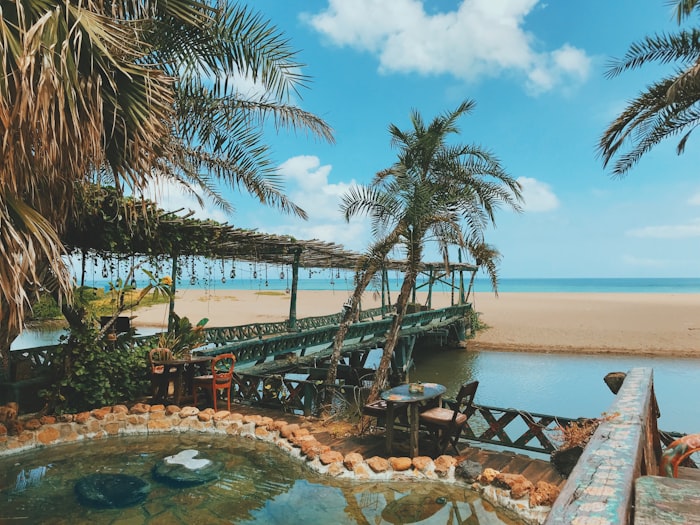
Bali, Indonesia
Warm, affordable, endlessly deep — beach, wellness, and culture in one place.
Not sure where to go
Take the 5-minute quiz
Answer a few honest questions and get matched to destinations that actually fit how you travel.
Start the quiz