Guatemala
Maya ruins, volcano hikes, and a lake ringed by villages — cheap and intense.
Guatemala packs more into a short trip than its size suggests. Antigua is a cobblestone colonial town framed by volcanoes; Lake Atitlán is a string of indigenous villages around deep water; Tikal hides vast Maya pyramids in the jungle. It is cheap, the culture is living rather than staged, and the landscape does most of the work.
Most trips start in Antigua, an easy base of ruined churches, coffee farms, and Spanish schools, then move to Lake Atitlán, where you hop between villages by lancha — San Pedro for backpackers, San Marcos for the slower crowd, Santiago for Maya weaving and markets. The Acatenango overnight hike puts you at eye level with an erupting volcano. Tikal is a flight or a long haul north into the Petén jungle. Money goes to guides, shuttles, and the odd splurge lodge; the rest is genuinely cheap.
The honest part: getting around is rough. Chicken buses are colorful and grim in equal measure, shuttle days are long and bumpy, and petty theft is common enough that you keep an eye on your bag. Some highland and border routes warrant real caution, so you check current advice rather than wing it. The rainy season from May to October turns afternoons to downpours and trails to mud. Come for the culture and the volcanoes, not for comfort or polish.
Highlights
-
Antigua
Colonial town under three volcanoes. Best base for the country.
-
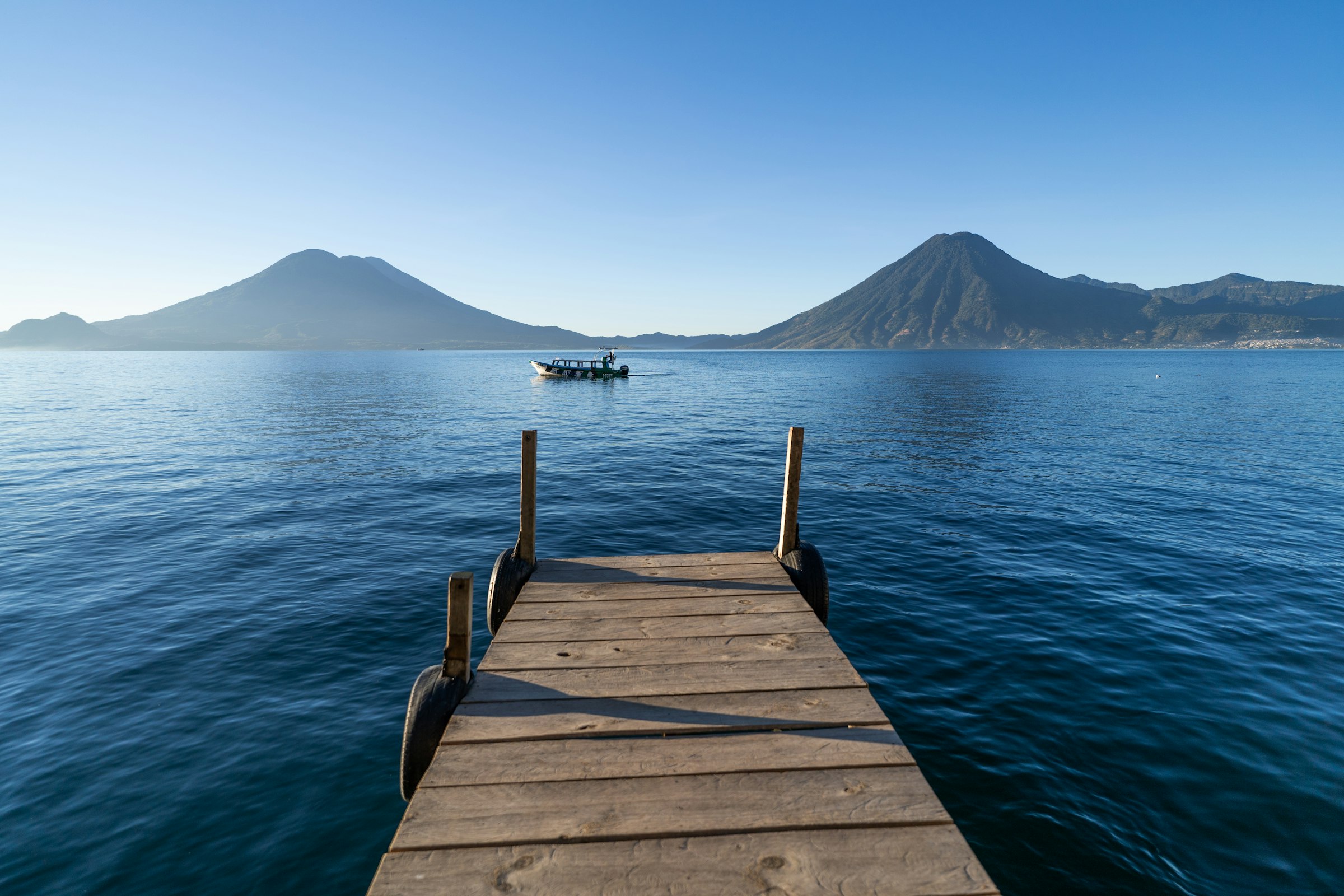
Lake Atitlán
Boat between Maya villages around a deep volcanic lake.
-
Tikal
Maya pyramids rising out of the Petén jungle. Go at dawn.
-
Acatenango
Overnight hike facing the erupting Fuego volcano. Hard but worth it.
-
Semuc Champey
Turquoise limestone pools deep in the interior. A rough trip in.
Practical info
- Visa
- Visa-free for most Western passports (90 days, CA-4 region). Verify before travel.
- Currency
- GTQ (Guatemalan Quetzal).
- Language
- Spanish and Mayan languages. Limited English.
- Safety
- Petty theft is common; some routes warrant caution. Check current advice.
- Getting around
- Tourist shuttles between hubs; chicken buses are cheap but rough.
- Tap water
- Tap water not safe. Drink bottled or filtered.
- Plug type
- Type A Type B 120V
- Money
- Cash dominant; cards work in Antigua and larger towns.
General guidance — visas, safety, and health change, so check your government's travel advisory and the official sources before you go.
Common questions
- What do you need to enter Guatemala?
- Visitors from the US, EU, UK, Canada and Australia get 90 days visa-free — but the stay is shared across the CA-4 bloc (Guatemala, Honduras, El Salvador and Nicaragua), with the clock starting at your first entry to any of them; hopping between CA-4 countries does not reset it, you have to leave the zone (to Mexico or Belize) to restart. The one active step is a free online traveller declaration run by the customs authority (SAT), completed before you fly — it produces a QR code and is required both to enter and to leave by air. There is no eTA or e-visa. Make your passport valid six months to satisfy the airline.
- Is Guatemala safe to visit?
- The tourist core — Antigua, Lake Atitlán, Tikal and Flores — is not where the serious warnings sit, though the US rates the country Level 3 ("Reconsider Travel") overall for crime. The cautions attach to two things: a handful of outlying regions (the US flags San Marcos and Huehuetenango departments, and Zone 18 and Villa Nueva in Guatemala City, as do-not-travel zones), and the roads between the hubs, where occasional armed robberies mean the standard advice is to travel in daylight with reputable shuttle operators rather than drive yourself at night. Avoid hailing street taxis in the capital. It rewards sticking to the circuit and using trusted transport.
- Can you still do the Acatenango volcano hike?
- Check before you book — this is the most changeable thing on the page. The overnight Acatenango trek, famous for its campsite view of Fuego erupting across the saddle, has been subject to closures: after Volcán de Fuego’s major eruption in early August 2026, the tourism authority (INGUAT) banned hiking on both Acatenango and Fuego, and whether that has been lifted shifts with Fuego’s activity. Climbing Fuego itself is separately prohibited. Before committing, confirm the current status with INGUAT and the disaster agency CONRED — and know the hike is strenuous, cold and high (the summit is nearly 4,000 m), with no mountain-rescue service.
- When is the best time to visit Guatemala?
- The dry season, roughly November to April, with November–February giving the clearest volcano views. The “green” rainy season (May–October) brings short afternoon downpours and, in September–October, the heaviest rain and some landslide and road-washout risk — which can cut off the rough road to Semuc Champey. The single peak event is Semana Santa (Holy Week) in Antigua — a UNESCO-listed spectacle of sawdust “carpets” (alfombras) and processions — when hotels book out months ahead.
- How long do you need, and what’s the classic route?
- A week covers the highland core — Antigua as a base, Lake Atitlán, and a market day at Chichicastenango, with the overnight Acatenango hike if it’s open. Add two or three days to fly north to Tikal in the Petén jungle, and more for remote Semuc Champey or the Caribbean Garifuna coast. Guatemala packs a lot into short distances, but mountain roads are slow, so don’t over-schedule.
- Guatemala, Mexico or Costa Rica?
- Guatemala for living highland Maya culture among active volcanoes, and at the lowest prices in the region — rawer and less polished than its neighbours. Mexico is bigger and more varied (and has the beach resorts Guatemala lacks); Costa Rica is pricier, safer-feeling and wildlife-first. See Guatemala vs Mexico, Costa Rica vs Guatemala and Belize vs Guatemala.
Entry
The free declaration, and the shared CA-4 clock
No visa and no eTA — but there’s a free online form to do, and your 90 days are shared across four countries.
Guatemala asks for no visa and runs no authorisation scheme for the main Western nationalities — you get 90 days on arrival. The catch is that it’s a CA-4 regional allowance, shared with Honduras, El Salvador and Nicaragua: the count begins at your first entry to any of the four, and moving between them doesn’t reset it, so to restart the clock you must leave the bloc entirely (typically to Mexico or Belize). An extension of up to 90 more days is possible for a small fee before your stay expires.
The one thing to actually do is the free online traveller declaration run by the customs authority (SAT), filled in before you fly. It generates a QR code and is required both to enter and to leave by air, so do it in the days before departure. Make your passport valid six months — Guatemalan law asks only that it be valid with a blank page, but airlines enforce the longer buffer at check-in. The air departure tax is already bundled into ticket prices.
Mind the CA-4 clock: Guatemala’s 90 days visa-free is a regional allowance shared with Honduras, El Salvador and Nicaragua — the count starts at your first entry to any of the four and keeps running as you move between them, rather than resetting at each border. On a multi-country Central America trip, track the combined total, and if you need longer, apply for an extension in-country (at the immigration office) before it runs out.
When to go
Dry-season volcanoes, and Holy Week
A clear dry window for travel and clear volcano views — bracketing a lush, stormy green season and one unmissable festival.
Crimson bars catch people out: Semana Santa is magical but books out months ahead and spikes prices, and the September–October rains can wash out the rough road to Semuc Champey. The dry November–April window (shown here from January) has the clearest volcano views.
Travel in the dry season, November to April — November to February gives the crispest volcano views. The green rainy season (May–October) is lush and quieter, with short afternoon downpours rather than all-day rain, but September and October bring the heaviest weather and a real landslide and road-washout risk (the rough road to Semuc Champey is the first casualty).
The calendar’s peak is Semana Santa in Antigua, Guatemala’s UNESCO-listed Holy Week — the streets carpeted in coloured sawdust alfombras and filled with processions — so book months ahead if you want it, or a few weeks either side for a calmer city. A quieter marvel is the giant-kite festival at Sumpango each 1 November.
- Semana Santa fills Antigua and prices soarSkipturning up for Holy Week without a bookingGoreserving months ahead for the spectacle, or visiting a few weeks either side for a calmer Antigua
- the rains wash out the road to Semuc Champey (Sep–Oct)Skipa tight itinerary to remote Lanquín in the peak wetGothe dry season for Semuc, or leaning on lower, easier Atitlán and Antigua
- Acatenango is closed by Fuego’s activitySkipbanking the trip on the overnight hikeGothe easier Pacaya day climb — and confirm the status with INGUAT/CONRED first
Getting around
Shuttle vans, lake boats, a flight to Tikal
The tourist minibus is the backbone — and you fly, not drive, to the jungle ruins.
Most visitors skip the gritty capital entirely: from the airport (GUA) a tourist shuttle runs the hour-plus to Antigua, which becomes the base, and shuttle minibuses then link Antigua to Lake Atitlán and the other hubs. Around Lake Atitlán, shared public boats (lanchas) — cash only, running till dusk — are the way between the villages, since no road circles the whole shore. For Tikal, you fly Guatemala City to Flores rather than face the long overland haul.
The famous "chicken buses" — ex-US school buses, repainted in riotous colour — are the cheap local transport and a sight in themselves, but they’re discouraged for safety; tourist shuttles and private transfers are the norm, and you don’t self-drive at night. It’s a cash-first country — cards work in better Antigua and capital places, but the villages, boats and markets want quetzales.
| Hop | How | Note |
|---|---|---|
| Airport (GUA) – Antigua | Tourist shuttle (~US$18) or private | ~1–1.5 hours; most skip Guatemala City |
| Antigua – Lake Atitlán | Tourist shuttle minibus | ~2.5–3 hours; the standard tourist link |
| Around Lake Atitlán | Public boats (lanchas), cash only | Village to village; they stop at dusk |
| To Tikal | Fly GUA – Flores (FRS), then shuttle | Skips a very long overland haul |
The tourist shuttle minibus is how most visitors move between hubs; the colourful "chicken buses" (old US school buses) are cheap and iconic but discouraged for safety, and self-driving at night is advised against. Guatemala runs largely on cash (quetzales, ~Q7.6 to the dollar). Checked October 2026.
The big sights
Maya ruins, colonial Antigua, a volcano-ringed lake
Living highland Maya culture set among volcanoes — plus the great jungle temples of Tikal.
3,976 m Acatenango — camp out to watch a volcano erupt
Tikal is the headline — vast Maya temples rising out of the Petén jungle, a UNESCO mixed site teeming with monkeys and 300-plus bird species, reached by a short flight to Flores. Antigua, the UNESCO colonial capital of Baroque churches and ruins under three volcanoes, is the cultural anchor, spectacular at Semana Santa. And Lake Atitlán — a volcano-ringed crater lake, the deepest in Central America, fringed by Maya villages — is crossed by the public lanchas; cross before the afternoon "Xocomil" wind gets up.
Around those sit the Chichicastenango market (Thursdays and Sundays), the turquoise travertine pools of Semuc Champey down a rough 4x4 road near Lanquín, and the volcano hikes above Antigua — Pacaya as a popular day climb, Acatenango as the famous overnight (subject to the closures above). The concentration of living highland Maya culture among active volcanoes is what sets Guatemala apart from its neighbours.
Where to go
A compact, varied circuit
The classics cluster in the western highlands, with Tikal a flight to the north.
Almost everyone bases in Antigua and day-trips or shuttles out: Lake Atitlán and the Chichicastenango market are the classic highland pair, and Acatenango the adventure. Tikal is the one piece that needs a flight north to the Petén jungle; Semuc Champey and the Caribbean Río Dulce / Lívingston (Garifuna culture) are for travellers with more time and tolerance for rough roads. It’s a small country that feels large because the mountains slow everything down.
| Place | What it’s for | Good to know |
|---|---|---|
| Antigua | The colonial base — Baroque ruins under volcanoes | UNESCO; magical (and booked out) at Semana Santa |
| Lake Atitlán | Volcano-ringed crater lake and Maya villages | Deepest lake in Central America; boats between towns |
| Tikal (Petén) | The great Maya city above the jungle canopy | Fly to Flores; a UNESCO mixed site |
| Acatenango | The overnight hike to watch Fuego erupt | Strenuous, ~4,000 m; subject to closures |
| Chichicastenango | The famous highland Maya market | Thursdays and Sundays |
| Semuc Champey | Turquoise travertine pools in the jungle | Remote; a rough 4x4 road from Lanquín |
The food
Maya-Spanish home cooking, and world-class coffee
Stews, masa and chillies — plus two great exports in the cup and the glass.
Guatemalan food is Maya and Spanish home cooking — toasted-spice stews (pepián above all), masa in a hundred forms (tamales, chuchitos, tortillas), beans, chillies and plantain. It’s hearty, cheap and regional rather than a restaurant scene, best found at markets and comedores.
The two things to take seriously are the drinks. Guatemalan coffee — grown high around Antigua and Huehuetenango — is among the most prized in the world, and Ron Zacapa, aged by a solera system at over 2,000 m, is a genuinely world-class rum. The everyday beer is Gallo.
| Dish | What it is | Note |
|---|---|---|
| Pepián | Spiced meat-and-vegetable stew in toasted recado | The most iconic dish — a national heritage food |
| Kak’ik | Fiery Q’eqchi’ turkey soup | Also a declared national heritage dish |
| Tamales / chuchitos | Masa steamed in banana leaves or corn husks | The everyday staple |
| Rellenitos | Fried plantain filled with sweet black bean | The street dessert |
| Guatemalan coffee | High-grown Antigua and Huehuetenango beans | Among the world’s most prized |
| Gallo & Ron Zacapa | The local lager and a world-class aged rum | Zacapa is solera-aged at altitude |
Guatemala declared four dishes — pepián, kak’ik, jocón and mole de plátano — national intangible heritage in 2007; pepián is the one to seek out. The coffee (eight named growing regions) and the high-altitude Ron Zacapa rum are the country’s great exports.
Culture
The living Maya highlands
More indigenous than anywhere else in Central America — and still reckoning with its recent past.
23 languages the living Maya heart of Guatemala
Guatemala is the most indigenous country in Central America — over 40% Maya, with 21 living Maya languages alongside Spanish — and that culture is not a museum piece: it’s the backstrap-woven traje of the highlands, the K’iche’ ritual at Chichicastenango, the Day-of-the-Dead giant kites at Sumpango. The welcome is warm, but in indigenous towns dress modestly and always ask before photographing people.
There is also a heavy recent history to hold respectfully: the 1960–1996 civil war killed or disappeared tens of thousands, with a UN-backed commission finding acts of genocide against the Maya. It’s present and openly discussed, and worth approaching with care rather than as trivia.
For LGBTQ+ travellers: same-sex activity is legal, but same-sex marriage and civil unions are not recognised, and Guatemala is socially conservative, with large Catholic and Evangelical majorities — only around a sixth of people support same-sex marriage. The scene is low-key and the usual advice is discretion, especially outside Antigua and the capital.
Safety & health
The circuit, the roads, and the volcanoes
Read the warnings precisely — they’re about specific regions, the transfers, and the geology.
Read Guatemala’s advisories by map, not headline. The tourist circuit — Antigua, Atitlán, Tikal, Flores — is explicitly the part you visit; the US (which rates the country Level 3 overall) names specific outlying areas to avoid instead — San Marcos and Huehuetenango departments, a strip near the Mexican border, and Zone 18 and Villa Nueva in Guatemala City. The circuit-relevant caution is the roads between the hubs, where occasional armed robberies mean you travel by day with a reputable shuttle, not self-drive at night, and skip street taxis in the capital. Tourist help is the 24/7 PROATUR line on 1500 (police 110).
The other hazard is natural. Guatemala is a chain of active volcanoes on a plate junction: Fuego, over Antigua, erupts regularly (a major phase in August 2026 forced evacuations and the hiking ban), and ashfall occasionally reaches the town. On health, malaria precautions apply only in the Petén lowlands around Tikal (not Antigua, the capital or Atitlán); dengue is widespread; and the tap water isn’t safe anywhere, so stick to bottled or filtered.
A quick political note to check near travel: an early-2026 state of siege followed prison unrest, and protests and road blockades recur in Guatemala, occasionally closing highways for a day or two. None of it typically touches the tourist circuit, but it’s worth a look at the current situation and the PROATUR updates before you set out.
Compare Guatemala
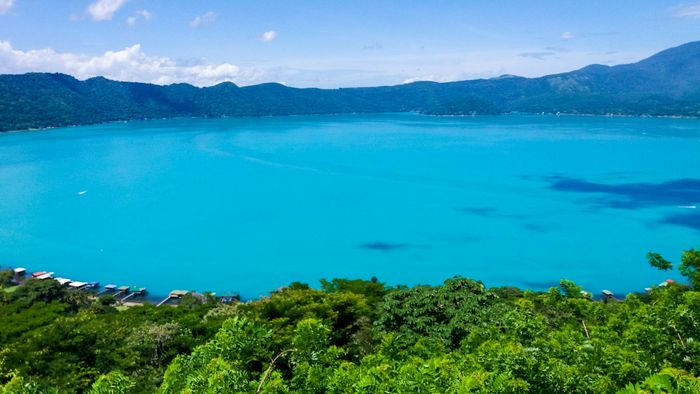
If you like Guatemala, also consider
United States
A continent pretending to be a country — cities, deserts, and the best national parks anywhere.
Argentina
Buenos Aires has the best steakhouses and nightlife in South America.

France
Paris is only the opening act — wine country, the Alps, and two coastlines.

Italy
The benchmark for food, history, and beauty.
Japan
Extraordinary food, culture, and cities. Nothing quite prepares you for it.
Not sure where to go
Take the 5-minute quiz
Answer a few honest questions and get matched to destinations that actually fit how you travel.
Start the quiz