Qatar
A polished, compact stopover built almost entirely around Doha.
Qatar is essentially one city, and Doha is easy to read in a long weekend or a stopover between flights. You get a serious museum, a restored old souq, a wall of glass towers across the bay, and the desert and an inland sea within a short drive. It is clean, safe, and frictionless — and it makes no pretence of being more than that.
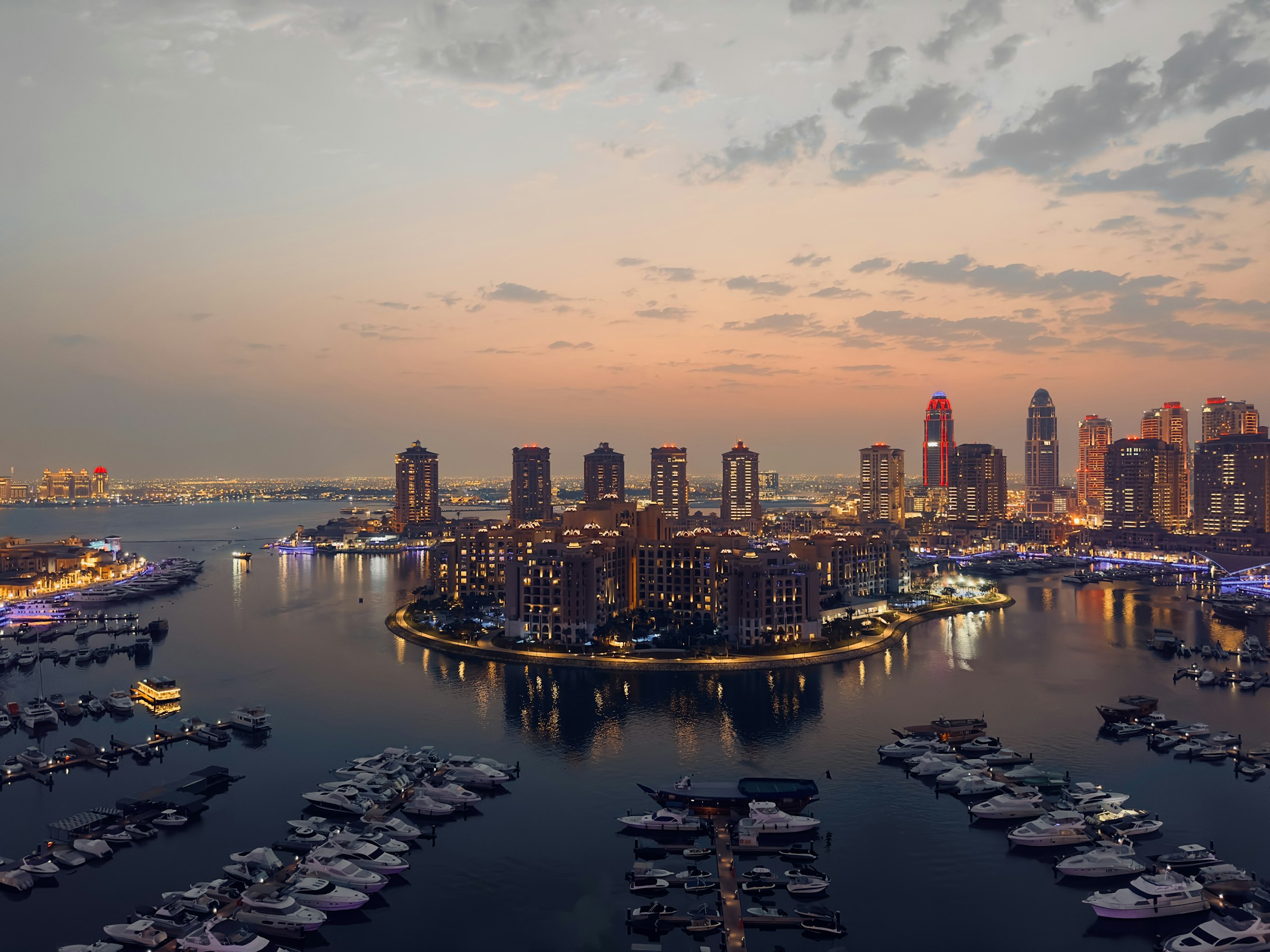
Two or three days cover the city comfortably. Start at the Museum of Islamic Art, a single building that justifies the trip on its own, then wander the lanes of Souq Waqif at dusk when the falcon traders and shisha cafes come alive. Walk the Corniche for the West Bay skyline, browse the boutiques and marina of the man-made Pearl, and book a desert drive south to the dunes and the inland sea at Khor Al Adaid on the Saudi border. Distances are short and a metro plus taxis handle most of it.
The honest part: there is very little street life here, and outside the souq and the museums the city can feel like a sequence of malls and air-conditioned lobbies. The summer heat from May to September is brutal enough to keep you indoors, alcohol is limited to licensed hotels and runs expensive, and the whole place is dearer than its neighbours. If you want a country to wander for two weeks, this is not it. As a couple of polished days en route to somewhere else, it works.
Highlights
-
Museum of Islamic Art
A landmark I.M. Pei building and a collection that earns the visit alone.
-
Souq Waqif
A restored market of spice, textiles, and falcons — best at dusk.
-
West Bay & the Corniche
The glass-tower skyline, best walked or seen from a dhow on the bay.
-
Khor Al Adaid
The inland sea where dunes meet the Gulf — reached by 4x4 desert drive.
-
The Pearl
A man-made island of marinas, cafes, and boutiques for an easy evening.
Practical info
- Visa
- Visa-free entry for many Western passports (typically 30 days). Verify before travel.
- Currency
- QAR (Qatari Riyal).
- Language
- Arabic. English widely spoken.
- Safety
- Among the safest places to travel; very low crime.
- Getting around
- Modern metro in Doha plus taxis and ride apps; 4x4 tour for the desert.
- Tap water
- Tap water is desalinated and safe; many drink bottled.
- Plug type
- Type G 240V
- Money
- Cards accepted almost everywhere; cash useful in the souq.
General guidance — visas, safety, and health change, so check your government's travel advisory and the official sources before you go.
Common questions
- Is Qatar safe to visit right now?
- The cities are calm and functioning, but the regional picture shifted in 2026. Following US–Iran hostilities that began in February 2026, the US moved Qatar to Level 3 “Reconsider Travel” (August 2026), citing the risk of armed conflict and an Iranian drone-and-missile threat across the Gulf. The UK is less severe — it lifted its earlier all-but-essential-travel warning in June 2026 and now simply says “no travel can be guaranteed safe,” flagging regional strikes, possible airspace closures and flight disruption, and advising travellers to avoid military and security sites. Doha itself is operating normally, but this is live and volatile: check the US State Department and UK FCDO advisories close to departure and allow for the chance of flight changes.
- Do you need a visa for Qatar, and how long can you stay?
- Around 80 nationalities get a free visa waiver stamped on arrival, but the length differs — a common trap. EU/Schengen travellers (and ~33 countries) get a waiver valid 180 days with stays up to 90 days; the UK, US, Canada, Australia and New Zealand are in the 30-day group (extendable once for another 30). So a UK or US passport gets 30 days, not the EU’s 90 — plan trip length accordingly. You need a passport valid six months and an onward ticket. The Hayya platform (the old World Cup fan ID, now the unified visa portal) isn’t required for waiver nationalities — the on-arrival stamp is the norm — but it’s how non-waiver nationalities apply before flying.
- Is Qatar worth more than a stopover?
- For most people, no — and that’s fine. Qatar is essentially Doha, a clean, safe, frictionless city that reads comfortably in three to five days or a stopover between flights. It makes no pretence of being a two-week country: there’s a world-class museum or two, a restored souq, a glass skyline and the desert within a short drive, and that’s the trip. As polished days en route to somewhere else it works beautifully; as a fortnight it would run thin.
- How do the Qatar Airways stopover packages work?
- They’re genuinely good value and worth building a trip around. Discover Qatar offers paid stopover packages — 4-star hotels from around US$14 a night, 5-star from ~$24 — for Qatar Airways (and partner/oneworld) tickets with a Doha transit of roughly 12–96 hours, plus a complimentary transit-hotel scheme for shorter qualifying layovers. If you’re flying Qatar Airways anyway, tacking on a couple of cheap Doha nights is often the smart move.
- Can you drink alcohol in Qatar?
- Only in licensed hotel bars and restaurants, to over-21s, and it’s expensive (taxed around 100%). There’s no public or retail sale — residents buy from a single distribution centre by permit — and drinking in public is a punishable offence. At the airport there’s airside duty-free and transit bars, but that’s not public retail. Dress is modest in public and more firmly enforced at museums, Souq Waqif and during Ramadan — shoulders and knees covered, beachwear for hotel pools only.
- When should I visit Qatar?
- October to April — comfortable, with November to February the coolest and best. May to September is very hot (40–45°C) and effectively an indoor season of malls, museums and late souq evenings. Ramadan (about 8 February to 9 March in 2027) reshapes the day, with no public eating, drinking or smoking in daylight. Because Qatar is really a city trip, a stopover works at any time of year — you just structure the summer version around air-conditioning.
When to go
A polished city, best in the cool months
Doha is clean, safe and frictionless — a stopover or long weekend, structured around the heat.
40–45°C the summer that empties the streets
October–April is the comfortable window, with November–February the coolest and best. The crimson May–September bar is the brutal indoor season (40–45°C), when life retreats to the malls, museums and evening souq. Ramadan (about 8 Feb–9 Mar in 2027) reshapes the day. Because Qatar is a city trip, a stopover works year-round — you just lean on air-conditioning in summer.
What Qatar is for is Doha, and Doha reads well in three to five days or a stopover: the Museum of Islamic Art, the restored lanes of Souq Waqif at dusk, the desert-rose National Museum, the Corniche and West Bay skyline, the marina and boutiques of The Pearl, Katara cultural village, the new city of Lusail, and a desert safari to the Khor Al Adaid inland sea (all covered below).
Set expectations: it’s a polished stopover city, not a two-week country — world-class in a couple of museums, frictionless and safe, but short on organic street life and long checklists. As a few days en route elsewhere it’s excellent; stretched to a fortnight it would thin out. And the much-trailed Lusail Museum hasn’t opened yet, so don’t plan around it.
- you hold a UK or US passportSkipassuming the EU’s 90 daysGoplanning for 30 (extendable once) — they’re in the 30-day tier
- you’re flying Qatar AirwaysSkippaying full hotel ratesGoadding a Discover Qatar stopover (4-star from ~$14/night)
- you’re visiting May–SeptemberSkipplanning outdoor daysGoan indoor itinerary — museums, malls and souq evenings
Entry & visa
Free on arrival — but check your days
A waiver for ~80 nationalities, with a catch: the UK and US get 30 days, the EU 90.
About 80 nationalities enter Qatar on a free waiver stamped on arrival, but the allowance splits in two. EU/Schengen (and roughly 33 Tier-1 countries) get a waiver valid 180 days with stays up to 90 days; the UK, US, Canada, Australia and New Zealand sit in the 30-day group, extendable once by a further 30. So don’t assume a long EU-style stay on a UK or US passport — you get 30 days.
The Hayya platform (originally the 2022 World Cup fan ID, now Qatar’s unified visa portal) is not required for the waiver nationalities — the on-arrival stamp at Hamad’s e-gates is the norm — but it’s where non-waiver travellers apply before flying. Bring a passport valid six months and an onward ticket.
Everything funnels through Hamad International Airport (DOH), Qatar Airways’ hub and a recent Skytrax “World’s Best Airport” — which is exactly why the stopover model (next section but one) works so well: for many travellers Qatar is somewhere you pass through, and Doha has engineered itself to catch you for a day or two on the way.
Safety & advisories
A calm city in an uneasy region
Doha is as safe as cities get for crime — but the 2026 regional conflict put it on the advisories.
Qatar has very low crime and is an easy, orderly place to be — the 2026 caveat is regional, not local. After US–Iran hostilities that began in February 2026, the US moved Qatar to Level 3 “Reconsider Travel” (August 2026), citing the risk of armed conflict and an Iranian drone-and-missile threat across the Gulf (Qatar hosts a major US airbase). The UK is less severe: it lifted its all-but-essential-travel warning in June 2026 and now says only that “no travel can be guaranteed safe,” flagging regional strikes, possible airspace closures and flight disruption, and advising visitors to steer clear of military and security facilities.
In practice the risk to a tourist is less street danger than disruption: Gulf airspace has been closed at short notice during flare-ups, delaying or rerouting flights. Doha is operating normally and the sights are open, but treat the situation as live — check both advisories in the week before you travel (they have moved repeatedly through 2026, in both directions), build slack into tight connections, and carry insurance that won’t void over a regional-conflict advisory.
The US and UK diverge on Qatar right now — the US at Level 3, the UK having stepped its warning back down — which tells you how finely balanced and fast-moving this is. Don’t treat either level as settled; the authorities’ own pages are the only reliable source on the day you book and the day you fly.
Getting around
An excellent metro, and cheap stopovers
The Doha Metro is fast, cheap and modern, distances are short, and the stopover packages are a bargain.
The Doha Metro is the easy way around — three modern, driverless lines, spotless and cheap, with a single journey at QAR 2 and a daily cap of QAR 6 (a reusable Travel Card costs QAR 10). Karwa taxis, Uber and Careem cover the rest, and distances are short, so you rarely need more. Everything funnels through Hamad International Airport, one of the region’s big hubs.
If you’re transiting on Qatar Airways, lean on the Discover Qatar stopover packages (4-star hotels from around US$14 a night, 5-star from ~$24, on a 12–96-hour Doha transit, plus free transit-hotel stays for qualifying long layovers) — often the cheapest way to turn a connection into a couple of polished days. It’s the single best-value way into the country.
| Way | Use it for | Note |
|---|---|---|
| Doha Metro | Getting around the city | 3 driverless lines; QAR 2 single, QAR 6 day cap |
| Karwa taxi / Uber / Careem | Door-to-door, the gaps | Distances are short; the metro does most of it |
| Hamad International (DOH) | The hub | Qatar Airways’ base; a top-rated global airport |
| Discover Qatar stopover | Turning a transit into a trip | 4-star from ~$14/night; 12–96h Doha transit |
A reusable metro Travel Card is QAR 10 (Standard class). The city is compact, so the Metro plus the odd taxi handles almost everything. Checked October 2026.
The stopover
The country built around a layover
Qatar’s smartest offer is the cheap, short stopover — the way most visitors should, and do, see it.
From $14/night Qatar’s stopover offer
More than almost anywhere, Qatar is a stopover destination by design. Qatar Airways routes a huge share of its network through Doha, and the national tourism arm Discover Qatar sells deliberately cheap stopover packages to convert those transits into a night or three in the city — the maths (a 4-star room from ~$14) is hard to beat if you’re flying through anyway.
It’s also simply the right length for the place. Doha’s set pieces — a couple of landmark museums, the souq, the Corniche, a desert safari — fit a two-to-three-day window comfortably, which is exactly what a stopover delivers. Treat Qatar as the civilised pause in a longer journey rather than a destination in its own right, and both the budget and the pacing come out right.
Sights
A world-class museum, a souq, and the desert
The set pieces are few but strong — mostly free to wander, with a desert trip the half-day out.
The anchors are the Museum of Islamic Art (I. M. Pei’s building justifies the trip on its own) and the National Museum of Qatar (Jean Nouvel’s desert-rose, opened 2019) — two buildings as impressive as their collections — flanked by the free-to-wander Souq Waqif (best at dusk, when the shisha cafés and falcon traders come alive), the Corniche walk beneath the West Bay towers, and the man-made Pearl and Katara village. North of the city, the new metropolis of Lusail — where the 2022 World Cup final was played — adds a boulevard and marina, and in the far north-west the Al Zubarah fort marks Qatar’s only UNESCO World Heritage Site, an 18th–19th-century pearling town.
The one trip out of the city is a desert safari south to the dunes and the Khor Al Adaid inland sea near the Saudi border — a half-day of dune-bashing and a rare desert-meets-sea landscape, usually reached by 4x4 from Mesaieed. Dress modestly at the museums and the souq, and beyond this handful of sights the appeal is the polish of the city itself rather than a long checklist.
| Sight | What it is | Good to know |
|---|---|---|
| Museum of Islamic Art | I. M. Pei’s landmark on the bay | World-class collection; the building alone is worth it |
| National Museum of Qatar | Jean Nouvel’s “desert rose” | The 2019 showpiece on the Corniche |
| Souq Waqif | Restored market, shisha, falcons | Free to wander; best at dusk |
| Lusail | The new World Cup city | The 2022 final was played here; boulevard + marina |
| Al Zubarah | NW pearling-town fort (UNESCO) | Qatar’s only World Heritage Site |
| Khor Al Adaid | The “inland sea” | 4x4 desert safari from Mesaieed |
Food & culture
Machboos, karak, and a city of expats
A small, wealthy, overwhelmingly expatriate country — with a Gulf table worth seeking out.
Qatar is a tiny, gas-rich country — a population of around 3.3 million that is roughly 90% expatriate, with Qatari citizens a small minority — so alongside the Gulf-Arab table (machboos the national dish, harees, luqaimat, cardamom-spiced karak tea) you’ll eat superb South Asian and Levantine food, a legacy of the workforce that built the place. Souq Waqif is the best single place to eat, at shisha-scented terraces after dark.
The country leans hard on culture as its calling card — the museum cluster, Education City’s university campuses, Al Jazeera’s global newsroom, and the legacy of hosting the 2022 World Cup, the first in the Arab world. Pearling and falconry remain the national heritage touchstones, on show at the souq’s falcon market and in the National Museum. Arabic is official; English is near-universal in daily life.
| Dish / drink | What it is | Note |
|---|---|---|
| Machboos | Spiced rice with meat or fish | The national dish |
| Harees / balaleet | Wheat-and-meat porridge / sweet vermicelli | Gulf comfort food |
| Luqaimat | Syrup-soaked fried dumplings | The classic sweet |
| Karak chai | Strong spiced milk tea | The national drink, from roadside stalls |
| Souq Waqif | The food-and-shisha hub | Where visitors and locals eat out |
Qatari citizens are only about a tenth of a ~3.3-million population that is overwhelmingly expatriate, so the everyday food scene is also richly South Asian, Levantine and global. Checked October 2026.
Good to know
Expensive, and licensed-only drinks
The practical footnotes — a pricey, dry-in-public city where you budget above Dubai.
The currency is the Qatari riyal, pegged at 3.64 to the US dollar, and Qatar is expensive — dearer than Dubai for hotels, dining and alcohol. Alcohol is licensed-venue-only (hotel bars and restaurants, over-21s, taxed around 100%), with no public or retail sale and public drinking a criminal offence. Tipping isn’t obligatory — a 10% service charge is often already on the bill — and rounding up for taxis and small services is the norm.
A couple of rhythms to plan around: modest dress is expected in public and enforced at museums, the souq and especially during Ramadan (about 8 February to 9 March in 2027), when there’s no public eating, drinking or smoking in daylight, shorter hours and no daytime alcohol service — though evenings come alive with iftar. Same-sex relationships are illegal, and public displays of affection are best avoided.
The quiet money lesson is that Qatar rewards the stopover model and punishes the open-ended stay: on a Discover Qatar package the hotel can cost less than lunch, while booked independently at full rack rate Doha is one of the priciest cities in the Gulf. If you’re not transiting on Qatar Airways, keep the trip short, lean on the Metro, and eat at the souq rather than the hotels.
Compare Qatar
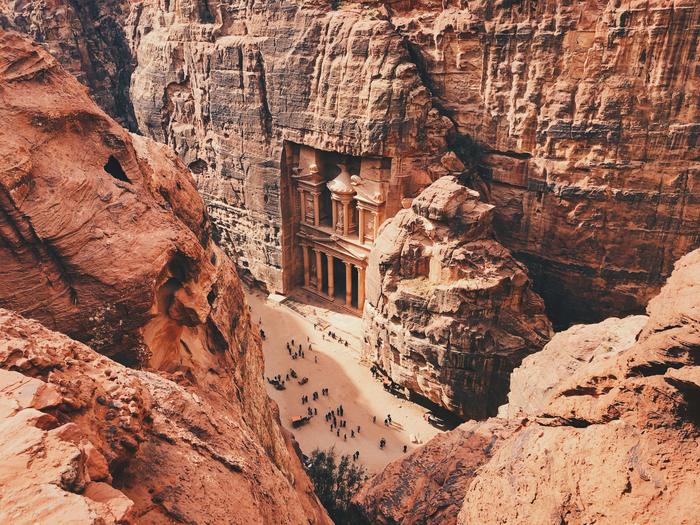
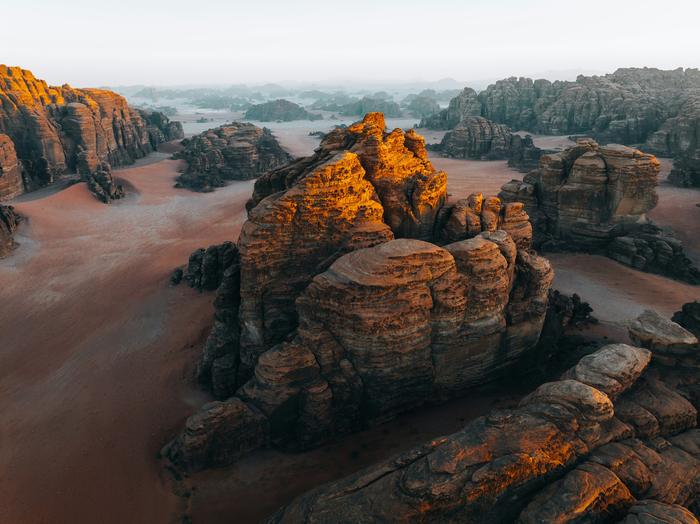
If you like Qatar, also consider
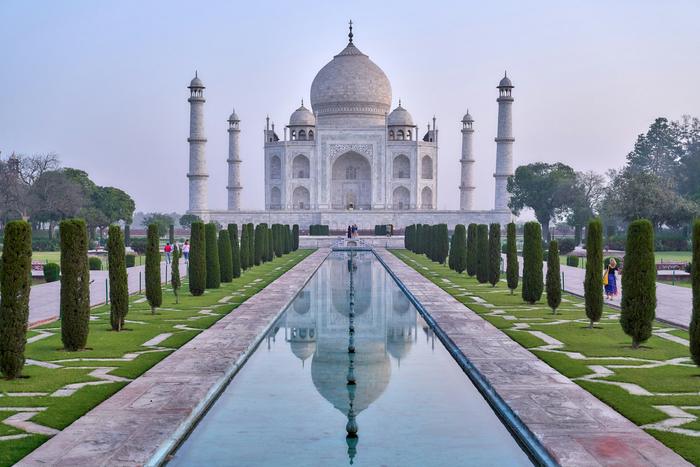
India
Overwhelming, beautiful, and utterly unlike anywhere else.
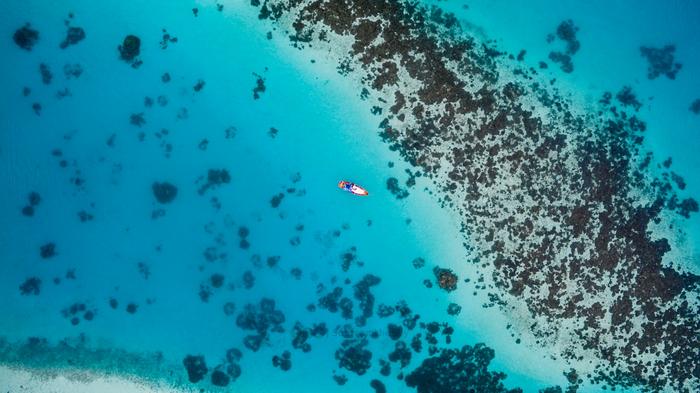
Maldives
One island, one resort, almost nothing to do. That is the point.

France
Paris is only the opening act — wine country, the Alps, and two coastlines.
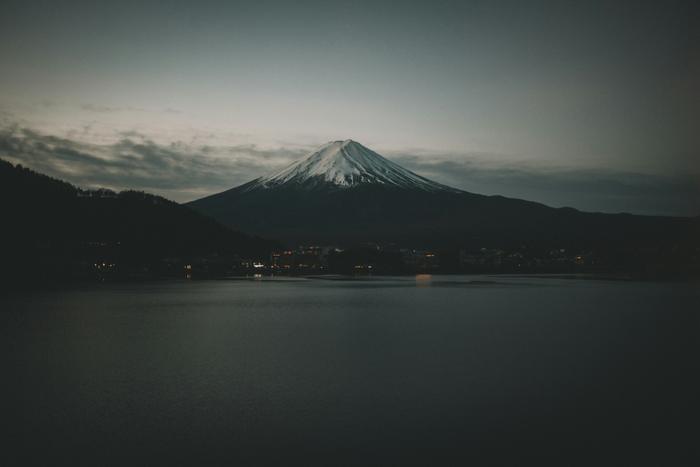
Japan
Extraordinary food, culture, and cities. Nothing quite prepares you for it.
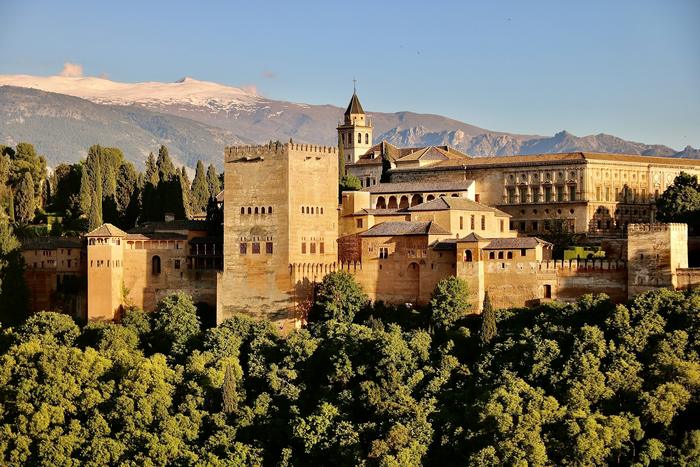
Spain
Food, beaches, and three or four cities that each justify the trip.
Not sure where to go
Take the 5-minute quiz
Answer a few honest questions and get matched to destinations that actually fit how you travel.
Start the quiz