Mallorca
Far more than package beaches — turquoise coves, a UNESCO mountain range, and one of the Med’s best cities.
Mallorca has an image problem it doesn't deserve: for a lot of people it means package resorts and party strips, and that Mallorca does exist. But turn away from it and you find one of the most varied islands in the Mediterranean — hidden turquoise coves, a dramatic UNESCO-listed mountain range, olive-terraced villages, and in Palma one of the most underrated small cities in Europe. It's easy, close, and does both the flop-and-swim holiday and the active one.
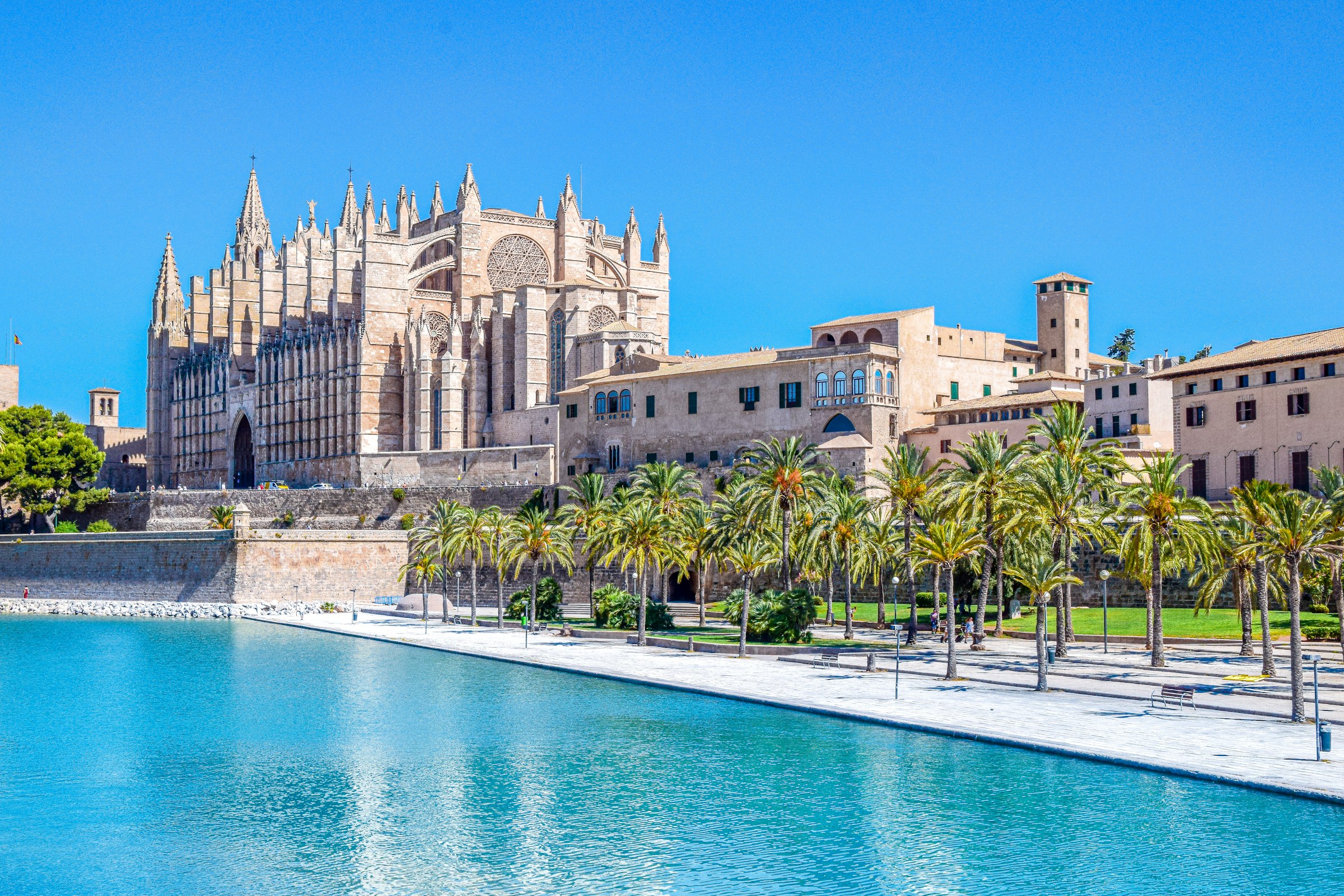
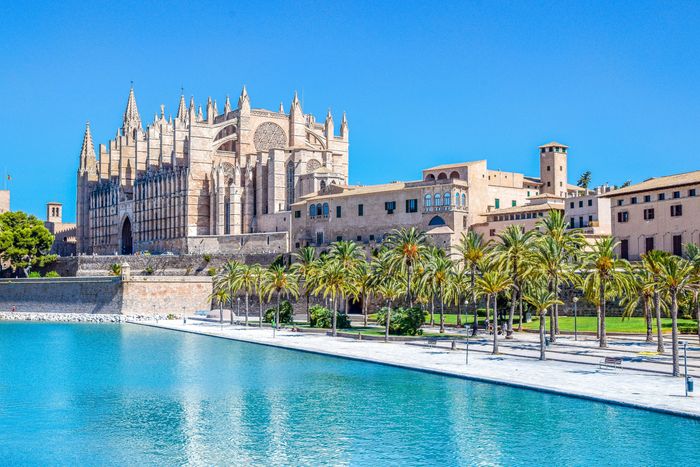
The Serra de Tramuntana along the northwest coast is the revelation: a wall of mountains dropping to the sea, threaded by one of Europe's great driving (and cycling) roads down to the hairpins of Sa Calobra, with honey-stone villages like Valldemossa and Deià, and the vintage wooden train up to Sóller. The coast is riddled with calas — small, cliff-framed coves of unreal turquoise water, especially in the northeast and around Cala Deià. And Palma itself is a proper city: a soaring seafront cathedral, a tangled old town, a serious food-and-wine scene. Cap de Formentor at the northern tip is the classic sunset drive.
The honest part: Mallorca in July and August is busy and hot, the famous coves get rammed and their tiny car parks fill by mid-morning, and the southern resort belt is exactly the concrete package Mallorca of the cliché. The trick is timing and geography — come in late spring or September, base in the Tramuntana or the quieter northeast rather than the party resorts, and start early for the calas. Do that and it's a genuinely brilliant, varied island that's a two-hour flight from most of Europe.
Highlights
-
Serra de Tramuntana
A UNESCO mountain range down the northwest coast — the Sa Calobra road, cycling passes, and terraced villages.
-
The calas
Hidden turquoise coves, especially in the northeast and around Cala Deià — arrive early to beat the crowds.
-
Palma
An underrated capital: a vast seafront cathedral, a maze of an old town, and a serious food scene.
-
Sóller & the vintage train
A wooden 1912 train over the mountains to a pretty valley town of orange groves.
-
Valldemossa & Deià
Honey-stone mountain villages on the northwest coast, long a haunt of writers and artists.
-
Cap de Formentor
A dramatic drive to the island’s northern tip — cliffs, a lighthouse, and the classic sunset.
Practical info
- Visa
- Schengen — visa-free for most Western passports (90 days).
- Currency
- EUR (€)
- Language
- Spanish and Catalan (Mallorquí); English widely spoken.
- Safety
- Very safe; watch for pickpockets in busy tourist spots in Palma.
- Getting around
- Rent a car to reach the coves and mountains; Palma has buses and the Sóller train.
- Tap water
- Tap water safe.
- Plug type
- Type C Type F 230V
- Money
- Cards accepted widely.
General guidance — visas, safety, and health change, so check your government's travel advisory and the official sources before you go.
Common questions
- When is the best time to visit Mallorca?
- May–June and September–October are the sweet spot: warm sea, thinner crowds, lower prices. July–August is hot (Palma highs around 30°C) and crowded. And note the crucial winter fact: much of the island’s resort infrastructure — coastal hotels, beach clubs, resort-town restaurants — closes roughly November to March. Palma itself stays open year-round.
- Do you need a car in Mallorca?
- For the calas, the Serra de Tramuntana and the Sa Calobra and Formentor roads, effectively yes — but it’s the island’s contested issue: summer traffic and parking are severe, rental cars scarce and pricey in peak, and the Formentor road closes to private cars in summer with a park-and-ride shuttle. Palma itself is walkable and bus-served, so a city-only trip works car-free.
- Is Mallorca affected by the anti-tourism protests?
- There have been large demonstrations since 2024 (tens of thousands in Palma), with more into 2026, but they target mass and rental tourism and second-home pressure on housing and water — not individual visitors, who report no hostility. What you’ll actually meet is a tourist tax, the odd protest day when businesses close in support, and visible graffiti.
- Is Mallorca cheaper than Sicily?
- No — Mallorca is markedly pricier. Both are eurozone, but northern-European package and luxury demand pushes Mallorca’s accommodation, dining and car hire well above Sicily’s: cost of living runs around 28% higher and rents more than double. A budget tier exists inland and in the shoulder season. See our full comparison.
- Is the Magaluf party scene what Mallorca is like?
- No — it’s one concentrated strip and atypical. A 2020 decree cracked down on it (no happy hours, pub crawls or party boats, no late-night off-licence sales in Magaluf and Playa de Palma), and the rest of the island — the Tramuntana villages, Palma’s old town, Deià — is a completely different, upmarket experience.
The backlash
A small island having a very public argument with tourism
The defining current story here isn’t a sight — it’s the backlash, and it shapes the practical trip.
Mallorca is compact, superbly connected — its airport handled 33 million passengers in 2024, third-busiest in Spain — and that success has produced a genuine reckoning. Mass anti-tourism protests have run since 2024, tens of thousands in Palma, recurring into 2026, aimed squarely at mass tourism, holiday rentals and the pressure on housing and water rather than at individual visitors. What it means on the ground: a tourist tax, occasional protest days when local businesses close in support, and the measures below.
The concrete rules to know: a Sustainable Tourism Tax is charged per person per night (roughly €1–4 by season and hotel category, higher in summer, under-16s exempt and halved after the eighth night — confirm current rates at booking); a 2020 alcohol decree still bans happy hours, pub crawls, party boats and late-night off-licence sales in the Magaluf and Playa de Palma party zones; and cruise ships are capped at three a day in Palma, with rental-car and vehicle limits under debate. Water scarcity is real in peak summer and a named grievance in the protests.
When to go
The shoulder is the sweet spot — and winter shuts
The calendar has a trap at both ends: August is the crush, and November is the shutter.
Time it for the shoulder — May–June or September–October — for warm water without the July–August heat, prices and crush. The catch travellers miss is the other end: outside Palma, much of the island closes from November to March, when coastal hotels, beach clubs and resort-town restaurants shutter, so a late-autumn trip can find the resorts dark while the capital carries on. One-off for 2026: a total solar eclipse crosses the island on 12 August, bringing exceptional crowds and road and beach closures around it.
The calas
The famous coves are tiny, and everyone knows about them
Mallorca’s signature turquoise calas are the postcard — and the clearest face of its overtourism.
The most-photographed coves are minute. Caló des Moro is about forty metres of sand reached down a rocky ten-minute scramble with no facilities — and it draws thousands on a peak day, so the municipality has cracked down on roadside parking and locals have petitioned to cap numbers. Cala Varques and Cala s’Almunia are undeveloped and foot-access only. The lesson is the same everywhere: go early or off-season, and don’t count on parking.
The two famous drives are experiences in themselves and equally congested: the Sa Calobra road spirals down through its 270° “tie-knot” bridge to the Torrent de Pareis gorge, and the Cap de Formentor road runs out to the lighthouse — but in summer Formentor closes to private cars by day, with a park-and-ride shuttle from Port de Pollença and fines for driving up in restricted hours.
Beyond the coves
A UNESCO mountain range and a real city
The island people reduce to beaches has a cathedral, a mountain landscape and a scenic railway to match.
Palma is a genuine city, not a resort: the great Gothic cathedral of La Seu (which Gaudí himself restored) presides over an Arab-legacy old town, and it lives year-round. Behind the coast rises the Serra de Tramuntana, a UNESCO cultural landscape of dry-stone terraces threaded by the GR221 “dry-stone route” and dotted with the villages of Valldemossa, Deià and Sóller. The Sóller railway — a century-old narrow-gauge wooden train from Palma, €23 single or €30 return in 2026 — is the scenic way up, and the Coves del Drac near Porto Cristo end their tour with a live classical concert played from boats on one of the world’s largest underground lakes.
Good to know
Spanish hours, Catalan signs, live EU borders
The practical footnotes that shape the days.
Mallorca is Schengen and eurozone; Spanish and Catalan (the local “Mallorquí”) are co-official, so many signs and place names are Catalan, though English is widely spoken in tourist areas. The rhythm is Spanish — midday closures inland and late dinners from about 20:30 — and while tap water is legally drinkable it’s hard and poor-tasting, so bottled is the norm. On borders: the EU’s biometric Entry/Exit System (EES) is now rolling out, so expect fingerprint-and-photo registration on arrival; the separate ETIAS travel authorisation is not yet required — it’s expected in 2027, so it doesn’t apply to a 2026 trip.
Sources
Where this comes from
The detail above was read off primary sources on — operator timetables, municipal ordinances, regional tourism boards, national statistics offices and first-hand traveller reports, rather than other travel articles. Researched and maintained by Dmitrii Romashchin — how we research.
Compare Mallorca with
If you like Mallorca, also consider
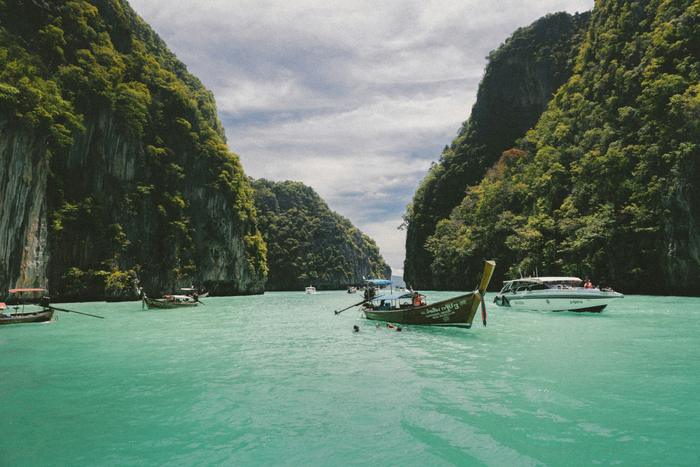
Thailand
The complete package for warm-climate travel.
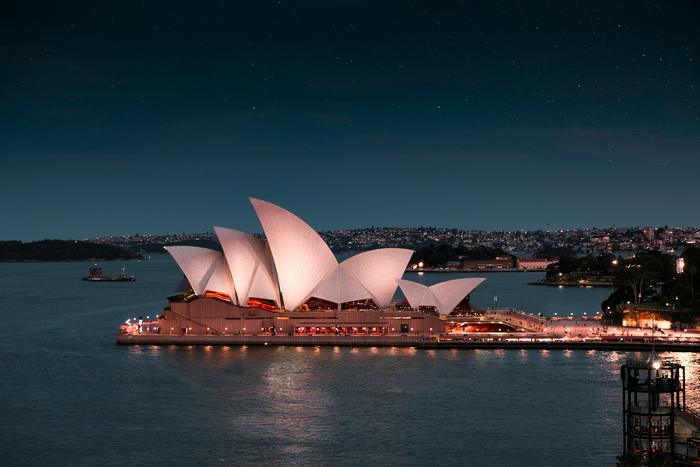
Australia
Vast, varied, relaxed. Reef, Sydney, and proper wilderness in one.
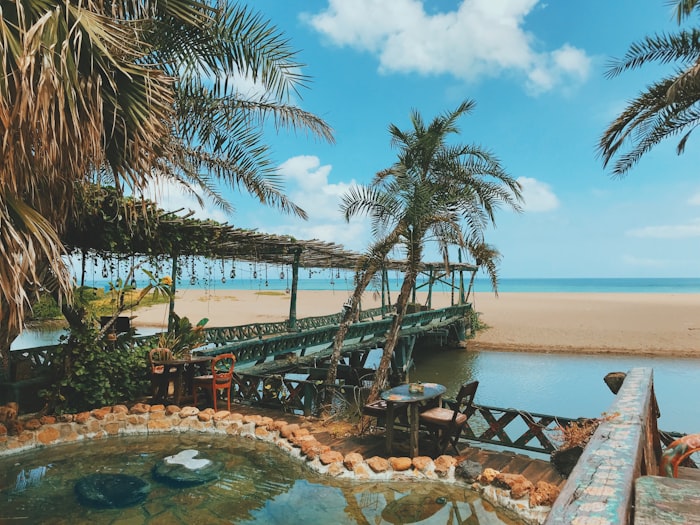
Bali, Indonesia
Warm, affordable, endlessly deep — beach, wellness, and culture in one place.
Not sure where to go
Take the 5-minute quiz
Answer a few honest questions and get matched to destinations that actually fit how you travel.
Start the quiz