
Fiji
Reef diving, island-hopping, and a country that takes hospitality seriously.
Fiji is two trips wearing one name. Viti Levu, the main island, is where you land and where most people live; the postcard version — white sand, clear water, a single ring of palms — lives out in the Mamanuca and Yasawa island chains, reached by catamaran or small plane. Add some of the warmest hospitality anywhere and reefs that justify the flight, and a week assembles itself.
Most trips start with a transfer straight off the plane: a few nights on one island, then a boat to another, packing slows you down so you stop trying. The Mamanucas are closer and busier; the Yasawas are further, quieter, and run from backpacker dorms to barefoot-luxury resorts on the same chain. Days are diving, snorkeling, kayaking, and not much else by design. Resort meal plans and inter-island transfers, not the room, are where the budget quietly goes.
The honest part: this is a beach-and-water destination, and if you need cities, ruins, or a restaurant scene, you'll run out of country fast — Nadi, the gateway town, is somewhere to pass through, not linger. Many resorts lock you into their dining at resort prices because there's nothing else within reach. And the timing is non-negotiable: November through April is the wet, humid cyclone season, when a storm can pin you indoors for days. Come in the May-to-October dry window and the trade-off is simply that there isn't much to do but relax, which is the entire point.
Highlights
-
Yasawa Islands
The quieter, further chain — beaches range from dorm-cheap to barefoot-luxury.
-
Mamanuca Islands
Closer to Nadi and easier to reach. Day-trip snorkeling and surf breaks.
-
Taveuni
The Garden Island — rainforest, waterfalls, and the Rainbow Reef for divers.
-
Coral Coast (Viti Levu)
Reef-fringed mainland stretch if you want to skip the boats.
Practical info
- Visa
- Visa-free for most Western passports (typically four months on arrival). Verify before travel.
- Currency
- FJD (Fijian Dollar).
- Language
- Fijian, Fiji Hindi, and English.
- Safety
- Generally safe and relaxed. Sun, currents, and reef cuts are the real hazards.
- Getting around
- Catamaran ferries and small planes between islands; rental car or bus on the mainland.
- Tap water
- Tap water safe in resorts and main towns; ask on remote islands.
- Plug type
- Type I 240V
- Money
- Cards work in resorts; carry cash for villages and small islands.
General guidance — visas, safety, and health change, so check your government's travel advisory and the official sources before you go.
Common questions
- Do you need a visa for Fiji?
- For most travellers, no. Fiji grants citizens of the UK, EU, US, Canada, Australia and New Zealand (and around 110 countries in all) a visitor permit of up to four months on arrival — no pre-application — extendable by a further two months if you apply before it expires. Your passport must be valid at least six months beyond entry, and you’re technically expected to show an onward or return ticket and proof of accommodation. You fill in a passenger arrival card; Fiji has been rolling out a digital version, so check immigration.gov.fj close to your trip in case a pre-arrival online form has become mandatory.
- Is there a departure tax, and do I pay it at the airport?
- There’s a departure tax of FJ$200 (raised from FJ$170 in August 2025), but you almost certainly won’t pay it at the airport — it’s built into your airfare. This trips up people who set aside cash for it on the way out. A low-season reduction was discussed in 2026 but hadn’t been enacted, so budget for the full FJ$200 baked into the ticket.
- When is the best time to visit Fiji?
- The dry season, May to October — lower rainfall, clearer water, less humidity and the lowest cyclone risk, which is the whole point for diving and snorkelling. It coincides with the Southern-Hemisphere winter, so temperatures are pleasantly warm rather than hot. The wet season, November to April, is hotter and more humid and is also cyclone season, peaking January–March, when a storm can genuinely disrupt island transfers. The shoulder edges (May, October) give you good weather with fewer crowds and better rates.
- Mamanucas or Yasawas — and is Nadi worth any time?
- Treat Nadi as a gateway, not a destination: it’s where you land, but the Fiji you came for is out on the islands, a further ferry or flight away. The Mamanucas are closer to Nadi — quick transfers, day-trippable — while the Yasawas run further north, more remote and dramatic (the “Blue Lagoon” chain), with everything from backpacker dorms to boutique lodges. Serious divers go further still, basing on Taveuni or Savusavu in the north for the soft-coral sites. Don’t lose days in Nadi; get to the water.
- How much does Fiji really cost once you’re on an island?
- More than the room rate suggests, because of two captive costs. On a small or outer island there’s nowhere else to eat, so you buy the resort’s (often compulsory) full-board meal plan at resort prices (commonly FJ$100–280 per adult per day). And you pay a boat or seaplane transfer each way to reach it. Upmarket bills also carry roughly 20% of tax (15% VAT plus a 5% tourism/environment levy on larger operators). Factor all three in before you compare resorts — a “cheaper” island can work out dearer.
- Is Fiji good for families, divers, or honeymooners?
- All three, but in different places. Families gravitate to the close, calm Mamanucas and the road-accessible Coral Coast (short transfers, kids’ clubs). Divers head north to Taveuni and Savusavu for the soft-coral Rainbow Reef, or to Beqa Lagoon for the shark dives. Honeymooners pick the adults-oriented boutique resorts of the outer Mamanucas and Yasawas, or a barefoot-luxury private island. Match the island group to the trip rather than picking a resort blind.
Entry & visa
Four months on arrival, tax in the airfare
Entry is easy — a generous visitor permit on arrival, with the departure tax already in your ticket.
Fiji is one of the easier Pacific nations to enter: most Western travellers and New Zealanders get a visitor permit of up to four months on arrival, with no application, extendable by two more months if you ask before it runs out. Bring a passport valid six months beyond entry, and be ready to show an onward ticket and accommodation if asked.
The FJ$200 departure tax is already in your airfare — not a separate cash payment at the airport, which is a common misbudget. Fiji is also moving its paper arrival card online via a UNDP-backed Digital Arrival Card; the paper form still works, but check the official immigration site before you fly in case a pre-arrival online declaration has become compulsory.
When to go
A water trip, and the season is non-negotiable
Fiji is for reef, islands and switching off — and the dry May–Oct window versus cyclone season decides everything.
Fiji has one simple rule: the dry season (May–Oct, the Southern-Hemisphere winter) is the window — clearer water, lower humidity, lowest cyclone risk. The crimson wet season (Nov–Apr, shown Jan–Apr) is hotter and is cyclone season, peaking January–March, when a storm can strand island transfers. May and October are the best-value shoulders.
What Fiji is for is water and islands: soft-coral diving and snorkelling, island-hopping, and resort stays that run from backpacker to barefoot-luxury. What it is not for is cities, nightlife or a culture-and-sightseeing itinerary — Nadi and Suva are logistics hubs, and days on the islands are diving, snorkelling, kayaking and deliberately not much else.
Timing is the one thing you can’t fudge. The dry season, May to October, brings clear water, low humidity and the lowest cyclone risk — the postcard Fiji. The wet season, November to April, is hotter and is also cyclone season (peak January–March), when storms can pin you down and scramble island transfers. Book the water-heavy, outer-island part of a trip for the dry window.
- you want clear water and reliable transfersSkipthe November–April cyclone seasonGoMay–October, the dry window (May and October for value)
- you think Nadi is the destinationSkiplingering in the gateway townGoheading straight out to the Mamanucas or Yasawas by catamaran
- you’re comparing outer-island resortsSkipjudging on the room rate aloneGofactoring in the compulsory meal plan and the boat/seaplane transfer
Getting around
Catamaran up the chains, or fly the far hops
Everything radiates from Nadi and Port Denarau — a daily catamaran works the Mamanucas and Yasawas; planes reach the north.
Almost all international flights land at Nadi, and most island transfers leave from nearby Port Denarau. The workhorse is the Yasawa Flyer catamaran (South Sea Cruises / Awesome Adventures), running daily up through the Mamanucas and Yasawas — roughly a five-hour haul to the far north — with Bula / Awesome hop-on-hop-off passes (sold in day-blocks) for flexible island-chaining. For speed or the nearer islands, seaplanes (Turtle Airways) and small planes cut the transfer to minutes at a price.
For the bigger islands and serious diving in the north, Fiji Link flies from Nadi to Savusavu, Taveuni, Kadavu and Suva — Nadi to Suva is about 30 minutes. One planning point: the “island” in a brochure may be a half-day and a significant transfer from the airport, so check each resort’s transfer time and cost before you compare room rates.
| Way | Use it for | Note |
|---|---|---|
| Yasawa Flyer catamaran | Up the Mamanucas & Yasawas | Daily from Port Denarau; ~5h to the far north |
| Bula Pass | Flexible island-hopping | Hop-on-hop-off ferry pass in day-blocks |
| Fiji Link / seaplane | The far islands and the north | Nadi–Suva ~30 min; Taveuni/Savusavu by air |
| Hire car / bus | The Coral Coast and Viti Levu | The Queens Road; otherwise you’re on the water |
Almost all international flights land at Nadi, and most island transfers leave nearby Port Denarau. Check each resort’s transfer time and cost before comparing room rates — the “island” may be hours and a significant boat fare away. Checked October 2026.
Think in boat times, not just resorts. The Yasawa Flyer catamaran from Port Denarau (by Nadi) is the backbone, but it’s roughly a five-hour haul to the far Yasawas, so a remote-island resort means a long transfer each way. Pick the Mamanucas for quick, calm access close to Nadi, the Yasawas for drama you’ll earn by sailing for it — and don’t book a far-north island for the same day you land or leave on an international flight.
Reefs & islands
Soft coral, shark dives and two island chains
The draw is underwater — reefs billed as the world’s soft-coral capital, with the best diving up north.
The headline is the diving and snorkelling — Fiji is widely branded the “soft coral capital of the world.” The north holds the best of it: Rainbow Reef in the Somosomo Strait off Taveuni (the famous “Great White Wall” of soft corals, for intermediate-plus divers) and the sites around Savusavu on Vanua Levu. Off southern Viti Levu, Beqa Lagoon near Pacific Harbour runs celebrated baited shark dives (bull and tiger sharks) alongside gentler reefs, and Bligh Water off Rakiraki rewards experienced divers. The Mamanucas and Yasawas skew toward easy snorkelling and resort diving.
If you’re not island-hopping, the Coral Coast on southern Viti Levu is a resort strip reachable by road, with snorkelling and villages close at hand, plus land sights around Nadi — the colourful Sri Siva Subramaniya Hindu temple, the Sabeto mud pools and the Sigatoka Sand Dunes. Wherever you stay, factor in the resort meal-plan reality below — on a small island, the reef and the resort are the holiday.
The soft corals are the whole point, so protect them: reef-safe (oxybenzone-free) sunscreen is the expected courtesy over Fiji’s reefs, and the stronger currents at the marquee sites like the Great White Wall make them intermediate-plus dives rather than beginner snorkels — match the site to your certification, and book the north if diving is the trip’s purpose.
Where to go
Pick the island group, not the resort
Fiji’s regions are distinct trips — close-and-calm, remote-and-dramatic, road-accessible, or dive-serious.
Choose Fiji by island group, because they’re genuinely different trips. The Mamanucas are the close, calm, easily-reached islands; the Yasawas the remote, dramatic chain (the Blue Lagoon was filmed there), with everything from dorms to boutique lodges. The Coral Coast gives you a resort on southern Viti Levu without any boat transfer. Serious divers head north to Taveuni and Vanua Levu for the soft-coral walls, or to Beqa Lagoon for the shark dives. And Nadi is the gateway — land, transfer out, and keep it to a day.
| Region | What it’s for | Good to know |
|---|---|---|
| Mamanucas | Close, calm, day-trippable islands | Quick transfers from Denarau; family-friendly |
| Yasawas | Remote, dramatic, the “Blue Lagoon” chain | Backpacker to boutique on one chain |
| Coral Coast (S Viti Levu) | A road-accessible resort strip | No boat transfer needed |
| Taveuni & Vanua Levu (north) | Serious soft-coral diving | Rainbow Reef, the Great White Wall |
| Beqa / Pacific Harbour | Shark dives and adventure | Off southern Viti Levu |
| Nadi & Denarau | The gateway, not the destination | Airport and port; a day at most |
Food & kava
Coconut-cured fish, the earth oven, and grog
A Melanesian-Indian island table — and a ceremonial drink that is the heart of Fijian life.
Yaqona (kava) the shared bowl at the heart of Fijian life
Fiji’s table blends Melanesian and Indian traditions. The national dish is kokoda (raw fish cured in lime and coconut milk), the celebration is a lovo (a feast slow-cooked in an earth oven), and the everyday is often Indo-Fijian curry and roti — around a third of the country descends from indentured Indian labourers. Root vegetables (cassava and taro/dalo) anchor most plates, and the fish and fruit are superb. But the thing that defines Fijian social life is kava (see the figure) — the shared, earthy “grog” that runs through everything from a village welcome to an ordinary night.
| Dish / drink | What it is | Note |
|---|---|---|
| Kokoda | Raw fish cured in lime and coconut milk | The national dish |
| Lovo | A feast slow-cooked in an earth oven | The celebration meal, in banana leaves |
| Curry & roti | The Indo-Fijian everyday | ~a third of Fiji is of Indian descent |
| Cassava & taro (dalo) | The root-vegetable staples | With almost every meal |
| Kava (yaqona) | The earthy, tongue-numbing “grog” | The social and ceremonial drink |
| Fresh fish & tropical fruit | The island larder | Everywhere, year-round |
On a small island the resort’s (often compulsory) meal plan is usually the only option. And kava — shared from a communal bowl with a clap and a “bula” — is the social glue and the heart of the sevusevu village welcome.
Culture
Two peoples, “bula”, and a rugby religion
A warm, two-community society with its own courtesies — and a national obsession with sevens rugby.
Olympic gold rugby sevens — Fiji’s national passion
Fiji is a warm, two-community society: the indigenous iTaukei Fijians (just over half the population) and the Indo-Fijians (around a third), descendants of indentured labourers brought under British rule, alongside smaller communities — with three official languages (English, Fijian and Fiji Hindi) and “bula” the all-purpose greeting you’ll hear a hundred times a day. The iTaukei are largely Methodist Christian and the Indo-Fijians mostly Hindu and Muslim, and the cultural glue is a famous, genuine friendliness. Visiting a village means a sevusevu (a kava gift) and modest dress; and rugby sevens (see the figure) is the shared national passion.
Good to know
Meal-plan lock-in, a levy stack and village etiquette
The practical footnotes — a captive-pricing island economy with its own customs.
The currency is the Fijian dollar, and tipping isn’t customary — many resorts run a single shared staff fund rather than individual tips. The big budget line is the resort meal-plan lock-in: on small or outer islands there’s nowhere else to eat, so you effectively buy the resort’s (often mandatory) full-board plan at resort prices. Upmarket bills also carry a levy stack: 15% VAT (usually in the displayed price) plus a 5% tourism/environment levy on larger tourism businesses, so the total tax can run to about 20%. Tap water is generally fine in Nadi, Denarau and major resorts; use bottled or treated water on the outer islands.
A little cultural literacy goes a long way. To visit a village you present a sevusevu — traditionally a bundle of kava root, bought at a market — and you dress modestly (shoulders and knees covered), remove your hat (wearing one insults the chief) and take your shoes off entering a home. Expect “Fiji time”: a relaxed pace that includes transfers, so build in buffer, and reef-safe sunscreen is the expected courtesy over the soft corals.
Compare Fiji
If you like Fiji, also consider

Greece
Ruins in the morning, a swim by noon, taverna until dark.

Spain
Food, beaches, and three or four cities that each justify the trip.
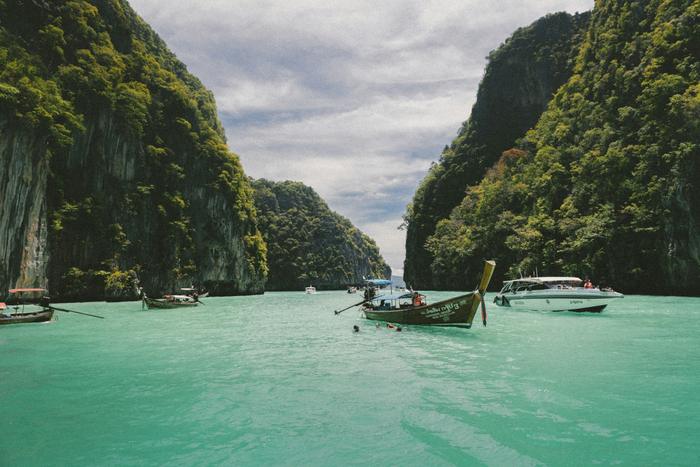
Thailand
The complete package for warm-climate travel.
Not sure where to go
Take the 5-minute quiz
Answer a few honest questions and get matched to destinations that actually fit how you travel.
Start the quiz